
Conductive porous spacers for nested stamped plate fuel cell
a fuel cell and stamped plate technology, applied in the field of fuel cells, can solve the problems of insufficient space, inability to support fuel cells with feed regions without diffusion media, lamination and durability problems, etc., and achieve the effect of eliminating subgaskets and minimizing thermal mass
- Summary
- Abstract
- Description
- Claims
- Application Information
AI Technical Summary
Benefits of technology
Problems solved by technology
Method used
Image

Examples
Embodiment Construction
[0023]The following detailed description and appended drawings describe and illustrate various embodiments of the invention. The description and drawings serve to enable one skilled in the art to make and use the invention, and are not intended to limit the scope of the invention in any manner.
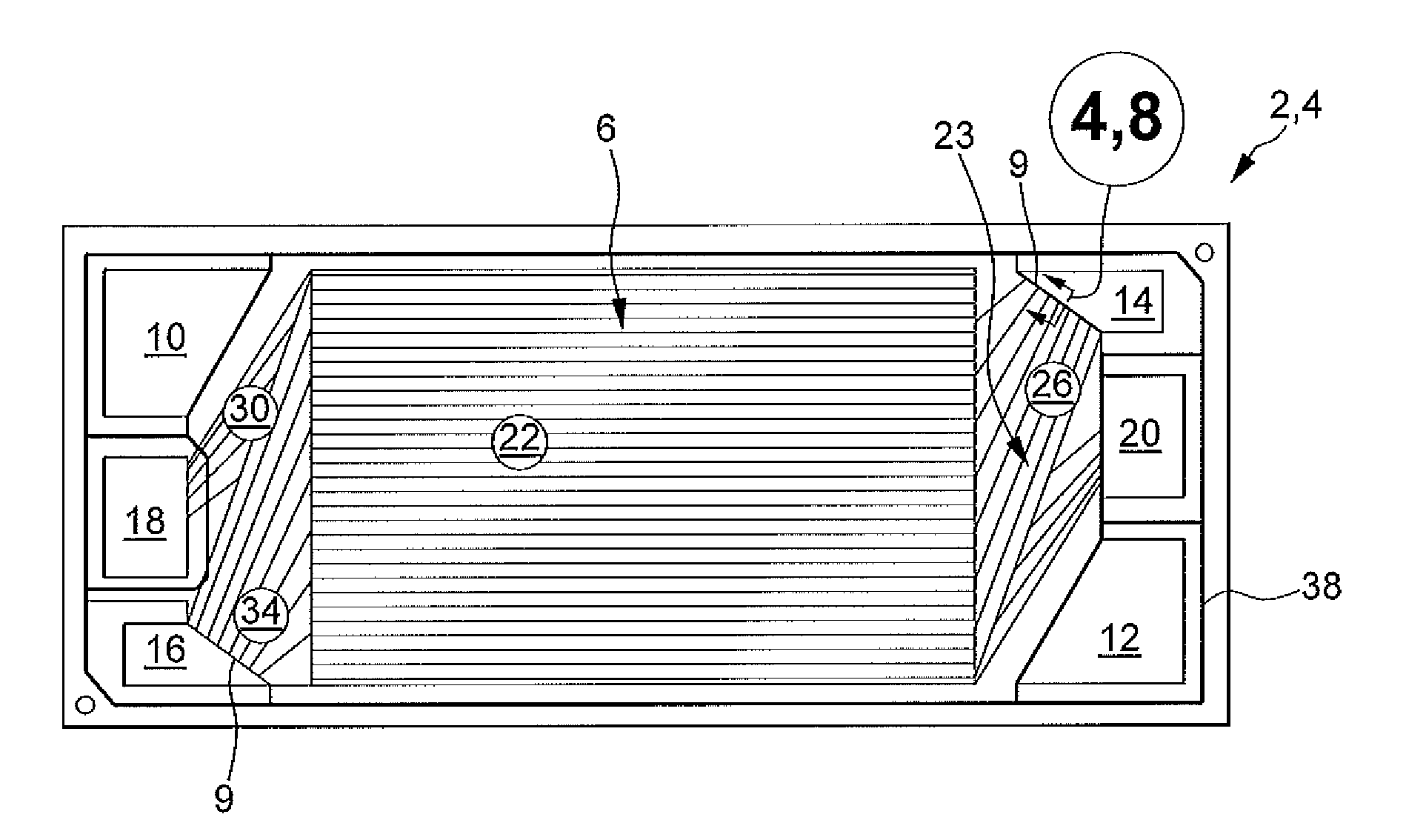
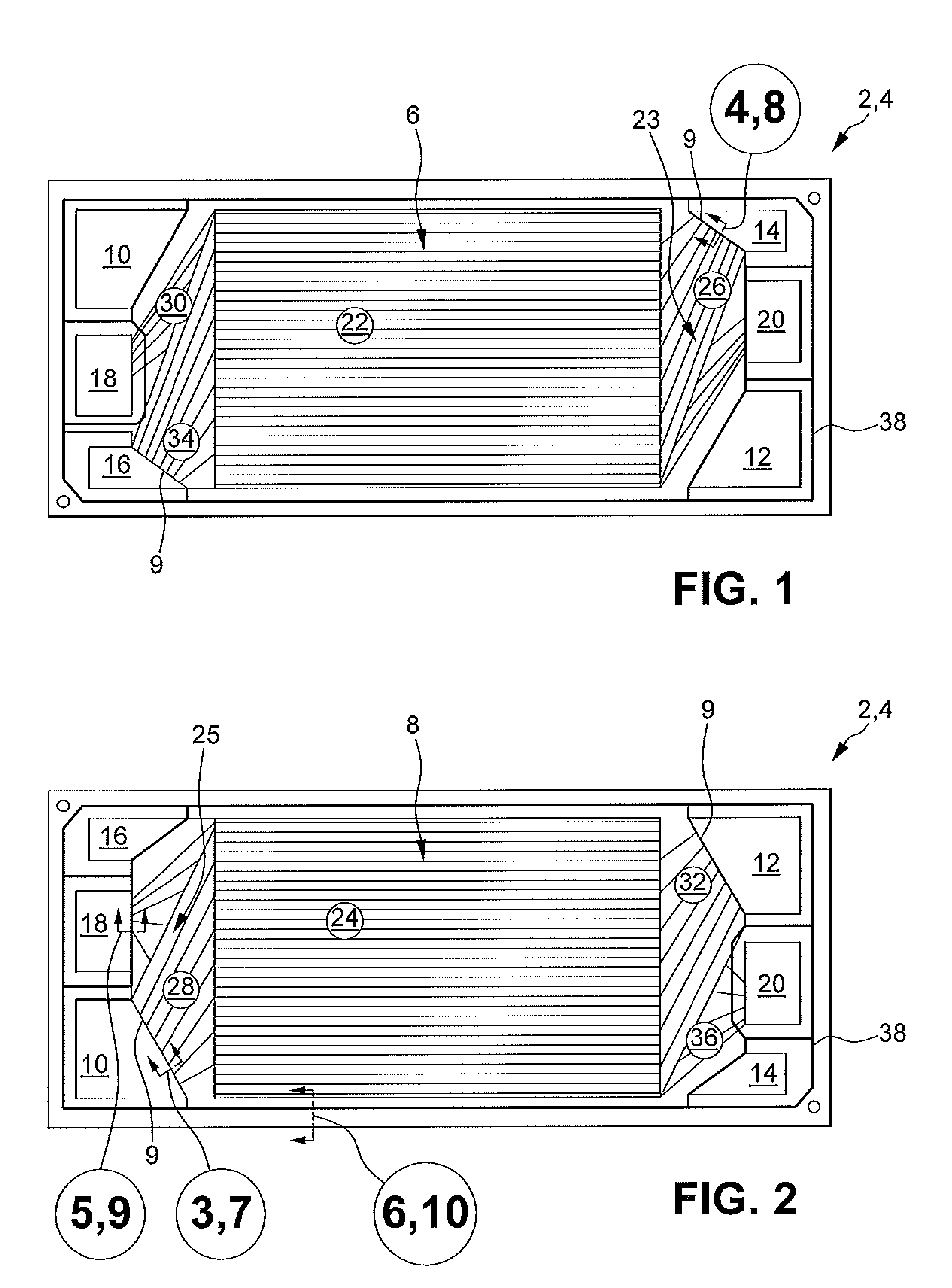
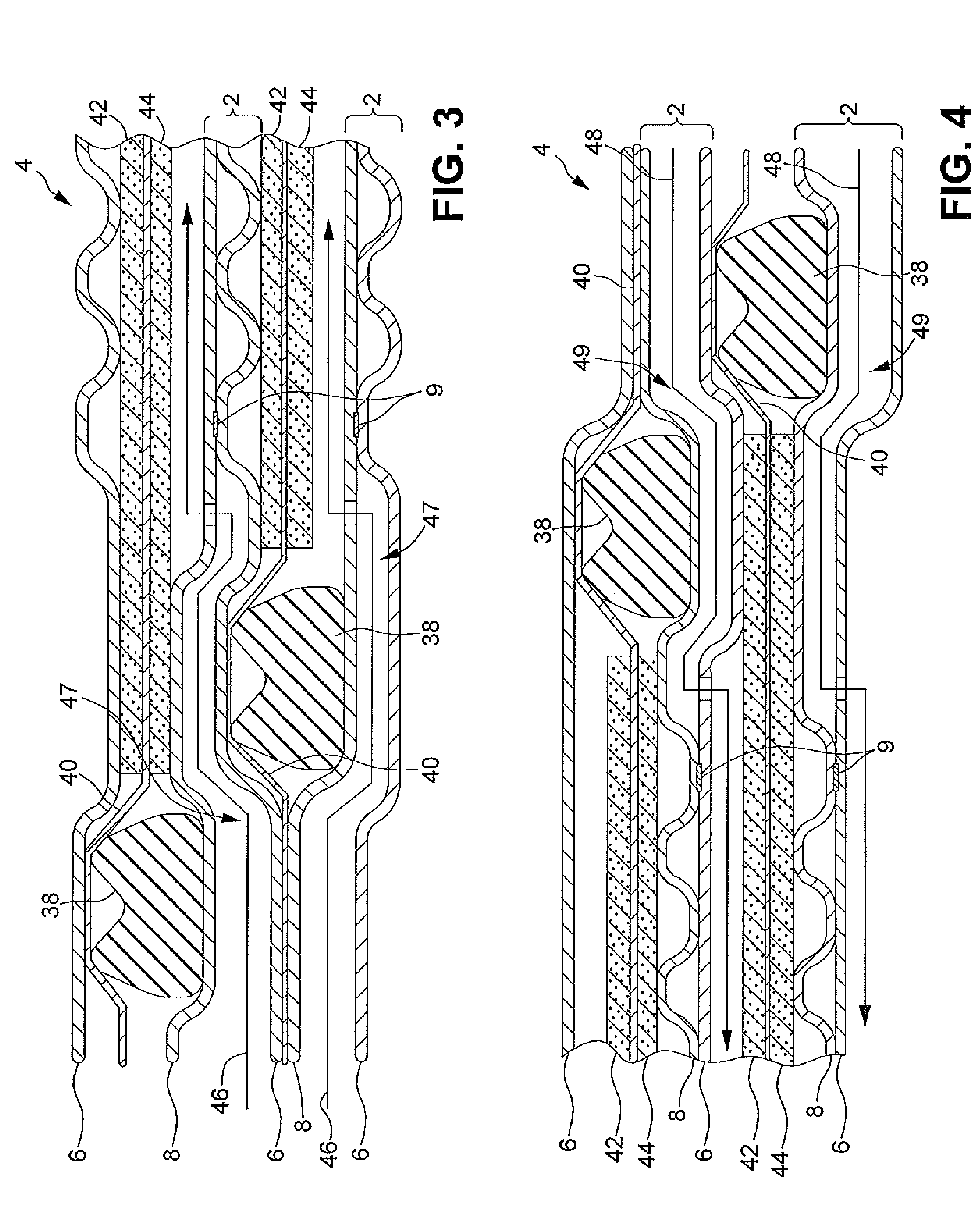
[0024]As shown in FIGS. 1-10, the present disclosure includes a fuel cell bipolar plate 2 that facilitates the transportation of reactants and coolant through a fuel cell stack 4. Exemplary fuel cell stacks 4 that may be employed with the bipolar plates 2 of the present disclosure are described in Assignee's co-owned U.S. Pat. No. 6,974,648 to Goebel, U.S. Pat. No. 7,291,414 to Goebel et al., and U.S. Pat. Appl. Publ. No 2007 / 275288 to Goebel et al., the entire disclosures of which are hereby incorporated herein by reference.
[0025]With reference to FIGS. 1 and 2, the bipolar plate 2 includes a first unipolar plate 6, also referred to as an anode plate 6, and a second unipolar plate 8, also ref...
PUM
| Property | Measurement | Unit |
|---|---|---|
| hydraulic diameter | aaaaa | aaaaa |
| thickness | aaaaa | aaaaa |
| thickness | aaaaa | aaaaa |
Abstract
Description
Claims
Application Information
 Login to View More