
Materials and methods for determining susceptibility or predisposition to cancer
- Summary
- Abstract
- Description
- Claims
- Application Information
AI Technical Summary
Benefits of technology
Problems solved by technology
Method used
Image

Examples
Embodiment Construction
PPM1D Gene and Polypeptide Sequences
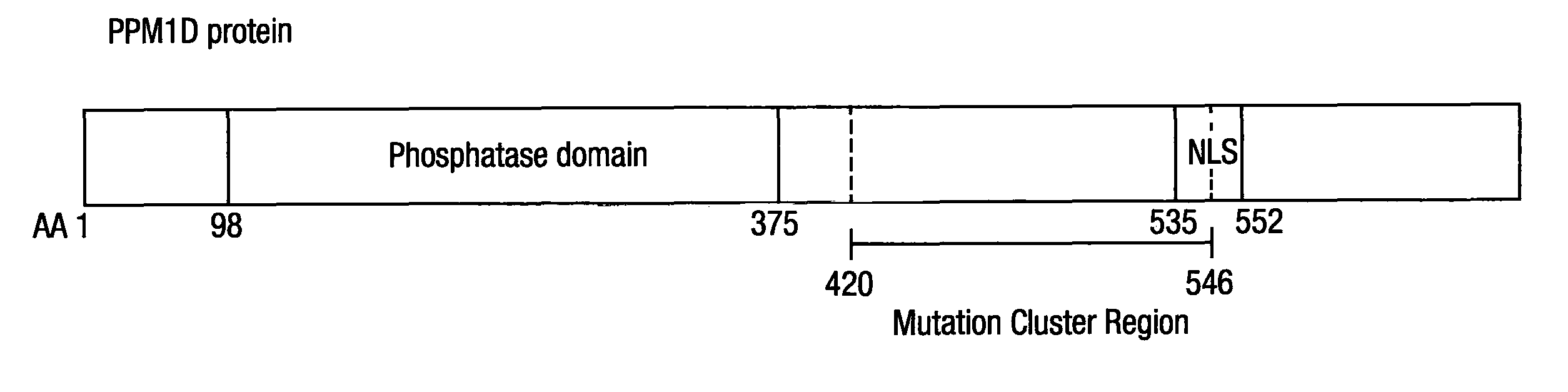
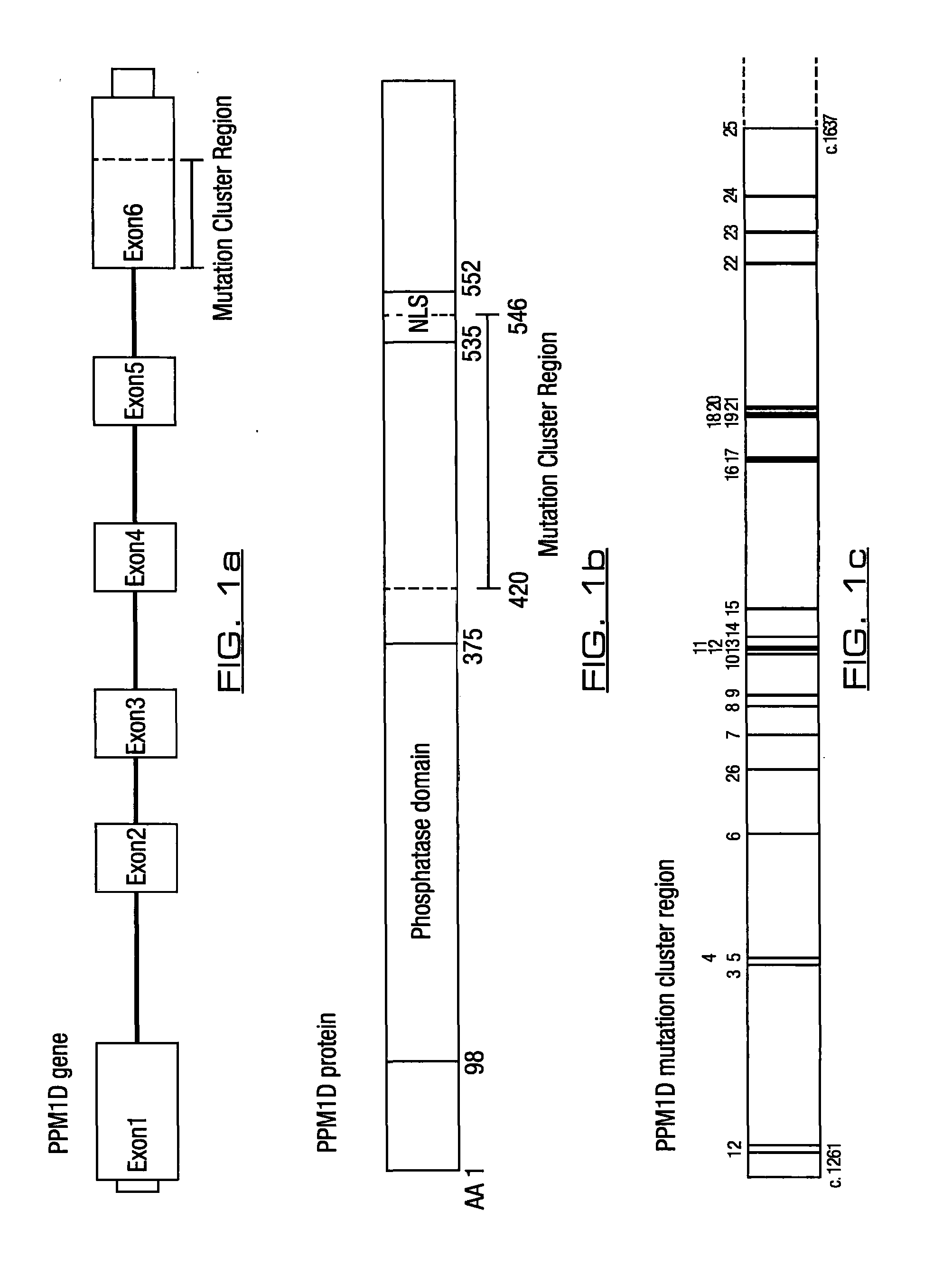
[0036]The PPM1D gene and polypeptide sequences are disclosed in Ali, A. Y. et al., Oncogene, 31(17), 2175-2186 (2012) and are publicly available on GenBank as sequence accession numbers NM—003620 and NP—003611. The polypeptide sequence is 605 amino acids in length and is provided a SEQ ID NO: 1. The coding sequence of the PPM1D gene is reproduced herein as SEQ ID NO: 2. PPM1D nucleic acid includes the sequence shown in SEQ ID NO: 2, alleles and sequence variants thereof and complementary sequences of any of these nucleic acids. The numbering used herein refers to these sequences and in particular in Table 1 to the coding sequence of the PPM1D gene shown in SEQ ID NO: 2. However, the present invention is also applicable to the use of alleles and sequence variants of this gene that may include one or more of the mutations as disclosed herein.
[0037]PPM1D nucleic acid and amino acid sequences preferably have at least 90% sequence identity, more prefer...
PUM
 Login to View More
 Abstract
Description
Claims
Application Information
 Login to View More