
Pseudo-spectral method to control three-degree-of-freedom wave energy converters
a wave energy converter and pseudo-spectral control technology, applied in the field of wave energy converters, can solve the problems of insufficient wave energy extraction technology, limitation of existing theory and practice, and the inability to control floating structures parametrically, and achieve the effect of computational efficiency and optimal pseudo-spectral control
- Summary
- Abstract
- Description
- Claims
- Application Information
AI Technical Summary
Benefits of technology
Problems solved by technology
Method used
Image

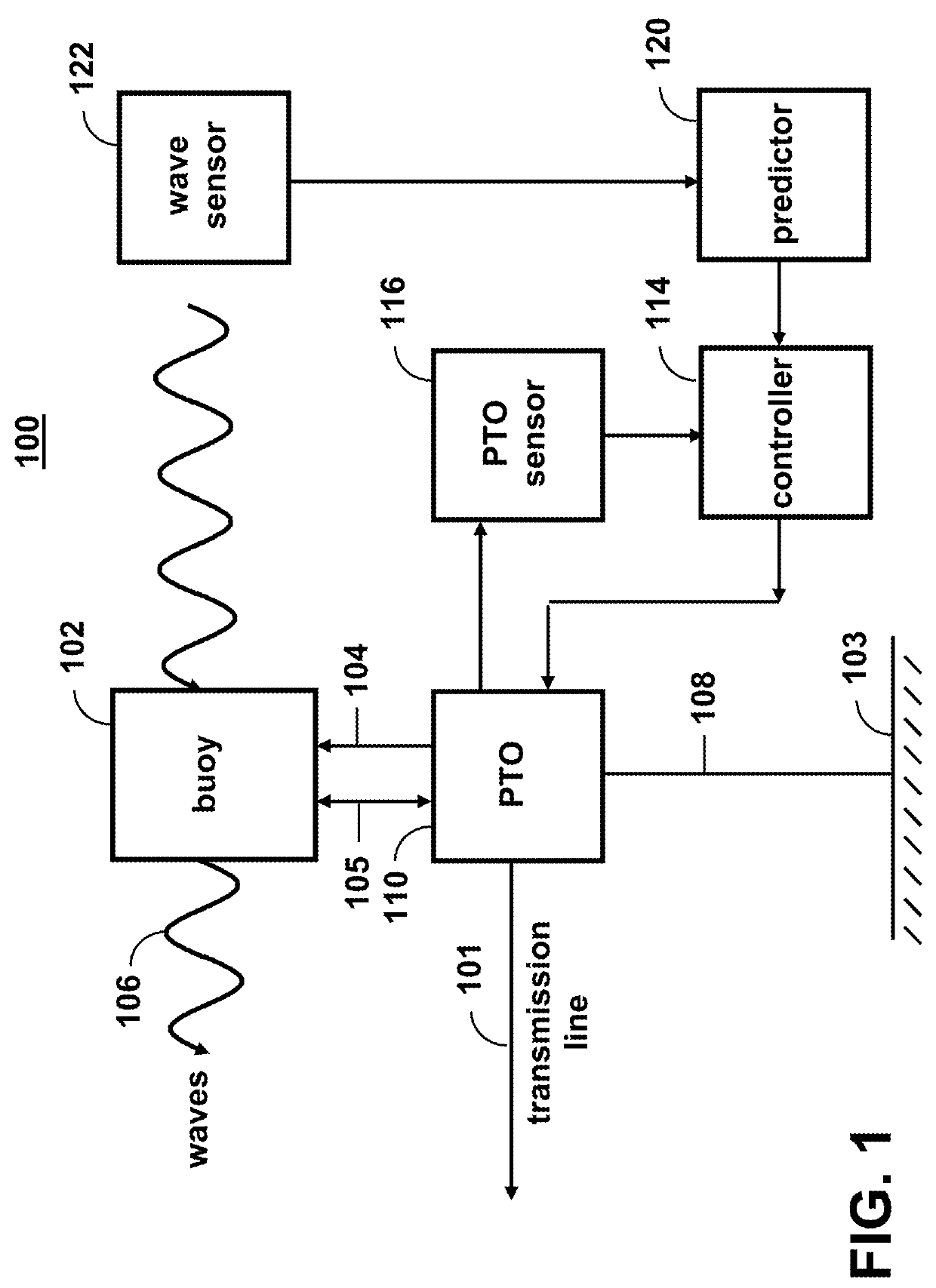
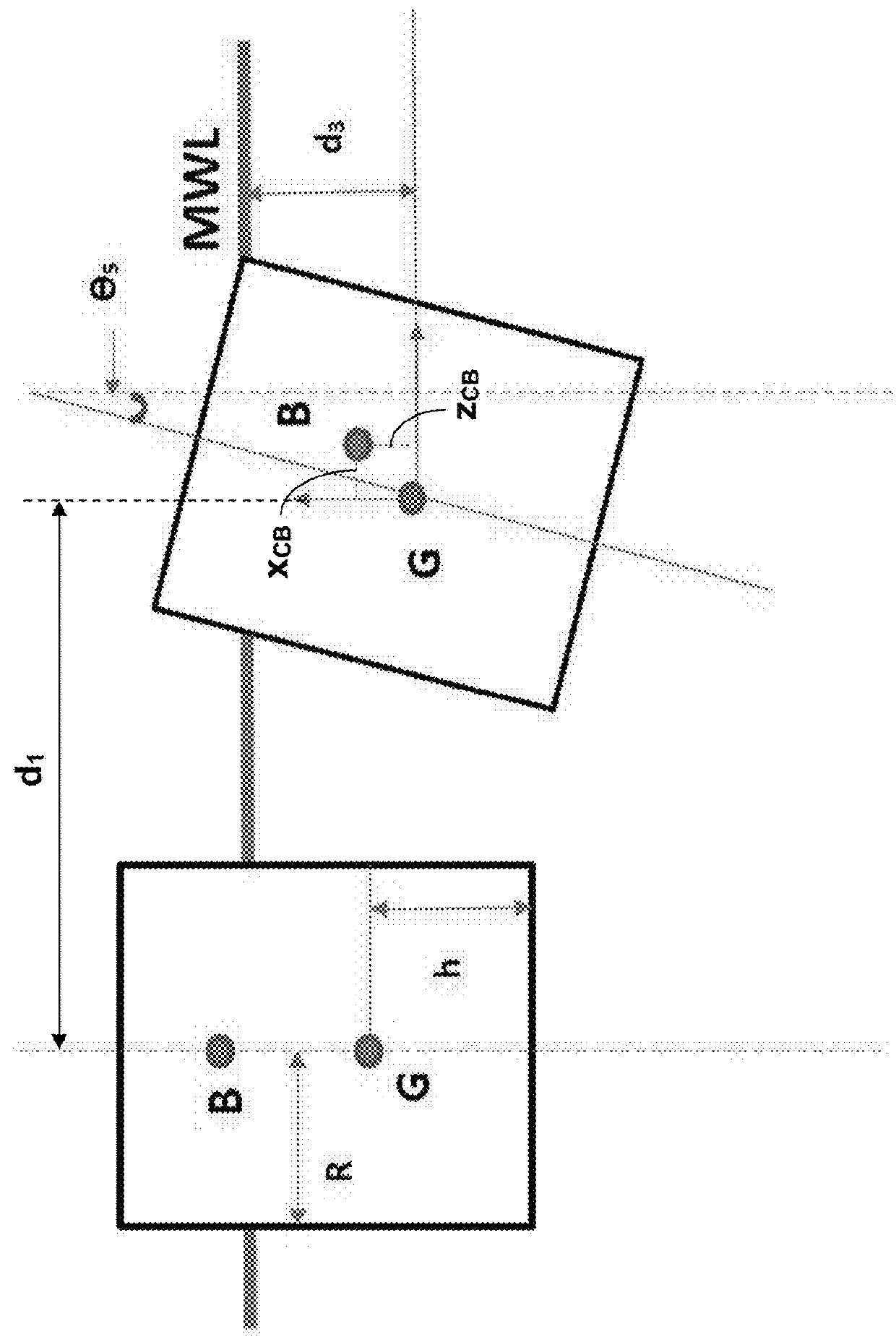
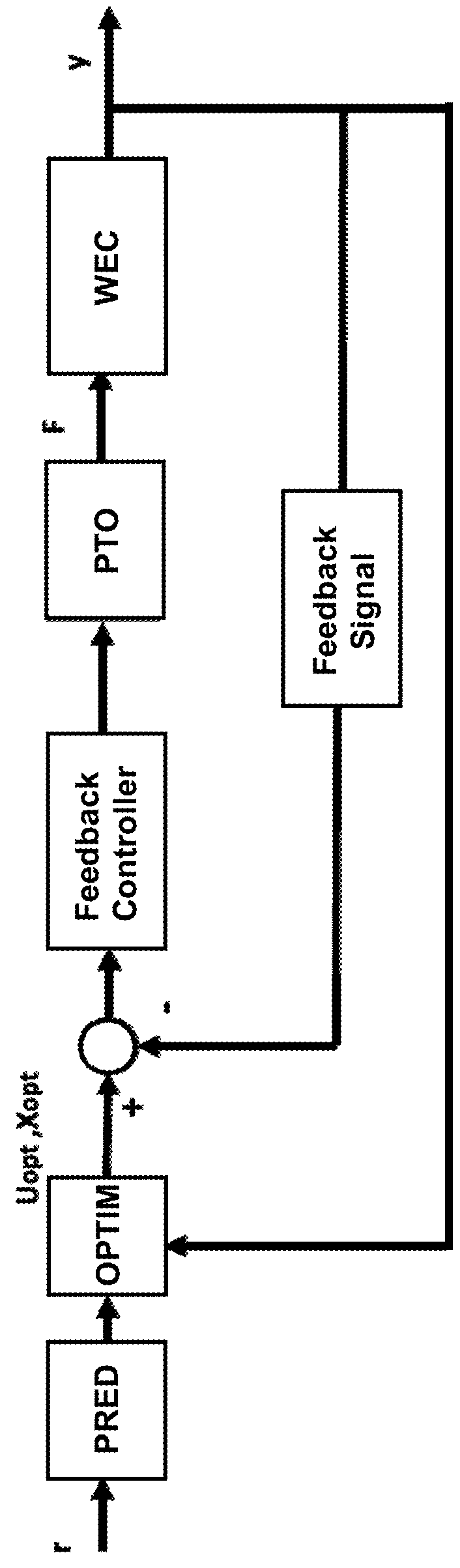
Examples
Embodiment Construction
[0030]In designing the optimal control, it is important to note that the WEC buoy is excited by waves which are stochastic in nature. The Dynamic Programming (DP) approach is one method that can be implemented to search for the optimal control in such a stochastic system. The DP approach, however, is computationally expensive and suffers the curse of dimensionality. Indirect methods for optimal control seek a solution to the closed system of necessary conditions of optimality. Direct methods for optimal control discretize the control problem, then apply non-linear programming (NLP) techniques to the resulting finite-dimensional optimization problem. Due to control parameterization, direct methods provide only approximate solutions. Therefore, the present invention implements a pseudo-spectral approach to computing the optimal control, where a Fourier series basis is used to approximate the control, the states, and the objective function. The objective function maximizes the extracte...
PUM
 Login to View More
 Abstract
Description
Claims
Application Information
 Login to View More