
Position sensor and position detection method
a technology of position sensor and position detection, which is applied in the direction of cycle equipment, program control, instruments, etc., can solve the problems of inability and failure to detect the occurrence of anomalies in the sensor
- Summary
- Abstract
- Description
- Claims
- Application Information
AI Technical Summary
Benefits of technology
Problems solved by technology
Method used
Image

Examples
first example embodiment
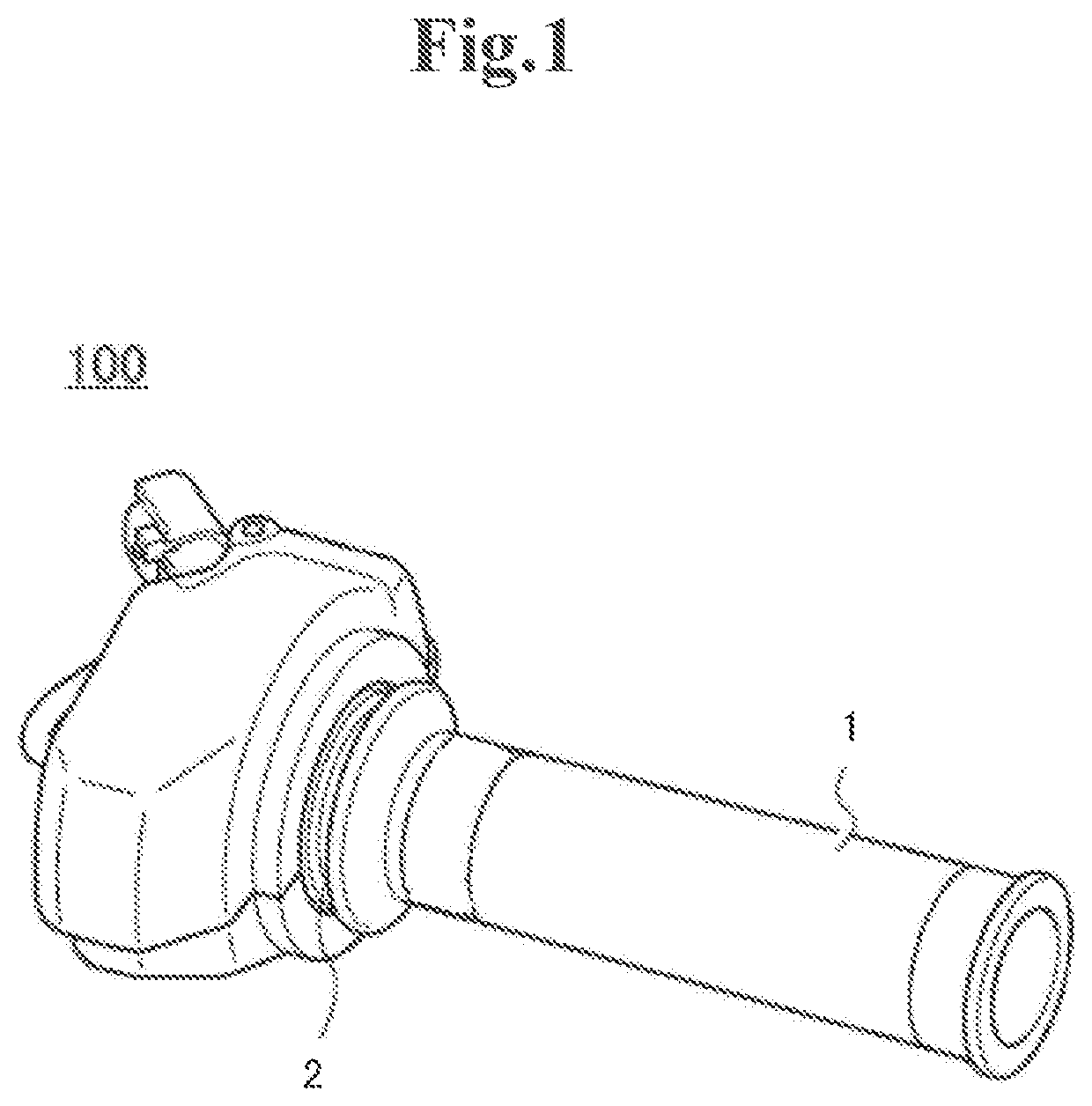
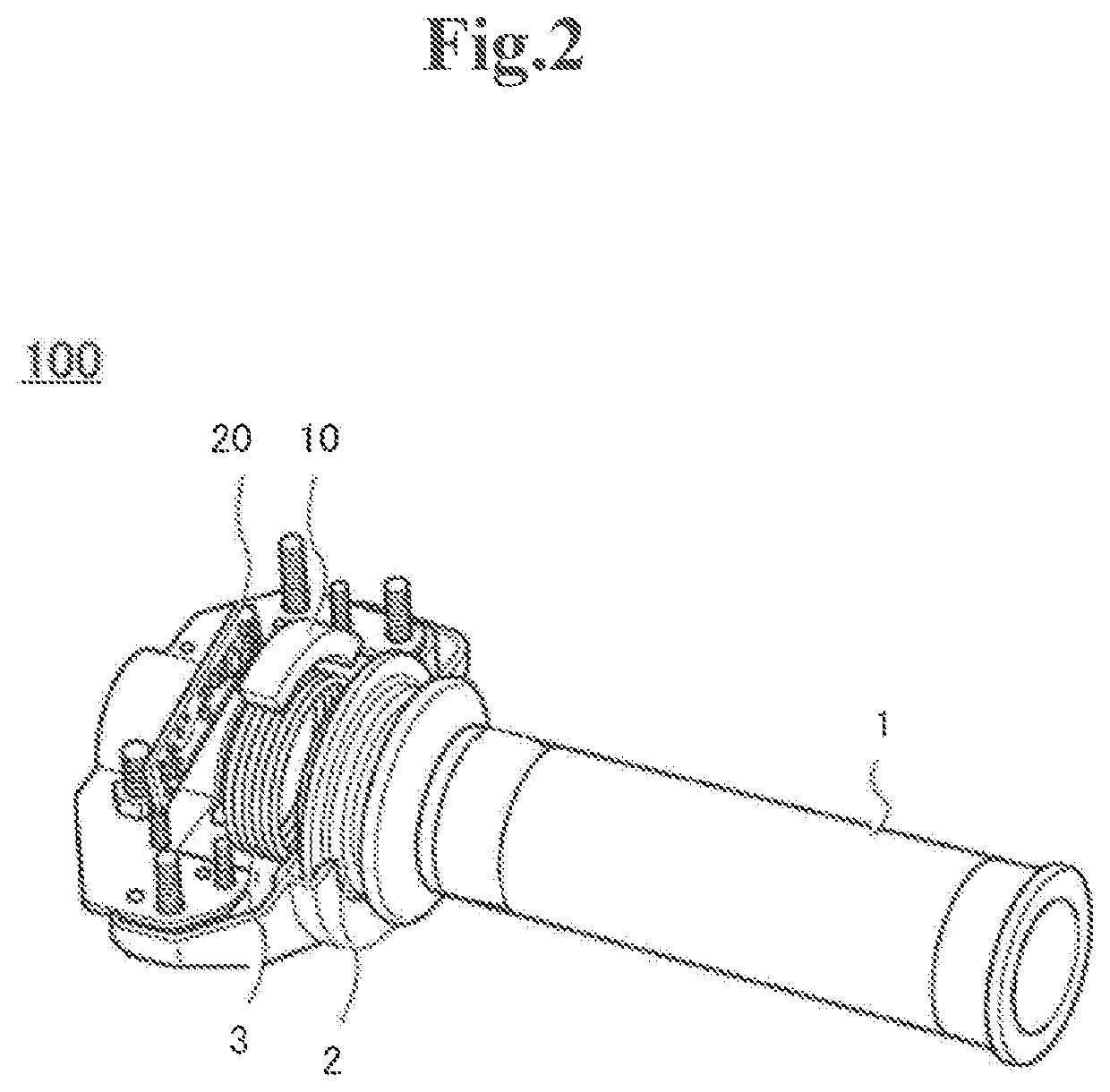
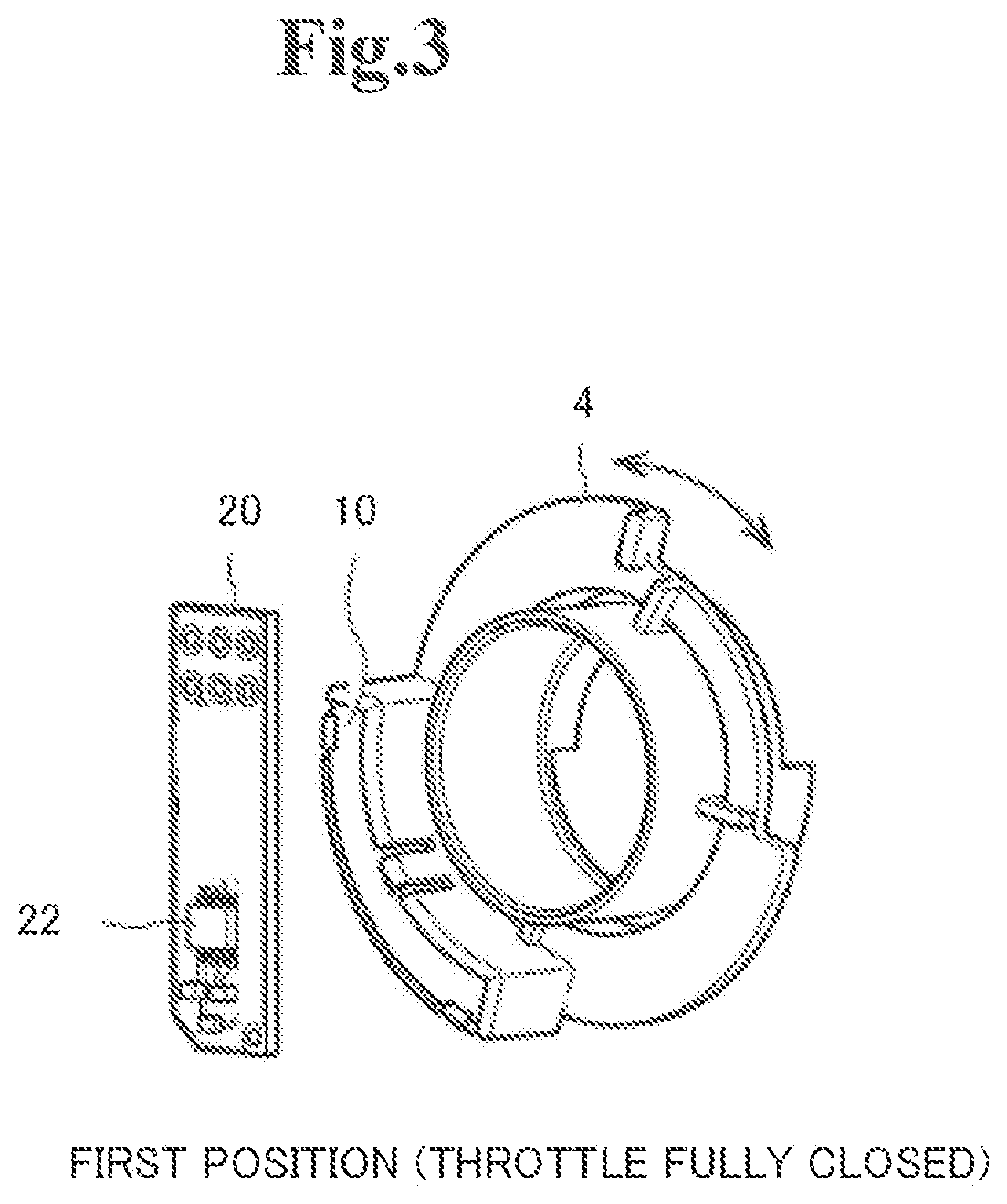
[0023]A first example embodiment of the present invention will be described with reference to FIGS. 1 to 10. FIGS. 1 to 6 are views for describing a configuration of a position sensor, and FIG. 7 is a view for describing an operation of the position sensor. FIGS. 8 to 10 are views for describing other configurations of the position sensor.
Configuration
[0024]The position sensor in this example embodiment is a device for detecting the degree of rotation, that is, a rotation position in a rotation direction (a position) of a rotating body. Specifically, as shown in FIG. 1, the position sensor in this example embodiment is mounted on a throttle device 100 for operating an accelerator of a motorcycle and is for detecting the rotation angle of a throttle grip 1. The position sensor in this example embodiment also has a function to detect occurrence of an anomaly in the position sensor. However, the position sensor according to the present invention is not necessarily limited to being moun...
modification example
[0052]In the above description, a case in which as the relation between the detection values detected by the first sensor 21 and the second sensor 22, a relation such that in the case of the rotation angle of the magnet 10 being identical, both the detection values are substantially identical values, that is, both the detection values are values on the identical loci L1 and L2 as shown in FIG. 6 is set by the functions of the amplifiers 23 and 24 has been illustrated. Meanwhile, another relation may be set. For example, as shown in FIG. 8, as the relation between the detection values detected by the first sensor 21 and the second sensor 22, a relation such that the detection values are values on the mutually parallel loci L1 and L2 may be set by the functions of the amplifiers 23 and 24. In other words, although the loci L1 and L2 do not coincide, the change rates of the respective detection values are set to be identical in each of the abovementioned sections. To be specific, in th...
PUM
| Property | Measurement | Unit |
|---|---|---|
| rotation angle | aaaaa | aaaaa |
| rotation angle | aaaaa | aaaaa |
| rotation angle | aaaaa | aaaaa |
Abstract
Description
Claims
Application Information
 Login to View More