Frostless heat pump having thermal expansion valves

US6467284B1Inactive Publication Date: 2002-10-22UT BATTELLE LLC
6 Cites 36 Cited by

Patent Information

Authority / Receiving Office
US · United States
Current Assignee / Owner
Publication Date
2002-10-22
Estimated Expiration
Not applicable · inactive patent

Smart Images

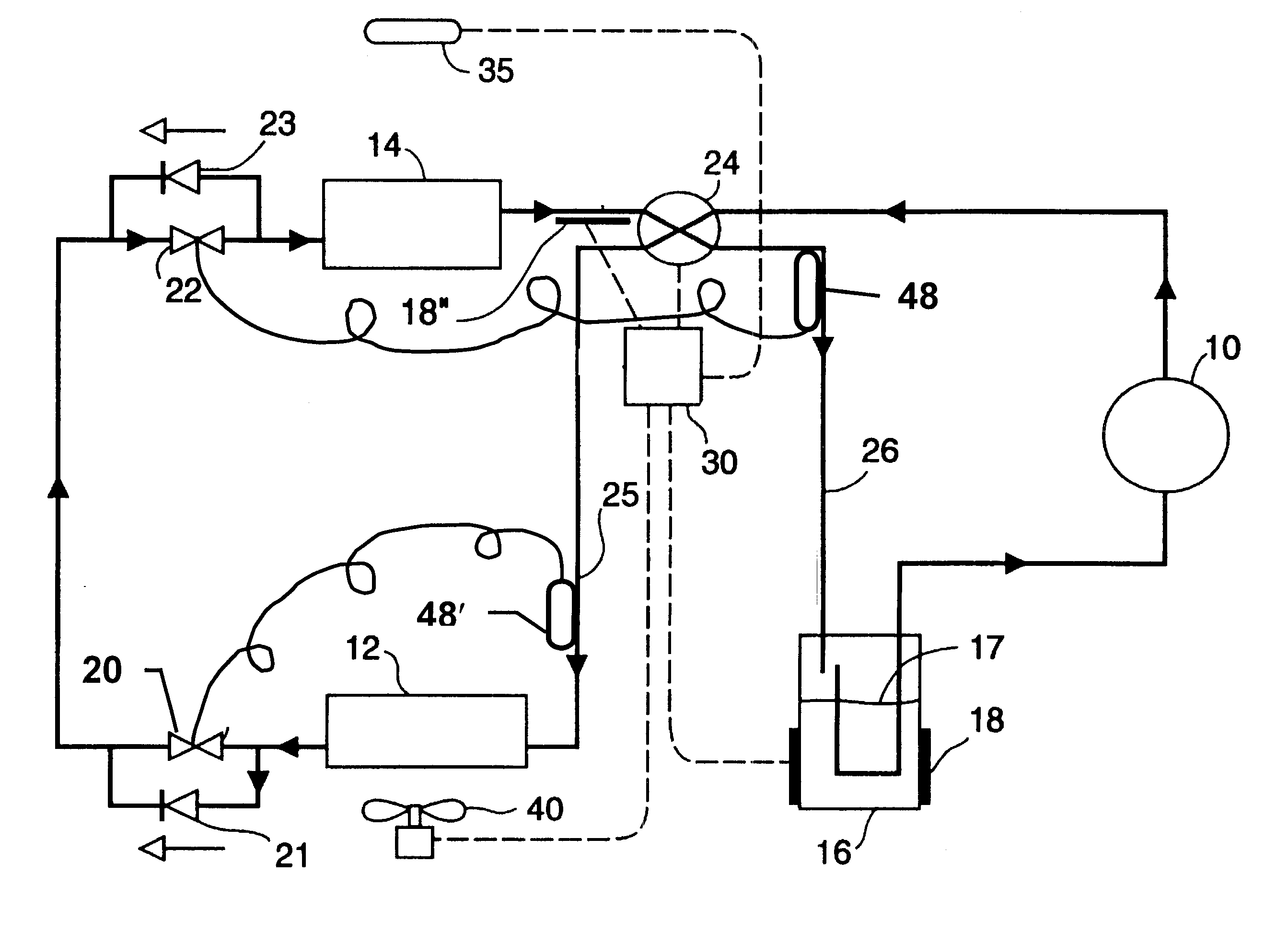
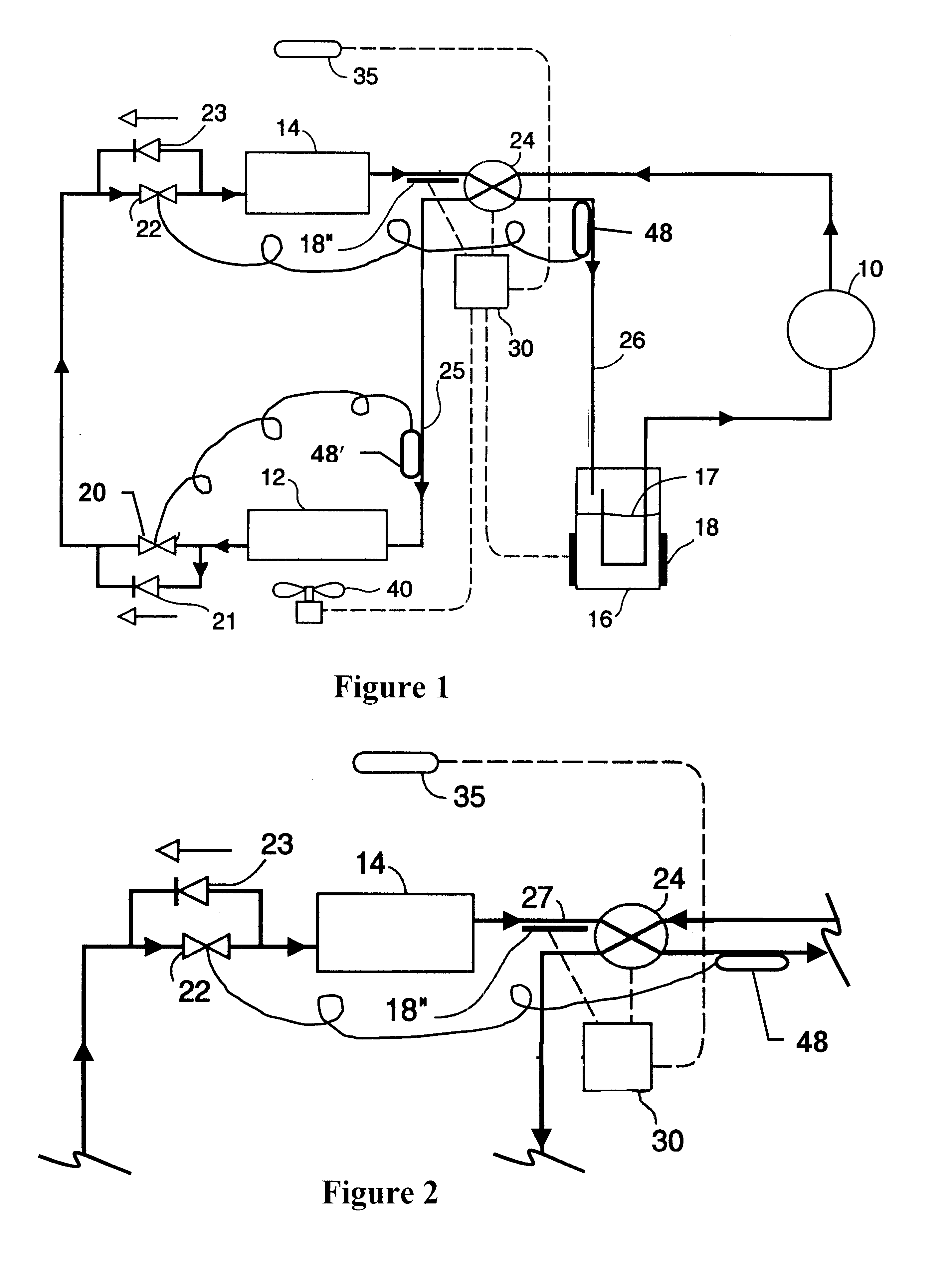
  • Figure 1
    Figure 1
  • Figure 2
    Figure 2
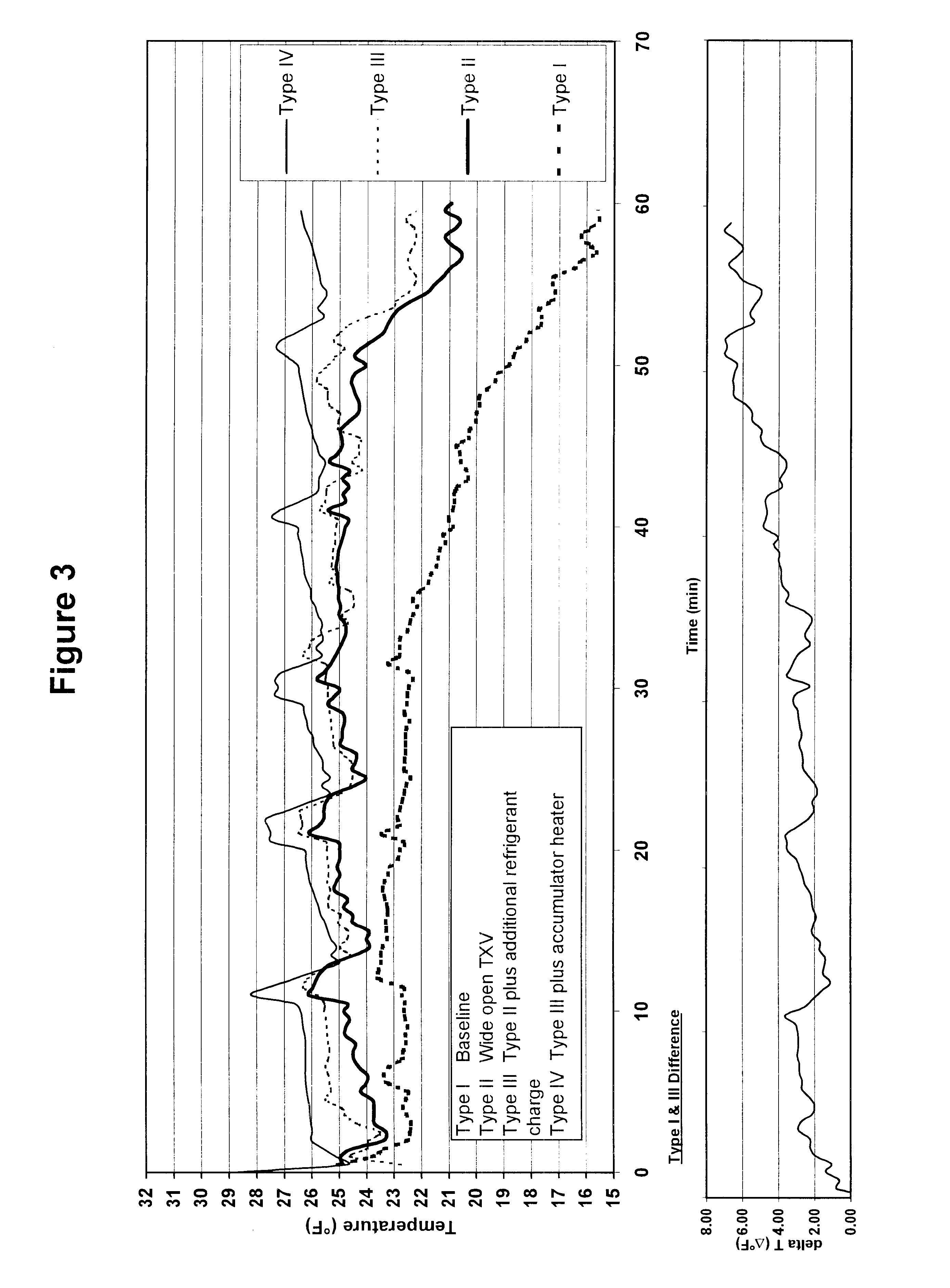
  • Figure 3
    Figure 3
Patent Text Reader

Abstract

A heat pump system having an operable relationship for transferring heat between an exterior atmosphere and an interior atmosphere via a fluid refrigerant and further having a compressor, an interior heat exchanger, an exterior heat exchanger, a heat pump reversing valve, an accumulator, a thermal expansion valve having a remote sensing bulb disposed in heat transferable contact with the refrigerant piping section between said accumulator and said reversing valve, an outdoor temperature sensor, and a first means for heating said remote sensing bulb in response to said outdoor temperature sensor thereby opening said thermal expansion valve to raise suction pressure in order to mitigate defrosting of said exterior heat exchanger wherein said heat pump continues to operate in a heating mode.
Need to check novelty before this filing date? Find Prior Art

Description

BACKGROUND OF INVENTIONHeat pumps are well known and used for heating and / or cooling enclosures such as buildings and the like. A heat pump generally includes a heat exchanger fluid (usually called a refrigerant) that is circulated between an interior heat exchanger inside the enclosure and an exterior heat exchanger outside the enclosure.During normal heating mode operation of a heat pump, the exterior (outdoor) heat exchanger thereof becomes colder than exterior ambient and absorbs heat into the refrigerant therefrom, and the interior (indoor) heat exchanger becomes warmer than interior ambient, transferring heat from the refrigerant into the indoor air. Thus, heat is "pumped" from a cooler exterior ambient into an interior ambient.When the exterior temperature is near or below the freezing point of water, generally in the range of 30 to 40 degrees Fahrenheit, ice (frost) usually builds up on the exterior heat exchanger, greatly reducing the heat pump performance. Therefore, defro...

Examples

Embodiment Construction

A two-ton air conditioning unit as described hereinabove, charged with R-22 refrigerant was used to test the invention as described hereinabove and the results are shown in FIGS. 3 and 4. Test results indicated that a 6 watt first heating means 18" input to the TXV remote sensing bulb 48 raised the evaporator coil temperature by 6.degree. F. after 60 minutes of operation in a 31.degree. F. ambient. After 60 minutes of operation in a 35.degree. F. ambient with the 6 watt first heating means 18" activated, the refrigerant saturation temperature in the evaporator was 6.degree. F. higher than that measured in conventional (baseline) heat pump operation.

Application of additional heat to the accumulator by the optional second heating means 18 further raises the exterior heat exchanger 14 temperature. The heat applied as described hereinabove is efficiently utilized as it is delivered to the house through the compressor 10. Because of the raised compressor suction pressure and temperature,...