
Method for the operation of a digital, programmable hearing aid as well as a digitally programmable hearing aid
a hearing aid and programmable technology, applied in the direction of deaf-aid sets, electric devices, etc., can solve the problems of inability to achieve the gain of hearing aids due to a more pronounced hearing impairment, and the user's experience of whistling is usually extremely unpleasant, and achieves a wide frequency response
- Summary
- Abstract
- Description
- Claims
- Application Information
AI Technical Summary
Benefits of technology
Problems solved by technology
Method used
Image

Examples
Embodiment Construction
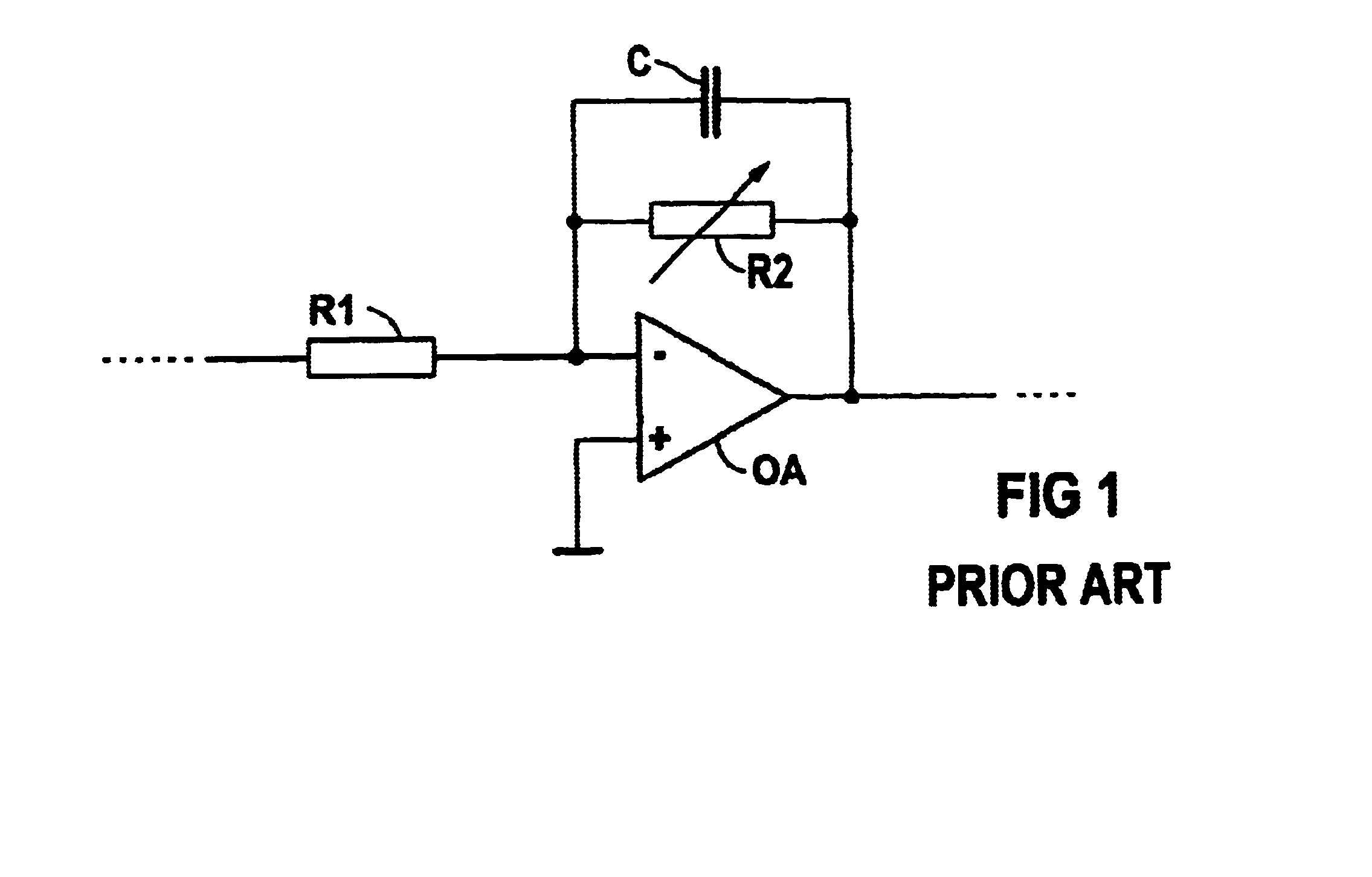
[0031]FIG. 1 shows the circuit-oriented realization of a roll-off circuit in a hearing aid with analog signal processing. This amplifier circuit comprises an operational amplifier OA that is wired with an input resistor R1 as well as with an RC element composed of a potentiometer R2 and a capacitor C in the feedback branch. The gain and, thus, the volume setting at the hearing aid, can be modified with the potentiometer R2. Simultaneously with the gain, however, the limit frequency (the knee point) from which the gain decreases with increasing frequency also changes.
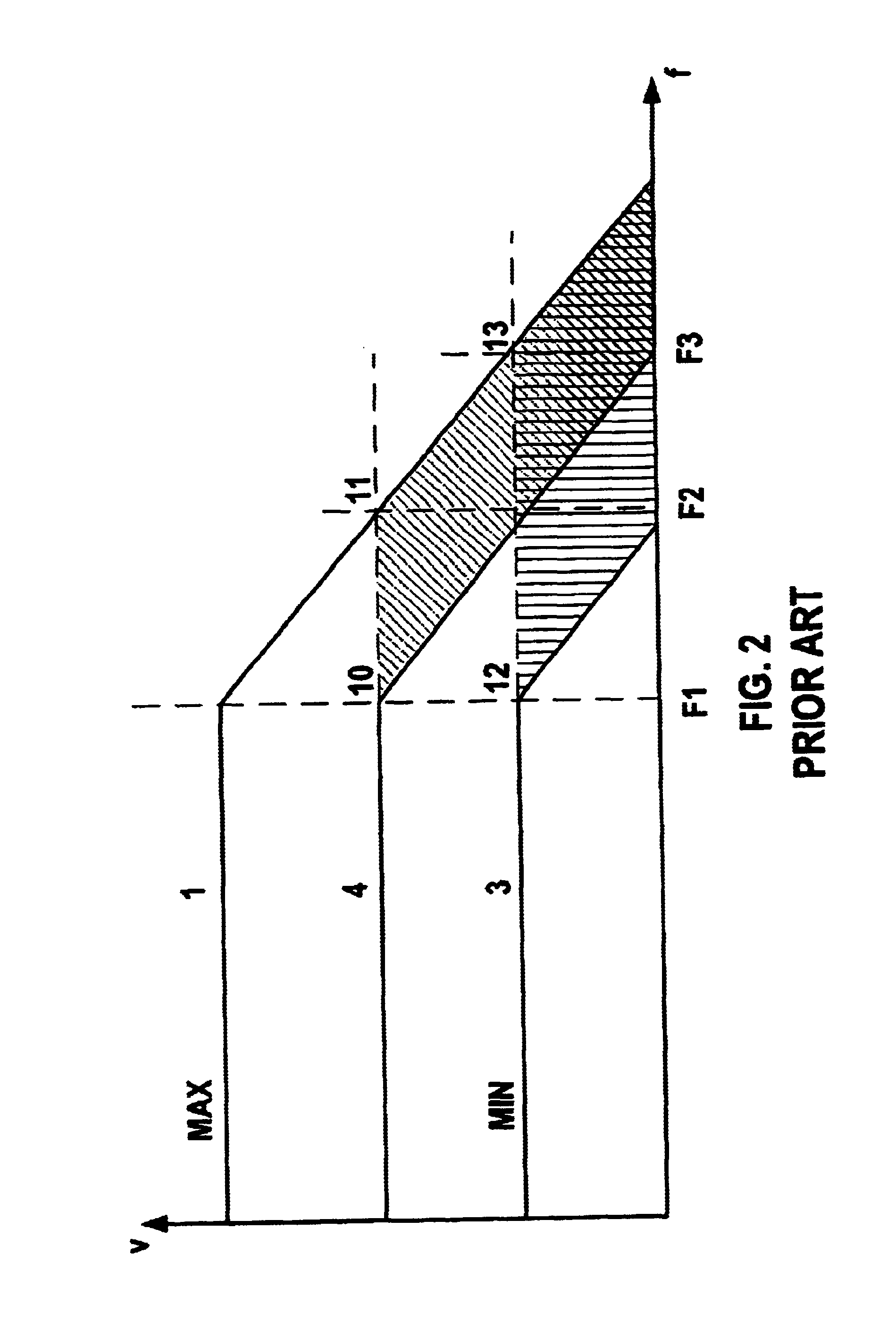
[0032]FIG. 2 shows the amplification V over the frequency f for different potentiometer settings of the amplifier circuit according to FIG. 1. The characteristic 1 shows the amplification V over the frequency f at the maximum volume setting at which the resistance of the potentiometer R2 is at its highest value. The amplification is constant up to a limit frequency F1; the amplification decreases linearly with increasing...
PUM
 Login to View More
 Abstract
Description
Claims
Application Information
 Login to View More