
Dual-mode contour-following mop
- Summary
- Abstract
- Description
- Claims
- Application Information
AI Technical Summary
Benefits of technology
Problems solved by technology
Method used
Image

Examples
Embodiment Construction
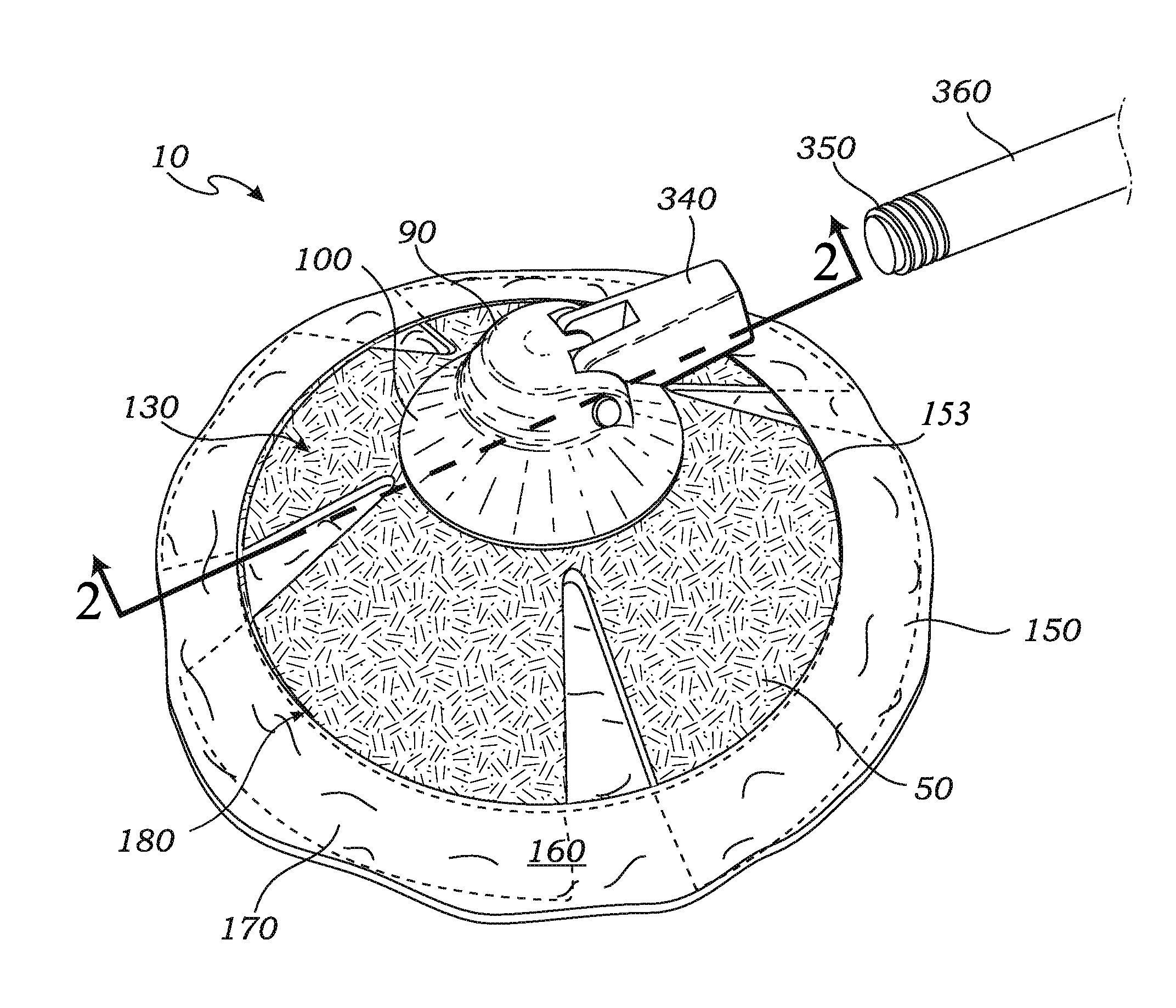
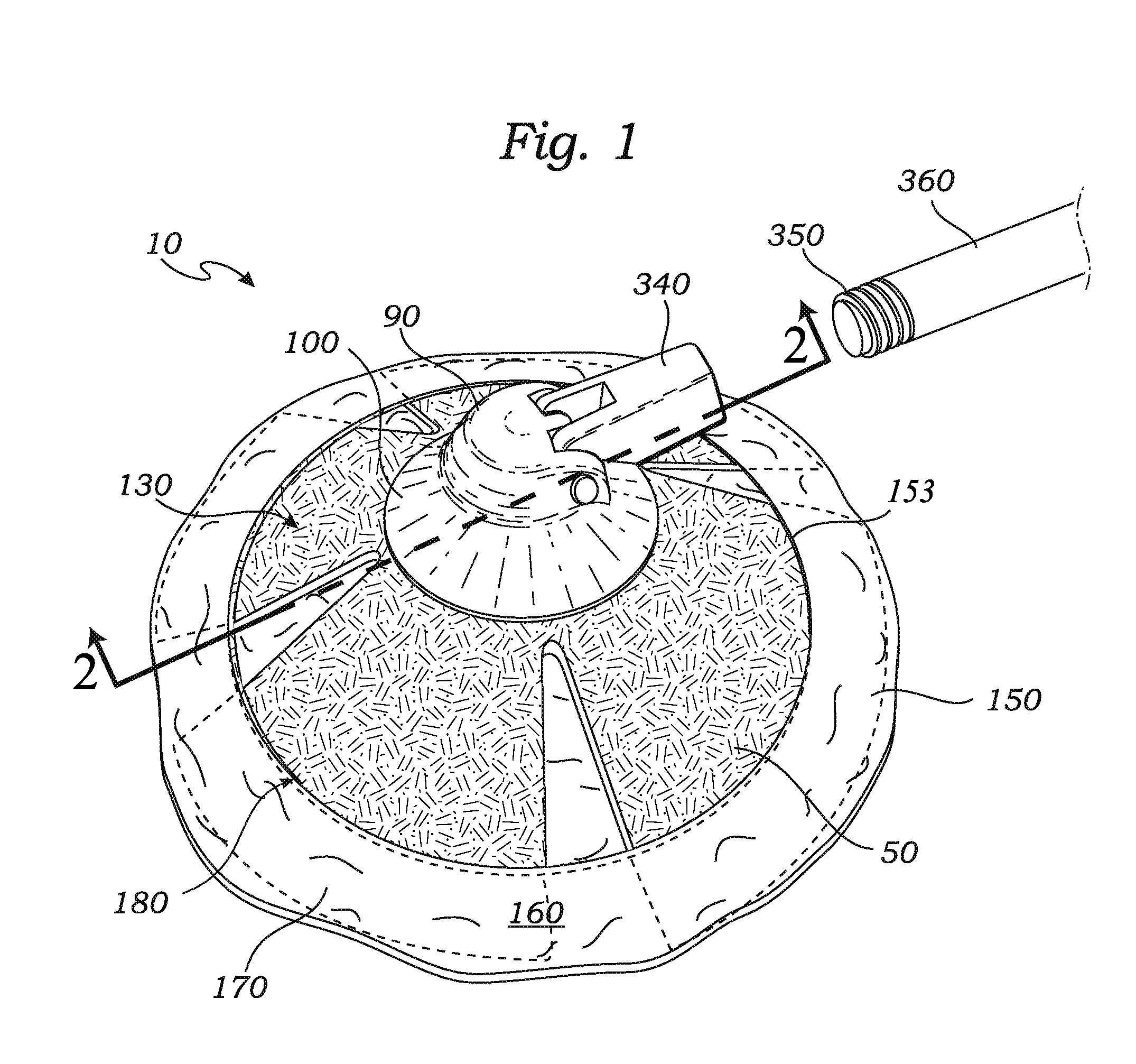
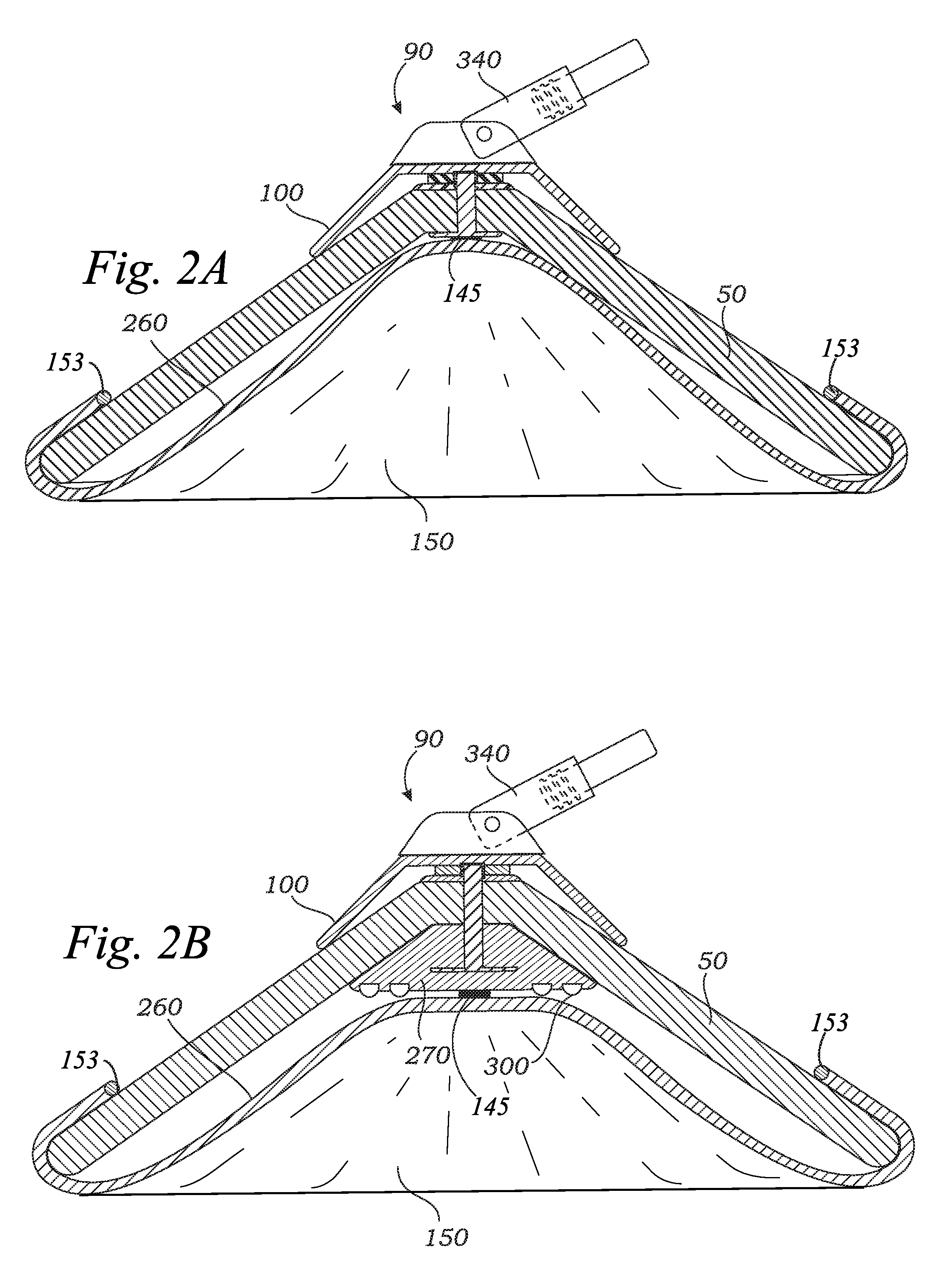
[0028]FIGS. 1 and 3 illustrate a scrubbing implement 10 for cleaning a surface 20. The scrubbing implement 10 includes a resilient base 30 that includes a plurality of resilient fingers 50, each of which are joined at a proximal end 60 to a hub 40 and extend radially away therefrom. Each finger 50 includes a distal end 70 opposite the proximal end 60. Preferably the hub 40 further includes a central aperture 80 therethrough. The resilient base 30 is preferably made from a resilient foam material such as EVA, or the like.
[0029]A rigid cap 90 comprises an inside upper end 120 and a wider open lower end 125. A frusta-conical side portion 100 is fixed at a top end 110 thereof to the upper end 120 of the cap 90. The upper end 120 preferably includes a central aperture 130 at least partially therethrough. The cap 90 preferably includes a handle receiving means 340 pivotally fixed to the cap 90 for receiving preferably a threaded end 350 of an elongated handle 360 (FIGS. 1 and 6), but may ...
PUM
| Property | Measurement | Unit |
|---|---|---|
| Flexibility | aaaaa | aaaaa |
| Shape | aaaaa | aaaaa |
Abstract
Description
Claims
Application Information
 Login to View More