
Electrochemical device
a technology of electrochemical devices and electrodes, which is applied in the field of electrochemical devices, can solve the problems of difficult to achieve excellent charging/discharging characteristics and increase internal resistance, and achieve the effects of convenient deformation, favorable electrical contact, and improved charging/discharging characteristics
- Summary
- Abstract
- Description
- Claims
- Application Information
AI Technical Summary
Benefits of technology
Problems solved by technology
Method used
Image

Examples
example 1
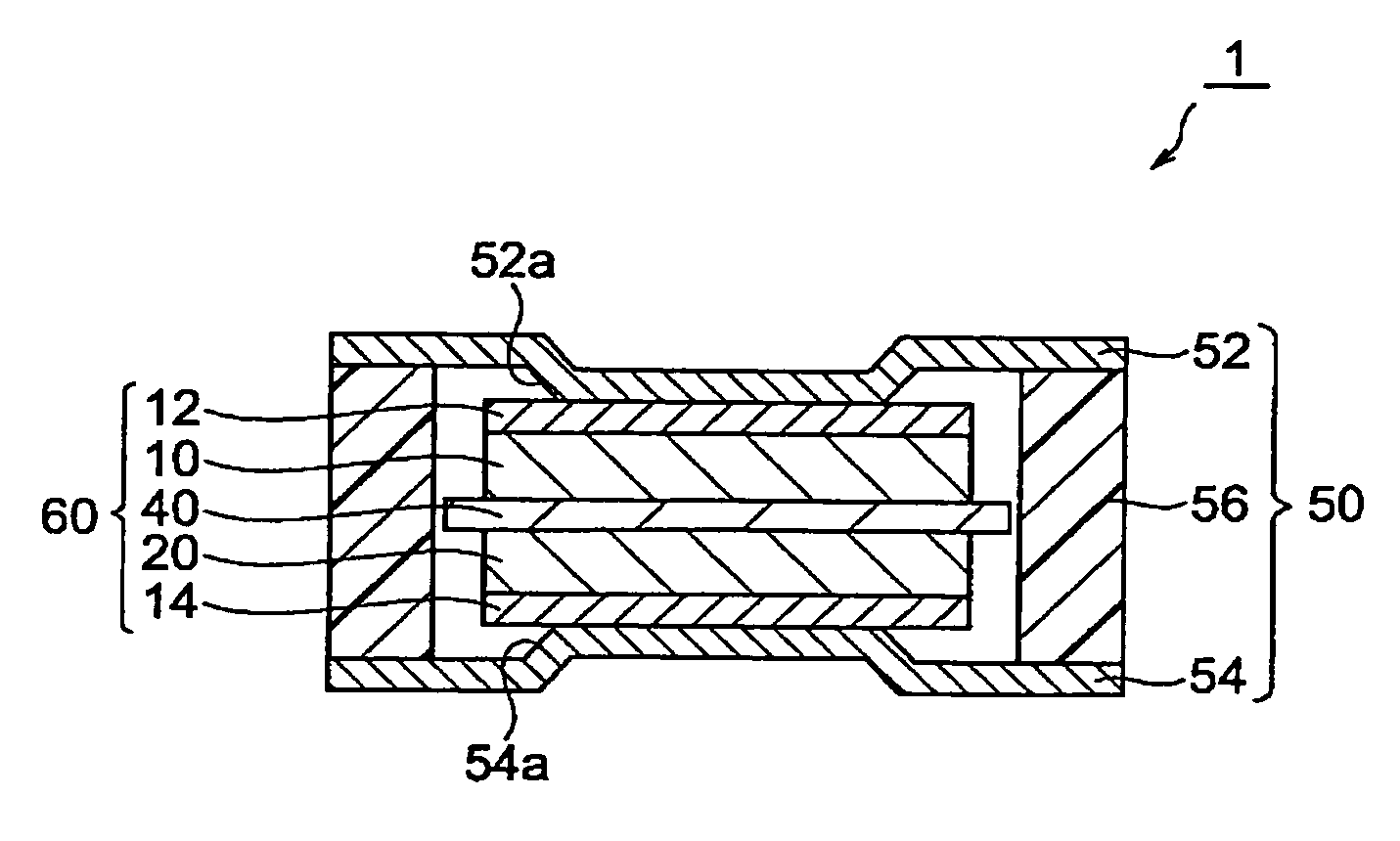
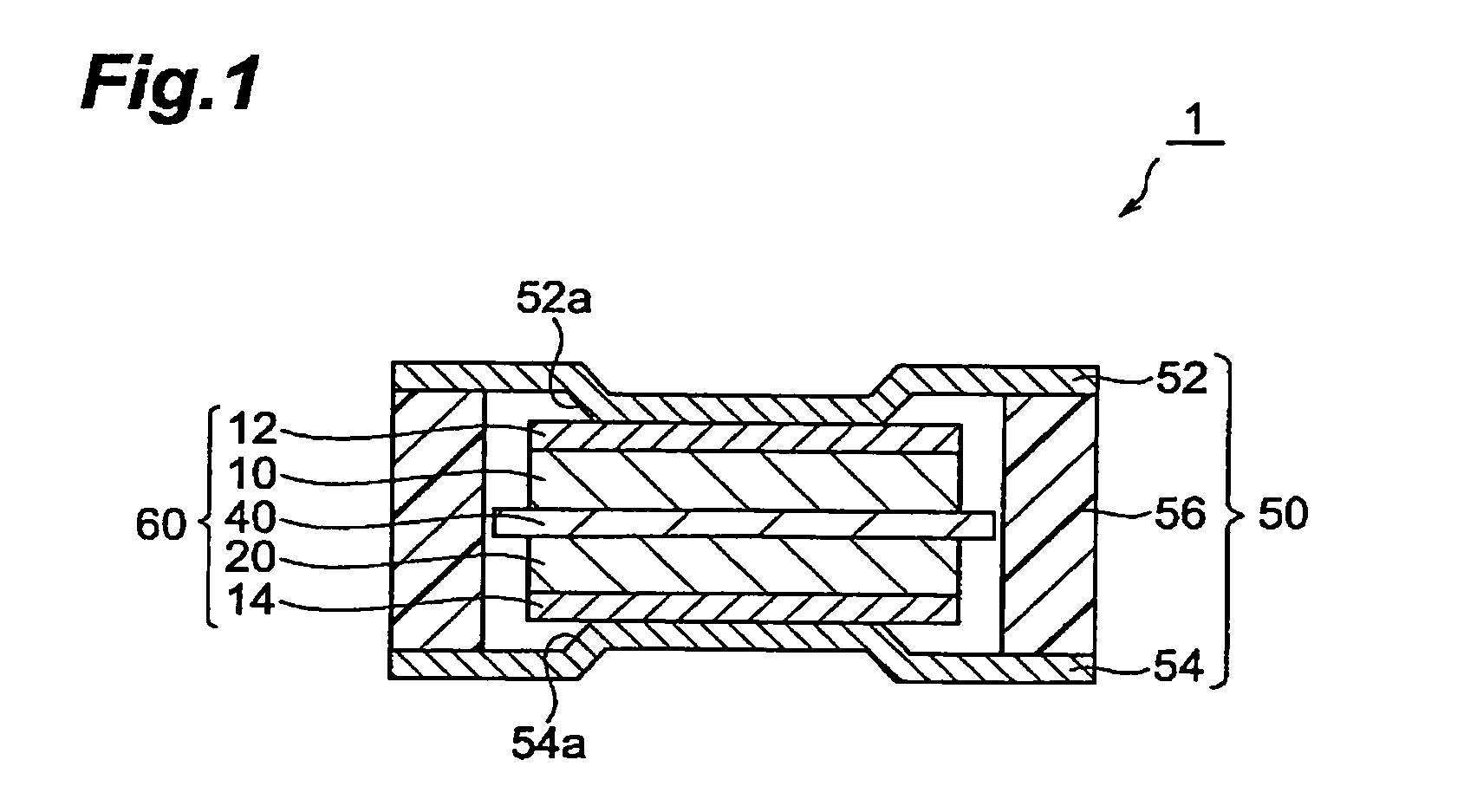
[0094]In the following procedure, an electric double layer capacitor having the same configuration as with the electric double layer capacitor 1 shown in FIG. 1 was made.
[0095](1) Making of Matrix
[0096]The anode (first electrode) and cathode (second electrode) were made by the following procedure. First, the activated carbon material (activated carbon), a thermoplastic resin (fluorine rubber) to become a binder, and a conductive auxiliary agent (carbon black) were compounded such that their mass ratios became carbon material / conductive auxiliary agent / binder=8:1:1, and the resulting mixture was put into MIBK (methylisobutylketone), which was a solvent, and mixed therewith, so as to prepare a coating liquid for forming an electrode (hereinafter referred to as “coating liquid L1”).
[0097]Subsequently, this coating liquid L1 was uniformly applied to one surface of a collector (having a thickness of 20 μm) made of an aluminum foil. Thereafter, MIBK was eliminated from the coating film by...
PUM
| Property | Measurement | Unit |
|---|---|---|
| size | aaaaa | aaaaa |
| size | aaaaa | aaaaa |
| temperature | aaaaa | aaaaa |
Abstract
Description
Claims
Application Information
 Login to View More