
Modulation of an innate immune response by altering TRIAL-R signaling
a technology of trial-r signaling and innate immune response, which is applied in the introduction of vector-based foreign material, antibody medical ingredients, peptide/protein ingredients, etc., can solve the problems of increasing susceptibility, and achieve the effect of inhibiting the responsiveness of cells, increasing or decreasing the activity of these cells
- Summary
- Abstract
- Description
- Claims
- Application Information
AI Technical Summary
Benefits of technology
Problems solved by technology
Method used
Image

Examples
example 1
Generation of TRAIL-R− / − Mice.
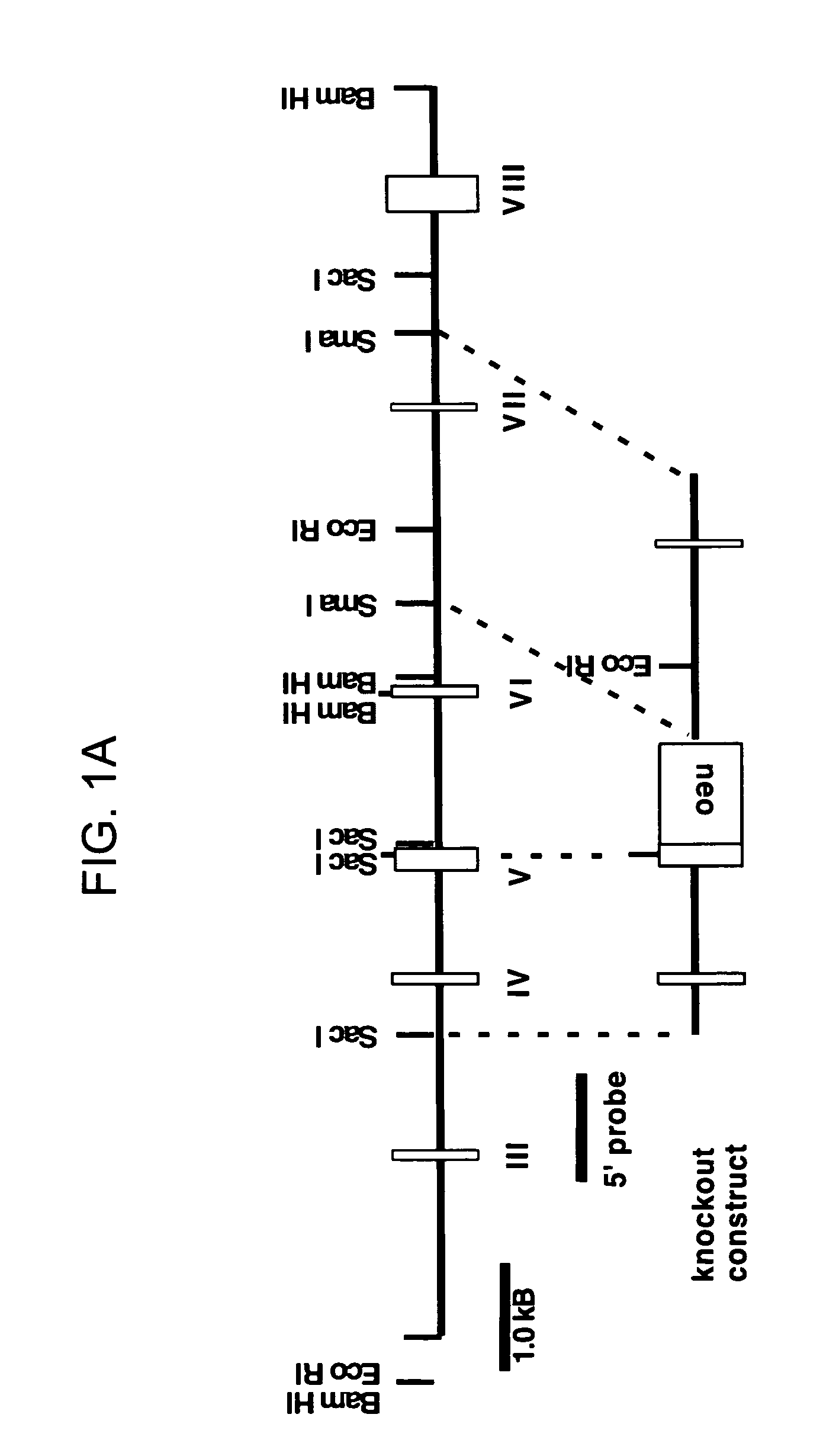
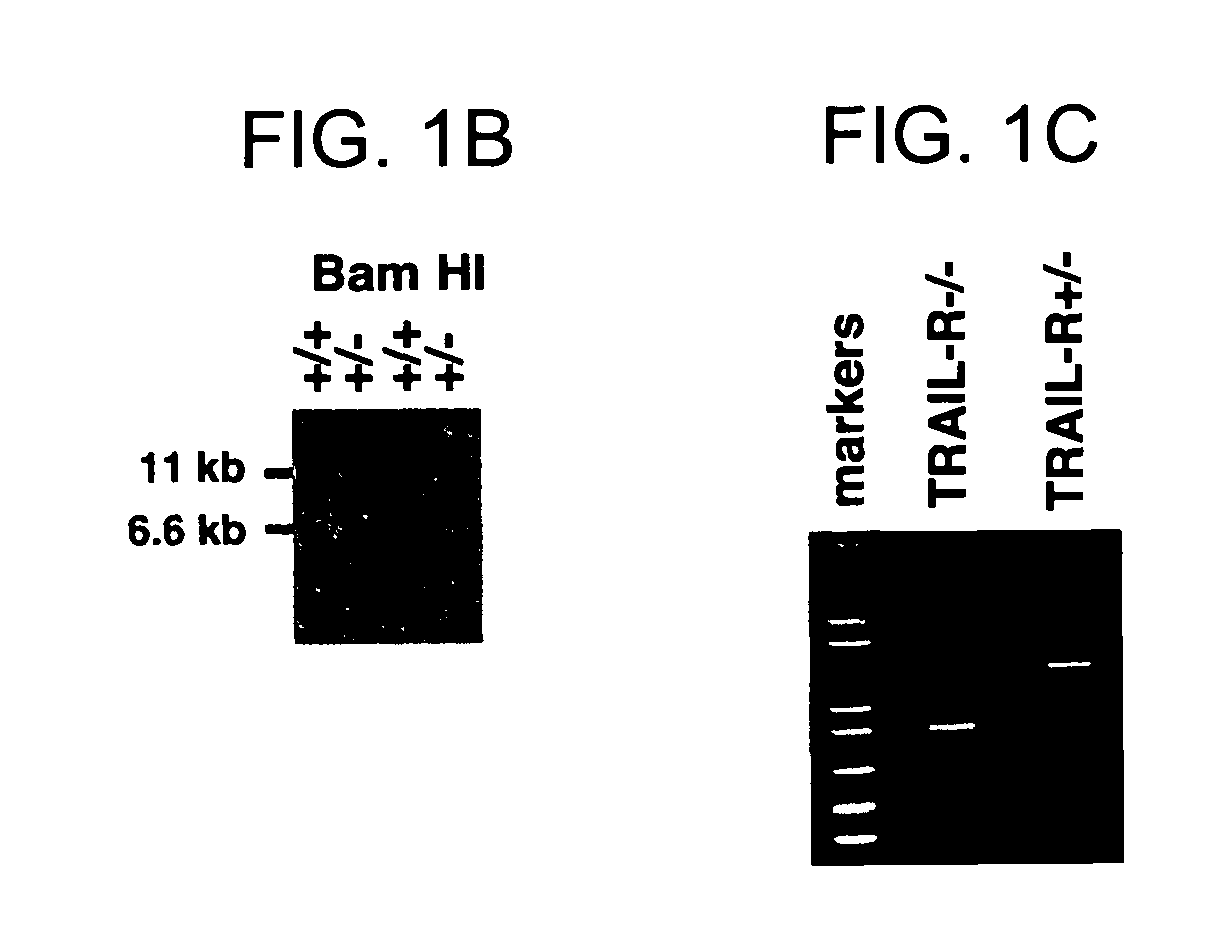
[0085]To assess the normal physiological function of the TRAIL receptor, TRAIL-R− / − mice were generated. The knockout construct replaced a portion of exon 5 (containing the transmembrane domain) and exon 6 with a neomycin gene cassette (FIG. 1a). Embryonic stem cells containing the desired homologous recombination were identified by Southern blot analysis using 5′ and 3′ probes and used to generate TRAIL-R heterozygous mice (FIG. 1b). TRAIL-R+ / − mice were crossed to C57BL / 6 for several generations and subsequently inter-crossed to produce homozygous animals. TRAIL-R− / − mice were born at the expected Mendelian ratios and showed no gross developmental abnormalities.
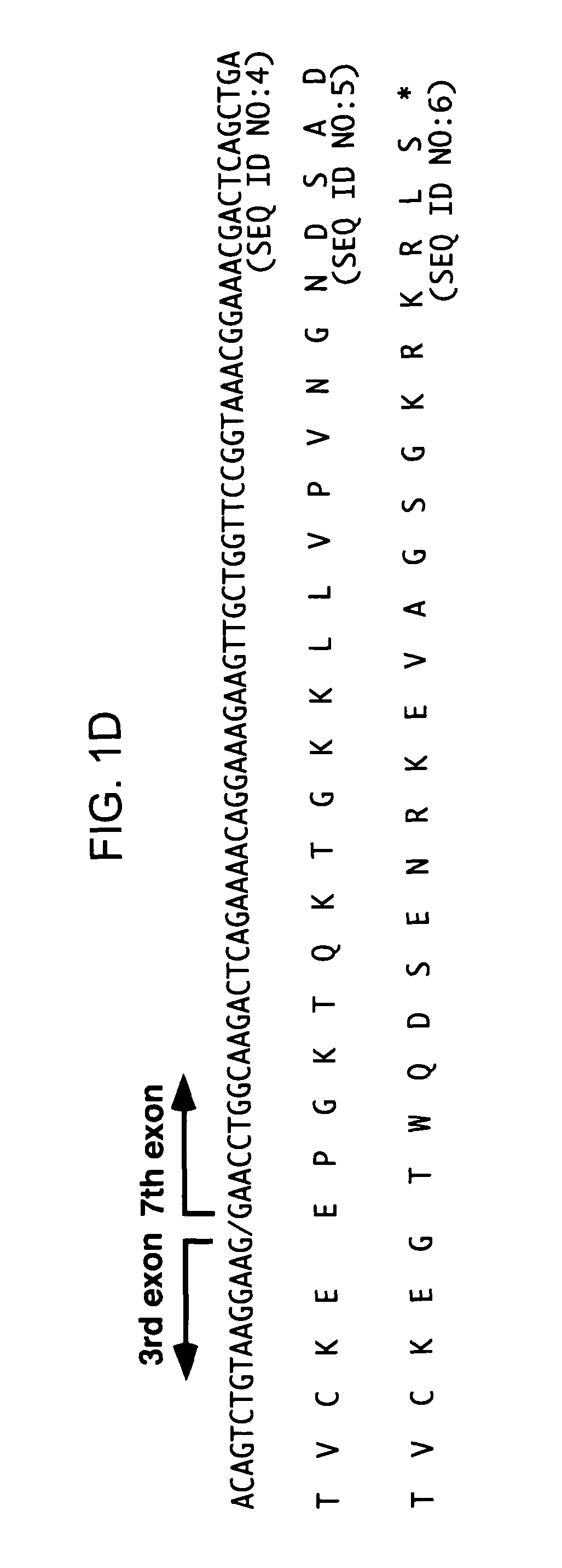
[0086]RT-PCR analysis was performed to determine if the TRAIL-R was indeed absent in TRAIL-R− / − mice. Direct protein analysis was not possible because none of the commercially available antibodies for human DR4 or DR5 cross-reacts with the mouse TRAIL-R protein. Furthermore, a rabbit polyclonal...
PUM
| Property | Measurement | Unit |
|---|---|---|
| weight | aaaaa | aaaaa |
| internal diameter | aaaaa | aaaaa |
| temperature | aaaaa | aaaaa |
Abstract
Description
Claims
Application Information
 Login to View More