
Non-aqueous pigment ink
A non-aqueous, non-aqueous resin technology, applied in the direction of ink, copying/marking methods, applications, etc., can solve the problems of easy occurrence of print through, low printing density, etc., achieve reduction of print through, improve storage stability, improve spray the effect of stability
Patent Information
- Authority / Receiving Office
- CN · China
- Patent Type
- Patents(China)
- Current Assignee / Owner
- Publication Date
- 2013-09-25
Smart Images
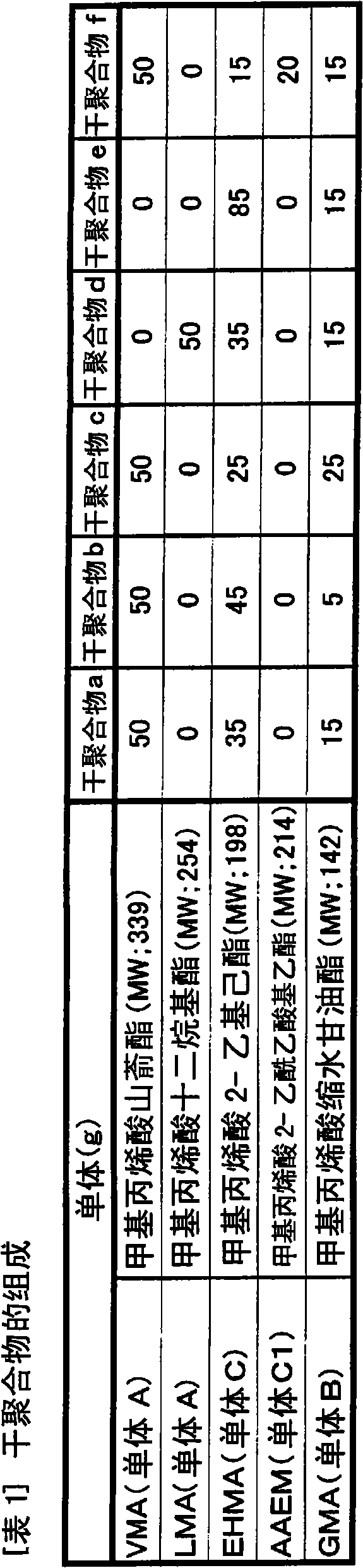
Figure 1 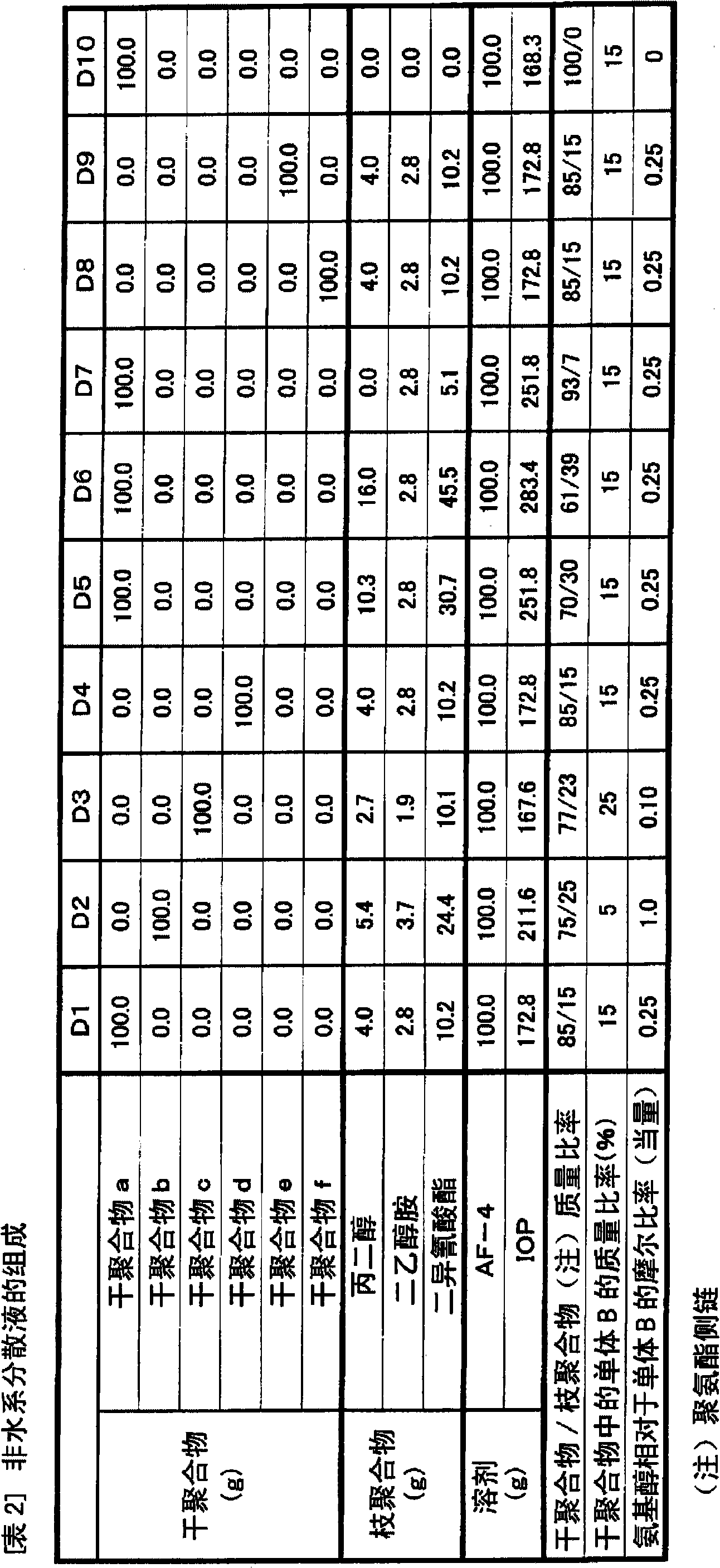
Figure 2 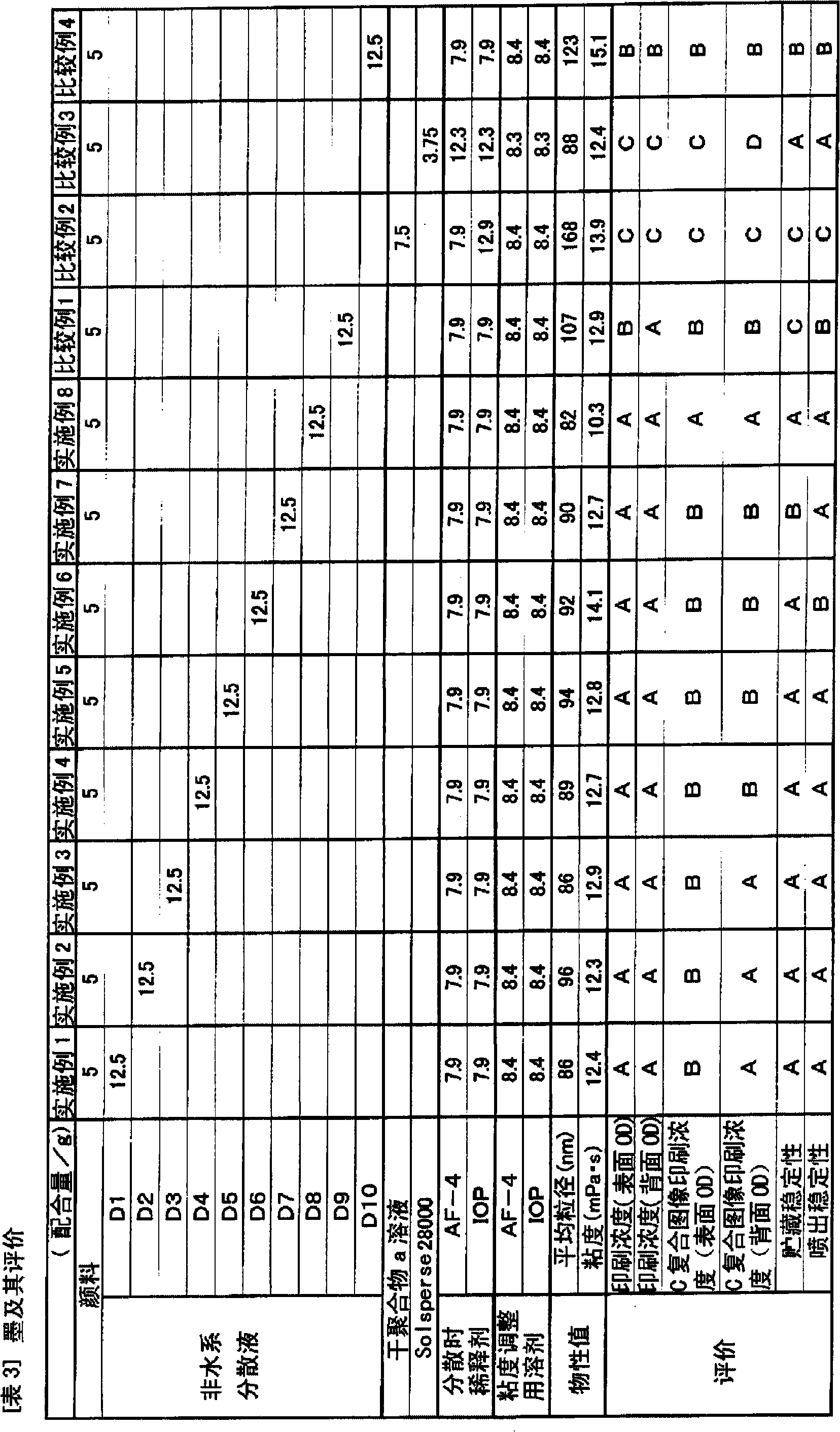
Figure 3
Abstract
Description
technical field
[0001] The present invention relates to a non-aqueous pigment ink, in particular to a non-aqueous pigment ink suitable for use in an inkjet recording system. Background technique
[0002] The coloring material of the ink used in the inkjet recording system is roughly divided into the coloring material using the pigment and the coloring material using the dye. The ink using the pigment as the coloring material is excellent in light resistance, weather resistance and water resistance required for high-quality printing. , so there is an increasing trend.
[0003] From the viewpoint of solvents, inks are broadly classified into aqueous type inks and non-aqueous type inks. Compared with water-based inks, non-aqueous inks that do not use water as an ink solvent, such as solvent-based inks based on volatile solvents and oil-based inks based on non-volatile solvents, have good drying properties and printability. Also excellent.
[0004] In non-aqueous type inks, a...
Examples
Embodiment 1
[0093] (1) Synthesis of copolymers (dry polymers a to f)
[0094] 75 g of AF-4 (a naphthene-based solvent; manufactured by Nippon Oil Corporation) was placed in a 300 ml four-neck flask, and the temperature was raised to 110° C. while blowing nitrogen gas and stirring. Then, the temperature was kept at 110° C., and 16.7 g of AF-4, 2 g of Perbutyl O (2-ethyl tert-butyl peroxyhexanoate; Japan Co., Ltd.) mixture. Then, the temperature was kept at 110° C., and 0.2 g of Perbutyl O were added after 1 hour and 2 hours each. Furthermore, aging was carried out at 110° C. for 1 hour and diluted with 10.6 g of AF-4 to obtain colorless and transparent dry polymer a to f solutions with a non-volatile content of 50%.
[0095] The mass average molecular weight (GPC method, standard polystyrene conversion) of each obtained dry polymer was 20,000 to 23,000.
[0096] [Table 1]
[0097]
[0098] Details of the monomers used are shown below.
[0099] Monomer (A): VMA (the carbon number o...
Embodiment 2~8、 comparative example 1~4
[0128] According to the formulation shown in Table 3, the inks of the respective examples and comparative examples were obtained in the same manner as in Example 1 above.
[0129] In Comparative Examples 2 and 3, a dry polymer a solution (50% solid content) and Solsperse 28000 (manufactured by The Lubrizol Corporation, 100% solid content) were used instead of the non-aqueous dispersion liquid, respectively.
[0130] [table 3]
[0131]
[0132] All of the obtained inks had a viscosity and a pigment particle diameter within an appropriate range for inkjet inks. The particle size of the ink was measured with a dynamic light scattering particle size distribution device LB-500 manufactured by Horiba Seisakusho. The viscosity of the ink is the viscosity when the shear stress is increased from 0 Pa to 10 Pa at a rate of 0.1 Pa / s at 23°C. The stress-controlled rheometer RS75 (cone angle 1°, diameter 60mm) manufactured by HAAKE Co., Ltd. To measure.
[0133]
[0134] Each ink ...