
Method for improving content of fatty acid in synechocystis PCC6803
A technology of PCC6803 and Synechocystis, which is applied in the field of plant genetic engineering, can solve problems such as the lack of thioesterase gene function research, and achieve the effects of strong low temperature tolerance, enhanced biomass, and increased total fatty acid content
Patent Information
- Authority / Receiving Office
- CN · China
- Patent Type
- Patents(China)
- Current Assignee / Owner
- Publication Date
- 2014-04-30
- Estimated Expiration
- Not applicable · inactive patent
Smart Images
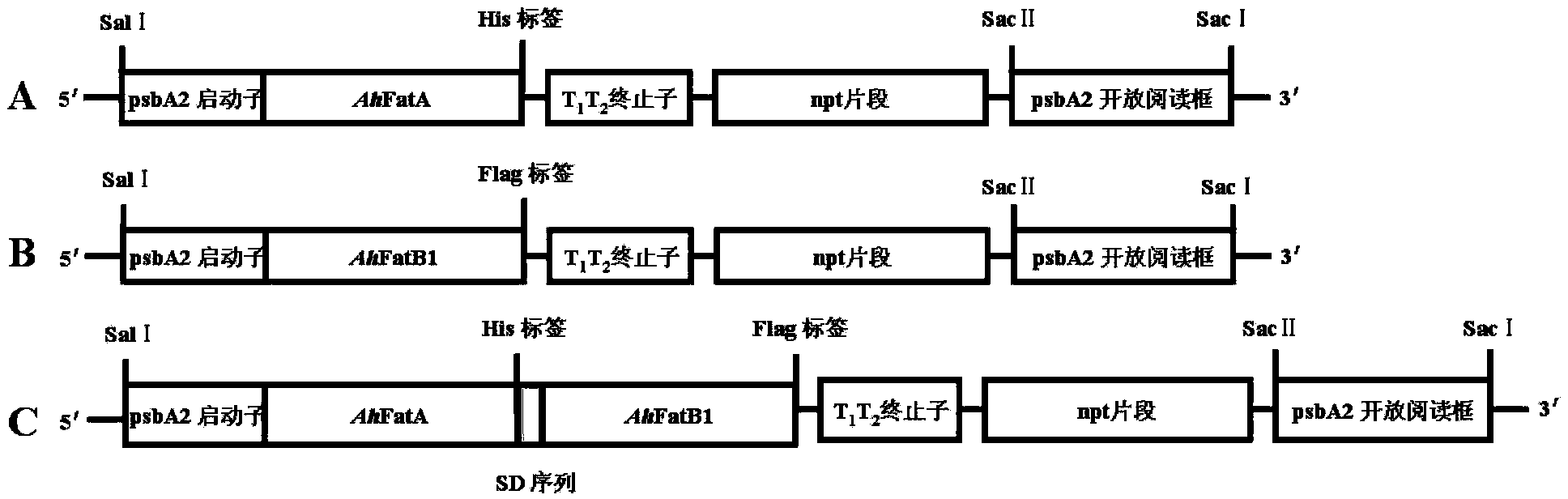
Figure 1 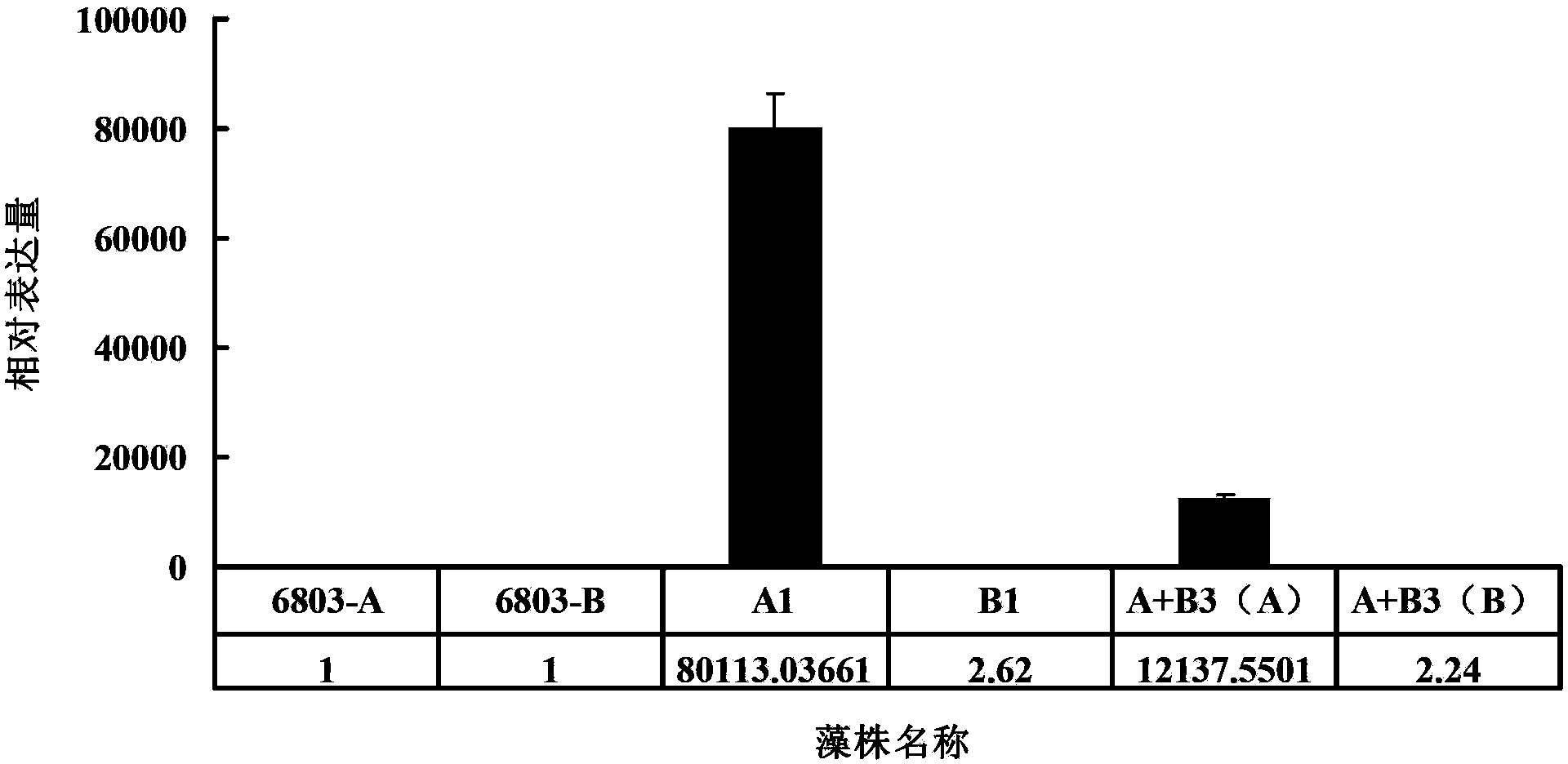
Figure 2 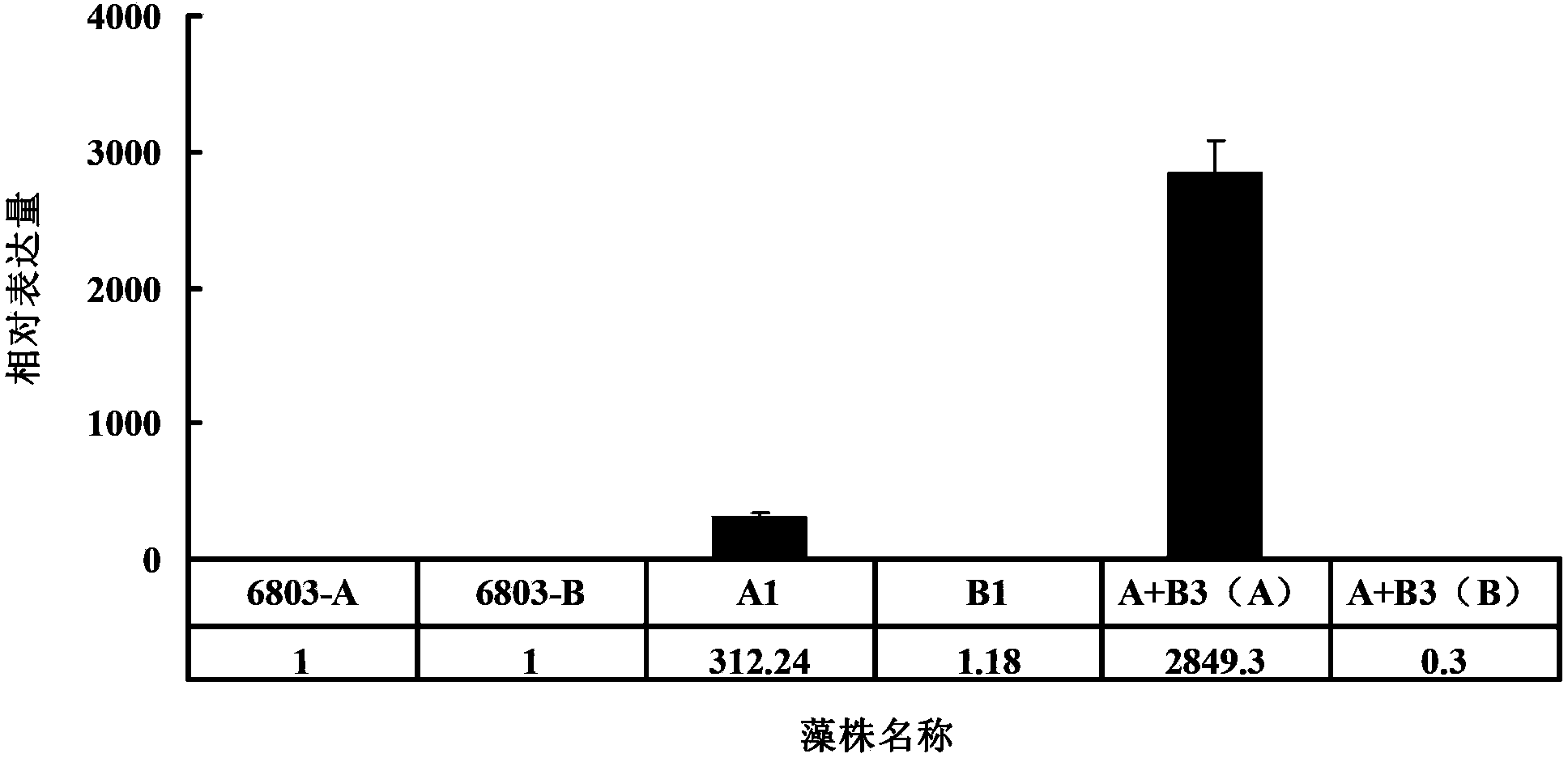
Figure 3
Abstract
Description
technical field
[0001] The invention relates to a method for increasing the fatty acid content of Synechocystis sp. PCC6803, which belongs to the technical field of plant genetic engineering. Background technique
[0002] Polyunsaturated fatty acids (PUFAs) refer to straight-chain fatty acids with more than two double bonds and 16-22 carbon atoms. It is one of the important components of higher animal and plant cells and has important physiological functions for the human body. It plays an important role in the fields of nutrition and medicine. At present, the main source of polyunsaturated fatty acids on the market is deep-sea fish, but PUFA extracted from fish has a strong fishy smell, and fish oil resources are limited, expensive, and there are potential pollution problems. The decline in the number of fish affects the diversification of marine life and causes damage to coastal ecosystems, thereby affecting ecological sustainable development.
[0003] Cyanobacteria (cy...
Examples
Embodiment 1
[0065] The cDNA fragments of peanut thioesterase gene AhFatA, peanut thioesterase gene AhFatB1, fusion gene AhFatA+AhFatB1 and homologous recombination fragment psbA2ORF cDNA fragments used to construct the expression vector of Synechocystis sp. PCC6803 were isolated and cloned.
[0066] Cloning of Synechocystis sp. PCC6803psbA2ORF gene fragment:
[0067] Primers were designed according to the psbA2ORF cDNA sequence in Synchocystis sp. PCC6803 (accession number: BA000022, AP012205, sequence shown in SEQ ID NO.7, Synchocystis sp. PCC6803) registered in GenBank:
[0068] psbA2-F: 5'-CTTGCGGCCGCCATATGCCGCGGATGACAACGACTTCTCCAAC-3',
[0069] psbA2-R: 5'AGTGAGCTCTTAACCGTTGACAGCAGG-3',
[0070] The amplification program was as follows: pre-denaturation at 94°C for 5 min; denaturation at 94°C for 30 s, renaturation at 58°C for 30 s, extension at 72°C for 1 min, after 35 cycles; extension at 72°C for 10 min, and storage at 4°C.
[0071] After the PCR reaction, the gel was recovered b...
Embodiment 2
[0100] Construction and Transformation of the Expression Vector of Synechocystis sp. PCC6803
[0101] In order to better study the function of the peanut sulfatase gene, the inventors made the peanut sulfatase gene AhFatA and AhFatB1 expressed in Synechocystis sp. PCC6803 by overexpression technology. Function of the peanut sulfatase gene.
[0102] Preparation of plasmid pBluscript SK plus T1T2:
[0103] Amplify the plasmid pKK233-2 of the E. coli T1T2 terminator, introduce a PstI restriction site at its 5' end, and introduce a BamHI restriction site at its 3' end. The primers used are:
[0104] T1T2-F: 5'-ATACTGCAGCCAAGCTTGGCTGTTTTGGC-3';
[0105] T1T2-R: 5'-TTAGGATCCCCCATTATTGAAGCATTTAT-3';
[0106] The amplification program was as follows: pre-denaturation at 94°C for 5 min, denaturation at 94°C for 30 s, renaturation at 60°C for 30 s, extension at 72°C for 1 min, after 35 cycles, 10 min at 72°C, and storage at 4°C. The obtained fragment was double digested with PstI an...
Embodiment 3
[0114] Detection of the expression levels of peanut sulfatase gene AhFatA, peanut sulfatase gene AhFatB1 and AhFatA+AhFatB1 in transgenic Synechocystis positive plants
[0115] Total RNA was extracted from transgenic Synechocystis sp. PCC6803 containing expression vectors pSDFatA, pSDFatB1, pSDFatA+FatB1 and wild type Synechocystis sp. PCC6803 for Real time quantitative PCR analysis.
[0116] The specific operation steps are as follows: Take 50ml of cyanobacteria with OD=1.8, centrifuge at 5000rpm at 4°C for 10min to collect the algae cells, grind them in liquid nitrogen until they are fine powder, add them to a 1.5ml centrifuge tube, quickly add 1ml TRIZOL (Invitrogen), mix by inversion Evenly, let stand at room temperature for 5 minutes, centrifuge at 11900rpm at 4°C for 10min, take the supernatant into a new 1.5ml centrifuge tube, add 200μl chloroform, shake vigorously by hand for 15s, let stand for 3-5min, centrifuge at 11900rpm at 4°C 10-15min. Take the supernatant into ...