
Genetic engineering expression and preparation methods of cecropin LL-37 and application thereof
A LL-37, genetic engineering technology, applied in the field of genetic engineering, can solve the problems of unmentioned yield, complicated cutting process, difficult recovery and purification, etc., and achieve the effects of low sterilization concentration MIC, good sterilization effect and cost reduction.
Patent Information
- Authority / Receiving Office
- CN · China
- Patent Type
- Applications(China)
- Current Assignee / Owner
- Publication Date
- 2013-10-23
- Estimated Expiration
- Not applicable · inactive patent
Smart Images
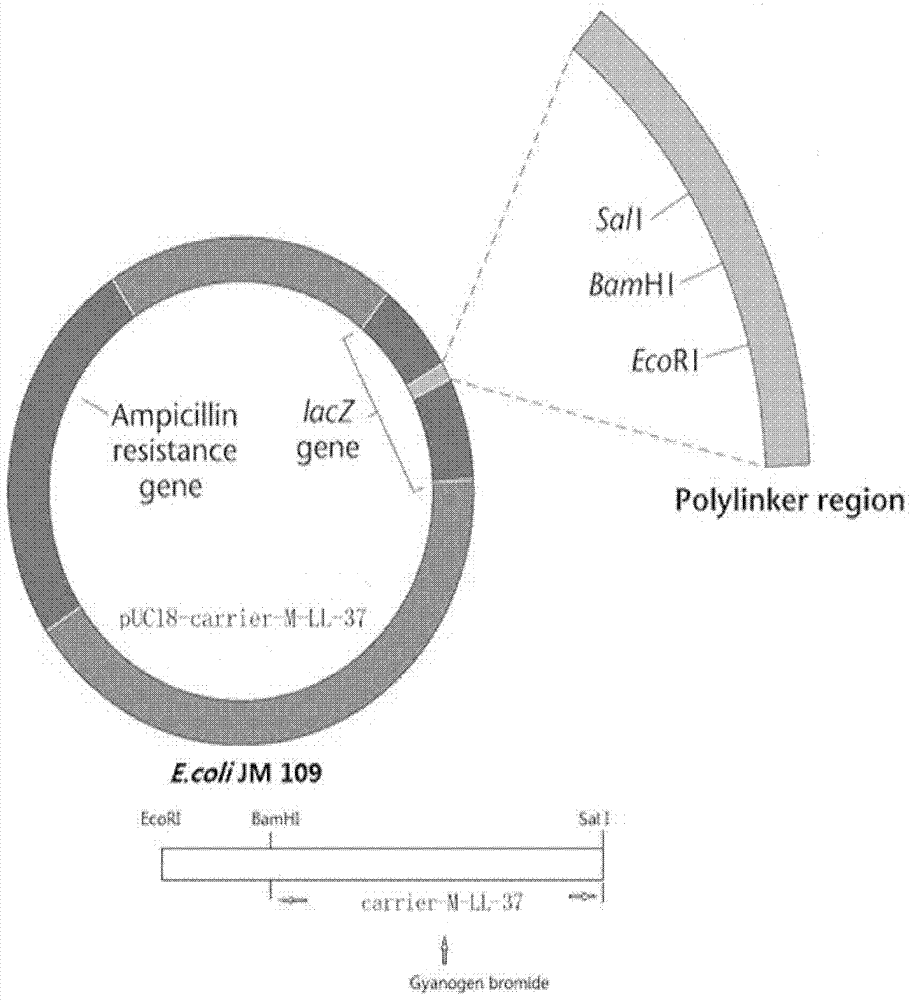
Figure 1 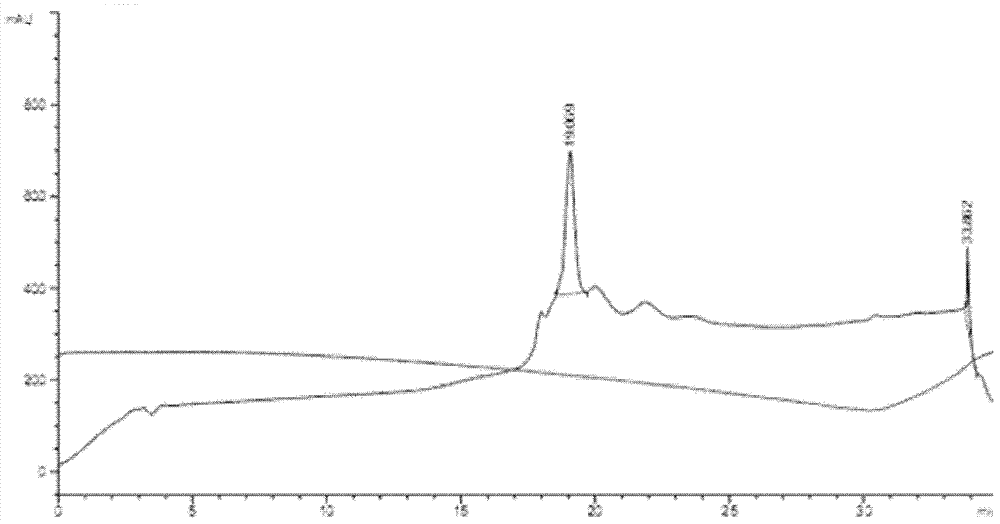
Figure 2 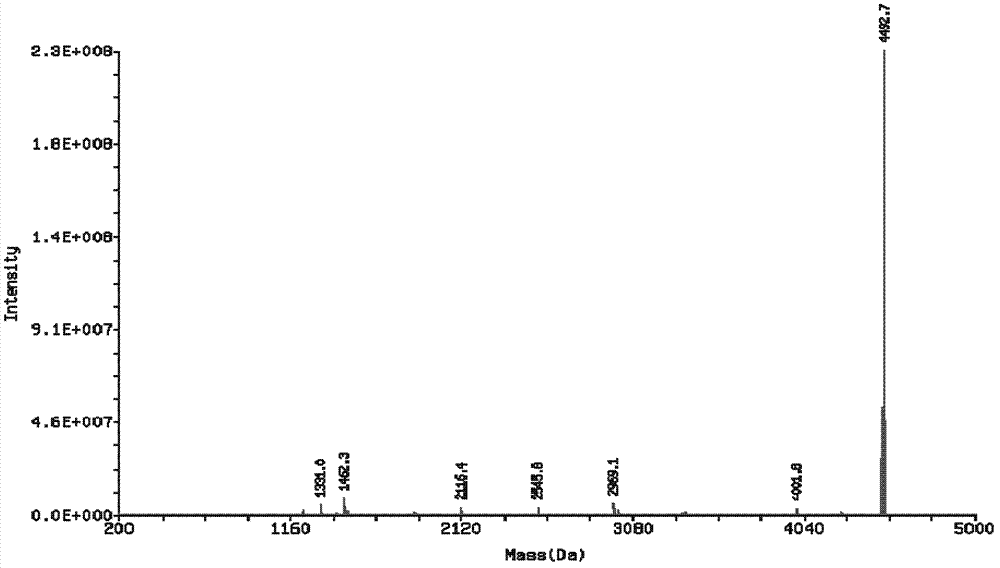
Figure 3
Abstract
Description
technical field
[0001] The invention belongs to the technical field of genetic engineering, and in particular relates to a gene engineering expression method of cecropin LL-37, a preparation method thereof and an application of cecropin LL-37 in skin infection. Background technique
[0002] Since Austrian scientists first reported it in 1909, and German scientists were the first to apply the synthetic sulfa drug Prontosil in 1932, the research and development of antibacterial drugs has occupied an important position in the entire field of drug research and development, and the struggle between humans and pathogens once had the upper hand . However, with the widespread use of antibiotics, the abuse of antibiotics, the accompanying bacterial resistance, and the side effects of antibiotics have gradually become serious problems for human beings. The high frequency of multidrug-resistant bacteria (multiple drug-resistant, MDR), extremely drug-resistant bacteria (extensively dru...
Examples
Embodiment 1
[0039] According to the amino acid sequence of LL-37, a DNA gene fragment is designed and synthesized, and the genetically engineered bacterium is a genetically engineered bacterium (E. Coli.). For the carrier of synthetic genetically engineered bacteria (LL-37), the present embodiment amplifies and connects the codon containing Met-LL-37 by conventional PCR method, and clones it into the Lac plasmid, and the enzyme cutting sites are BamH I and SalI, The fusion protein gene is formed, the expression plasmid is constructed, and the positive recombinant plasmid is confirmed by PCR. The positive recombinant plasmid was transfected into Escherichia coli E.Coli.JM109 to construct LL-37 genetically engineered bacteria. see figure 1 .
[0040] The single-stranded DNA structure SEQ ID in the expression vector of LL-37 genetically engineered bacteria:
[0041] -CTG-CTG-GGT-GAT-TTC-TTC-CGT-AAA-AGC-AAA-GAA-AAA-ATC-GGT-AAA-GAA-TTC-AAA-CGT-ATC-GTT-CAG-CGT-ATC-AAA - GAT-TTC-CTG-CGT-AAC-...
Embodiment 2
[0058] 1: Construction of expression plasmids
[0059] The genetically engineered bacterium is a genetically engineered bacterium (LL-37).
[0060] In order to synthesize the carrier of genetically engineered bacteria (LL-37), we amplified and joined the codons containing Met-LL-37 by conventional PCR method, and cloned it into the Lac (pUC18) plasmid, and the restriction sites were BamH I and Sal 1, form the fusion protein gene, construct the plasmid, and confirm the positive recombinant plasmid with the method of PCR. The positive recombinant plasmid was transfected into Escherichia coli E.Coli.JM19 to construct genetically engineered bacteria.
[0061] 2: fermentation
[0062] 250ml of seed culture solution (1000ml of seed culture solution contains 10g of peptone, 5g of yeast extract, 20ml of 0.02mol / L phosphate buffer, pH7.0) in a 1000ml Erlenmeyer flask, sterilized at 120°C for 20 minutes, cooled and then added 20% glucose solution 5ml. Add 1ml of the strain stored in...