
Chemical structures of 11 novel phenolic acid compounds with clinical urinary system drug-resistant bacteria resistant activity and application thereof
A technology of chemical structure and drug-resistant bacteria, applied in the fields of organic chemistry, urinary system diseases, organic active ingredients, etc., can solve the problem of unknown active ingredients, etc., and achieve the effect of strong activity and less toxic and side effects
Patent Information
- Authority / Receiving Office
- CN · China
- Current Assignee / Owner
- Publication Date
- 2014-05-21
- Estimated Expiration
- Not applicable · inactive patent
Smart Images
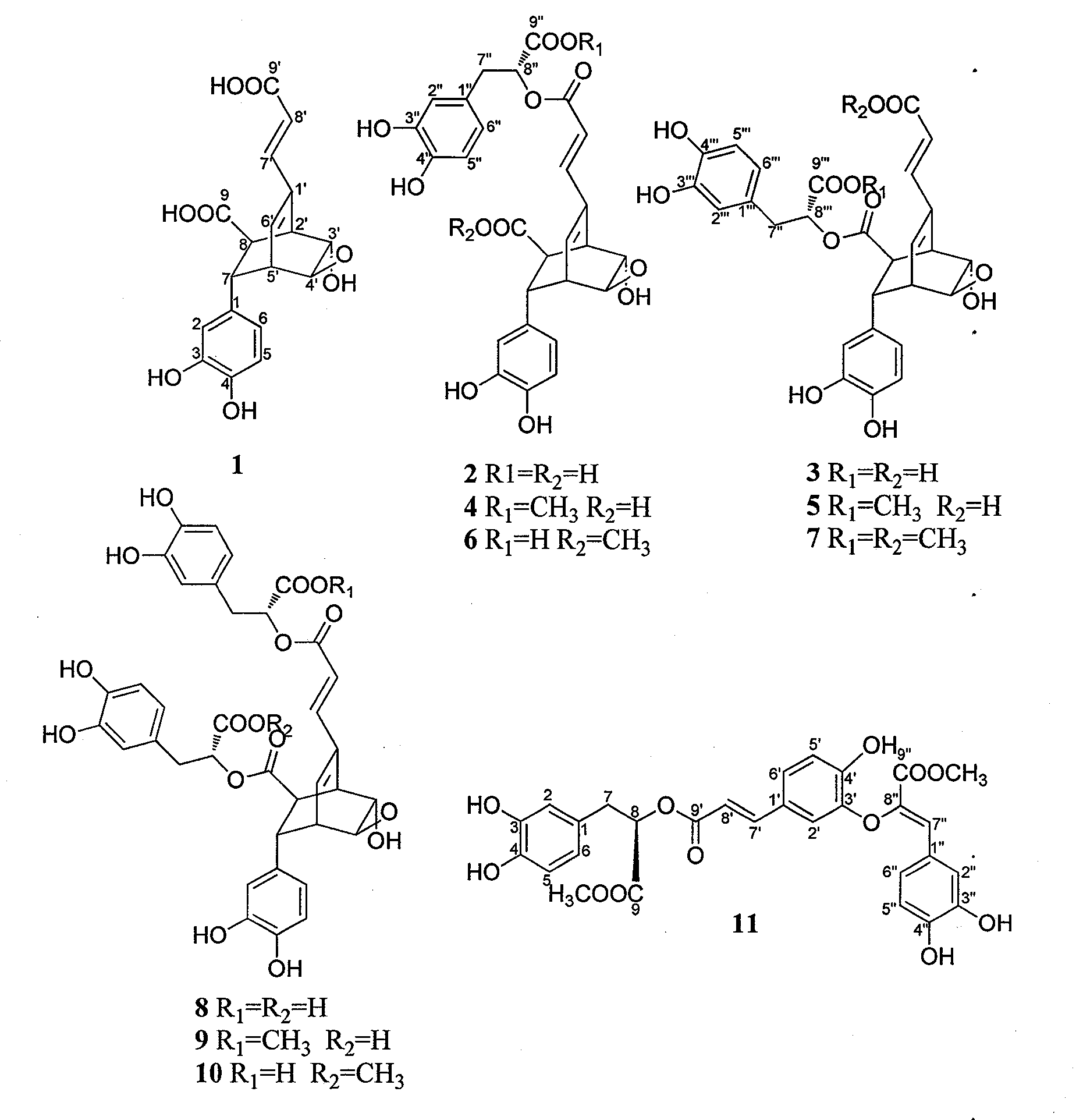
Figure 1 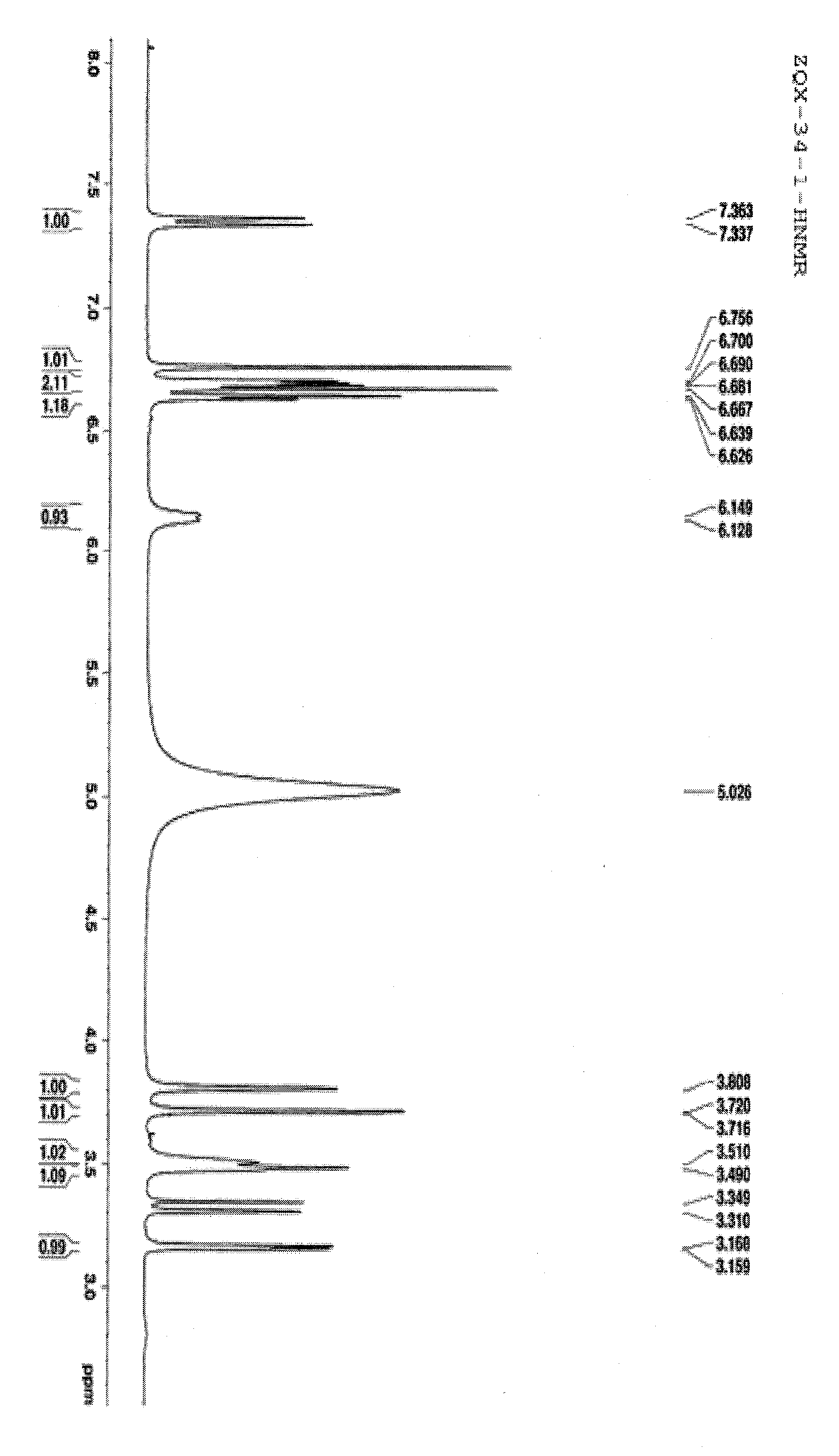
Figure 2 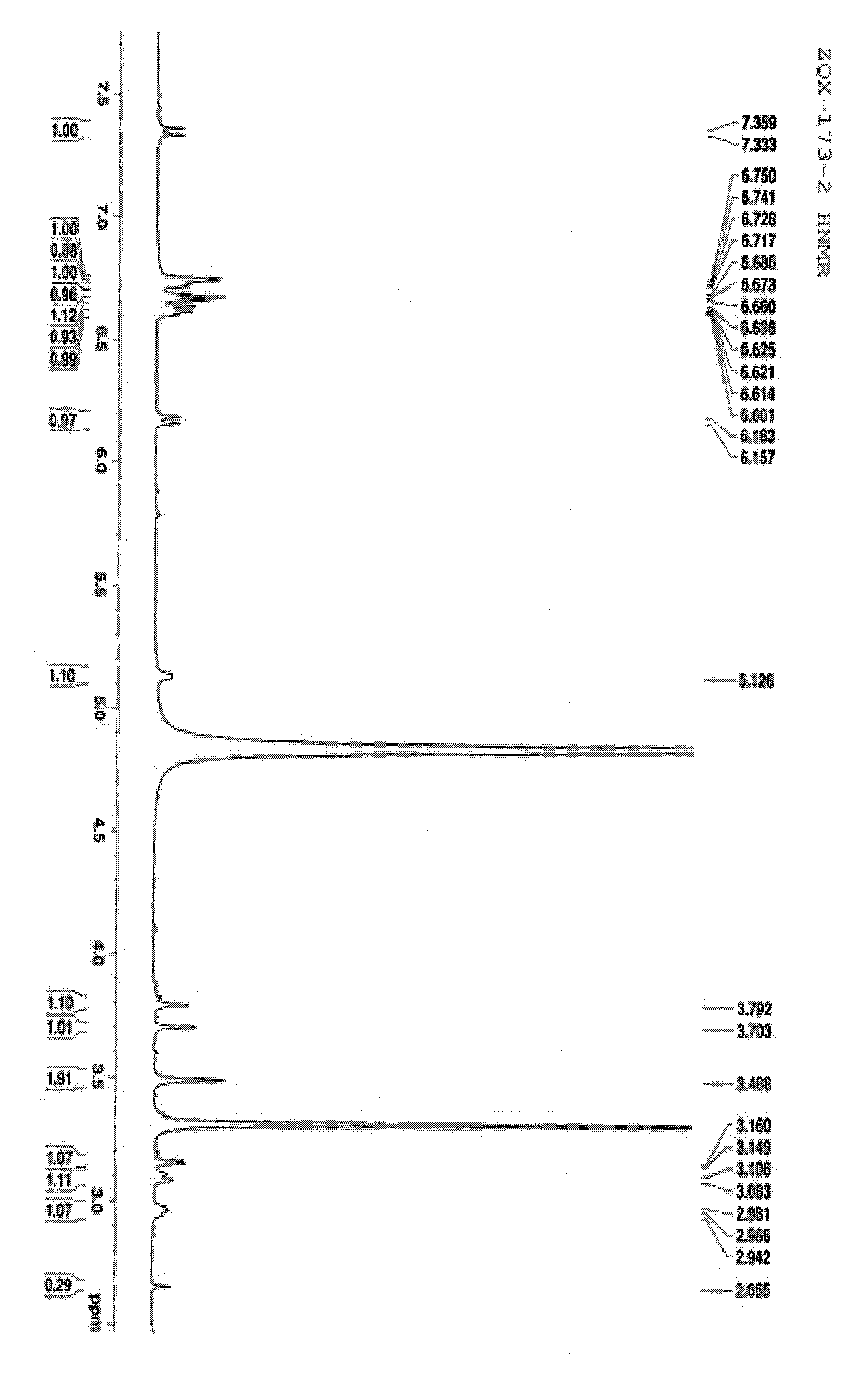
Figure 3
Abstract
Description
technical field
[0001] The present invention relates to the activity of the whole herb extract from Clerodendranthus spicatus (Thunb) C.Y.Wu (Orthosiphon stamineus Benth.), a medicinal plant of the Lamiaceae Kidney tea genus, by means of phytochemical extraction and separation, against clinical urinary drug-resistant bacteria Eleven new compounds were isolated from the site. The chemical structures of the 11 novel phenolic compounds and their application in the preparation of drugs for the treatment and / or prevention of anti-clinical urinary system drug-resistant bacteria are applied for patent protection. Background technique:
[0002] Clerodend ranthus spicatus (Thunb) C.Y. Wu (Orthosiphon stamineus Benth.) is a plant of the genus Kidney tea in the family Lamiaceae. There are only 5 species of this genus in the world, which are produced in Indonesia, Malaysia, Myanmar, the Philippines and other countries in Southeast Asia, and are also distributed in Australia. There is ...
Examples
Embodiment example 1
[0045] The preparation of compound described in embodiment case one present invention
[0046] The effective active part A of cat's whiskers is subjected to macroporous resin chromatography, using ethanol-water (0%, 30%, 60% and 95%) as the eluent to obtain 30% macroporous resin elution part A1, 65% human Porous resin elution part A2 and 95% macroporous resin elution part A3. A1 and A3 were systematically separated. A1 was crudely separated by reverse-phase MCI column chromatography, eluted with methanol-water (0:100-100:0) gradient, and 173 fractions were obtained. Fr.34-42 was separated by gel and ODS column chromatography, eluted with methanol-water, traced by thin layer and combined to obtain 12 fractions, which were separated by reversed-phase HPLC preparative chromatography , to obtain compound 1. Fr.63-83 was separated by gel column, eluted with methanol-water system, and the same components were combined by TLC to obtain 13 fractions. The obtained fractions were sep...
Embodiment example 2
[0047] Embodiment two characterization of the compound of the present invention
[0048] The structure of compound 1-11 was determined by testing its physical and chemical properties and spectral data.
[0049] The spectral data of compound 1-11 are shown in Table 1-6 and the structure is shown in the following formula.
[0050]
[0051] Table 1 Spectral data of compound 1.2*
[0052]
[0053]
[0054] Spectral data of compound 3-4 in table 2
[0055]
[0056] Table 3 Spectral data of compound 5-6
[0057]
[0058]
[0059] Spectral data of compound 7-8 in table 4
[0060]
[0061] Table 5 Spectral data of compounds 9-10
[0062]
[0063] Table 6 Spectral data of compound 11
[0064]
[0065] *The test solvent is methanol, the hydrogen spectrum data is measured at 600MHz, and the carbon spectrum data is measured at 150MHz.
[0066] The high-resolution mass spectrometry data of compounds 1-11 are shown in Table 7
[0067] Table 7 High resolution ...