
Catalyst for hydrodesulfurization of catalytic cracking gasoline and preparation method thereof
A technology for catalytic cracking gasoline and hydrodesulfurization, which is used in metal/metal oxide/metal hydroxide catalysts, physical/chemical process catalysts, chemical instruments and methods, etc. Control regulation, the influence of polyvinyl alcohol template agent solubility, limitations, etc., to achieve the effect of good hydrodesulfurization selectivity, high catalyst desulfurization rate, and inhibition of olefin saturation activity
Patent Information
- Authority / Receiving Office
- CN · China
- Patent Type
- Patents(China)
- Current Assignee / Owner
- Publication Date
- 2019-07-12
Smart Images
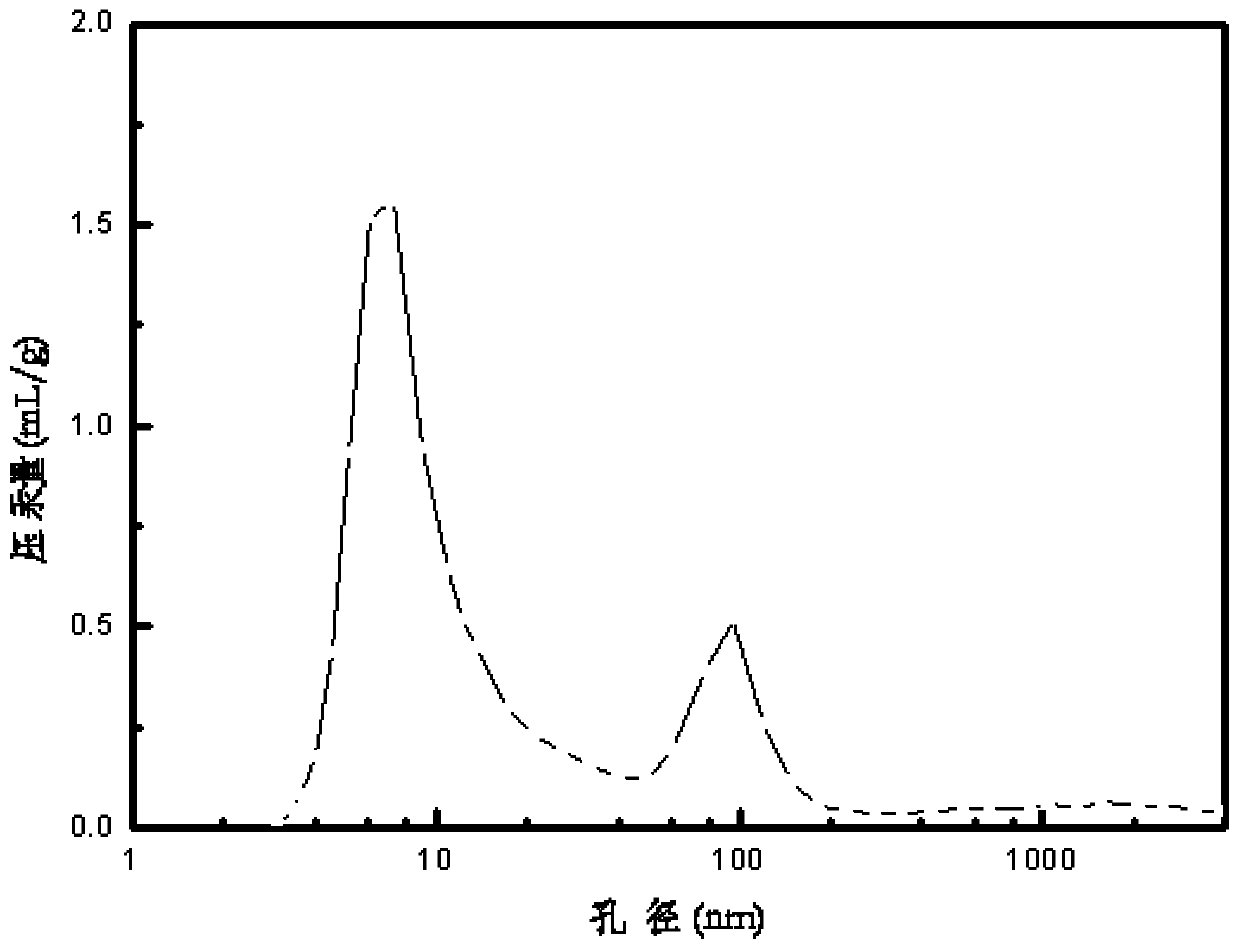
Figure 1 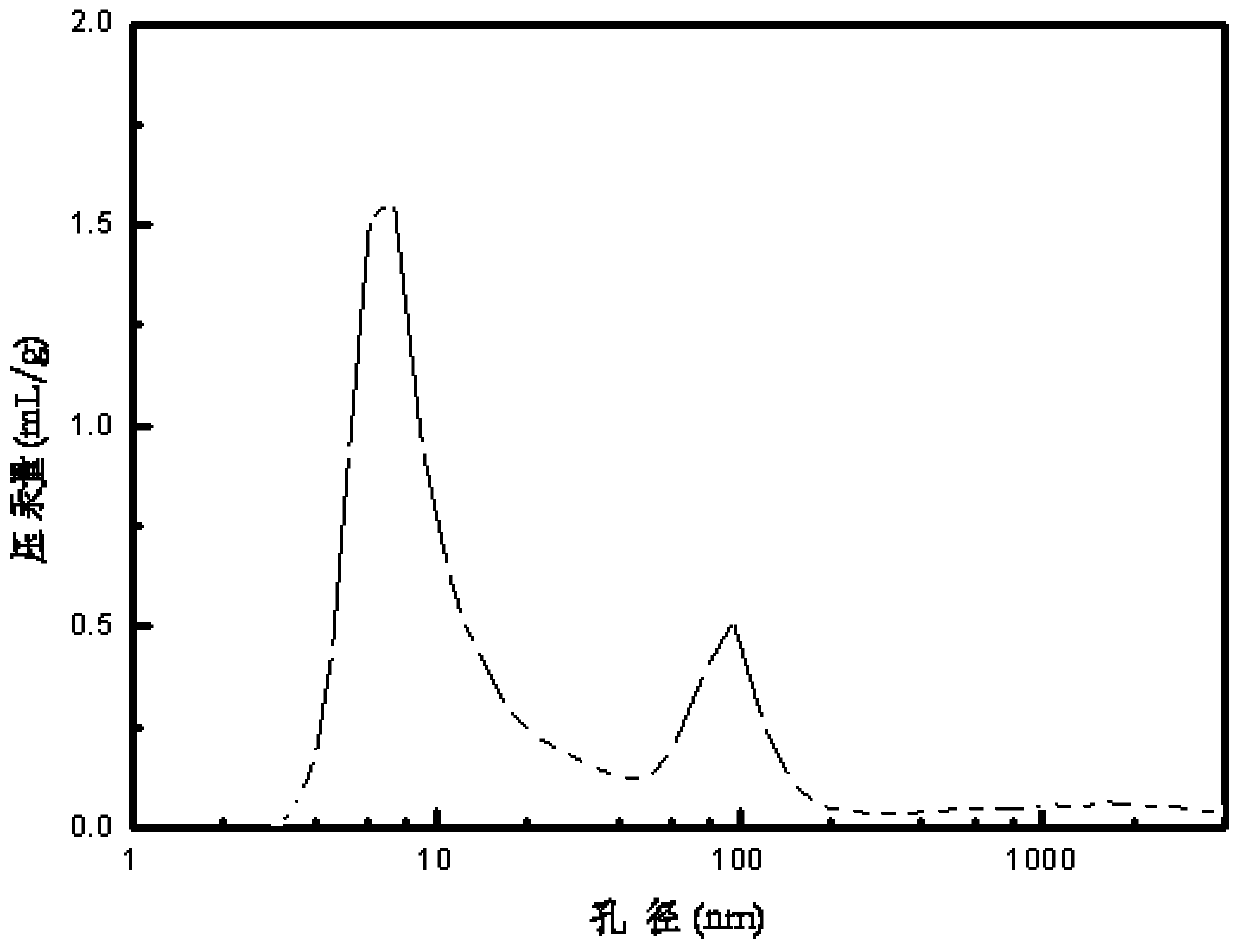
Figure 2 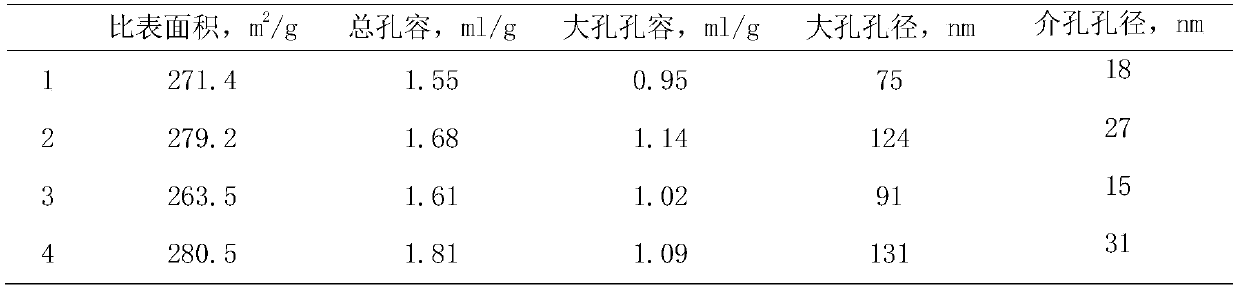
Figure 3
Abstract
Description
technical field
[0001] The invention relates to a catalyst for hydrodesulfurization of catalytic cracking gasoline and a preparation method thereof. Background technique
[0002] Because catalytic cracking gasoline generally has a sulfur content of 100-500v%, there are even high-sulfur and high-olefin feed oils with a sulfur content of more than 500 mg / kg and an olefin content of more than 40%. Selective hydrodesulfurization technology will inevitably cause partial saturation of olefins and lower octane number during deep hydrodesulfurization, which requires hydrodesulfurization catalyst to desulfurize while avoiding excessive loss of octane number as much as possible.
[0003] Due to their large pore structure, high specific surface area, and good thermal stability, macroporous oxides are widely used in heterogeneous catalysts, catalyst supports, adsorption and separation materials, chromatographic packing, electrode materials, acoustic and thermal resistance materials and...
Examples
Embodiment 1
[0034] First, 8.0 g of the water-soluble chitosan pore-enlarging agent was added to deionized water at 50° C., and then acetic acid was added dropwise until the chitosan was completely dissolved to obtain an acid solution containing the pore-enlarging agent. Weigh 1.46g of phosphoric acid and 7.35g of magnesium nitrate respectively, and completely dissolve phosphoric acid and magnesium nitrate in 70g of distilled water to form an aqueous solution containing phosphorus and magnesium. Weigh 350g of pseudo-boehmite powder and 20.0g of fenugreek powder into the kneader, mix well, then add the mixed solution of phosphoric acid and magnesium nitrate, and finally add the acid solution containing chitosan to the pseudo-boehmite The powder is evenly kneaded, and then kneaded-extruded into a clover shape. Dry at 120° C. for 8 hours, and calcined at 700° C. for 4 hours to obtain an alumina carrier 1 containing phosphorus and magnesium. In carrier 1, phosphorus pentoxide is 0.5wt%, and m...
Embodiment 2
[0037] Add 8.0 g of the water-soluble chitosan pore-enlarging agent into deionized water at 50° C., and then add acetic acid dropwise until the chitosan is completely dissolved to obtain an acid solution containing the pore-enlarging agent. Weigh 1.09g of phosphoric acid and 9.12g of magnesium nitrate respectively, completely dissolve phosphoric acid and magnesium nitrate in 70g of distilled water to form an aqueous solution containing phosphorus and magnesium. Weigh 350g of pseudo-boehmite powder and 20.0g of fennel powder into the kneader, mix well, then add the mixed solution of phosphoric acid and magnesium nitrate, and finally add the acid solution containing chitosan to the pseudo-boehmite The stone powder is evenly kneaded, and then kneaded-extruded into a clover shape. Dry at 120° C. for 8 hours, and calcined at 700° C. for 4 hours to obtain an alumina carrier 1 containing phosphorus and magnesium. Then use phosphorus and magnesium to modify the surface of the carrier...
Embodiment 3
[0040] The preparation method of the carrier was carried out according to Example 1. The difference is that the water-soluble chitosan pore-enlarging agent is replaced by a non-water-soluble chitosan pore-enlarging agent, and the chitosan formic acid solution is stirred for 30 minutes with a magnetic stirrer. An alumina support 3 with a macroporous structure was obtained. The content of the auxiliary components phosphorus and magnesium in the carrier accounts for the percentage of the carrier mass, respectively P 2 o 5 1.8wt%, MgO2.0wt%. Its specific surface area and pore size distribution are shown in Table 1.
[0041] Cobalt nitrate and ammonium molybdate were prepared as an impregnation solution, and ammonia water was added to adjust the pH value to dissolve all the salts, then the alumina carrier 3 was impregnated, dried at 120°C for 6 hours, and calcined at 650°C for 5 hours to obtain the hydrodesulfurization catalyst 3. The main composition of the catalyst 3: cobalt ...