
Microbial remediation method for polluted soil in antimony ore area
A technology for microbial remediation and contaminated soil, applied in the field of microbial remediation of contaminated soil in antimony mining areas, can solve the problems of secondary pollution, high treatment costs, and large engineering workload, and achieve the effects of promoting growth activity, low cost, and quick results
Patent Information
- Authority / Receiving Office
- CN · China
- Patent Type
- Applications(China)
- Current Assignee / Owner
- Publication Date
- 2022-06-03
Smart Images
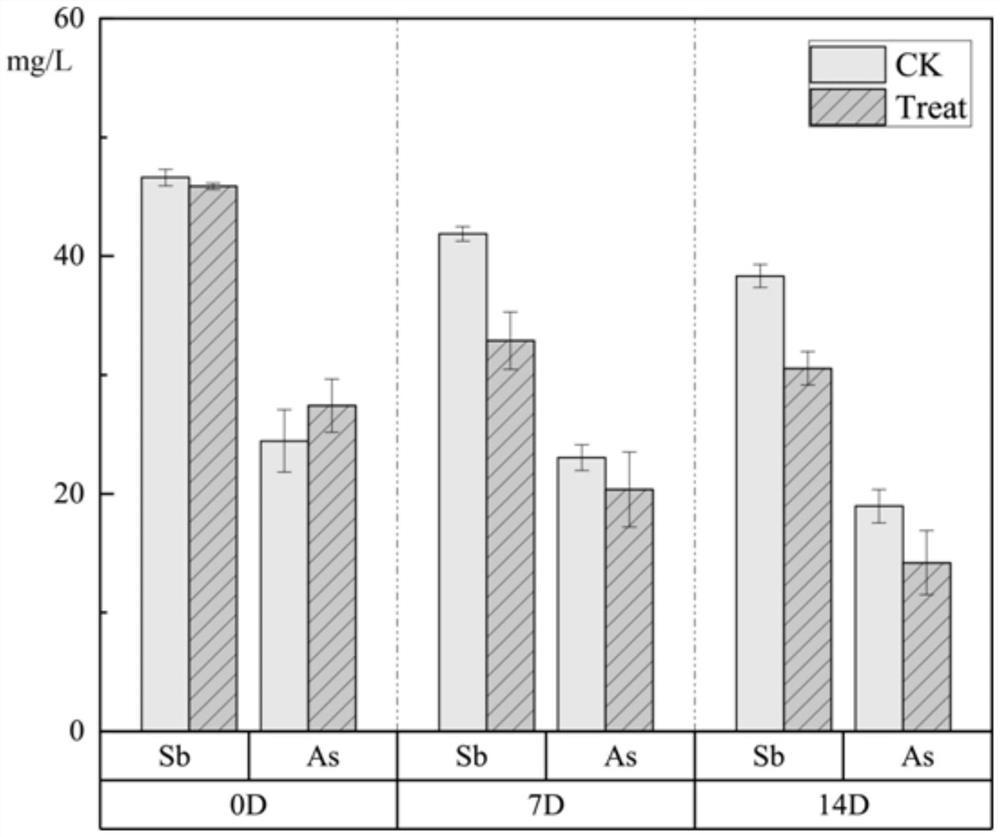
Figure 1 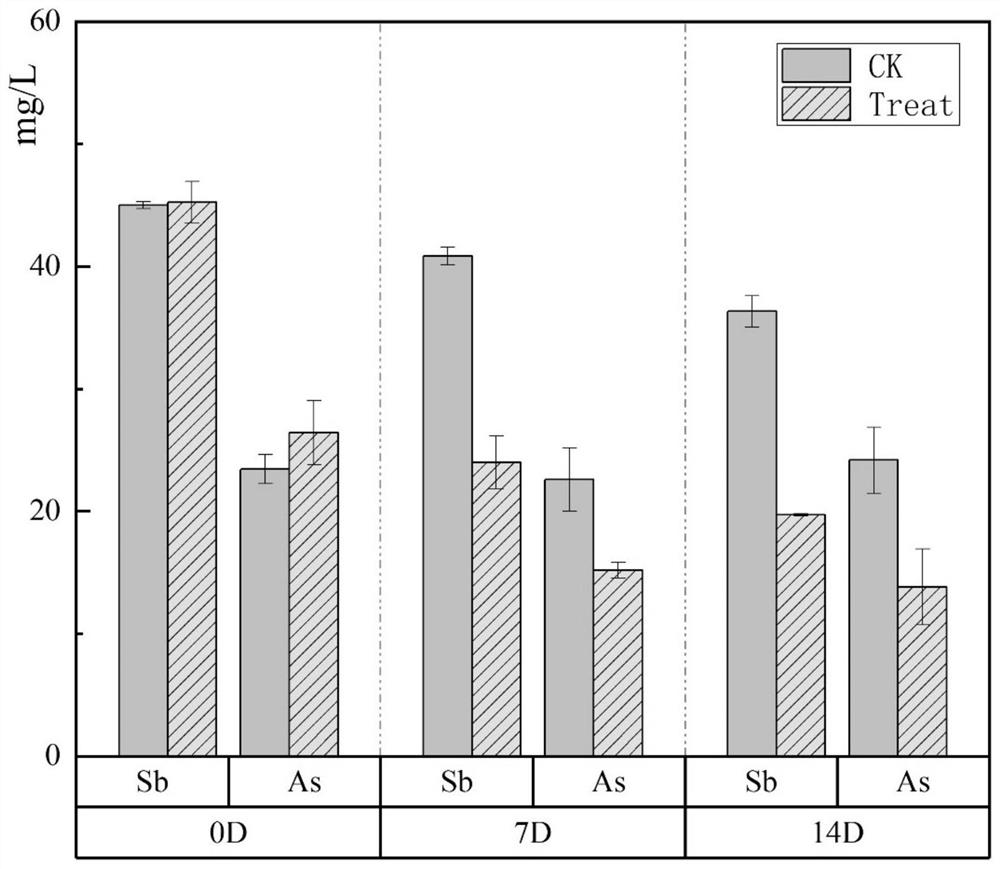
Figure 2 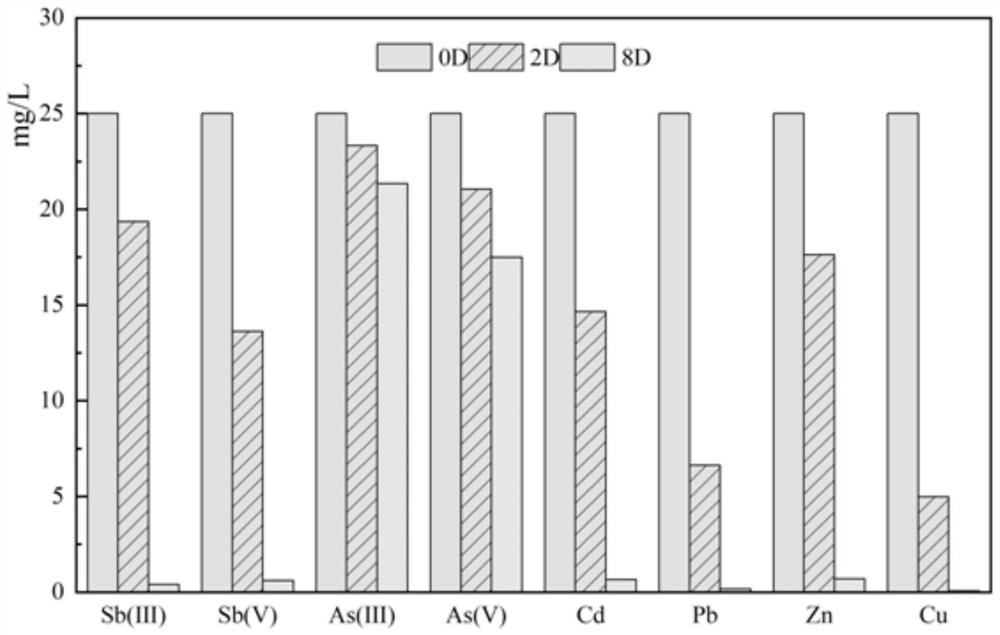
Figure 3
Abstract
Description
technical field
[0001] The invention relates to the field of remediation of polluted soil in mining areas, in particular to a microbial remediation method for polluted soil in antimony mining areas. Background technique
[0002] my country is the world's largest antimony reserve, production and exporter, accounting for 50%, 80% and 85% of the world's total. However, a large amount of waste slag (mining waste rock, tailings and smelting slag) produced by antimony mining and smelting releases a large amount of toxic metal elements under the action of weathering and leaching, and continuously migrates to the surrounding environment through surface runoff and infiltration of rain and snow. This has resulted in a series of ecological and environmental problems such as low land utilization rate, loss of ecosystem stability, weakened vegetation restoration ability, and pollution of surrounding cultivated land, which seriously restricts economic and social development.
[0003] Ant...
Examples
Embodiment 1
[0028] Microbial remediation method for polluted soil in antimony mining area
[0029] (1) The isolated and purified Desulfovibrio desulfuricans subsp. Desulfuricans strain was acclimated with heavy metals such as antimony, cadmium, lead, zinc, and copper, and then inoculated into fresh medium with 10% inoculum for anaerobic culture for 3-5 days (1×10 8 CFU / g);
[0030] (2) The inoculum obtained in step (1) is 0.8-1.0L / m 2 Dosage is sprayed into heavy metal contaminated soil for microbial restoration of heavy metal contaminated soil;
[0031] (3) The concentrations of antimony and arsenic ions in soil heavy metal leachate were measured at intervals of 0, 7 and 14 days.
Embodiment 2
[0033] (1) The isolated and purified Desulfovibrio desulfuricans subsp. Desulfuricans strain was acclimated with heavy metals such as antimony, cadmium, lead, zinc, and copper, and then inoculated into fresh medium with 10% inoculum for anaerobic culture for 3-5 days (1×10 8 CFU / g);
[0034] (2) Add white carbon black to the fresh medium, the volume ratio of white carbon black to medium is 1.0-1.2%, stir and mix, add 10% acclimated sulfate-reducing bacteria, stir and mix, pH is adjusted to 7.0 with sodium hydroxide 3-5 days of anaerobic culture at 30°C (1×10 8 CFU / g);
[0035] (3) The inoculum obtained in step (2) is 0.8-1.0L / m 2 Dosage is sprayed into heavy metal contaminated soil for microbial restoration of heavy metal contaminated soil;
[0036] (4) The concentrations of antimony and arsenic ions in soil heavy metal leachate were determined at intervals of 0, 7 and 14 days.
Embodiment 3
[0038] On the basis of step (1), (2) of embodiment 2;
[0039] Prepare fresh medium with antimony (III, V), arsenic (III, V), cadmium, lead, copper and zinc ion concentrations of 25 mg / L respectively, and insert 10% of the sulfate-reducing bacteria obtained in step (2);
[0040] The concentrations of antimony (III, V), arsenic (III, V), cadmium, lead, copper and zinc ions in the solution were measured at intervals of 0 days, 2 days and 8 days.
[0041] like figure 1 As shown in the figure, the removal rates of antimony and arsenic in the polluted soil of the mining area for 14 days by the sulfate-reducing bacteria remediation of the present invention are 33.43% and 48.25%, respectively, as shown in the figure. figure 2 As shown, the removal rates of antimony and arsenic from the polluted soil in the mining area for 14 days after adding silica additives were 56.43% and 47.69%, respectively. The addition of silica additives significantly improved the removal rate of antimony ...