
Methods for treating bacterial infections
a bacterial infection and bacterial technology, applied in the field of bacterial infection treatment and prevention, can solve the problems of reducing the use of antibiotics, and not having significant activity of antibiotics against gram negative bacteria, etc., and requiring further restrictions
Patent Information
- Authority / Receiving Office
- US · United States
- Patent Type
- Patents(United States)
- Current Assignee / Owner
- Publication Date
- 2017-01-10
Smart Images
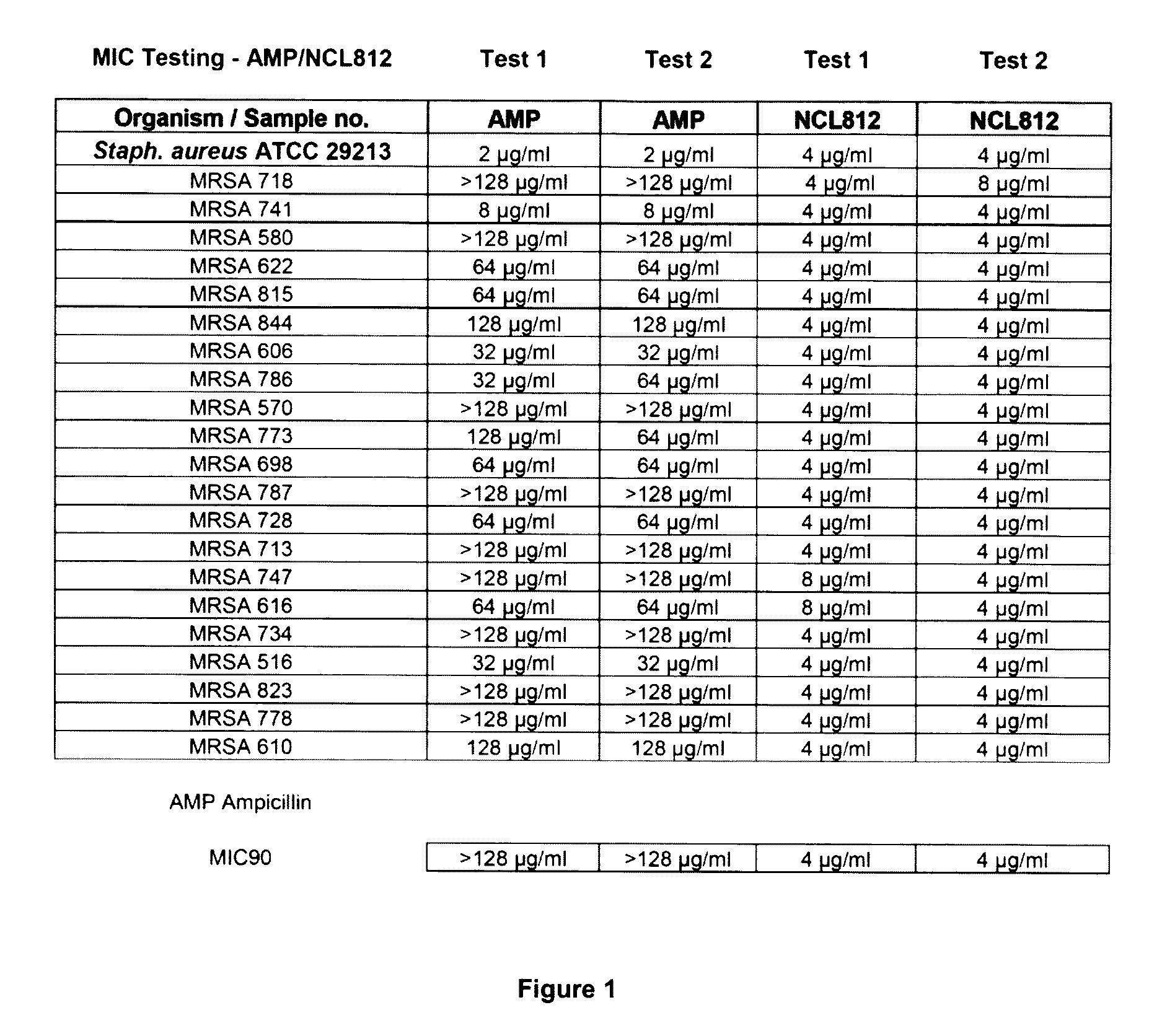
Figure 1 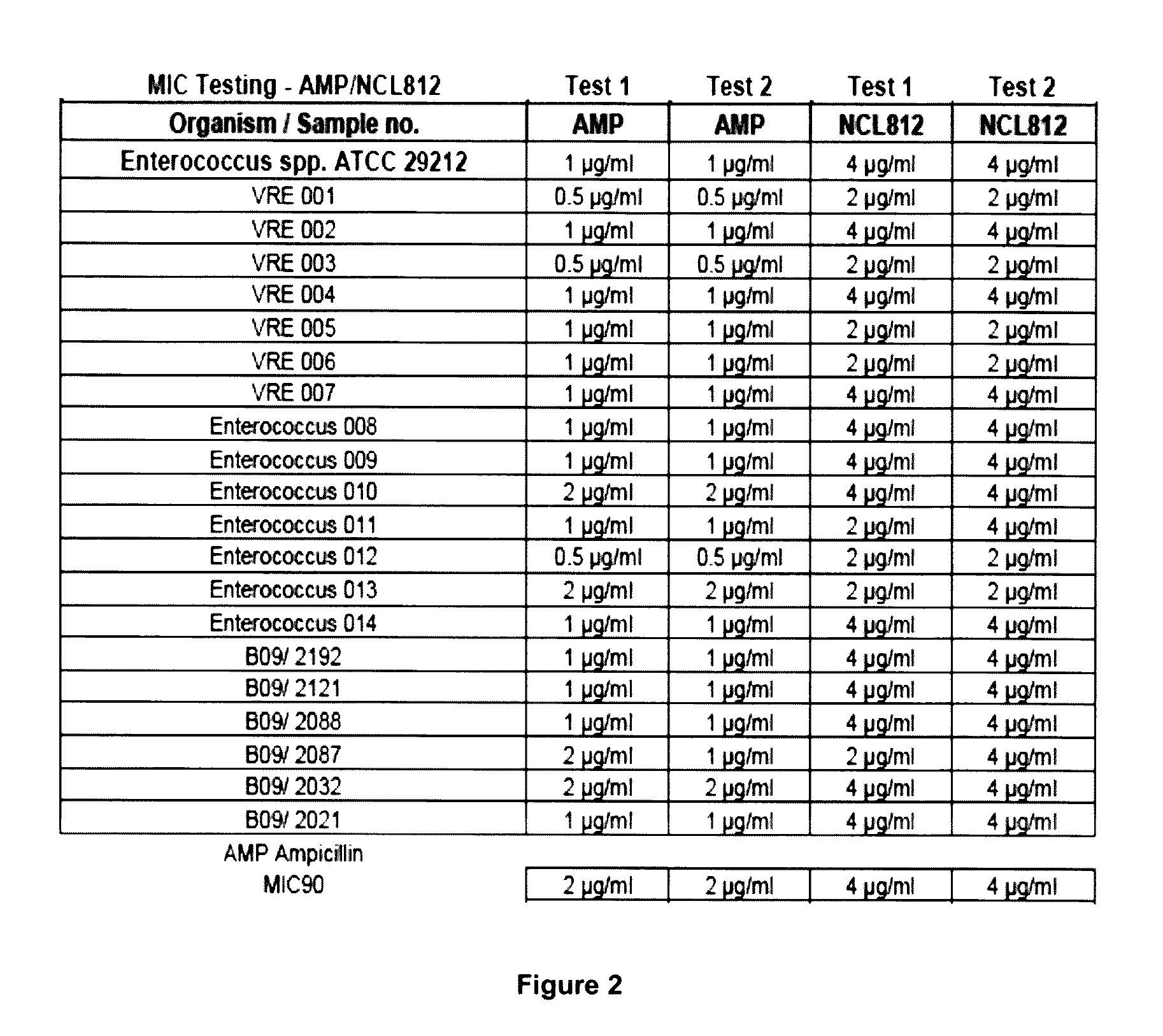
Figure 2 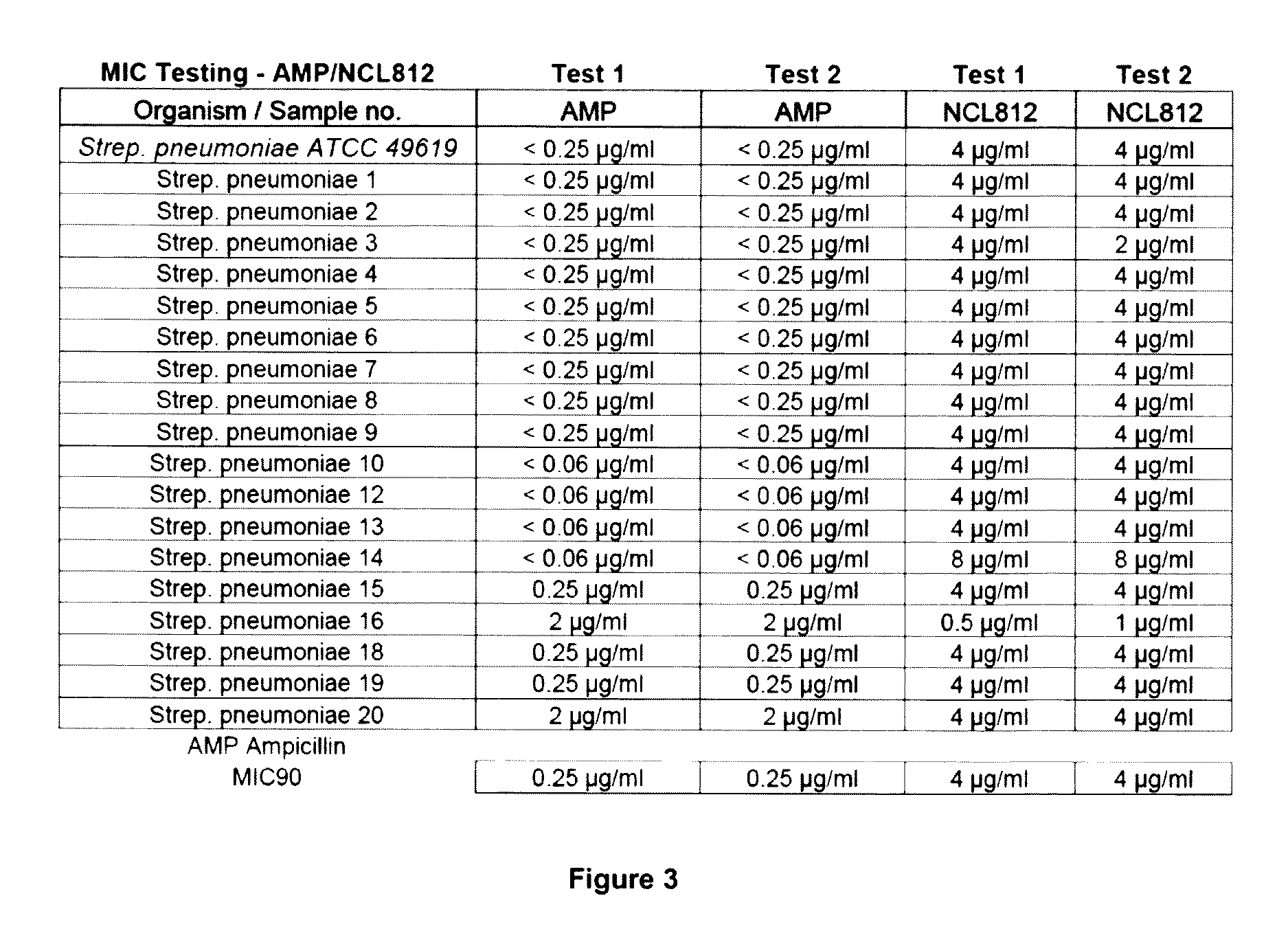
Figure 3
Abstract
Description
CROSS REFERENCE TO RELATED APPLICATIONS
[0001] This application is U.S. National Stage application of PCT / AU2014 / 000480, filed 1 May 2014, which claims priority to Australia application No. 2013901517, filed 1 May 2013, the contents of all of which are hereby incorporated by reference in their entirety.TECHNICAL FIELD
[0002] This invention relates to methods of treating and preventing a bacterial infection in a subject, methods for preparing a medicament for use in treating and preventing a bacterial infection in a subject, and pharmaceutical and veterinary antibacterial compositions when used therein.BACKGROUND ART
[0003] A marked increase in prevalence of multi-drug resistance in disease-causing Gram-positive (G+ve) (Staphylococcus aureus, Enterococcus spp. and Streptococcus pneumoniae) and Gram negative (G−ve) pathogens (Escherichia Enterobacter spp., Salmonella spp., Acinetobacter baumannii, Klebsiella pneumoniae and Pseudomonas aeruginosa) has coincided with an unprecedented global d...
Examples
example 1
The Minimum Inhibitory Concentrations (MIC) for NCL812 in Methicillin-Resistant Staphylococcus aureus (MRSA), Vancomycin-Resistant Enterococcus spp. (VRE) and Streptococcus pneumoniae
[0161]In this example and other examples in the specification, the term NCL812 is used to indicate robenidine.
[0162]This study was undertaken to determine minimum inhibitory concentrations (MIC) for a new antibacterial agent, NCL812. The antibacterial agent represents a potentially new class of drug with a perceived narrow spectrum of activity against bacteria and a novel mechanism of action. This study focused on recent isolates of three major opportunistic pathogens of humans where the development of antibacterial resistance to existing antibacterial classes is problematic: methicillin-resistant Staphylococcus aureus (MRSA), vancomycin-resistant Enterococcus spp. (VRE) and Streptococcus pneumoniae.
Materials and Methods
Bacterial Isolate Collection and Identification
[0163]Sixty one test isolates were ...
example 2
Effect of NCL812 on Staphylococcus aureus Macromolecular Synthesis
Materials and Methods
Test Compounds
[0170]Test compound NCL812 was transported to the experimental facility under conditions of ambient temperature and then stored at 2-8° C. until assayed. Stock solutions were made by dissolving NCL812 dry powder in 100% DMSO to a concentration of 6,400 μg / ml.
Minimal Inhibitory Concentration Testing
[0171]The MIC assay method followed the procedure described by the Clinical and Laboratory Standards Institute, or CLSI (Clinical and Laboratory Standards Institute). Methods for Dilution Antimicrobial Susceptibility Tests for Bacteria That Grow Aerobically; Approved Standard—Eighth Edition. CLSI document M07-A8 [ISBN 1-56238-689-1]. Clinical and Laboratory Standards Institute, 940 West Valley Road, Suite 1400, Wayne, Pa. 19087-19898 USA, 2009), and employed automated liquid handlers to conduct serial dilutions and liquid transfers. The medium employed for the MIC assay was Mueller Hinton I...
example 3
Effect of NCL812 on ATP Release from Staphylococcus aureus
Materials and Methods
Test Compounds
[0186]The test compound NCL812 was shipped under conditions of ambient temperature and then stored at 2-8° C. until assayed. Stock solutions were made by dissolving NCL812 dry powder in 100% DMSO to a concentration of 1,600 μg / ml. The comparator agent was polymyxin B (Sigma, P-4932 (Lot 044K11905)).
[0187]S. aureus ATCC 29213 was originally acquired from the American Type Culture Collection (Manassas, Va.).
ATP Release Assay
[0188]The CellTiter-Glo Luminescent Cell Viability Assay (Promega) was utilized to measure the leakage of ATP from bacteria. Cultures were grown to early exponential phase (0.2-0.3 optical density units at 600 nm) in Mueller-Hinton Broth II and then treated with seven different concentrations of either NCL812 or polymyxin B (positive control) utilizing the MIC for each compound as a guide (0, 0.25, 0.5, 1, 2, 3, 4, or 8-fold the MIC). The negative control rece...