[0015] (2.1) When the unit is in the grid-connected power generation mode and the generator speed is close to the minimum grid-connected speed near the cut-in wind speed, the first-order
natural frequency in the Fore-aft direction of the tower is coupled with the
triple frequency of the generator speed, resulting in The first-order vibration fault in the Fore-aft direction of the tower occurs;
[0016] (2.2) During the start-up process of the unit near the cut-out wind speed to the grid-connected power generation mode, due to the limitation of the wind condition, the unit maintains near the minimum grid-connected speed for a long time, also because of the tower Fore-aft direction The first-order natural frequency is coupled with the
triple frequency of the generator speed, resulting in the first-order vibration fault in the Fore-aft direction of the tower;
[0017] (2.3) Above the rated wind speed, for wind turbines, since the aerodynamic damping of the first-order natural frequency in the Fore-aft direction of the tower itself is relatively small, if no measures are taken to suppress the first-order natural frequency vibration in the Fore-aft direction of the tower, During the full power operation of the unit, first, a
signal with the same frequency as the first-order natural frequency in the Fore-aft direction of the tower will be excited in the generator speed
signal, and the frequency signal will be used by the
pitch actuator during the pitching action process , correspondingly, the aerodynamic damping of the first-order natural frequency in the Fore-aft direction of the tower becomes smaller, resulting in the first-order vibration fault in the Fore-aft direction of the tower;
[0018] (2.4) When the unit is running above the rated wind speed, due to the influence of strong gusts and rapid
pitch changes, the first-order natural frequency vibration fault in the Fore-aft direction of the tower occurs;
[0020] (2.6) For the
storm control strategy scheme to increase the cut-out wind speed of the unit, when the wind speed of the fan is higher than the conventional cut-out wind speed value, it is easy to cause the first-order natural frequency vibration fault in the Fore-aft direction of the tower
[0023] (2.7) This scheme can only suppress the vibration caused by the fan running above the rated wind speed, and the generator speed signal contains the same frequency signal as the first-order natural frequency in the Fore-aft direction of the tower. Below the wind speed, or the fan is running above the rated wind speed, but the generator speed signal does not include the vibration caused by the first-order natural frequency and the same frequency signal in the Fore-aft direction of the tower (that is, the aforementioned situation (2.1) , (2.2), (2.4), (2.5) and (2.6)) are powerless
[0024] (2.8) For the generator speed-
pitch closed-
loop control loop, the
system response speed is slow, the overshoot is large, and the dynamic characteristics are poor
[0025] (2.9) The
tripping condition of the air switch on the generator side mentioned in the previous situation (2.5) plays a decisive role in determining the
limit load of
mechanical components such as the hub of the wind
turbine, the
yaw bearing, the tower, and the foundation. The technical solution of adding a band-stop filter in the
propeller control circuit is powerless to cause this type of vibration, so the
mechanical components such as the hub,
yaw bearing, tower, and foundation of the wind turbine have a large
limit load, and the cost of the entire wind turbine is relatively high.
[0028] Since the existing wind turbines do not include the function of increasing the cut-out wind speed of the unit, it is impossible to increase the power generation of the unit and the investment income of the wind farm by increasing the cut-out wind speed
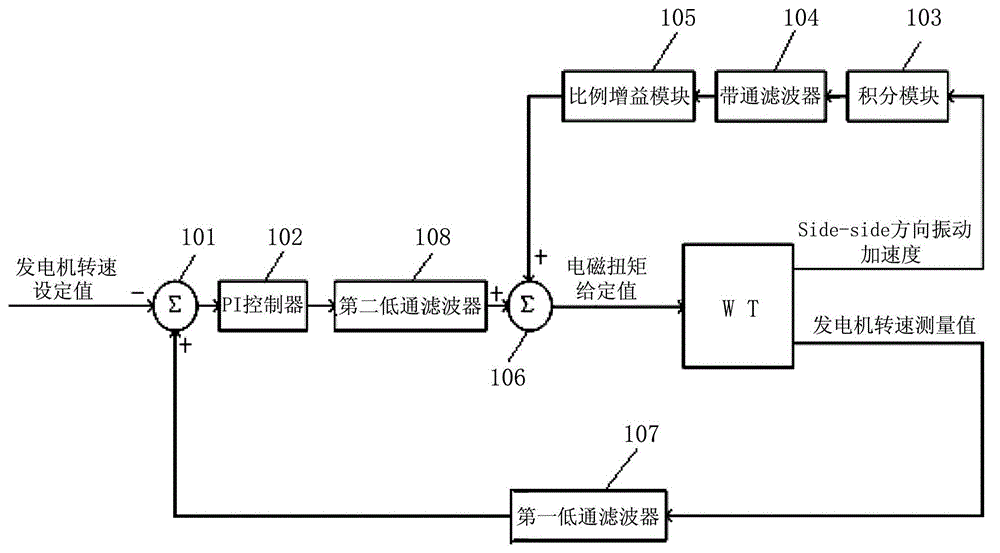
[0029] For the generator speed-
pitch rate control loop and the generator speed-
electromagnetic torque control loop of the series band-stop filter, after increasing the cut-out wind speed of the
unit operation, in the process of fan startup and grid-connected power generation mode, the unit tower The
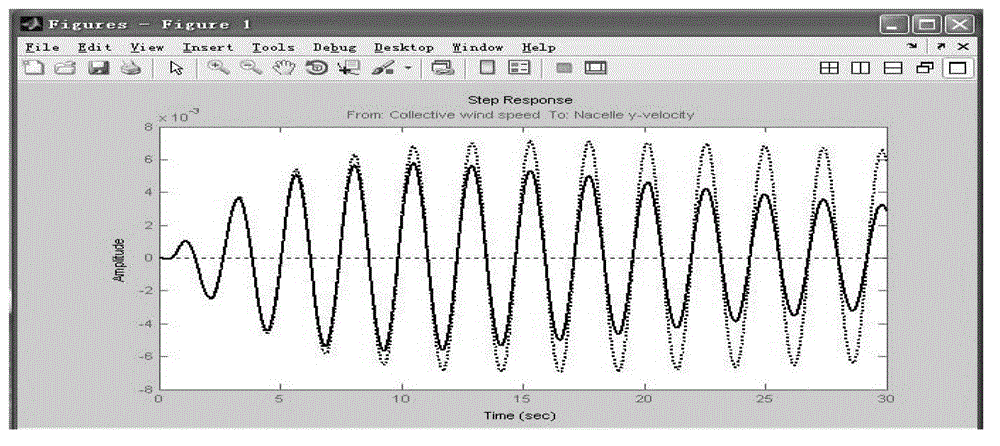
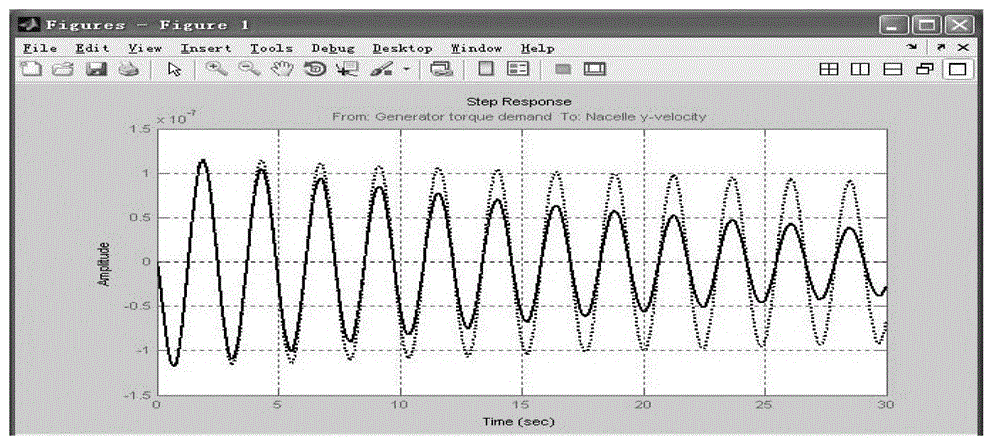
vibration amplitude of the first-order natural frequency in the Fore-aft direction and the Side-side direction of the tower will increase greatly. On the one hand, it will cause vibration faults in the Fore-aft or Side-side direction of the unit. The Mx
bending moment also greatly increases the corresponding fatigue load due to the increase of the
vibration amplitude

 Login to View More
  Login to View More