Method for multirobot to search smell sources with cooperation under the dynamic smoke plumage environment

A multi-robot and robot technology, applied to instruments, measuring devices, surveying and navigation, etc., can solve the problems of time-consuming differences, static plume distribution, waste of robot resources, etc.

CN103278151AInactive Publication Date: 2013-09-04CHINA UNIV OF MINING & TECH
5 Cites 34 Cited by

Patent Information

Authority / Receiving Office
CN · China
Patent Type
Applications(China)
Current Assignee / Owner
Publication Date
2013-09-04
Estimated Expiration
Not applicable · inactive patent

Smart Images

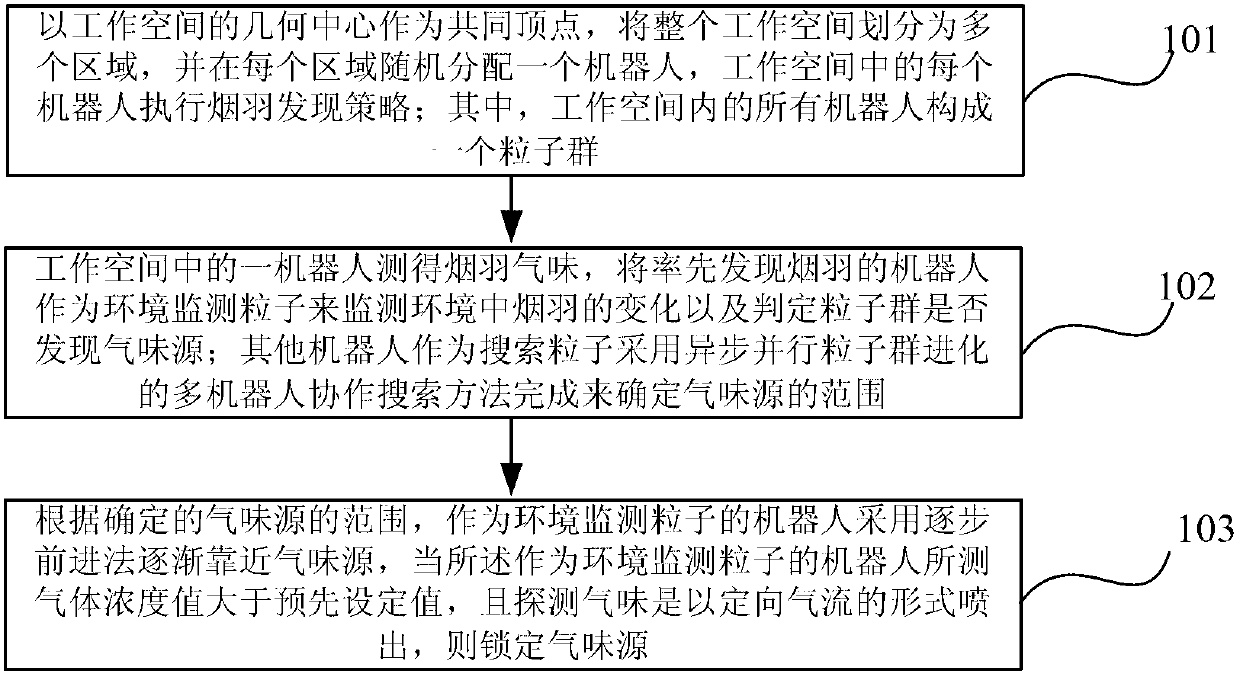
  • Figure 1
    Figure 1
  • Figure 2
    Figure 2
  • Figure 3
    Figure 3
Patent Text Reader

Abstract

The invention relates to a method for multirobot to search smell sources with cooperation under the dynamic smoke plumage environment, and the geometric centre of the working space is the common vertex, and divides the whole working space into several subareas, and each subarea is distributed with a robot randomly, and each robot among all the robots executes a smoke plumage discovery strategy in the working space of the corresponding subarea; when a robot in the working space detects the smoke plumage smell, the robot which detects the smoke plumage at first is immediately considered as an environment monitoring particle for monitoring the change of the smoke plumage in the environment and determining whether the particle swarm detects the smell source; other robots are considered as searching particles and employ multirobot cooperation searching method optimized from asynchronous parallel particle swarm for determining the scope of the smell source; according to the determined smell source scope, the robot which is considered as the environment monitoring particle employs a gradually forward method for gradually approaching the smell source, and when the concentration value of the gas detected by the robot as environment monitoring particle is higher than the preset value and the detected smell is sprayed in a form of directional airflow, the smell source is locked.
Need to check novelty before this filing date? Find Prior Art

Description

technical field

[0001] The invention relates to the field of robot swarm intelligence, in particular to a multi-robot collaborative search method for odor sources in a dynamic smoke plume environment. Background technique

[0002] The problem of robotic odor sourcing, also known as robotic active olfaction, refers to the process of using mobile robots to autonomously discover, track smoke plumes, and finally determine the location of odor sources. It widely exists in all aspects of production and life, such as fire alarm, inspection of prohibited items, detection of harmful gas leaks and anti-terrorist explosives, etc.

[0003] Inspired by the use of odor information in nature to complete activities such as foraging and courtship, scholars have tried to use mobile robots combined with odor sensors to find odor sources since the 1990s. At present, for a single robot, many odor source search strategies or methods have been given, representative methods such as the headwind se...

Examples

Embodiment

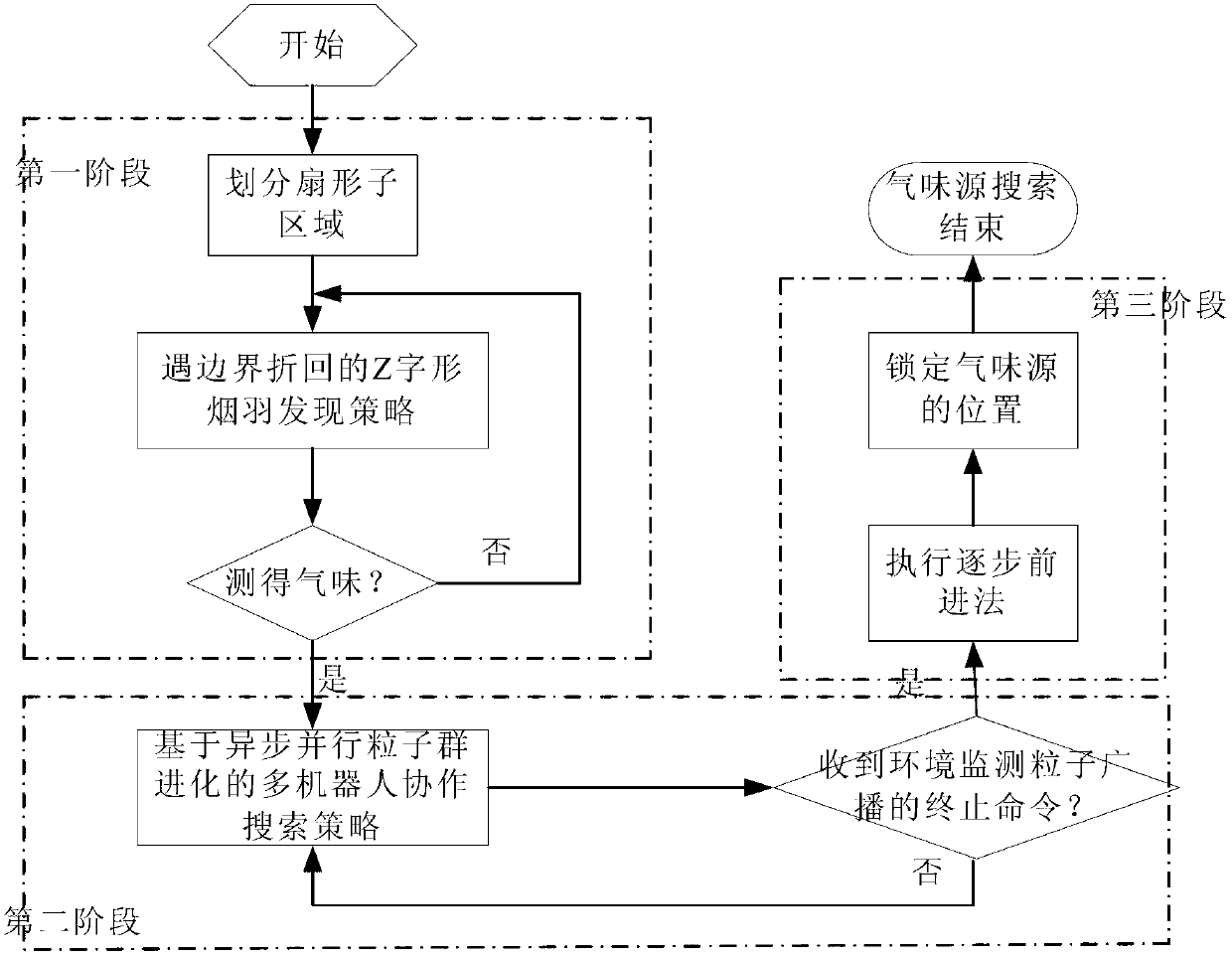
[0098] like image 3 As shown, it is a flow chart of the multi-robot odor source search method in the embodiment of the present invention. The invention divides the odor source search process into three stages: plume discovery, plume tracking and odor source confirmation; the three stages adopt different search strategies, and the three search strategies are organically combined to finally lock the odor source.

[0099] 1) Plume discovery stage

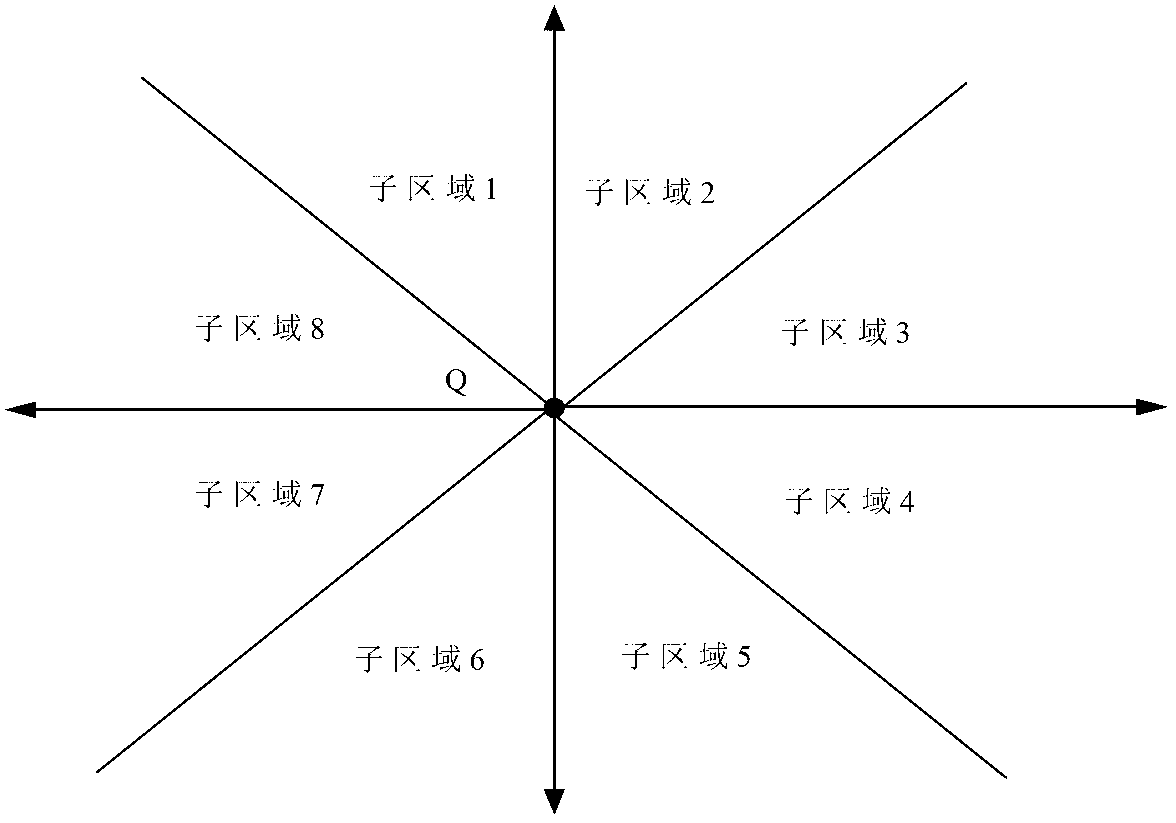
[0100] Divide the entire workspace into multiple fan-shaped sub-areas, and randomly assign a robot in each sub-area. In the absence of any odor information, all robots implement the zigzag plume discovery strategy in their corresponding sub-areas. If a robot detects the plume odor, it enters the plume tracking phase.

[0101] like Figure 4 As shown, it is a schematic diagram of the method for dividing the fan-shaped sub-regions of the work area in the embodiment of the present invention. Fan-shaped sub-region division method: th...