
Compositions and methods
A composition and material technology, applied in the direction of drug combination, carbohydrate active ingredients, pharmaceutical formulations, etc., can solve the problems of life quality deterioration, HNSCC 5-year survival rate not significantly improved, swallowing and respiratory weakness, etc.
- Summary
- Abstract
- Description
- Claims
- Application Information
AI Technical Summary
Problems solved by technology
Method used
Image



Examples
Embodiment 1
[0123] This example demonstrates that PEG inhibits cell proliferation in squamous cell carcinoma cells in vitro.
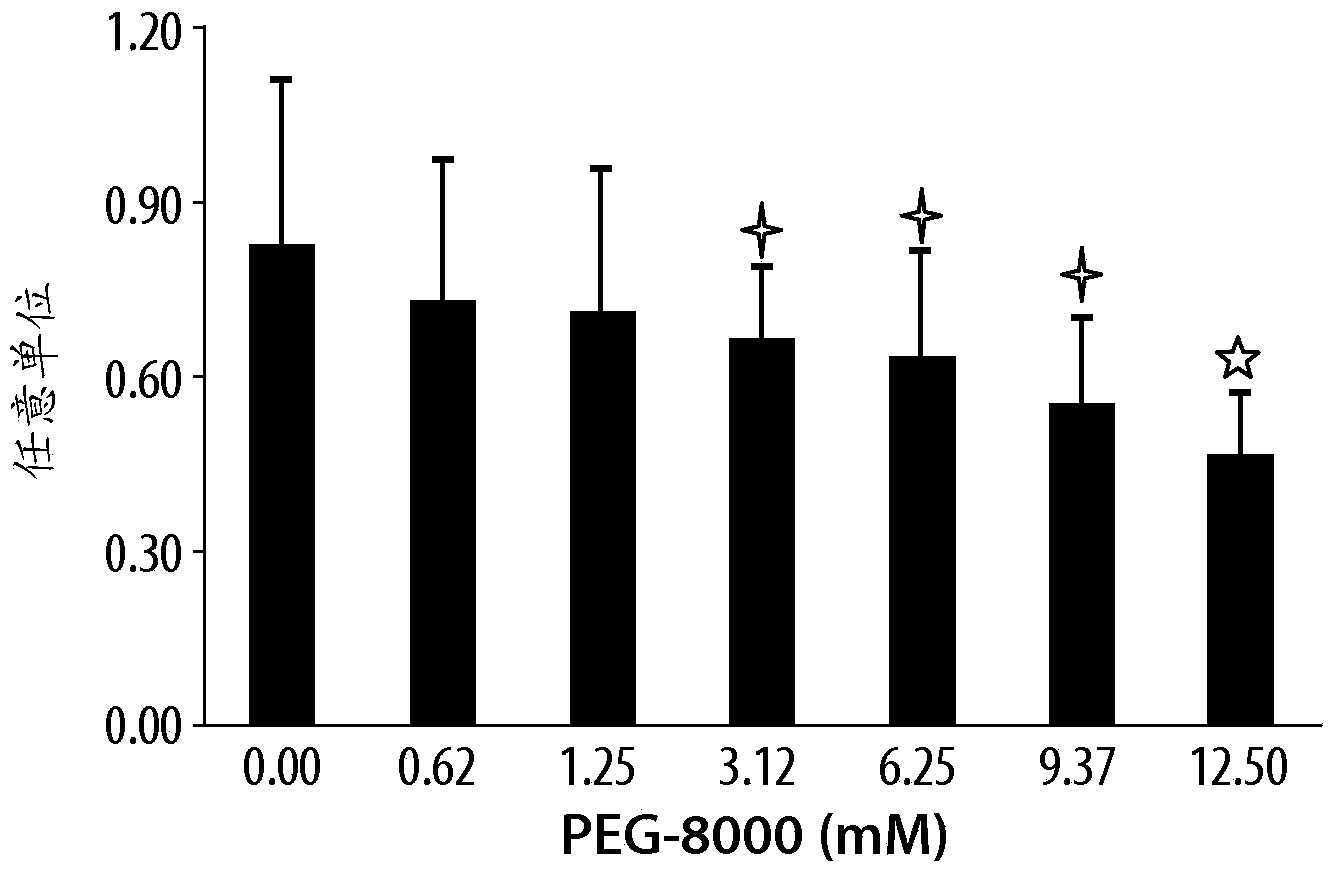
[0124] In order to demonstrate the anti-proliferative activity of PEG in HNSCC, SCC-25 cells (2000 cells / well) were seeded in 96-well plates, and then treated with different concentrations of PEG-8000 [0.62mM (0.5%w / v) to 12.5mM ( 10% w / v)] treatment. After 24 hours, the cell proliferation (change in cell number) was measured using the WST-1 assay. As shown in Figure 1, there was a dose-dependent decrease in SCC-25 cell proliferation (compared to vehicle alone, ★p<0.001). Since the greatest reduction in growth (43% reduction) was obtained at 10% w / v PEG8000 (maximum concentration tested), this concentration was used as the dose for the in vivo experiments. The presence of the SCC-25 cells with PEG or pretreatment of the SCC-25 cells with PEG significantly reduced cell proliferation.
Embodiment 2
[0126] This example demonstrates that different formulations of PEG can inhibit EGFR expression in SCC-9 and SCC-25 in vitro.
[0127] In these studies, the effect of PEG on the expression level of membrane (i.e., surface) EGFR in SCC-9 and SCC-25 cells was investigated. Six experimental groups were established. Control group SCC-9 and SCC-25 cells were not treated, a group of SCC-9 and SCC-25 cells were treated with 5% w / v PEG3350 solution, a group of SCC-9 and SCC-25 cells were treated with 5% w / v PEG8000 solution treatment. After 24 hours, the cells were trypsinized and analyzed by flow cytometry (Becton Dickinson Labware) for membrane (ie surface) expression of EGFR. The results showed that both PEG groups significantly reduced the amount of membrane (i.e., surface) EGFR expression in SCC-9 and SCC-25 cells (Fig. 2).
Embodiment 3
[0129] This example demonstrates that administration of PEG8000 can inhibit tumor development in a rat 4NQO model of squamous cell carcinoma.
[0130] The rat 4NQO-induced oral carcinogenesis model used in these studies has many features that are histopathologically comparable to human head and neck cancers. This model produces a range of preneoplastic and neoplastic lesions by systemic administration of 4NQO in drinking water and has been used in many chemoprevention studies. After 14 weeks of 4-NQO treatment (20ppm in drinking water), the rats were randomly divided into two groups, followed by oral topical application once a day (smear the buccal floor / roof of the rat's oral cavity with Sable Brush #4 for the longest for 3-4 min) (a) vehicle (PBS) or (b) PEG-8000 (10% w / v) for another 14 consecutive weeks. At necropsy, the entire tongue, pharynx, and esophagus were excised. Overall, the entire carcinogenic regimen used in this study had no effect that would impair the gene...
PUM
| Property | Measurement | Unit |
|---|---|---|
| molecular weight | aaaaa | aaaaa |
Abstract
Description
Claims
Application Information
 Login to View More