
Preparation method of rapidly decellularized unifoliate liver biological scaffold
A bioscaffold and decellularization technology, applied in medical science, prostheses, etc., can solve the impact on the quality and stability of decellularized liver bioscaffold preparation, the lack of uniform standards for perfusion pathways and protocols, and the low replantation rate of decellularized tissues and other problems, to achieve the effect of shortening the required time, good effect, and short solution time
- Summary
- Abstract
- Description
- Claims
- Application Information
AI Technical Summary
Problems solved by technology
Method used
Image

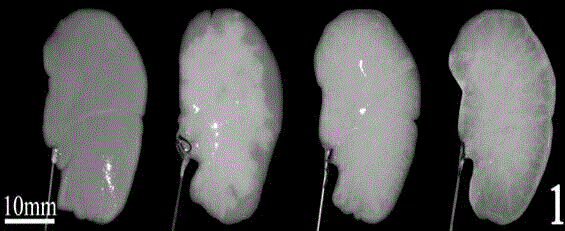
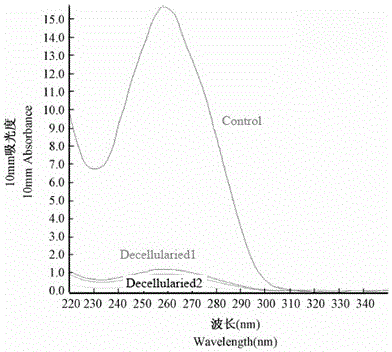
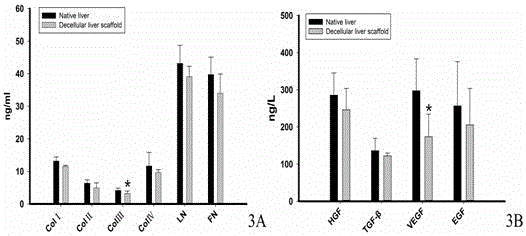
Examples
Embodiment Construction
[0019] Obtaining whole liver of SD rats
[0020] Healthy adult SD rats were weighed, anesthetized by intraperitoneal injection of 0.3-0.4ml / 100g10% chloral hydrate, fixed after the effect, opened the abdominal cavity, isolated the inferior vena cava, and injected heparin sodium solution for systemic heparinization. Find the hepatic hilum located below the liver, separate the hepatic artery, bile duct and portal vein, cut off the bile duct, ligate and cut off the beginning of the hepatic artery and portal vein, cut off the hepatic vein at the same time, separate the part of the liver connected to the diaphragm, and remove the liver. One group of livers was treated with perfusion decellularization, and the other group of livers was stored at -80°C as a control group.
[0021] Preparation of Decellularized Single Lobe Liver Bioscaffolds
[0022] (1) A group of livers were stored at -80°C without further processing as a control group.
[0023] (2) Preparation of decellularized s...
PUM
 Login to View More
 Abstract
Description
Claims
Application Information
 Login to View More