
A kind of preparation method of copolyester and the application of obtained copolyester in 3D printing
A 3D printing, copolyester technology, applied in the application field of copolyester materials in 3D printing, can solve the problems of high water absorption, difficult 3D printing, easy degradation, etc., to avoid degradation and energy consumption problems, sample size The effect of small deviation and low printing temperature
Active Publication Date: 2018-09-21
CHINA PETROLEUM & CHEM CORP +1
View PDF6 Cites 2 Cited by
- Summary
- Abstract
- Description
- Claims
- Application Information
AI Technical Summary
Problems solved by technology
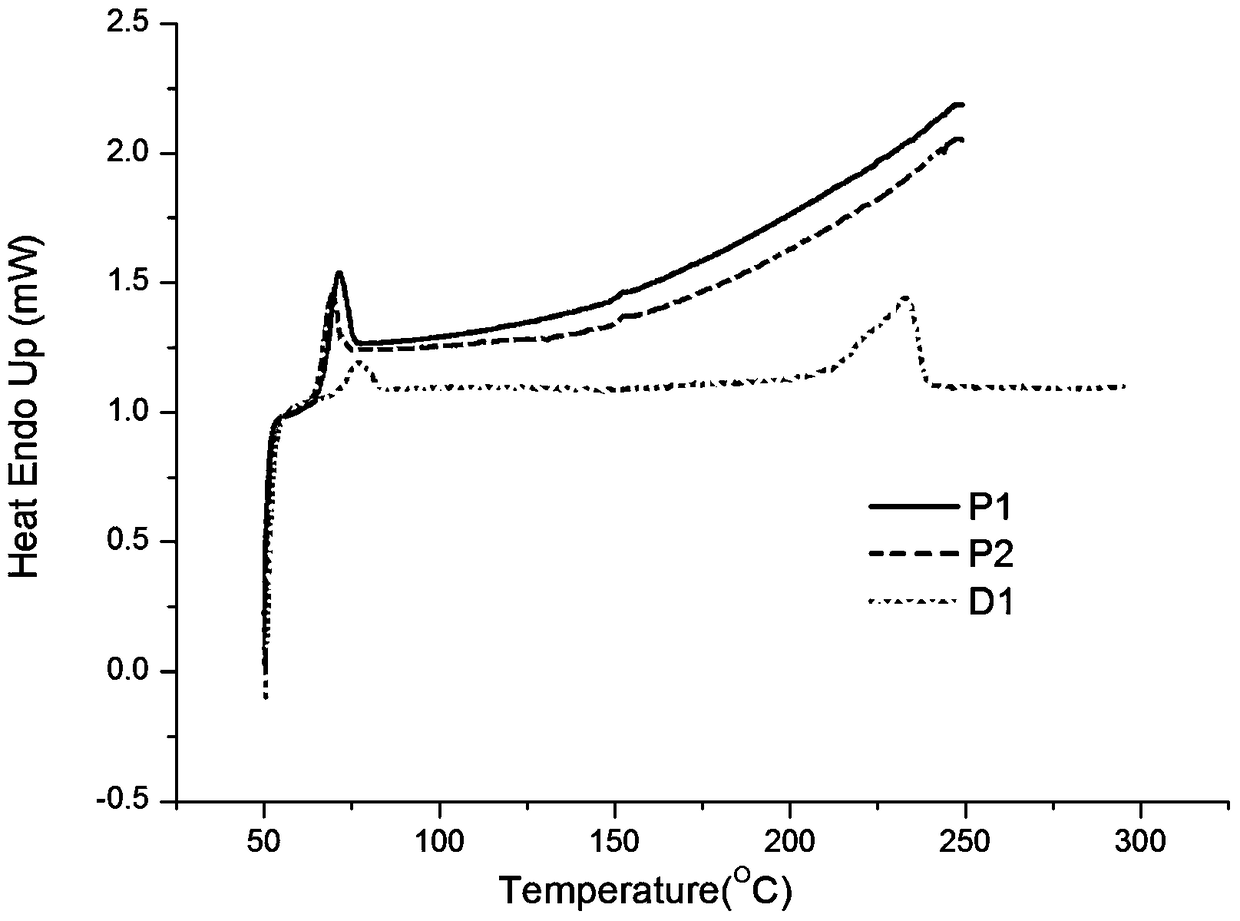
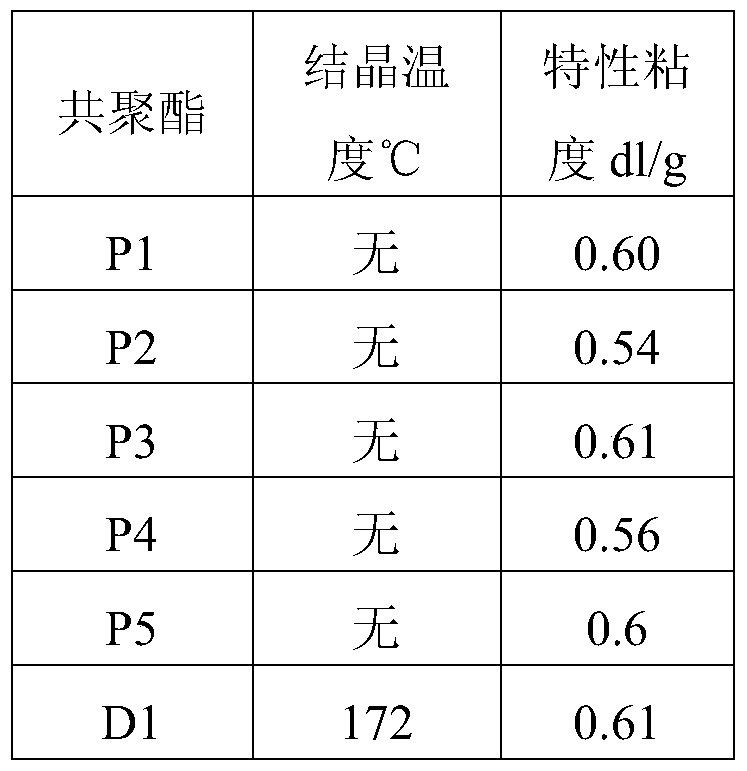
[0003] In order to overcome the defects of existing polyester materials such as crystallinity, high product shrinkage, high melting point, high water absorption, easy degradation at high temperature and difficult to carry out 3D printing, the purpose of the present invention is to provide a copolyester preparation method to obtain The copolyester has no obvious melting point, and the shrinkage rate of the product is low
Method used
the structure of the environmentally friendly knitted fabric provided by the present invention; figure 2 Flow chart of the yarn wrapping machine for environmentally friendly knitted fabrics and storage devices; image 3 Is the parameter map of the yarn covering machine
View moreImage
Smart Image Click on the blue labels to locate them in the text.
Smart ImageViewing Examples

Examples
Experimental program
Comparison scheme
Effect test
Embodiment 1B
[0049] Add 1000g of copolyester P1 and 200g of pigment into the twin-screw extruder together, and obtain a wire with a diameter of 3mm according to the wire preparation method, which is denoted as L1.
Embodiment 2B
[0051] Add 1000g of copolyester P2 and 200g of pigment into a twin-screw extruder, and obtain a wire with a diameter of 3mm according to the wire preparation method, which is denoted as L2.
Embodiment 3B
[0053] Add 1000g of copolyester P1 and 300g of pigment into the twin-screw extruder together, and obtain a wire with a diameter of 3mm according to the wire preparation method, which is denoted as L3.
the structure of the environmentally friendly knitted fabric provided by the present invention; figure 2 Flow chart of the yarn wrapping machine for environmentally friendly knitted fabrics and storage devices; image 3 Is the parameter map of the yarn covering machine
Login to View More PUM
| Property | Measurement | Unit |
|---|---|---|
| glass transition temperature | aaaaa | aaaaa |
| diameter | aaaaa | aaaaa |
Login to View More
Abstract
The present invention provides a copolyester preparation method comprising successive esterification and polycondensation of a dihydric alcohol, a fatty diacid and two or more aromatic diacid in the presence of a catalyst for preparation of an amorphous copolyester. The present invention also provides a method for using the copolyester material for preparation of a wire material and application of the wire material in 3D printing. The printing temperature of the wire material used in fused deposition method 3D printing is low, an obtained product is small in size deviation, and sample shrinkage rate is low.
Description
technical field [0001] The invention relates to a preparation method of copolyester and the application of the copolyester material prepared by the method in 3D printing. Background technique [0002] 3D printing technology mainly includes stereolithography appearance (SLA), fused deposition modeling (Fused Deposition Modeling, FDM), selective laser sintering (selective laser sintering, SLS) and other processes. Among them, the fused deposition modeling technology needs to thin the 3D model, melt the material into a liquid state at high temperature, and then extrude small spherical particles through the nozzle. These particles solidify immediately after being sprayed out. The permutations and combinations form real objects. This technology has higher molding precision, higher molding strength, and can be colored molding, but the surface is rough after molding. At present, the main 3D printing materials mainly include ABS, PC, polylactic acid, polystyrene, etc., and the mat...
Claims
the structure of the environmentally friendly knitted fabric provided by the present invention; figure 2 Flow chart of the yarn wrapping machine for environmentally friendly knitted fabrics and storage devices; image 3 Is the parameter map of the yarn covering machine
Login to View More Application Information
Patent Timeline
 Login to View More
 Patent Type & AuthorityPatents(China)
IPC IPC(8): C08G63/189C08G63/183C08G63/78C08K3/22C08K5/521
Inventor张龙贵侯家祥罗春霞李娟蔡小光郭梅芳
OwnerCHINA PETROLEUM & CHEM CORP