
Rapid and sensitive method for detection of Marburg virus RT-LAMP
A technology of RT-LAMP and Marburg virus, which is applied to the determination/inspection of microorganisms, biochemical equipment and methods, etc., can solve the problems of long time required, low sensitivity, and large equipment, so as to reduce time and complexity, Improve the detection ability, fast and accurate detection effect
- Summary
- Abstract
- Description
- Claims
- Application Information
AI Technical Summary
Problems solved by technology
Method used
Image

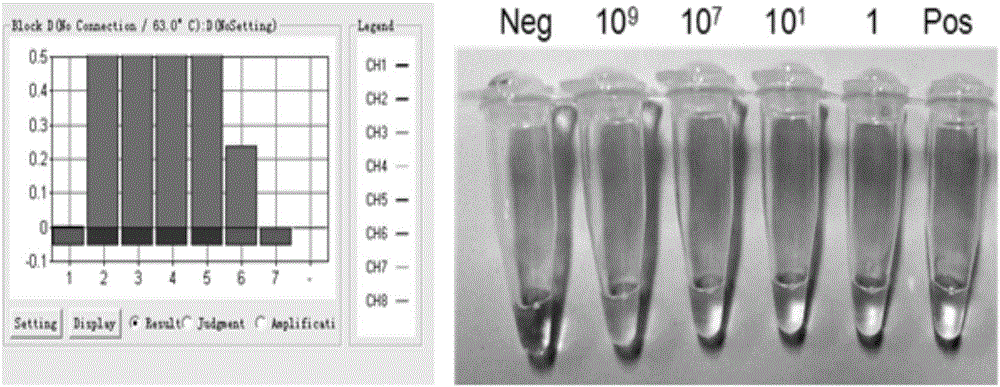
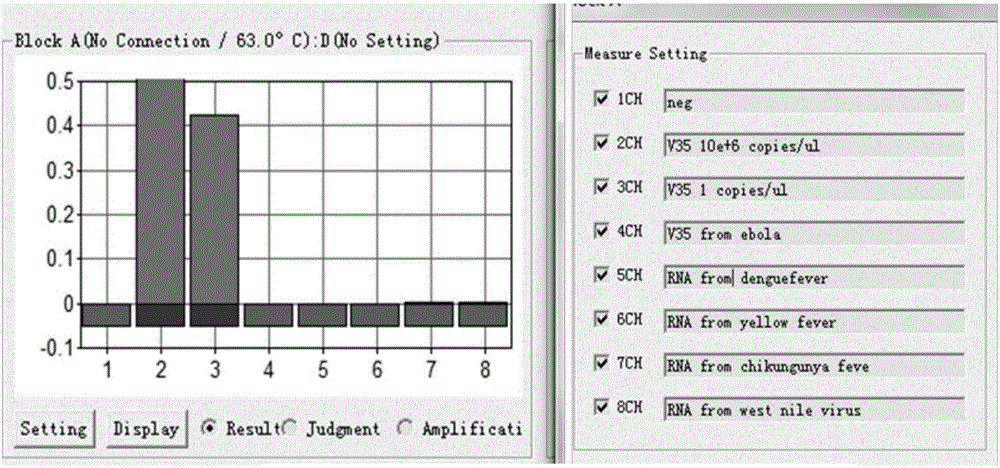
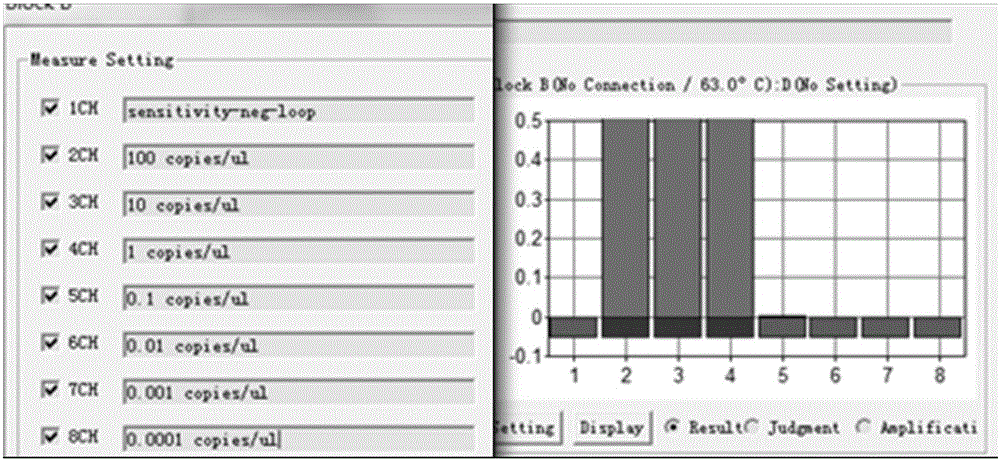
Examples
Embodiment 1
[0036] Example 1 Specificity and sensitivity of Marburg virus RT-LAMP detection method
[0037] 1. Experimental steps
[0038] 1. In vitro synthesis of Marburg virus and Ebola virus RNA
[0039] Using bioinformatics methods to analyze the genome sequence (Ang1379c) of the published Marburg virus Angola strain, the artificially synthesized fragment (about 600 bp) containing the specific detection Marburg virus VP35 was cloned on the PCR cloning vector (TOPO TA cloning kit), and used Plasmid DNA extraction kit to purify the plasmid DNA, sequence to confirm that the insert is correct, and then perform in vitro transcription: First, digest the plasmid with Not I to linearize it to exclude downstream RNA products, then use MAXIscript T7Kit for in vitro transcription to generate target RNA, and then use TurboDNase Perform DNase treatment to remove untranscribed plasmid DNA templates, and finally use ethanol precipitation to purify the RNA product, which is the positive control RNA ...
PUM
 Login to View More
 Abstract
Description
Claims
Application Information
 Login to View More