
Distributed management system and method for residential electricity consumption load based on demand response
A technology for demand response and residential electricity consumption, applied in the field of power system, can solve the problems of reducing the scale of data collection and transmission, unsatisfactory objective function, insufficient data collection and transmission, etc., to reduce the scale and improve the economy. benefits and social benefits, and the effect of promoting peak reduction and valley filling
Patent Information
- Authority / Receiving Office
- CN · China
- Patent Type
- Applications(China)
- Current Assignee / Owner
- Publication Date
- 2016-09-28
- Estimated Expiration
- Not applicable · inactive patent
Smart Images
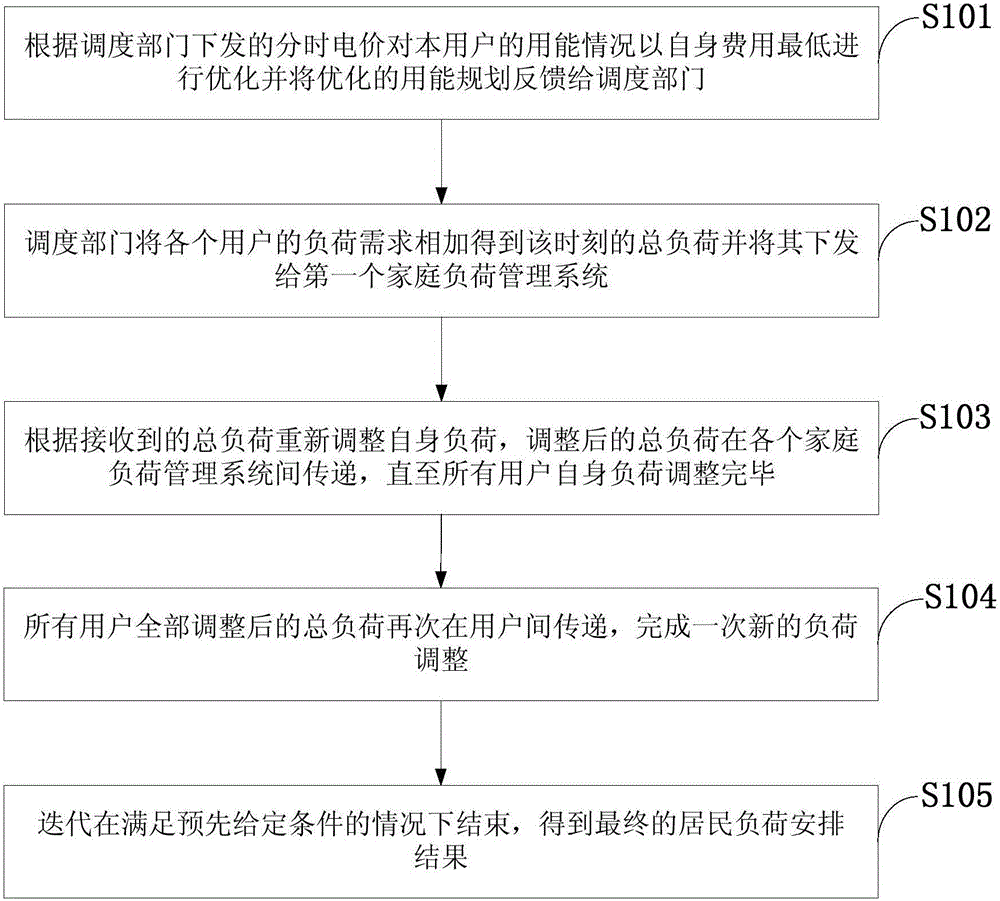
Figure 1 
Figure 2 
Figure 3
Abstract
Description
technical field
[0001] The invention belongs to the technical field of power systems, and in particular relates to a distributed management system and method for residential electricity loads based on demand response. Background technique
[0002] With the development of smart grid technology, it is possible to use demand response technology to further tap the energy-saving potential of demand-side energy-using systems. As an important means of peak shaving and valley filling, demand response technology can realize real-time voltage control and improve power quality. At the same time, demand response is also one of the important ways to achieve energy saving and emission reduction.
[0003] The current demand response technology at home and abroad is still immature, and unreasonable demand management methods may cause dissatisfaction among users, and even lead to situations that are harmful to the power grid, such as anti-peaking. Moreover, the current demand response resea...
Examples
Embodiment Construction
[0043] In order to make the object, technical solution and advantages of the present invention clearer, the specific implementation manners of the present invention will be further described in detail below in conjunction with the accompanying drawings.
[0044] Such as figure 1 As shown, the demand response-based distributed management method of residential electricity load in the embodiment of the present invention includes the following steps:
[0045] S101: According to the time-of-use electricity price issued by the dispatching department, optimize the user's energy consumption at the lowest cost and feed back the optimized energy consumption curve to the dispatching department;
[0046] S102: The dispatching department adds up the load demands of each user to obtain the total load at that moment and sends it to the first household load management system;
[0047] S103: Re-adjust its own load according to the received total load, and the adjusted total load is transferre...