
OLED (Organic Light-Emitting Device) image burning improvement method and device
An image and image block technology, applied in the field of OLED display, can solve problems such as high cost, complicated process, and poor quality
- Summary
- Abstract
- Description
- Claims
- Application Information
AI Technical Summary
Problems solved by technology
Method used
Image

Examples
Embodiment 1
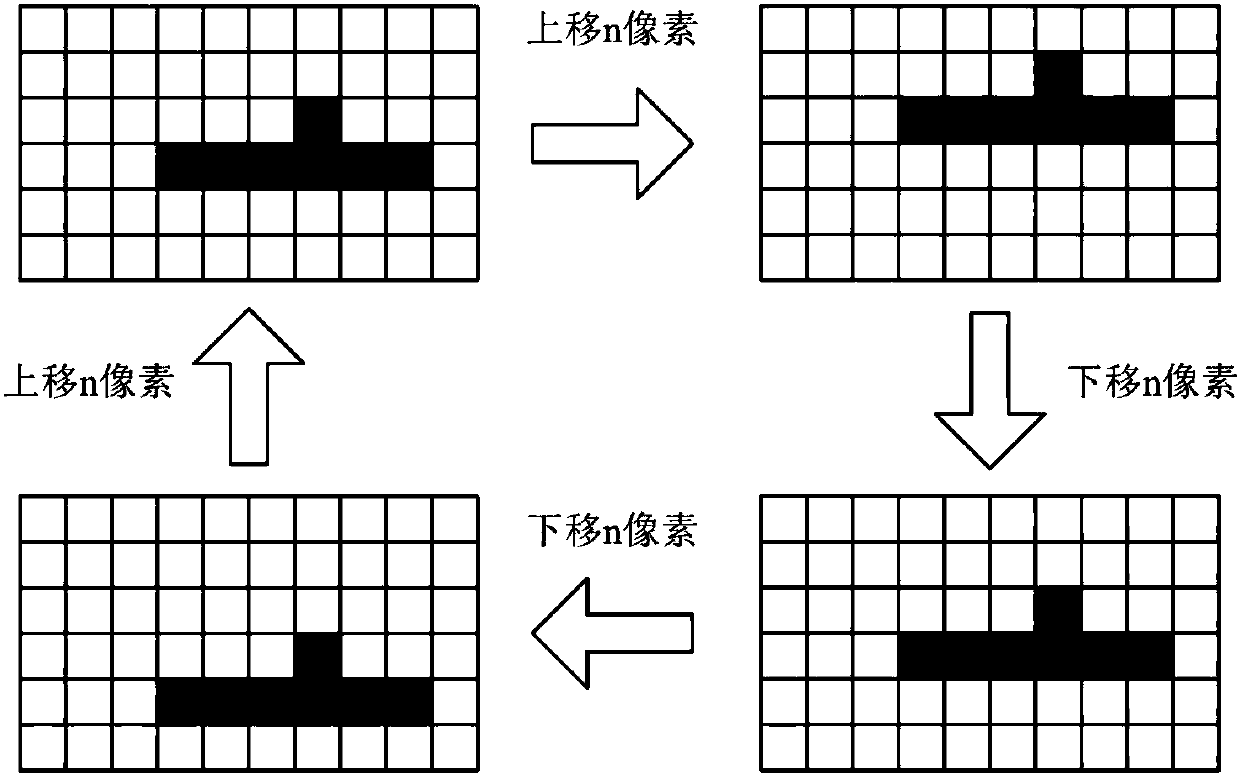
[0065] refer to Figure 5 , Figure 5 It is a schematic diagram of simulation results using the OLED image burn-in improvement method disclosed in the present invention. According to the existing OLED brightness attenuation model, the image burning simulation is carried out on the checkerboard screen, and the initial brightness is 5000cd / m 2 , the test time is 8000h. According to the image features and judged by image detection, the horizontal direction and vertical direction of the checkerboard image have the same burning situation, and the moving mode selects the moving mode of moving right → moving down → moving left → moving up. The results of the burning phenomenon before and after image processing are as follows Figure 5 As shown, it can be seen that after the image movement processing, the edge of the image is blurred, and the image burning phenomenon has been improved to a certain extent compared with that before the processing.
[0066] refer to Image 6 , Imag...
PUM
 Login to View More
 Abstract
Description
Claims
Application Information
 Login to View More