
Battery charging circuit and control circuit and control method thereof
A battery charging and control circuit technology, applied in secondary battery charging/discharging, battery circuit devices, charging/discharging current/voltage regulation, etc., can solve problems such as system instability and unsmooth switching, and improve transient response Performance, smooth control switching, and improved system stability
- Summary
- Abstract
- Description
- Claims
- Application Information
AI Technical Summary
Problems solved by technology
Method used
Image

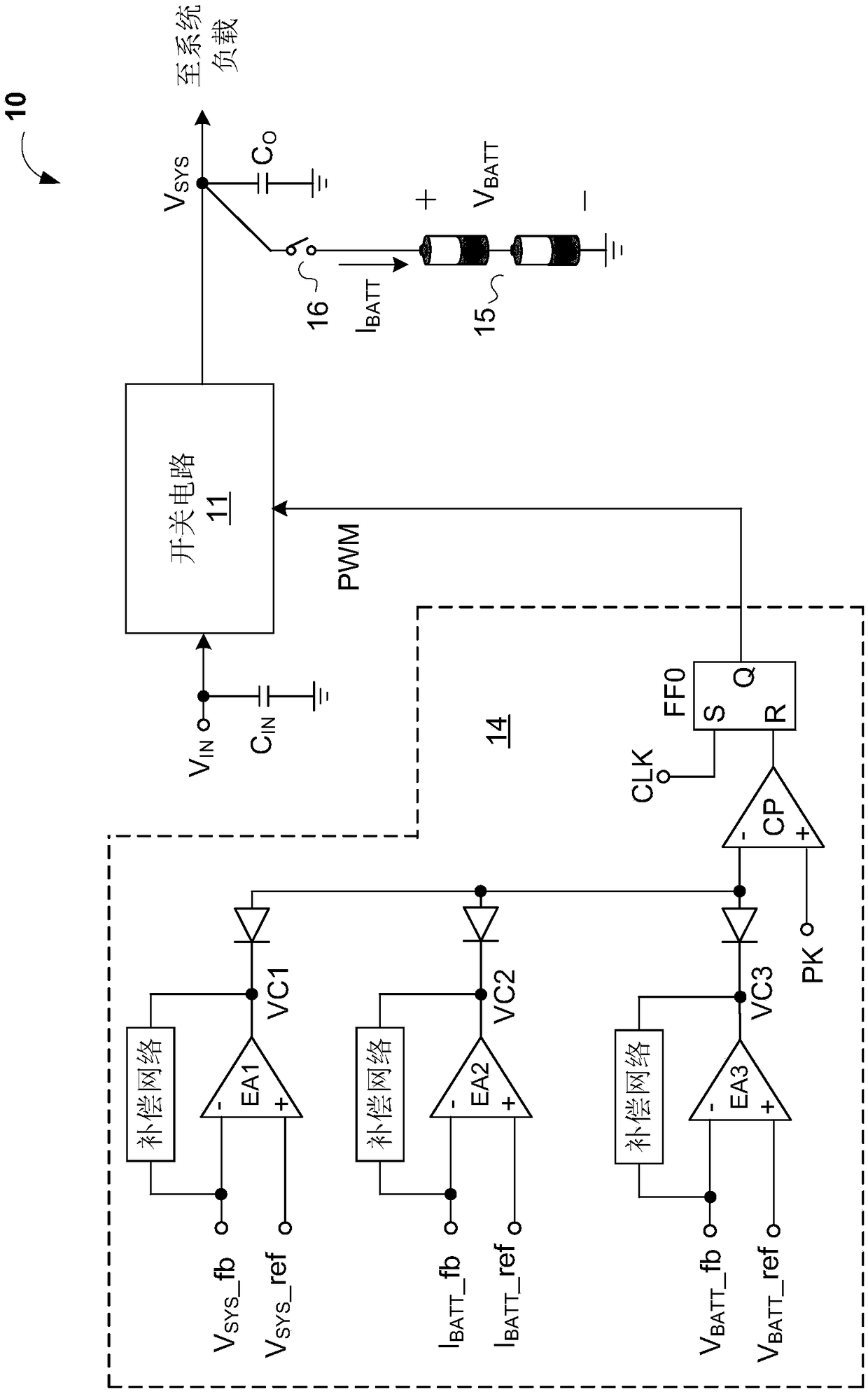
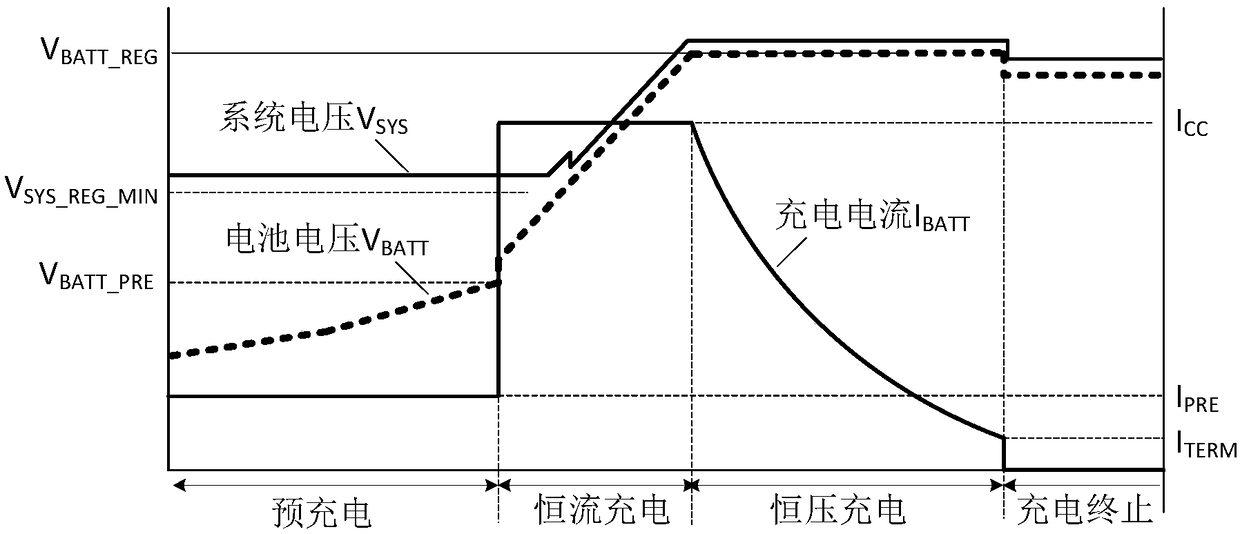
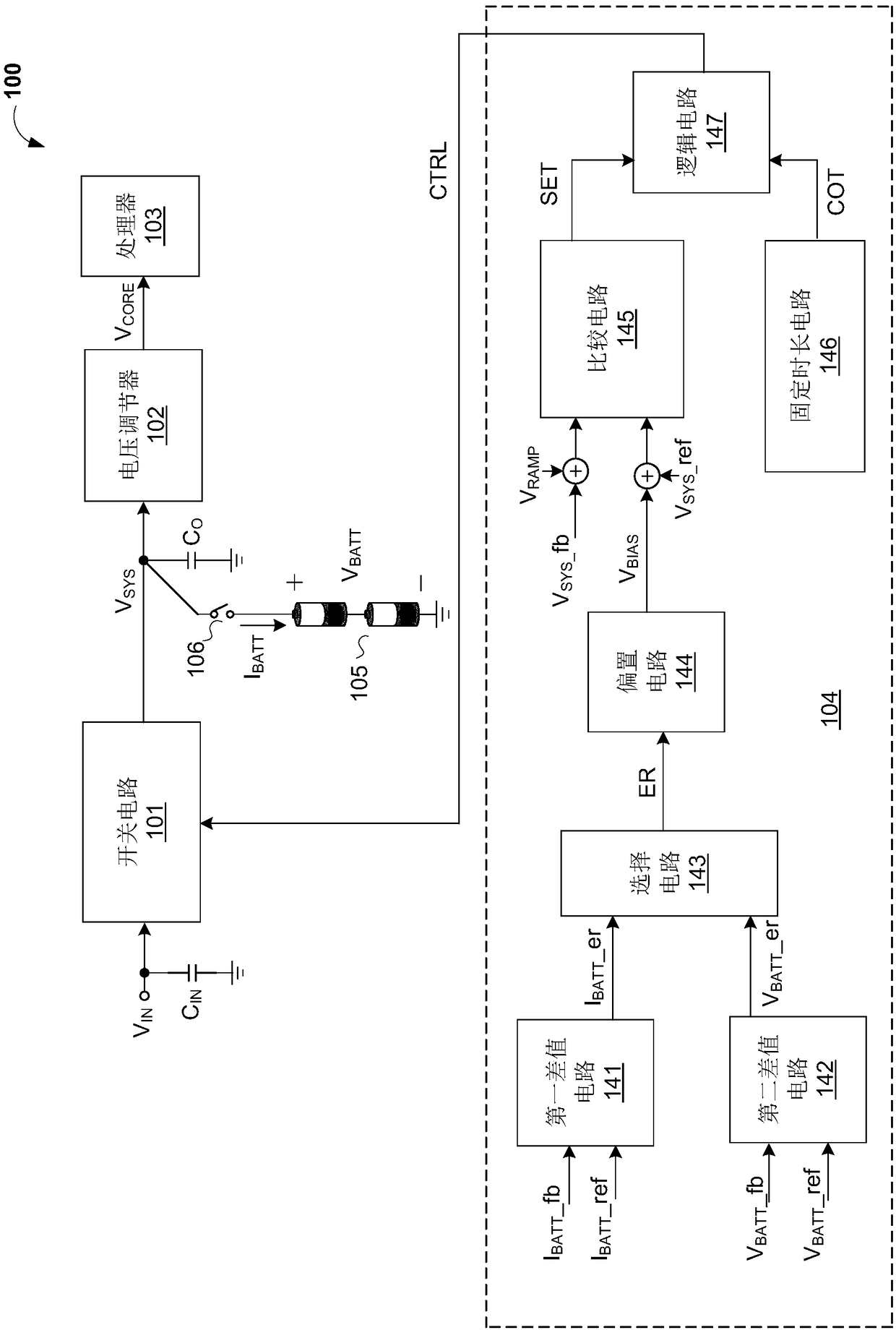
Examples
Embodiment Construction
[0020] Specific embodiments of the present invention will be described in detail below, and it should be noted that the embodiments described here are only for illustration, not for limiting the present invention. In the following description, numerous specific details are set forth in order to provide a thorough understanding of the present invention. It will be apparent, however, to one of ordinary skill in the art that these specific details need not be employed to practice the present invention. In other instances, well-known circuits, materials or methods have not been described in detail in order to avoid obscuring the present invention.
[0021] Throughout this specification, reference to "one embodiment," "an embodiment," "an example," or "example" means that a particular feature, structure, or characteristic described in connection with the embodiment or example is included in the present invention. In at least one embodiment. Thus, appearances of the phrases "in on...
PUM
 Login to View More
 Abstract
Description
Claims
Application Information
 Login to View More