
Reagent and reagent kit for detecting children asthma based on GLCCI1 gene rs37972 site and application
A technology for rs37972 and asthma, applied in the field of genetic engineering, can solve the problems of deepening asthma symptoms and poor treatment effect, and achieve early intervention and minimal improvement of MMEF
- Summary
- Abstract
- Description
- Claims
- Application Information
AI Technical Summary
Problems solved by technology
Method used
Image

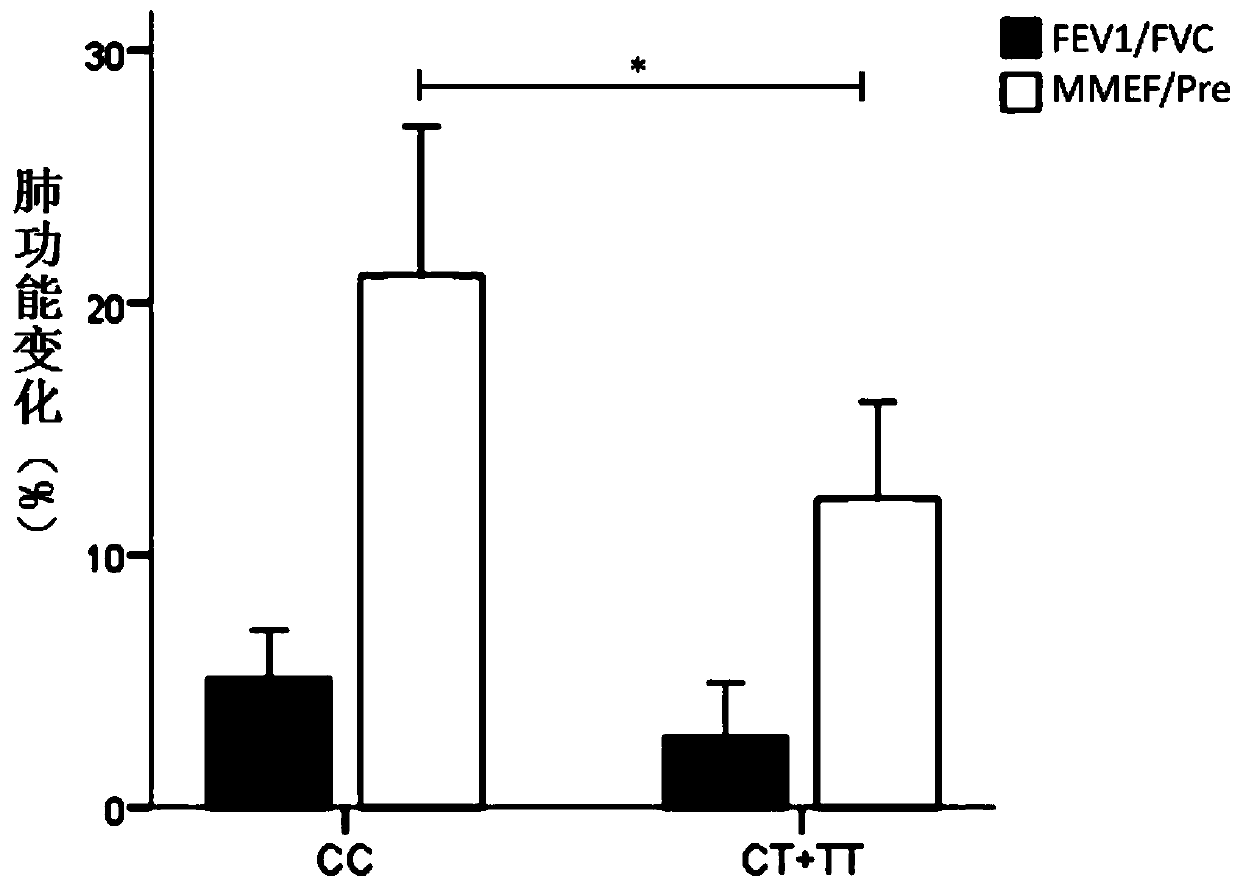
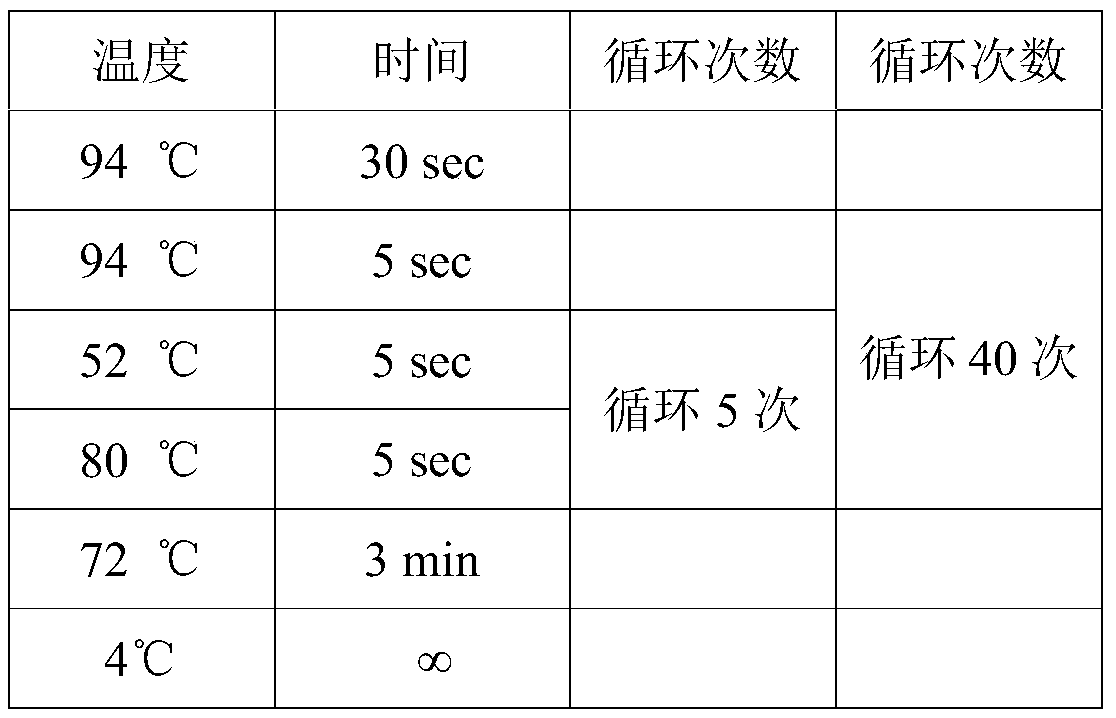
Examples
Embodiment 1
[0041] A detection reagent for detecting asthma in children, comprising: PCR reaction system, SAP reaction system and iPLEX extension system.
[0042] The total volume of the PCR reaction system is 5 μL, specifically including 1.625mM MgCl 2 , 500 μM dNTP, 50 μM upstream primer, 50 μM downstream primer, 0.5U / rxn Taq enzyme, 1.25x PCR Buffer and deionized water.
[0043] Wherein the DNA sequence of the upstream primer is shown in SEQ ID NO.1, specifically:
[0044] ACGTTGGATGCACGAGCAGACCAATTTGAC.
[0045] The DNA sequence of the downstream primer is shown in SEQ ID NO.2, specifically:
[0046] ACGTTGGATGCGGGAGCAATTAATGTAAGG.
[0047] The total volume of the SAP reaction system is 7 μl, and its components include: 1U / μl shrimp alkaline phosphatase, 10x SAP Buffer and deionized water.
[0048] The total volume of the iPLEX extension system is 9μl, and its components include: 0.222x iPLEX Buffer, 1x iPLEX Termination mix, 1x iPLEX Enzyme, Primer Mix (7μM: 14μM).
Embodiment 2
[0050] A kit for detecting asthma in children, comprising the reagent of Example 1.
Embodiment 3
[0052] An application of the reagent of Example 1 in the preparation of a kit for predicting the risk of children suffering from asthma, the application method comprising the following steps:
[0053] (1) Selection of inspection objects:
[0054] A total of 263 Han children with asthma diagnosed in the Pediatric Outpatient Clinic of Xiangya Hospital, Central South University were recruited, with an average age of 8.18 (±2.73) years old. At the same time, 150 healthy control children with an average age of 8.20 (±2.28) years old were recruited from the Department of Pediatrics, Xiangya Hospital, Central South University. At the same time, the above-mentioned children were divided into a group older than and equal to 6 years old (group A) and a group younger than 6 years old (group B) according to their age.
[0055] Inclusion criteria for asthma group:
[0056] 1. Meet the diagnostic criteria for asthma in the "Guidelines for the Diagnosis and Prevention of Bronchial Asthma i...
PUM
 Login to View More
 Abstract
Description
Claims
Application Information
 Login to View More