Multi-user random access method and system, and base station

A random access and multi-user technology, applied in the field of communication, can solve problems such as low mobility, conflicts, and low system scalability, and achieve the effect of reducing access conflicts and expanding the number

CN111586884AActive Publication Date: 2020-08-25BEIJING JIAOTONG UNIV
5 Cites 1 Cited by

Patent Information

Authority / Receiving Office
CN · China
Patent Type
Applications(China)
Current Assignee / Owner
Publication Date
2020-08-25

Smart Images

  • Figure 1
    Figure 1
  • Figure 2
    Figure 2
  • Figure 3
    Figure 3
Patent Text Reader

Abstract

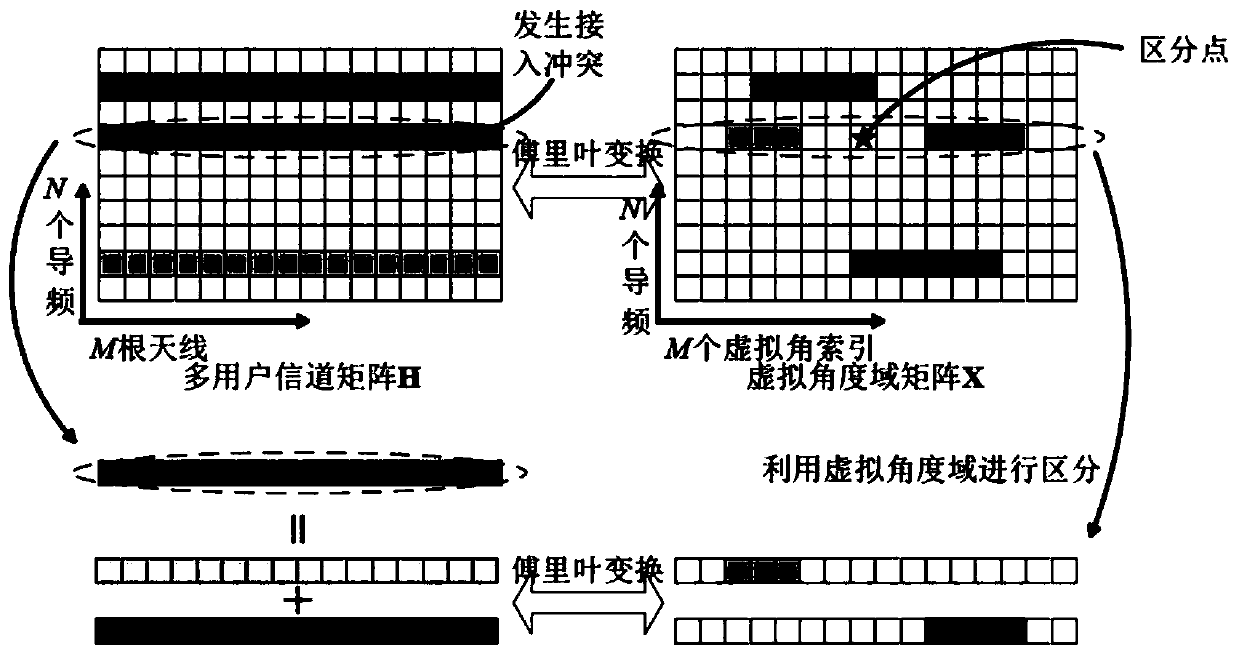
The embodiment of the invention provides a multi-user random access method and system utilizing angle domain cluster sparse characteristics, and a base station. The method comprises the following steps: 1, a base station side receives a signal Q sent to a base station when equipment of a user side gets access; 2, the base station side processes the received signals, wherein the step 2 specificallycomprises: performing Fourier transform Y = QW = AHW + ZW = AX + N on a received signal Q so as to convert a system model to a multi-antenna virtual angle domain, wherein the matrix W represents a discrete Fourier transform matrix, X = HW is a channel information matrix of an angle domain, n=ZW; and 3, the base station side performs pilot frequency detection and conflict resolution according to the processed signals.
Need to check novelty before this filing date? Find Prior Art

Description

technical field

[0001] The present invention relates to the communication field, in particular to a multi-user random access method, base station and system. Background technique

[0002] As one of the three major scenarios of the fifth-generation mobile communication system (fifth-generation, 5G), MMTC has the characteristics of a large number of devices, small data packet transmission, low mobility and low activity, and is a sparsity communication scene. However, the traditional grant-based and contention-based random access methods have cumbersome signaling interaction procedures, which not only cause excessive delays, but also cause the overhead of control information to be relatively large for small data packets of MMTC. Large, it will also cause a waste of spectrum resources.

[0003] Unauthorized multi-user access technology based on Compressive Sensing (CS) is a direction to solve this problem. The core idea of ​​CS is to project a sparse or compressible high-dime...

Examples

Embodiment Construction

[0039] Embodiments of the present invention are described in detail below, examples of which are shown in the drawings, wherein the same or similar reference numerals denote the same or similar elements or elements having the same or similar functions throughout. The embodiments described below by referring to the figures are exemplary only for explaining the present invention and should not be construed as limiting the present invention.

[0040] In order to facilitate the understanding of the embodiments of the present invention, several specific embodiments will be taken as examples for further explanation below in conjunction with the accompanying drawings, and each embodiment does not constitute a limitation to the embodiments of the present invention.

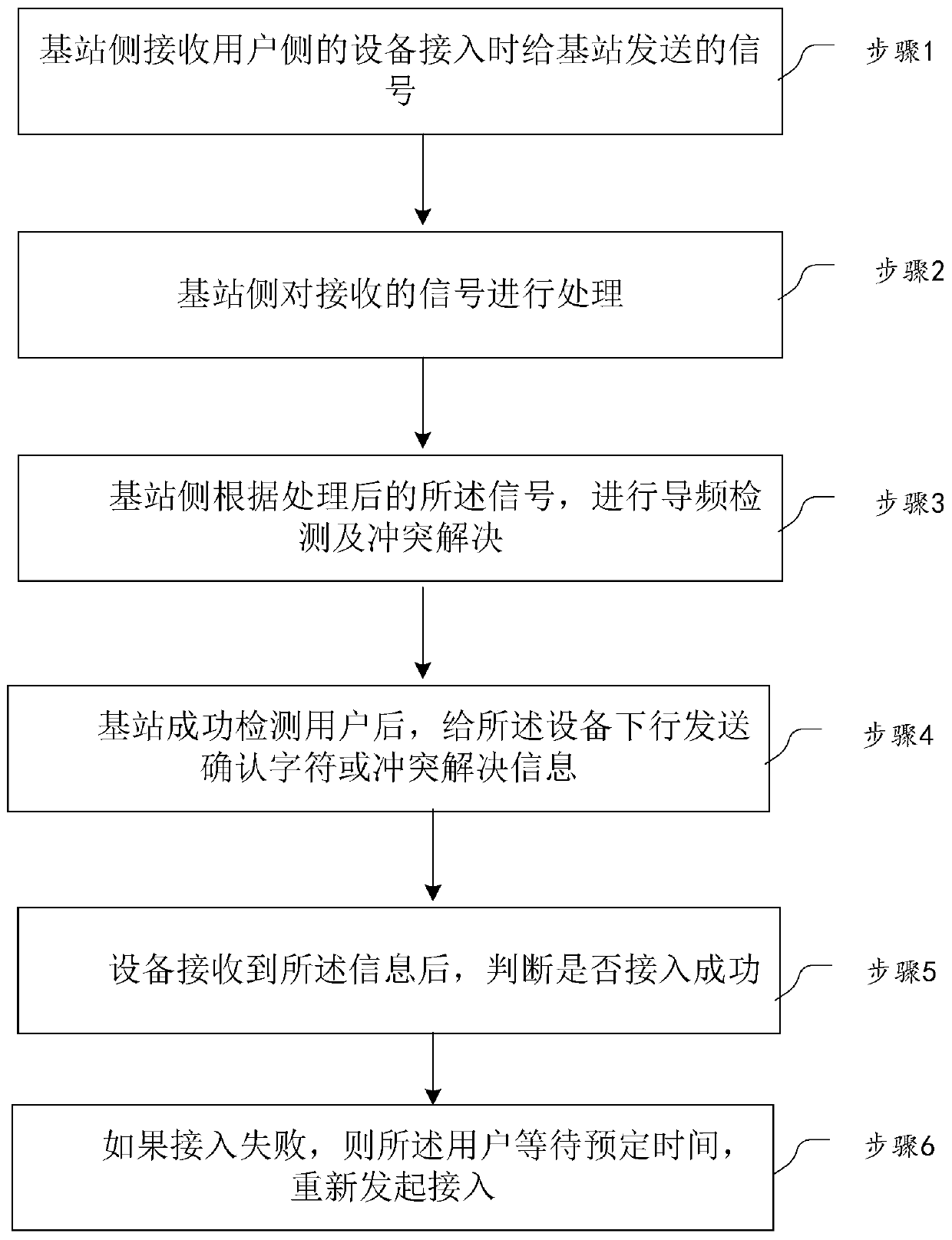
[0041] Such as figure 1As shown, it is a multi-user random access method utilizing angle-domain cluster sparseness according to the present invention, comprising the following steps:

[0042] Step 1, the base station sid...