
LILRB2 and notch-mediated expansion of hematopoietic precursor cells
a technology of hematopoietic precursor cells and notch-mediated expansion, which is applied in the direction of skeletal/connective tissue cells, instruments, peptides, etc., can solve the problem that lymphoid cells cannot give rise to cells of myeloid lineage, and achieve the effects of enhancing early marrow repopulation, generating more precursor cells, and improving long term repopulation
- Summary
- Abstract
- Description
- Claims
- Application Information
AI Technical Summary
Benefits of technology
Problems solved by technology
Method used
Image

Examples
embodiment 1
2. A method of embodiment 1 wherein the LILRB2 agonist has a molecular weight of at least 250 kD
3. A method of embodiment 1 or 2 wherein the LILRB2 agonist is multimerized.
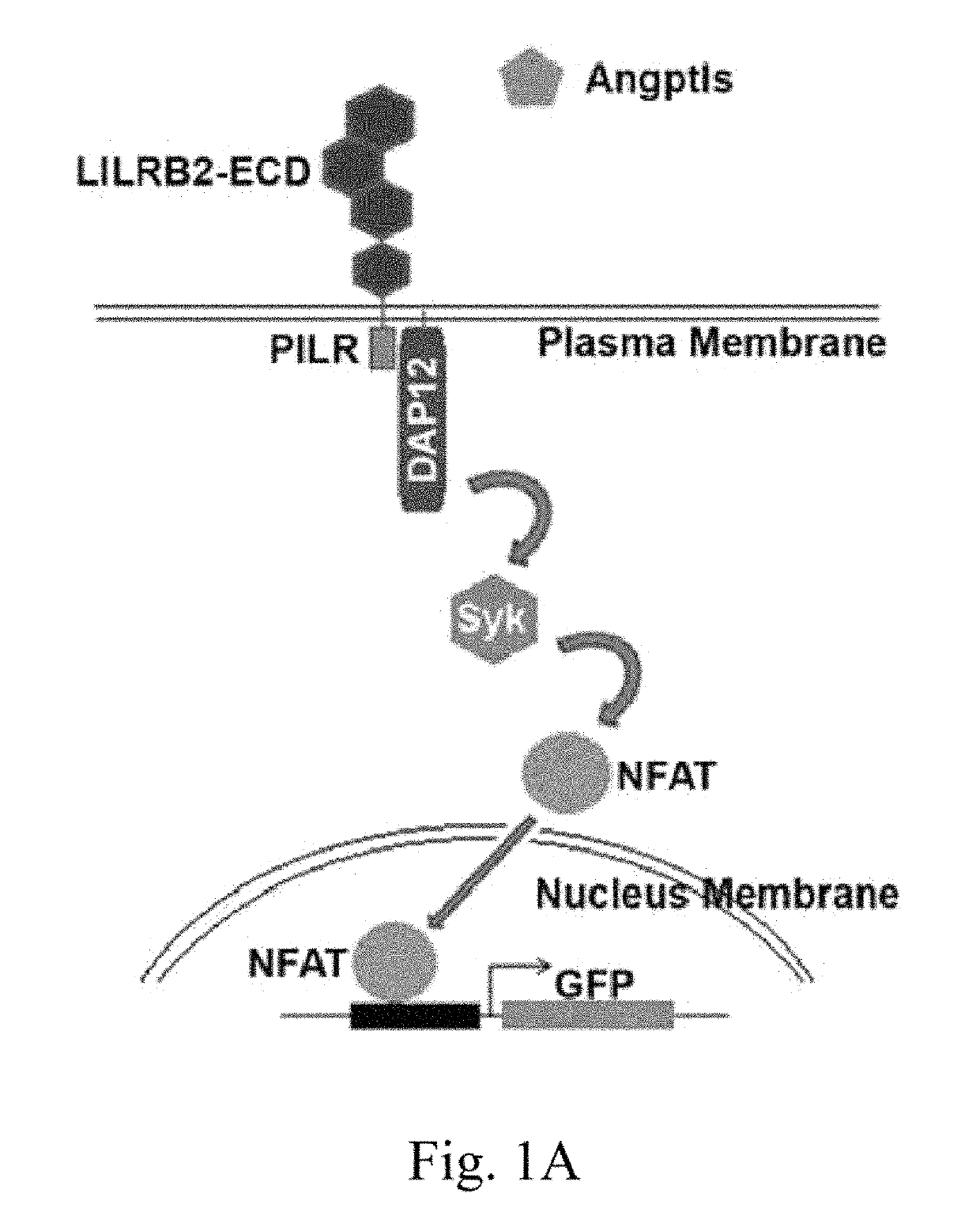
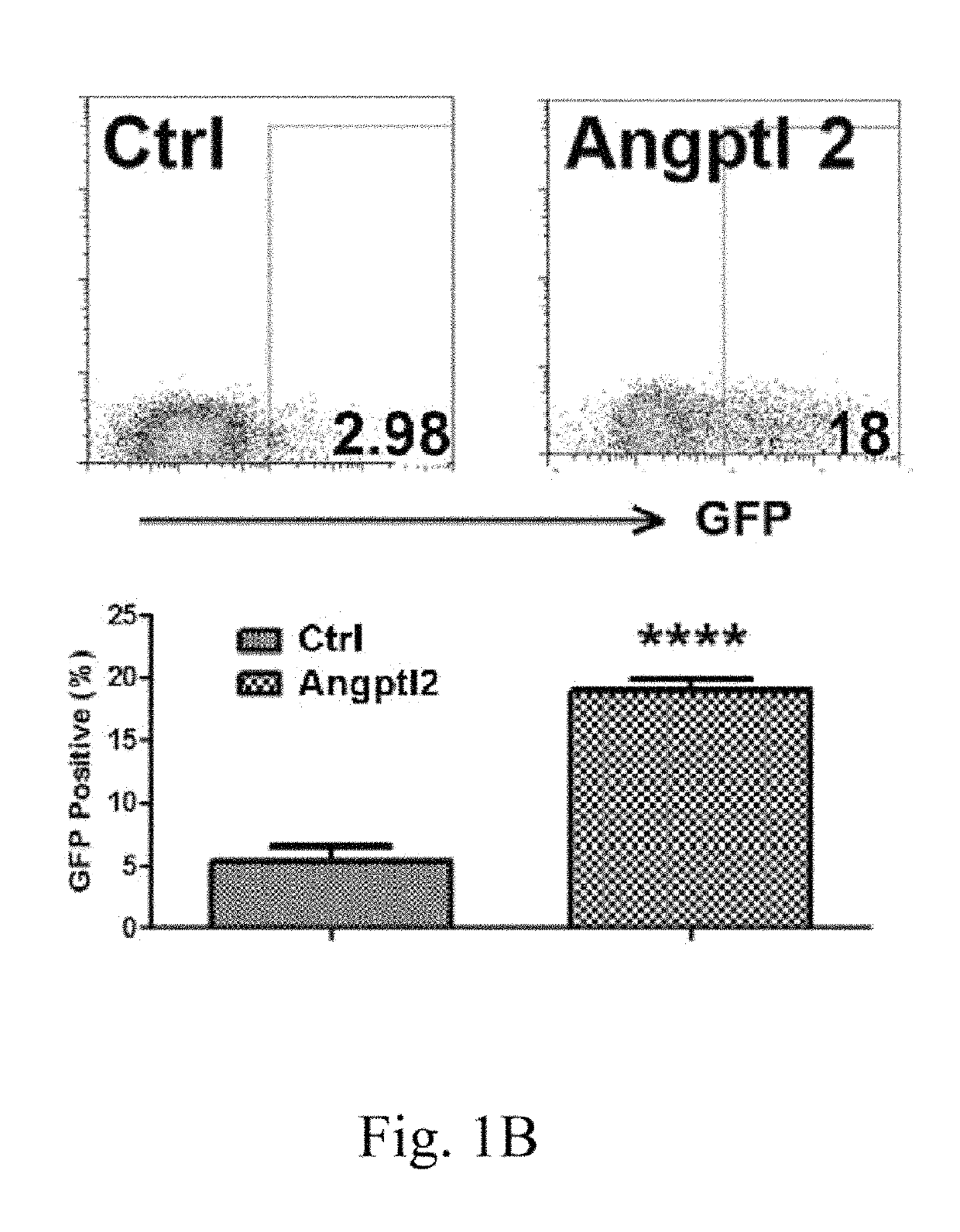
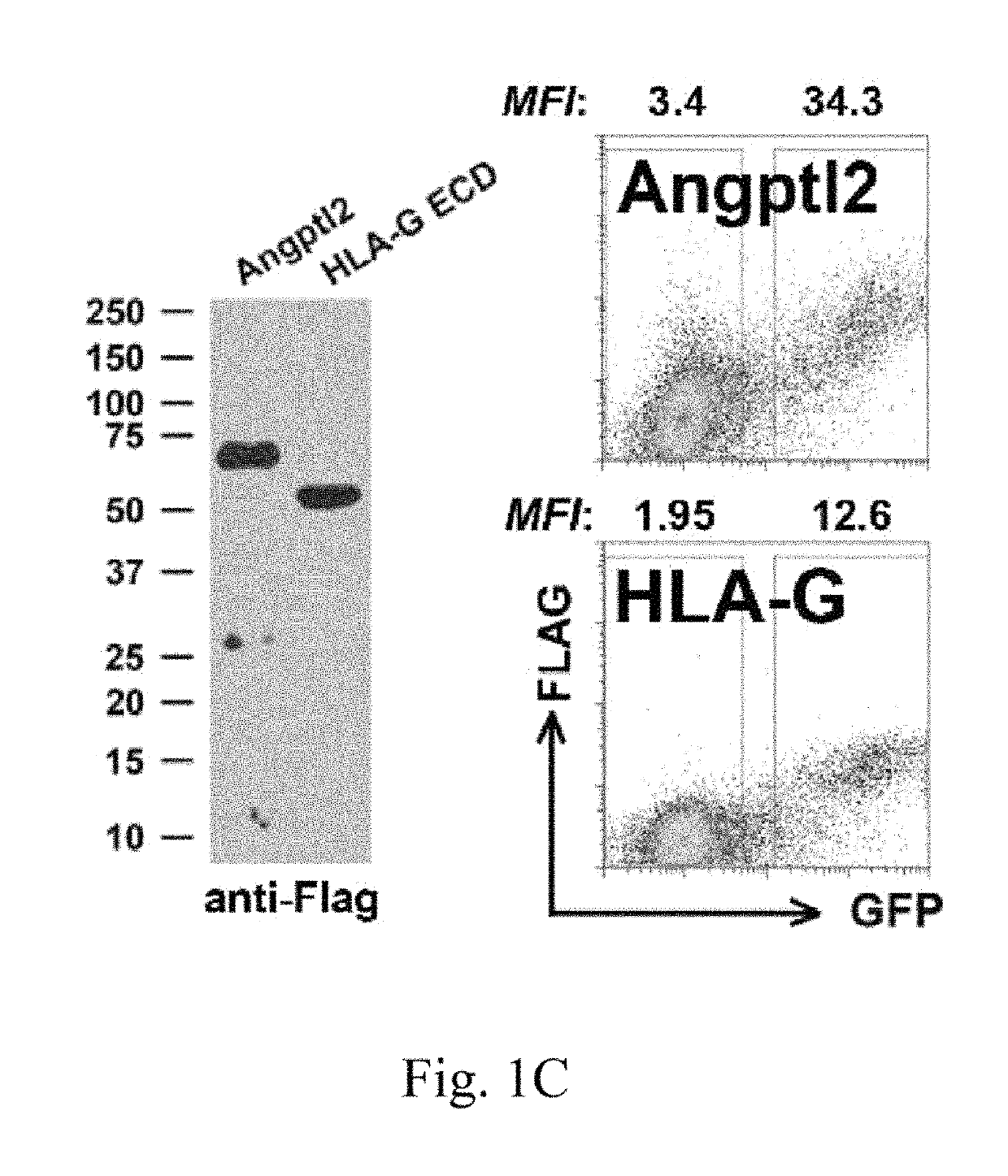
4. A method of embodiments 1, 2 or 3 wherein the LILRB2 agonist is an angiopoietin-like protein (Angptl) or fragment thereof.
embodiment 4
5. A method of embodiment 4 wherein the Angptl or fragment thereof comprises the coiled-coil domain of the Angptl.
6. A method of embodiment 4 or 5 wherein the LILRB2 agonist is Angptl 1 or a fragment thereof, Angptl2 or a fragment thereof, Angptl3 or a fragment thereof, Angptl4 or a fragment thereof, Angptl5 or a fragment thereof, Angptl7 or a fragment thereof, or Mfap4 or a fragment thereof.
7. A method of embodiment 1 wherein the LILRB2 agonist is an LILRB2 receptor antibody.
embodiment 7
8. A method of embodiment 7 wherein the LILRB2 antibody is a monoclonal antibody or a polyclonal antibody.
9. A method of any one of embodiments 1-8 wherein the LILRB2 agonist binds the Ig1 domain of LILRB2.
10. A method of any of embodiments 1-8 wherein the LILRB2 agonist binds the Ig4 domain of LILRB2.
11. A method of any of embodiments 1-8 wherein the LILRB2 agonist binds the Ig1 domain and the Ig4 domain of LILRB2.
12. A method of any of embodiments 1-8 wherein the LILRB2 agonist binds the amino acids at positions 92-100 of LILRB2 within the Ig1 domain.
13. A method of any of embodiments 1-8 wherein the LILRB2 agonist binds the amino acids at positions 94, 95 and / or 96 of LILRB2 within the Ig1 domain.
14. A method of any of embodiments 1-8 wherein the LILRB2 agonist binds the amino acids at positions 390-396 of LILRB2 within the Ig4 domain.
15. A method of any of embodiments 1-8 wherein the LILRB2 agonist binds the amino acids at 392 and 393 of LILRB2 within the Ig4 domain.
16. A method...
PUM
| Property | Measurement | Unit |
|---|---|---|
| time | aaaaa | aaaaa |
| time | aaaaa | aaaaa |
| culture time | aaaaa | aaaaa |
Abstract
Description
Claims
Application Information
 Login to View More