
System for analyzing oximetry data
a technology of oximetry and data analysis, applied in the field of method and system for the analysis of oximetry data, can solve the problems of not necessarily the ideal pressure, little sleep for the subject, and disruption of sleep, and achieve the effect of quick and reliable identification of the condition of the patien
- Summary
- Abstract
- Description
- Claims
- Application Information
AI Technical Summary
Benefits of technology
Problems solved by technology
Method used
Image

Examples
Embodiment Construction
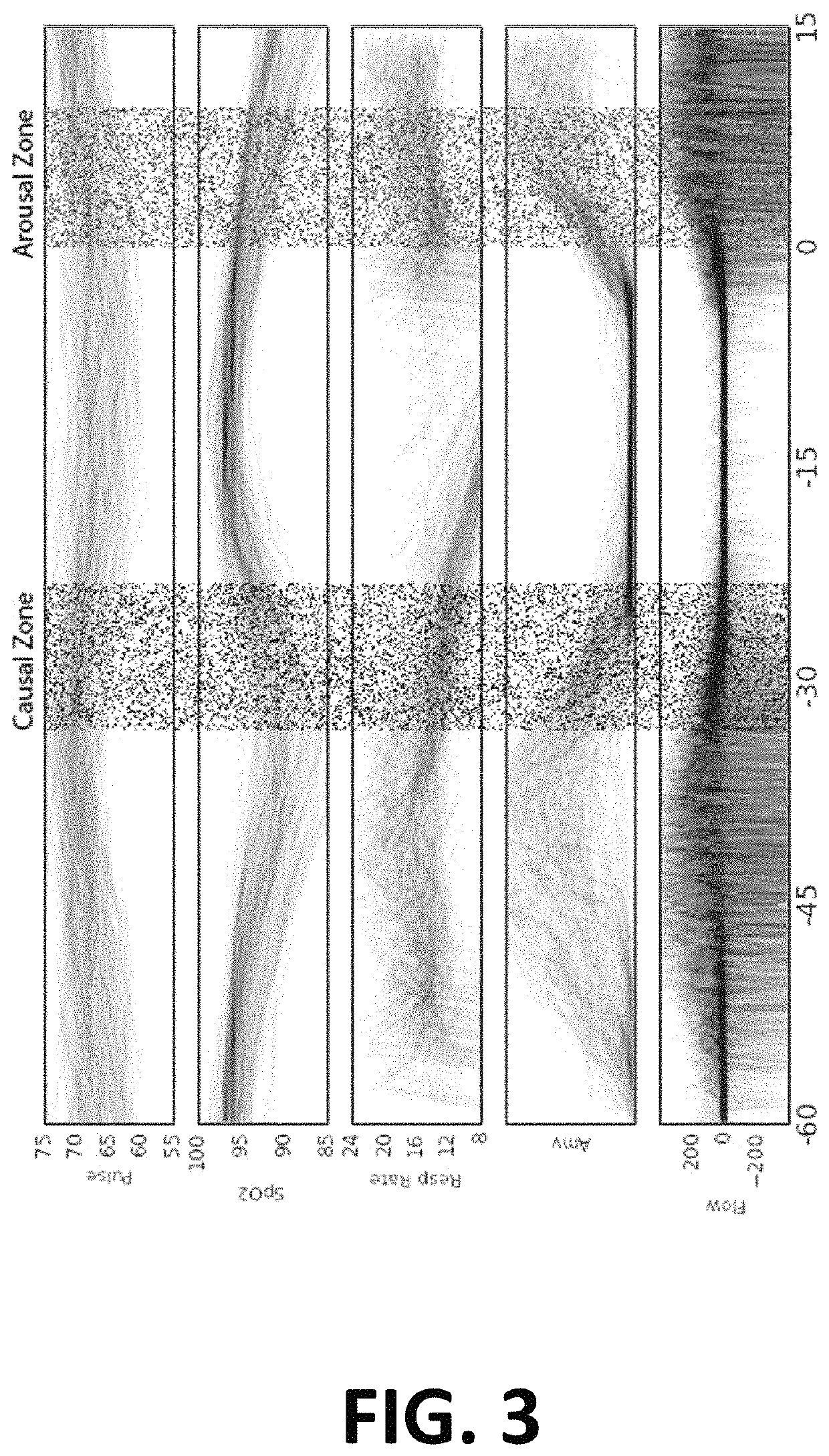
[0018]In the most general embodiment, the present invention provides a method and system for the analysis of a patient's oximetry data for the detection of sleep-disordered breathing. The system employs an algorithm to reliably detect patient arousals and correlate those with accelerated heart rate and oxygen saturation levels in a manner that detects sleep-disordered breathing via the patient's oximetry data.
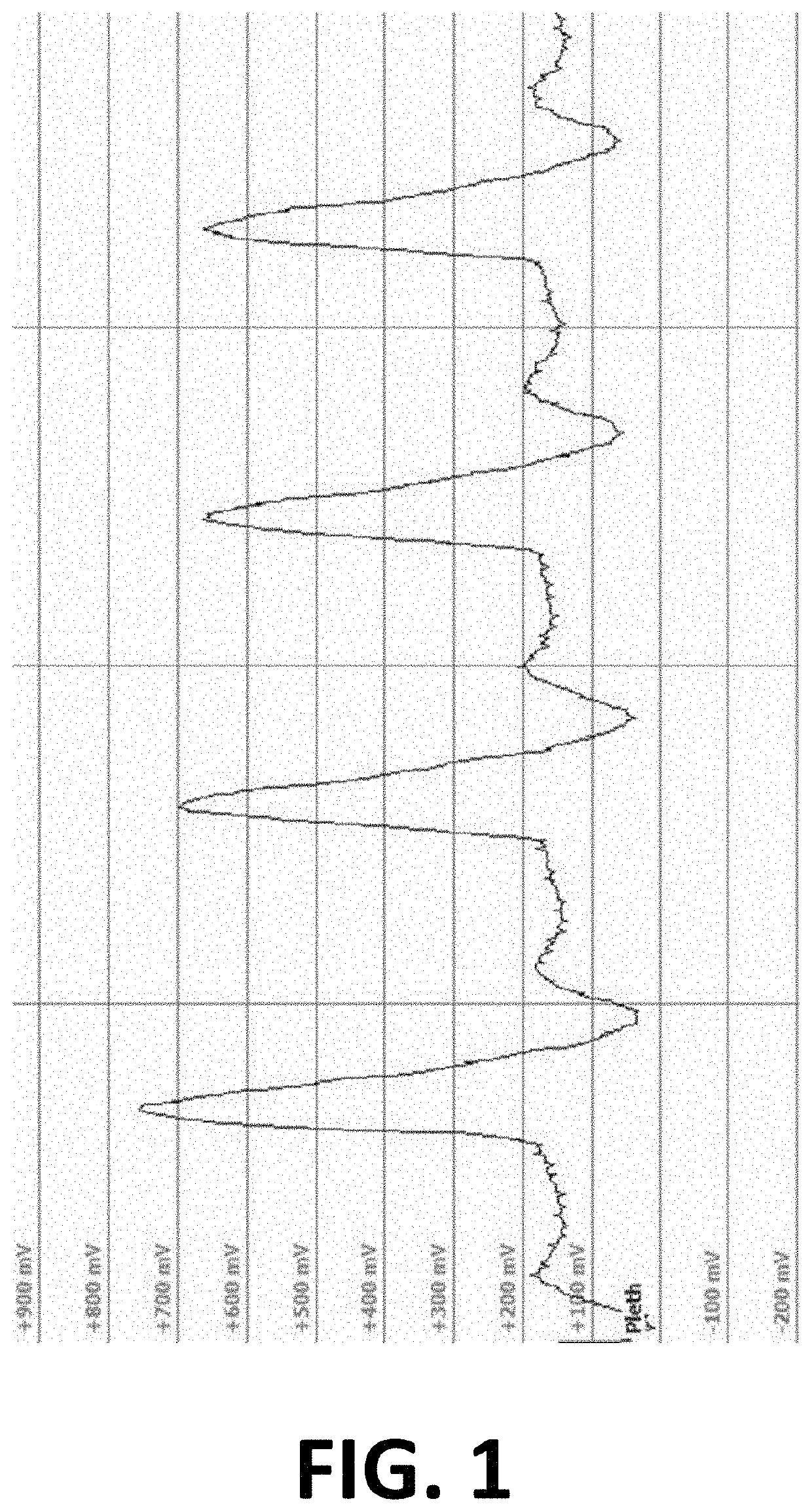
[0019]The initial steps in the method and system of the present invention are primarily known. The first step relates to first obtaining a high quality unfiltered pleth signal having a resolution of at least 16-bit / 100 Hz as shown at FIG. 1. This pleth signal is formed based on recording a plethsmography signal using an optical finger sensor associated with a pulse oximeter capable of recording a signal at or above the required signal resolution.
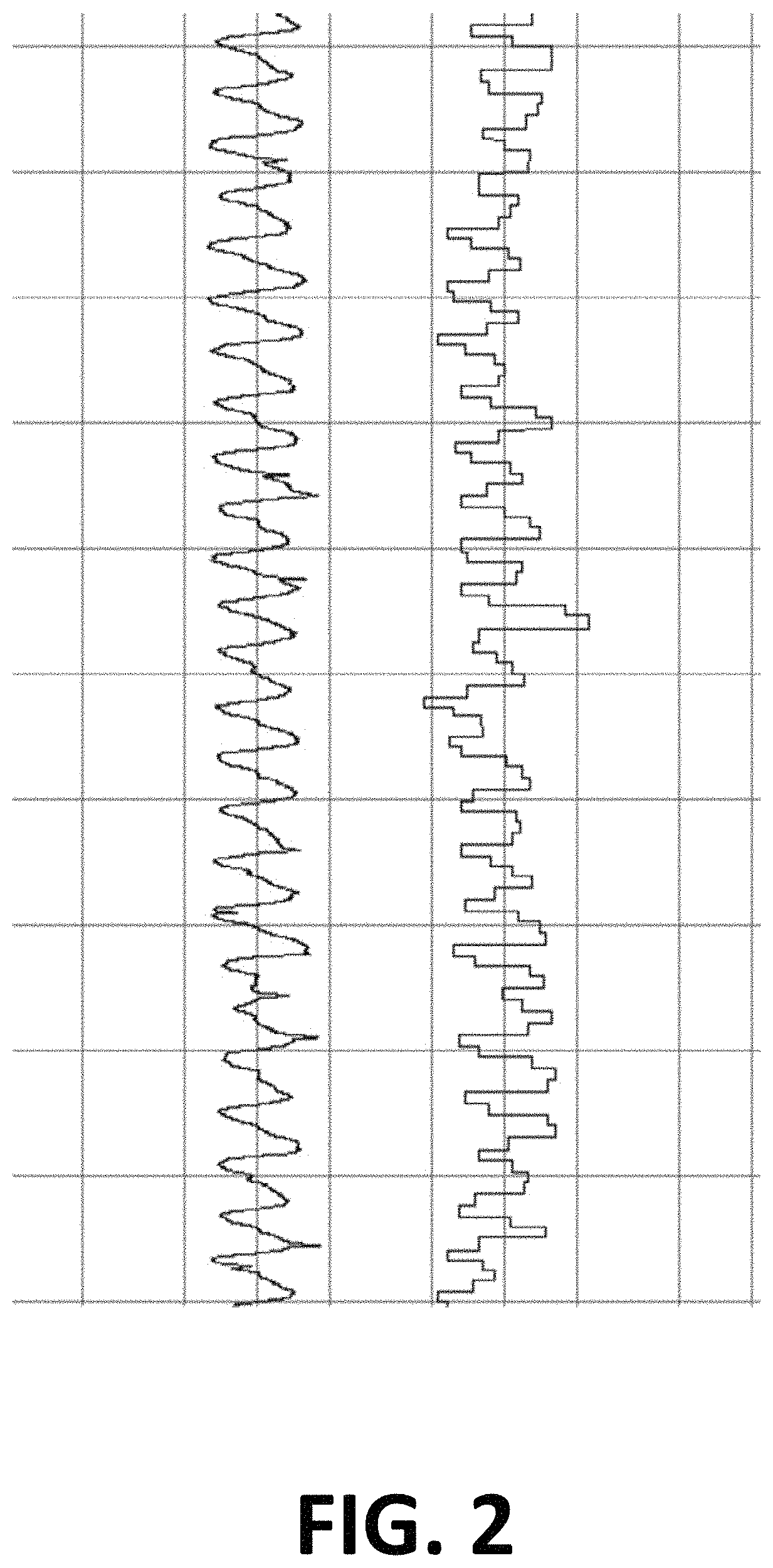
[0020]It is known in the art that, as shown in FIG. 2, a correlation exists as between variations in the heart rate rhythm and the bre...
PUM
 Login to View More
 Abstract
Description
Claims
Application Information
 Login to View More