Method of harvesting radio-frequency energy, corresponding circuit and device

a radio frequency energy and corresponding circuit technology, applied in the field of radio frequency energy harvesting, can solve the problems of reducing the ability to transfer information from the tag, wideband arrangements exhibiting low sensitivity to external effects at the expense of communication range capabilities, etc., and achieve the effect of facilitating accumulating energy

US10970497B2Active Publication Date: 2021-04-06STMICROELECTRONICS SRL
8 Cites 1 Cited by

Patent Information

Authority / Receiving Office
US · United States
Patent Type
Patents(United States)
Current Assignee / Owner
Publication Date
2021-04-06

Smart Images

  • Figure 1
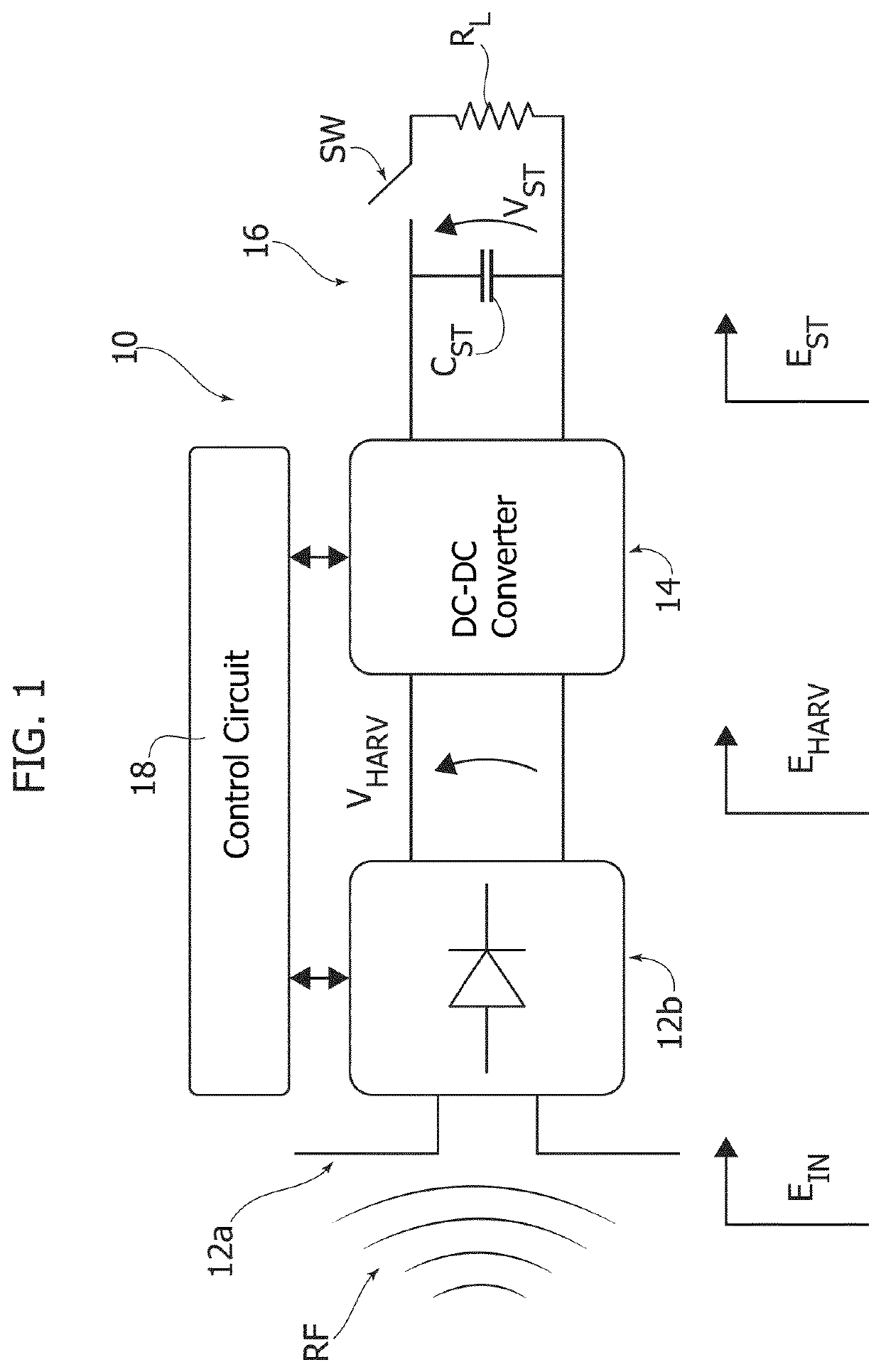
    Figure 1
  • Figure 2
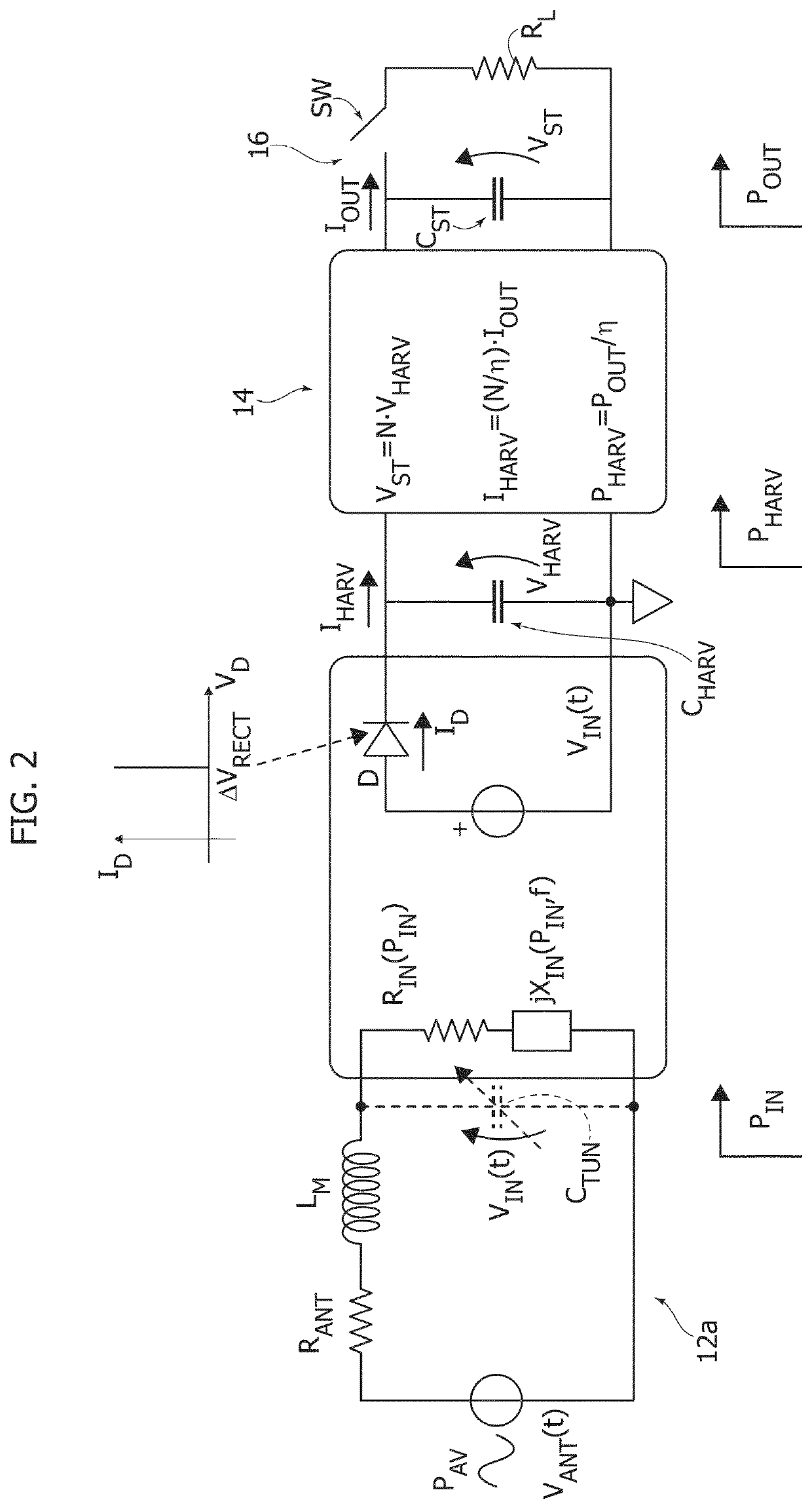
    Figure 2
  • Figure 3
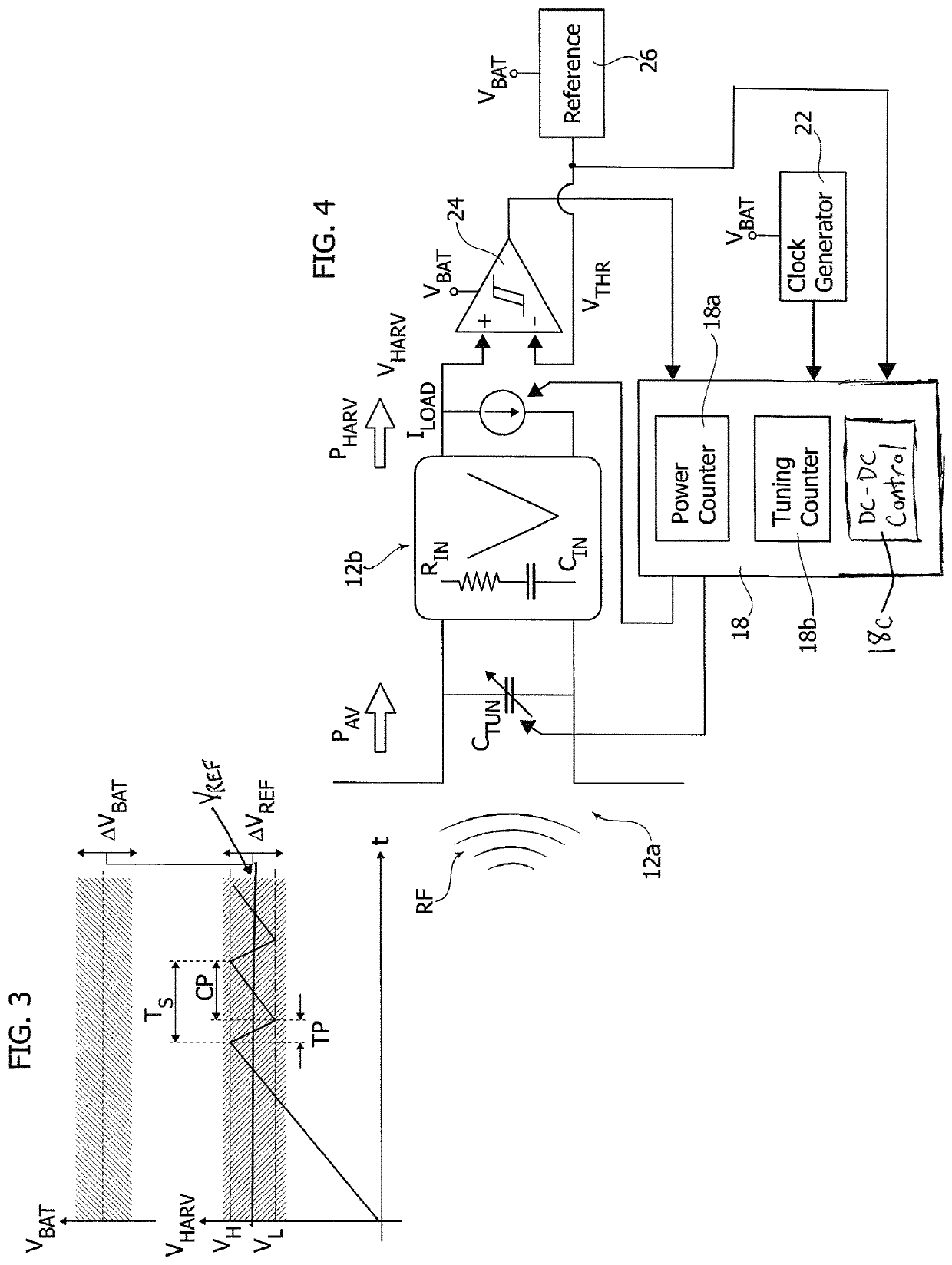
    Figure 3
Patent Text Reader

Abstract

A radiofrequency harvester circuit may be used in a battery-less RFID device. The harvester circuit includes an antenna unit that captures radiofrequency signals and harvesting circuitry coupled to the antenna unit for collecting energy from the radiofrequency signals captured by the antenna unit. The antenna unit is selectively tunable at a plurality of tuning bands that are scanned by selectively tuning the antenna unit at different frequency bands and sensing respective values indicative of the power of radiofrequency signals captured by the antenna unit at the frequency bands scanned. A highest value out of said respective values for the power of radiofrequency signals as well as the frequency band in the plurality of tuning bands of the antenna unit providing the aforesaid highest value are identified and the harvester circuit is operated with the antenna unit tuned at the frequency band providing the highest value thus identified.
Need to check novelty before this filing date? Find Prior Art

Description

BACKGROUNDTechnical Field

[0001] The description relates to harvesting radio-frequency (RF) energy.

[0002] One or more embodiments may be applied, e.g., to Radio-Frequency IDentification (RFID) devices, e.g., with the capability of operating in extreme low-power consumption conditions.Description of the Related Art

[0003] In its current applications, Radio-Frequency IDentification (hereinafter, briefly RFID) technology involves the use of electronic tags placed on objects, humans or animals with the capability of relaying identifying information to an electronic reader by means of radio-waves.

[0004] Automated toll payment systems or tracking systems capable of monitoring the progress of shipments, manufacturing processes and so on are exemplary of possible RFID applications.

[0005] A simple and cheap realization of an RFID tag may involve a miniaturized silicon device applied (e.g., glued) onto a laminar substrate with an antenna layout imprinted thereon.

[0006] The frequency response of the t...

Examples

Embodiment Construction

[0035]In the ensuing description, one or more specific details are illustrated, aimed at providing an in-depth understanding of examples of embodiments of this description. The embodiments may be obtained without one or more of the specific details, or with other methods, components, materials, etc. In other cases, known structures, materials, or operations are not illustrated or described in detail so that certain aspects of embodiments will not be obscured.

[0036]Reference to “an embodiment” or “one embodiment” in the framework of the present description is intended to indicate that a particular configuration, structure, or characteristic described in relation to the embodiment is included in at least one embodiment. Hence, phrases such as “in an embodiment” or “in one embodiment” that may be present in one or more points of the present description do not necessarily refer to one and the same embodiment. Moreover, particular conformations, structures, or characteristics may be comb...