Use of individual blade control on a propeller or rotor in axial flight for the purpose of aerodynamic braking and power response modulation

a technology of aerodynamic braking and power response modulation, applied in the field of rotorcraft, can solve the problems of large deviation from linear relationships, excess airfoil drag, rotational acceleration that increases shaft rpm, etc., and achieves the effects of improving aerodynamic braking, improving aircraft flight dynamics, and reducing torque stress

US11203423B2Active Publication Date: 2021-12-21KAREM AIRCRAFT INC
10 Cites 1 Cited by

Patent Information

Authority / Receiving Office
US · United States
Patent Type
Patents(United States)
Current Assignee / Owner
Publication Date
2021-12-21

Smart Images

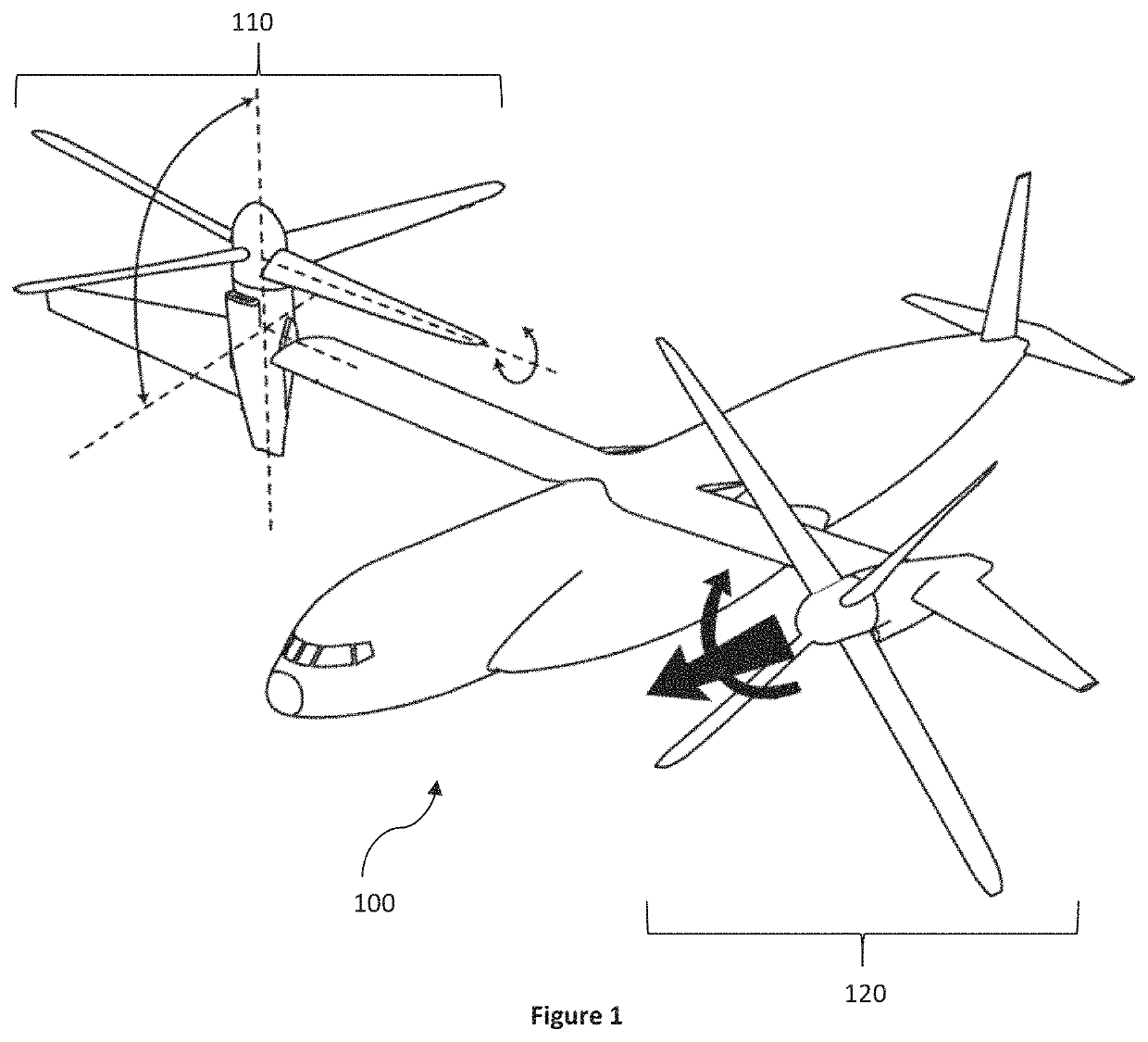
  • Figure 1
    Figure 1
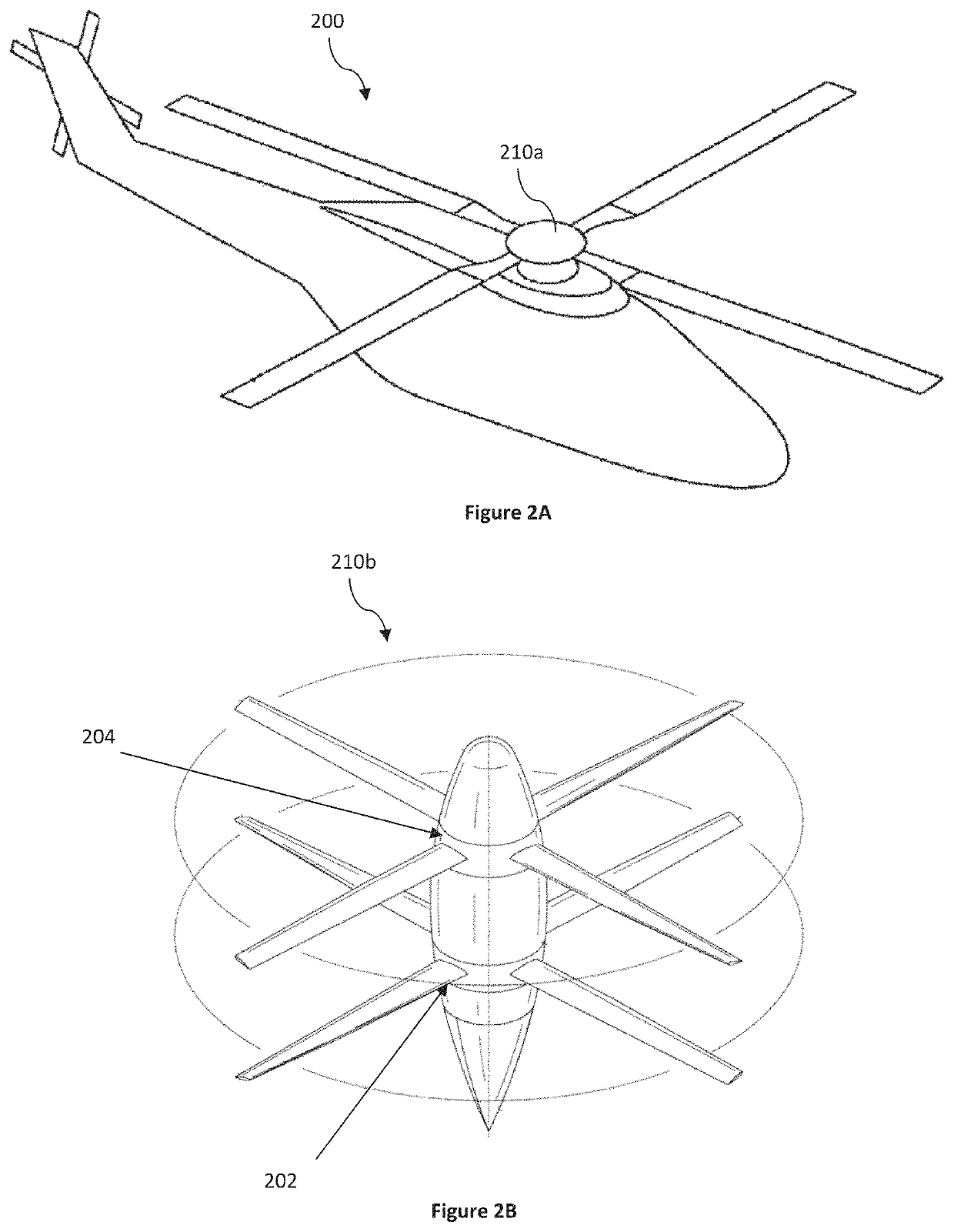
  • Figure 2
    Figure 2
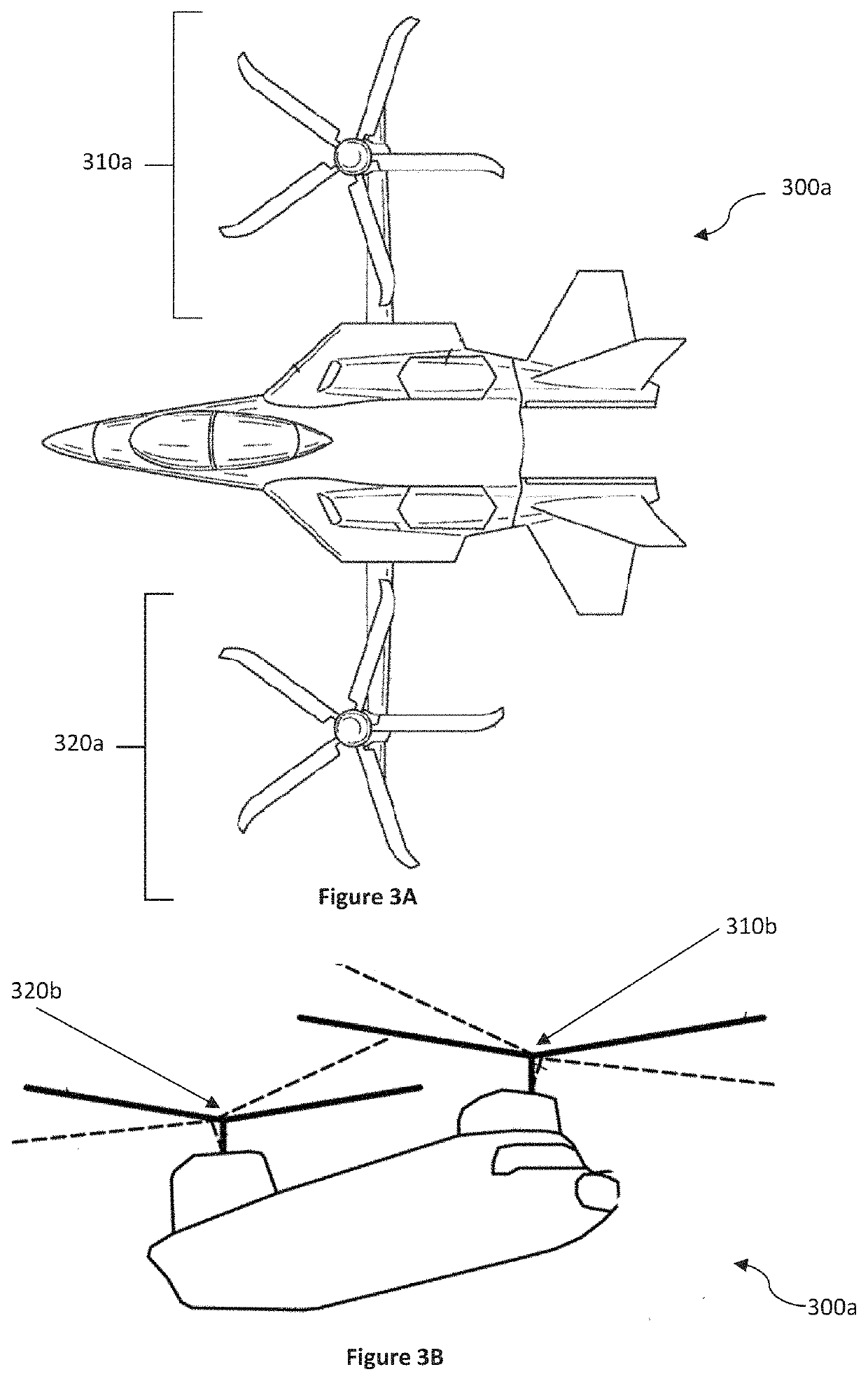
  • Figure 3
    Figure 3
Patent Text Reader

Abstract

Systems and methods are contemplated for favorably improving flight dynamics of aircraft, including enhanced aerodynamic braking and improved flight maneuverability. Air braking systems selectively position a first set of blades at a negative thrust pitch to product a net negative thrust across first and second sets of blades, while balancing torque of the drive shafts to zero. First and second sets of IBC blades can be driven by the same shaft or torque-linked shafts. Flight maneuver systems operate a powerplant at a high power mode, and dissipate the energy from the high power output by positioning a first set of IBC blades at a low efficiency pitch while maintaining constant thrust. As increased or rapid flight maneuverability is required, the first set of blades is positioned toward a high efficiency pitch to instantly increase thrust to the aircraft without requiring a related increase in energy output from the powerplant.
Need to check novelty before this filing date? Find Prior Art

Description

PRIORITY

[0001] This application claims priority to U.S. Provisional Application Ser. No. 62 / 513,925 (filed Jun. 1, 2017) and U.S. Provisional Application Ser. No. 62 / 513,930 (filed Jun. 1, 2017), the disclosures of which are each incorporated herein by reference.FIELD OF THE INVENTION

[0002] The field of the invention is rotorcraft.BACKGROUND

[0003] Propellers and rotors comprise lifting surfaces azimuthally distributed around the axis of a rotating shaft. They are generally utilized to provide propulsive forces for controlling the motion of an aircraft. Propellers may have one or more blades, and examples with two, three, four, five, six, and seven blades are common.

[0004] Some propellers utilize blades where blade pitch (lifting surface angle of incidence relative to the tangential direction due to shaft rotation) is mechanically fixed (fixed-pitch propellers). Other propellers, and some rotors, incorporate pitch-control mechanisms, enabling blade pitch for all blades to simultaneously ...

Examples

Embodiment Construction

[0048]The inventive subject matter contemplates systems, devices, methods, and uses of IBC-capable propellers or rotors to modify flight characteristics or dynamics of aircraft, for example (1) to achieve greater aerodynamic braking effectiveness than would otherwise be possible with non-IBC propellers or rotors, or (2) to rapidly modulate the amount of driveshaft torque required to drive a rotor or propeller while maintaining constant thrust (thus varying the effective lifting efficiency of the rotor).

[0049]Various objects, features, aspects and advantages of the inventive subject matter will become more apparent from the detailed description of preferred embodiments herein, along with the accompanying drawing figures in which like numerals represent like components.

[0050]Aerodynamic Braking

[0051]The inventive subject matter provides apparatus, systems and methods in which IBC-capable propellers or rotors are used to achieve greater braking effectiveness than would otherwise be pos...