
Dynamic compression device and driving tool
a technology of dynamic compression and driving tool, which is applied in the field of fasteners, can solve the problems of early mechanical failure, damage to the spring section shown in these patents, and mechanical failure of springs, so as to reduce the bending moment, reduce bone ingrowth, and facilitate the task of removing the screw
- Summary
- Abstract
- Description
- Claims
- Application Information
AI Technical Summary
Benefits of technology
Problems solved by technology
Method used
Image

Examples
Embodiment Construction
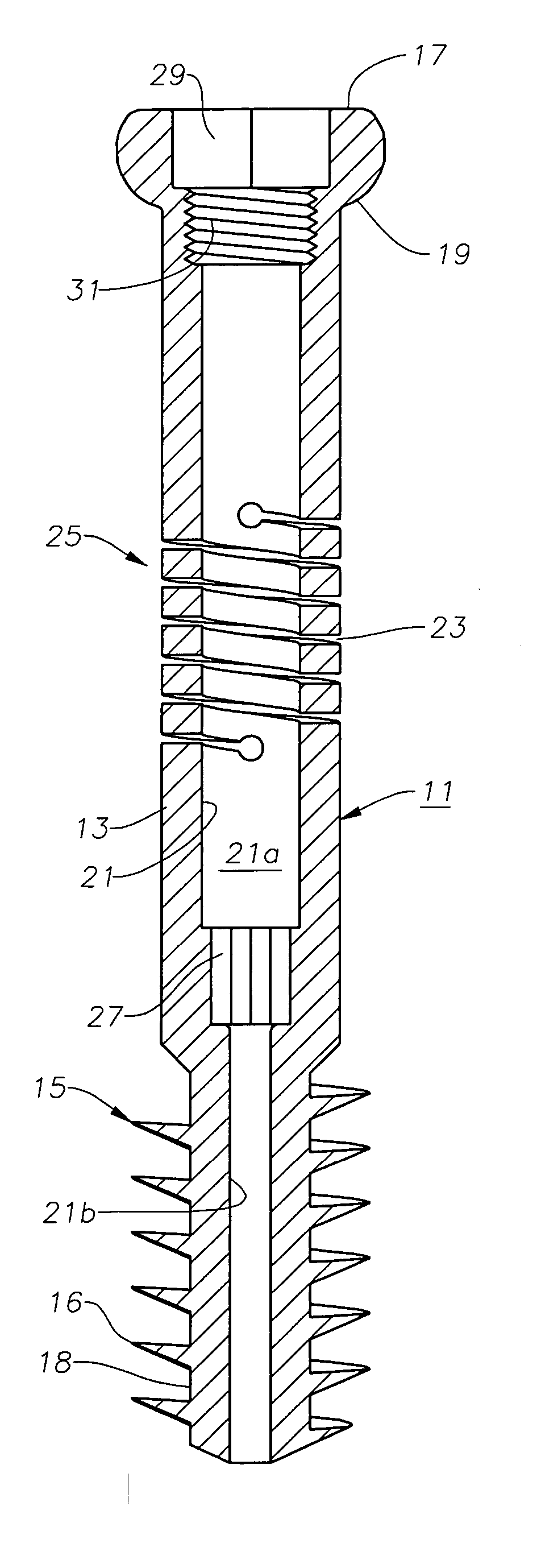
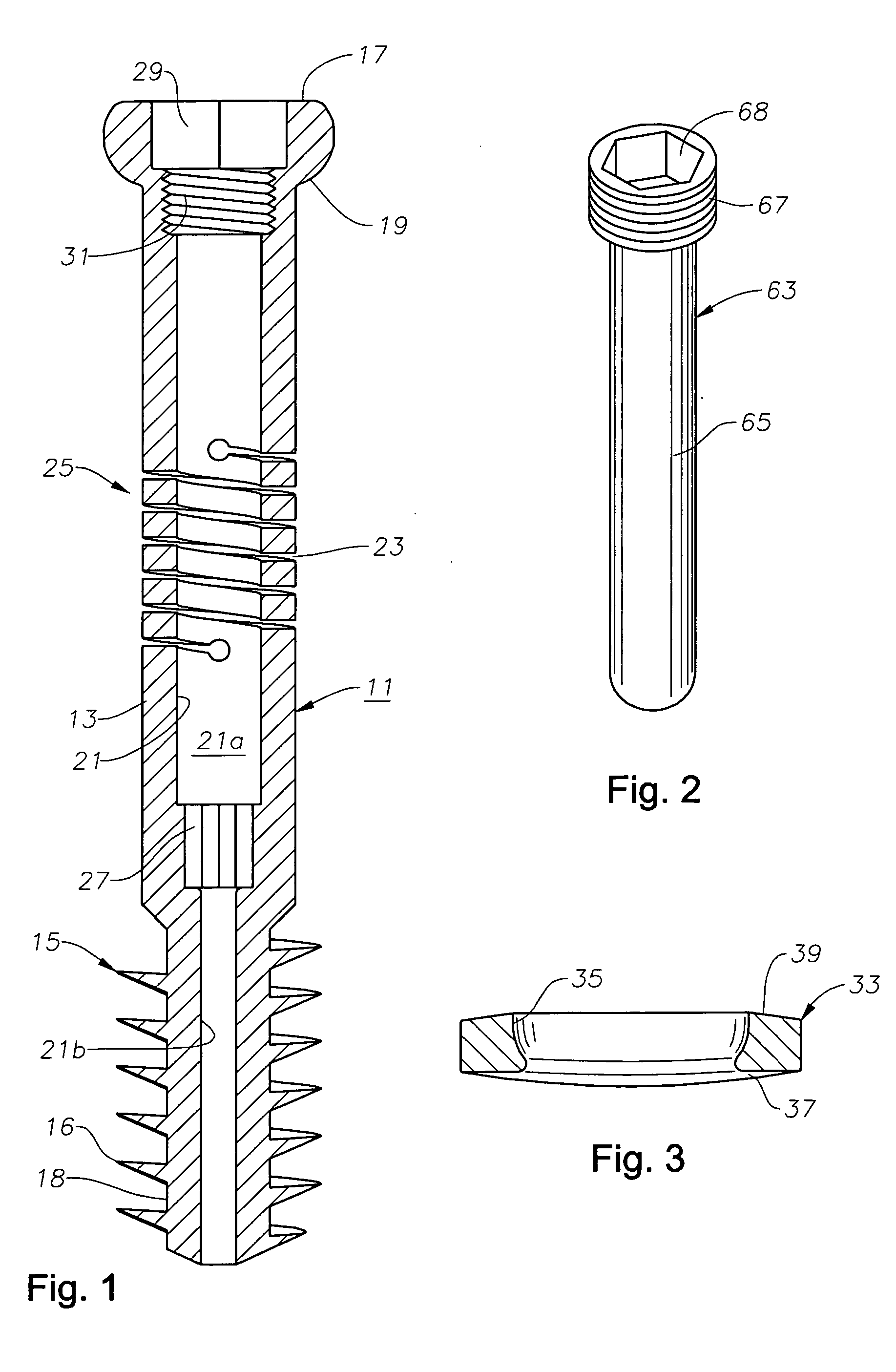
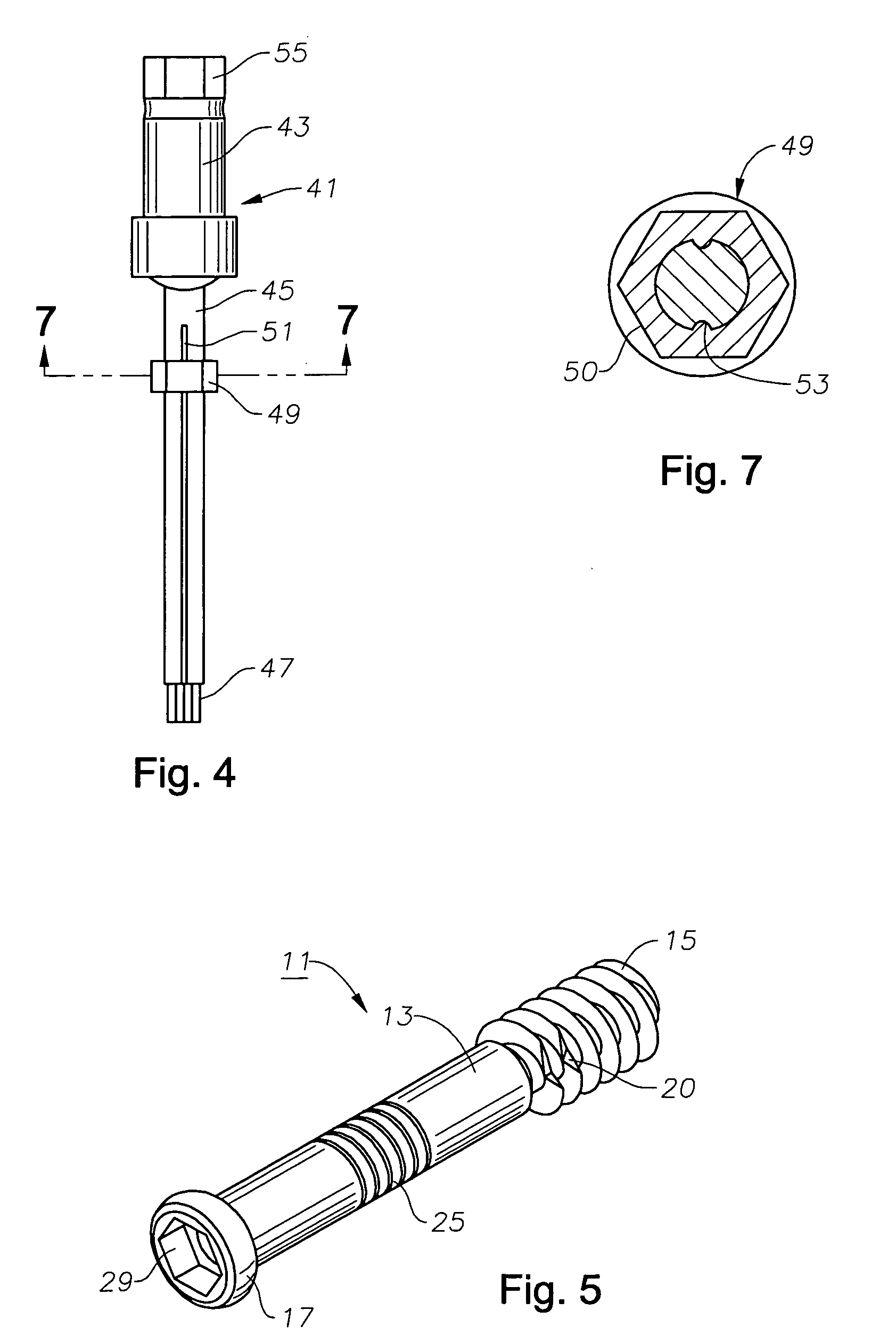
[0019] Referring to FIG. 1, the fastener of this invention includes comprises a screw 11 in the preferred embodiment that has an elongated body 13. Screw 11 may be formed of various biocompatible materials such as stainless steel or vitallium, but preferably is formed of titanium or titanium alloy because of the enhanced fatigue properties.
[0020] Screw body 13 has an anchor section on its distal end, which preferably comprises a set of external threads 15. Threads 15 may be a variety of types, but are shown as having a saw-tooth configuration with a sharp crest 16. A cylindrical root 18 locates between adjacent crests 16. The outer diameter of threads 15 measured at crests 16 is uniform, except for the first thread 15 at the distal end, which is slightly smaller. The outer diameter of threads 15 is larger than the outer diameter of body 13. Threads 16 have a low pitch, a considerable dimension from root 18 to crest 16, and resemble a flight of an auger. As shown in FIG. 5, one or t...
PUM
 Login to View More
 Abstract
Description
Claims
Application Information
 Login to View More