
Method of manufactring a press felt, and a press felt, with the shape of a closed loop
- Summary
- Abstract
- Description
- Claims
- Application Information
AI Technical Summary
Benefits of technology
Problems solved by technology
Method used
Image

Examples
Embodiment Construction
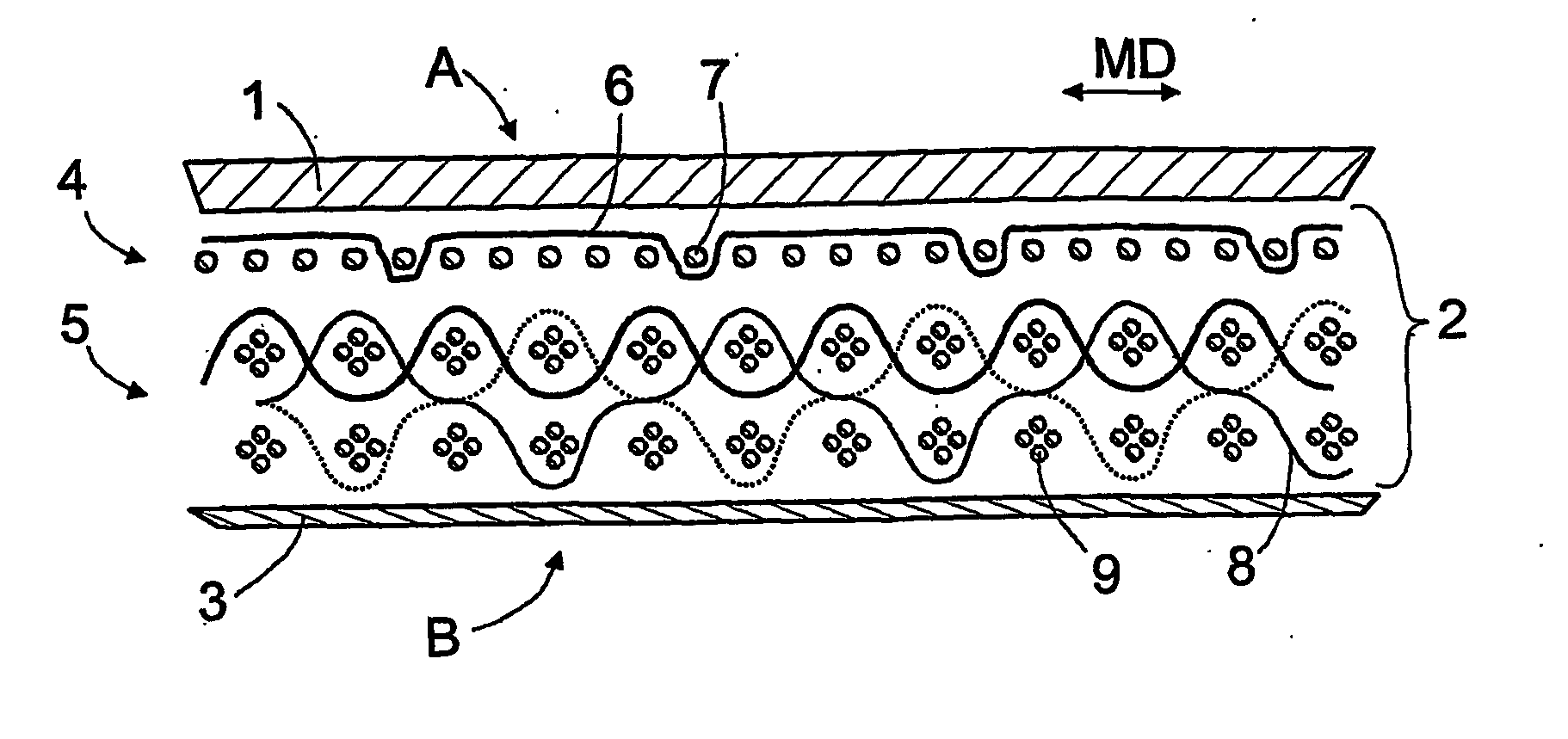
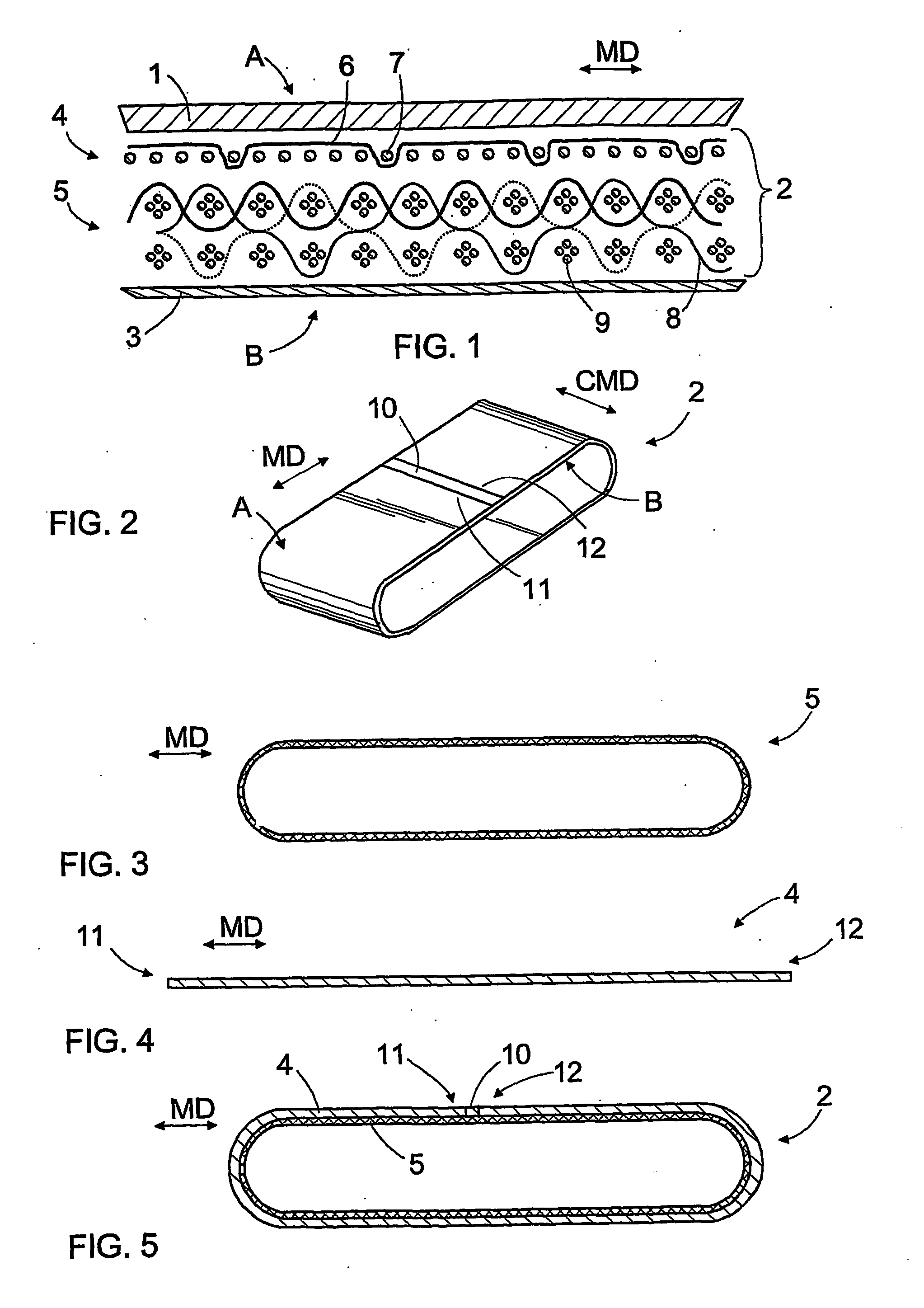
[0029]FIG. 1 illustrates a press felt according to the invention as a section in the paper machine direction MD. The felt illustrated in the figure comprises four layers attached to one another. On the felt surface A facing the web, there is a first batt fibre layer 1 as the outermost layer. Below the first batt fibre layer, there is a base fabric 2 consisting of two components, and further at the bottom of the felt, i.e. on the surface B facing the paper machine, there is a second batt fibre layer 3. The first batt fibre layer 1 prevents the generation of markings, i.e. a pattern caused by the weave of the base fabric, onto the web surface. In addition, water retention properties of the felt can also be affected by batt fibre. The first batt fibre layer 1 may consist of two or more thin layers, in which case there may be finer batt fibre on the surface of the batt fibre layer 1 and coarser batt fibre below it. The second batt fibre layer 3 at the bottom of the felt is not necessary...
PUM
| Property | Measurement | Unit |
|---|---|---|
| Width | aaaaa | aaaaa |
| Density | aaaaa | aaaaa |
| Shape | aaaaa | aaaaa |
Abstract
Description
Claims
Application Information
 Login to View More