
Compositions and methods for diagnosing autism
- Summary
- Abstract
- Description
- Claims
- Application Information
AI Technical Summary
Benefits of technology
Problems solved by technology
Method used
Image

Examples
example 1
Transmission Disequilibrium Analysis—Study 1
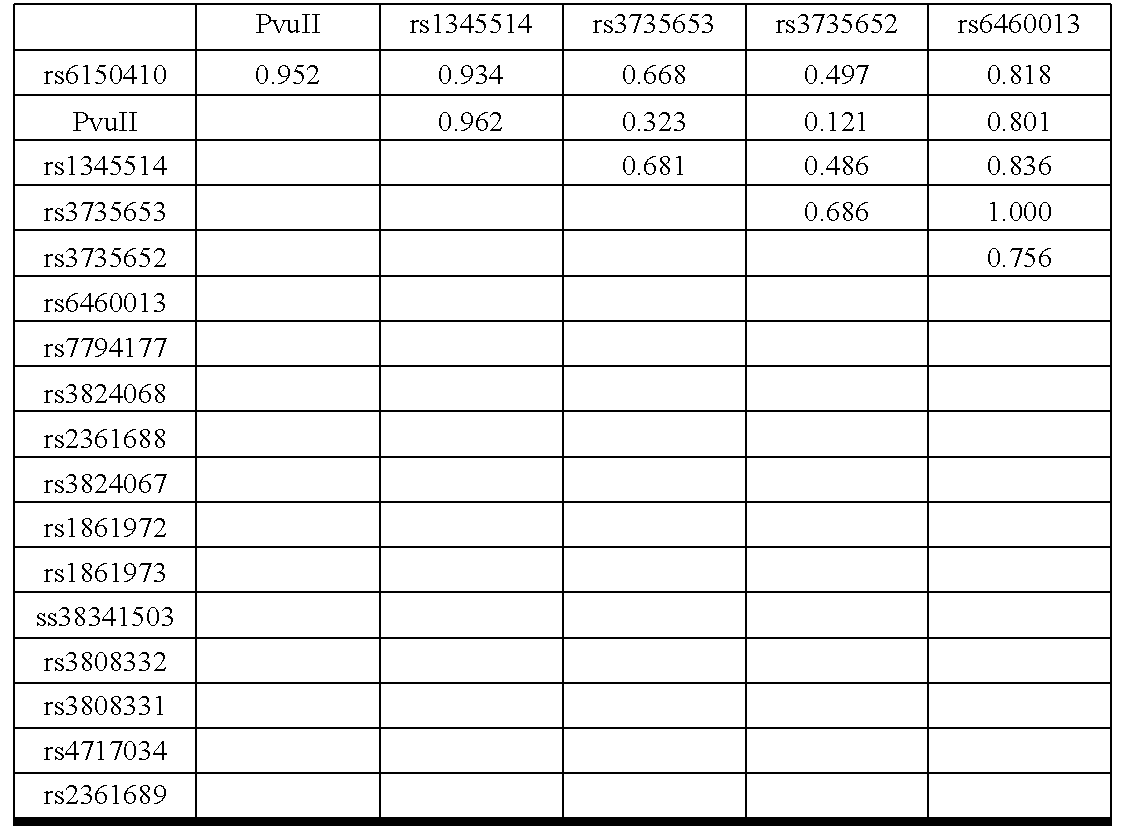
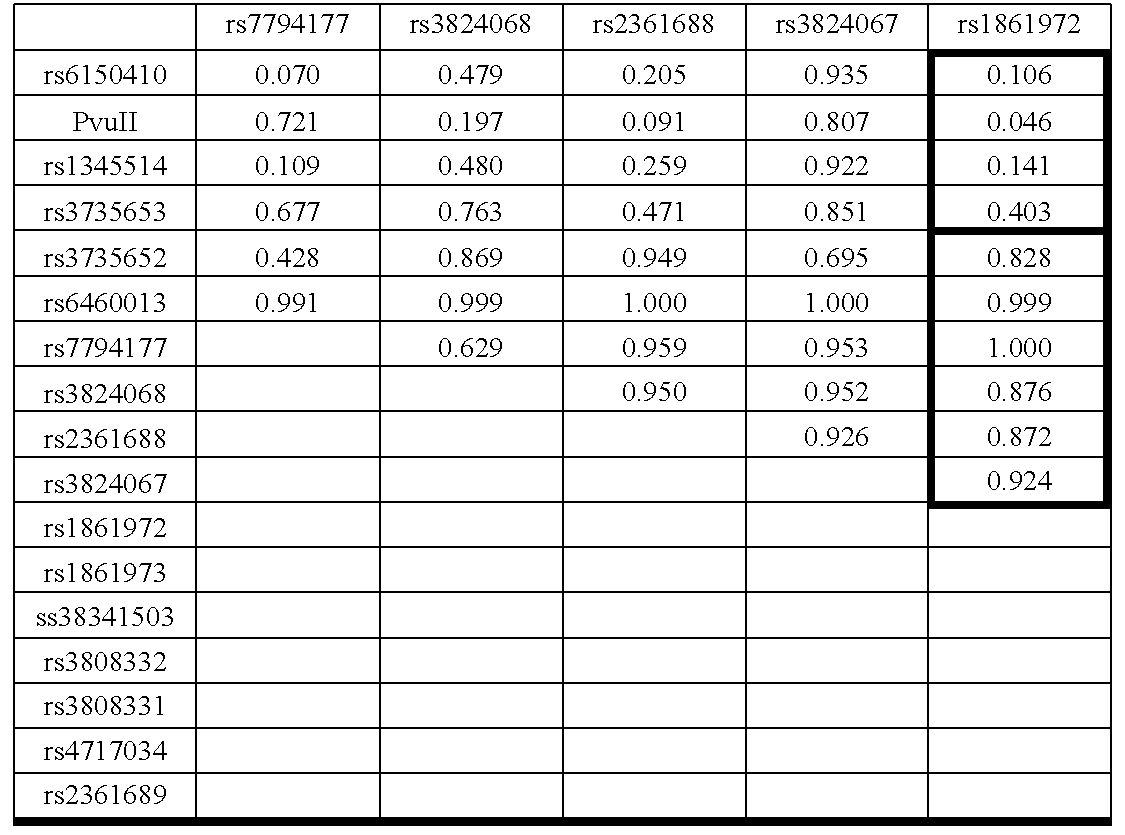
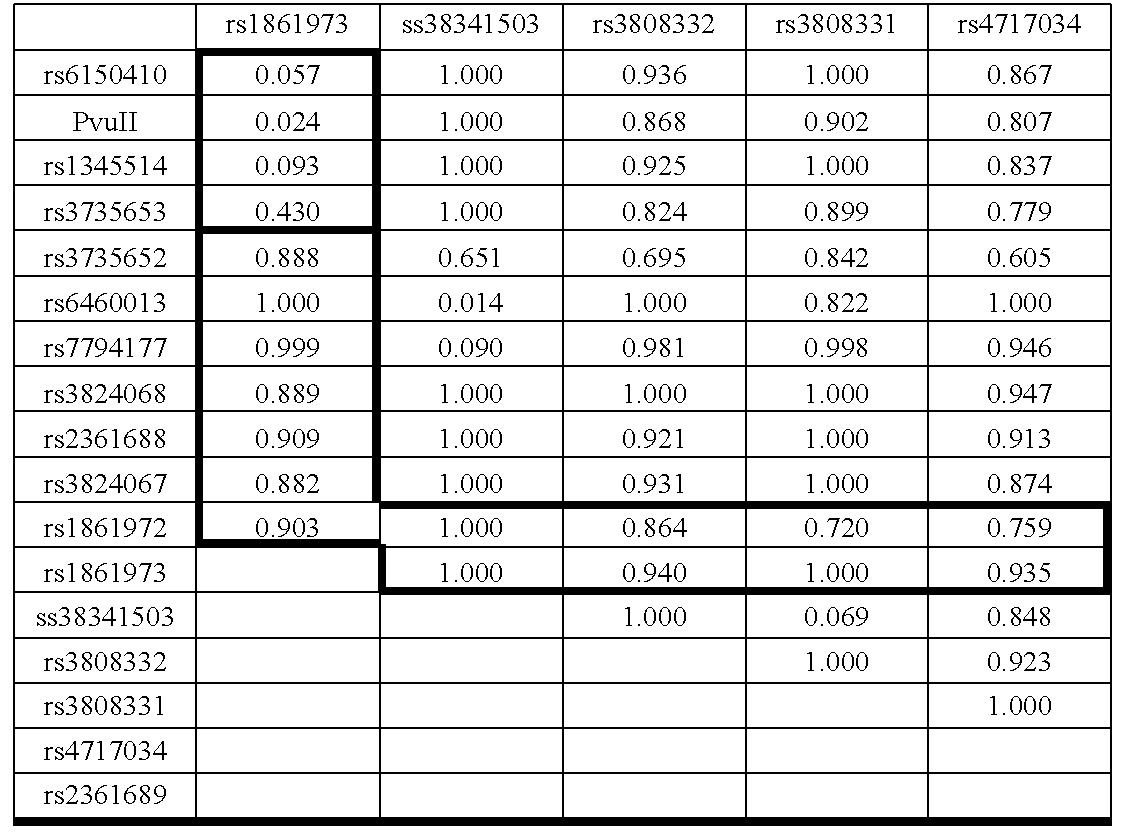
[0177] Families recruited to the Autism Genetic Resource Exchange (AGRE) were used for these studies. AGRE is a central repository of family DNA samples created by The Cure Autism Now (CAN) Foundation and the Human Biological Data Interchange. The selection criteria required was that at least two family members had been diagnosed with autism, Asperger's Syndrome or PDD. The diagnosis and characteristics of these families are described in detail elsewhere (Geschwind, et al. (2001) Am. J. Hum. Genet. 69:463-6; Liu, et al. (2001) Annu. Rev. Neurosci. 24:869-896). For the analysis disclosed herein, a narrow diagnosis was defined as only autism while a broad diagnostic included individuals affected with either autism, Asperger's Syndrome or PDD. In this study, 137 triads (parent-offspring trios) under the narrow diagnostic were initially evaluated. This was then extended to a total of 166 pedigrees that included 310 triads and 168 phenotypic d...
example 2
Transmission Disequilibrium Analysis—Study 2
[0192] The analysis presented in Example 1 demonstrated that the A allele of rs1861972 and the C allele of rs1861973 were significantly associated with ASD individually and as a haplotype under both narrow and broad diagnostic criteria. Replication of these association results is now observed in both another 222 AGRE families (AGRE II) and 129 National Institute of Mental Health (NIMH) families.
[0193] Subjects. Families recruited to the AGRE and to the NIMH Center for Collaborative Genetic Studies were used for this study (Risch, et al. (1999) Am. J. Hum. Genet. 65:493-507; Geschwind, et al. (2001) Am. J. Hum. Genet. 69:463-466).
[0194] The AGRE I dataset included 167 families, while the AGRE II dataset included 222 additional families. Family selection criteria have been described (Liu, et al. (2001) Am. J. Hum. Genet. 69:327-340; Geschwind, et al. (2001) supra). Families recruited by AGRE included at least two affected siblings (diagno...
PUM
| Property | Measurement | Unit |
|---|---|---|
| Volume | aaaaa | aaaaa |
| Fraction | aaaaa | aaaaa |
| Fraction | aaaaa | aaaaa |
Abstract
Description
Claims
Application Information
 Login to View More