Safe incineration of explosive air mixtures

US20060216663A1Inactive Publication Date: 2006-09-28MORRISSEY JAMES L
17 Cites 16 Cited by

Patent Information

Authority / Receiving Office
US · United States
Current Assignee / Owner
Publication Date
2006-09-28
Estimated Expiration
Not applicable · inactive patent

Smart Images

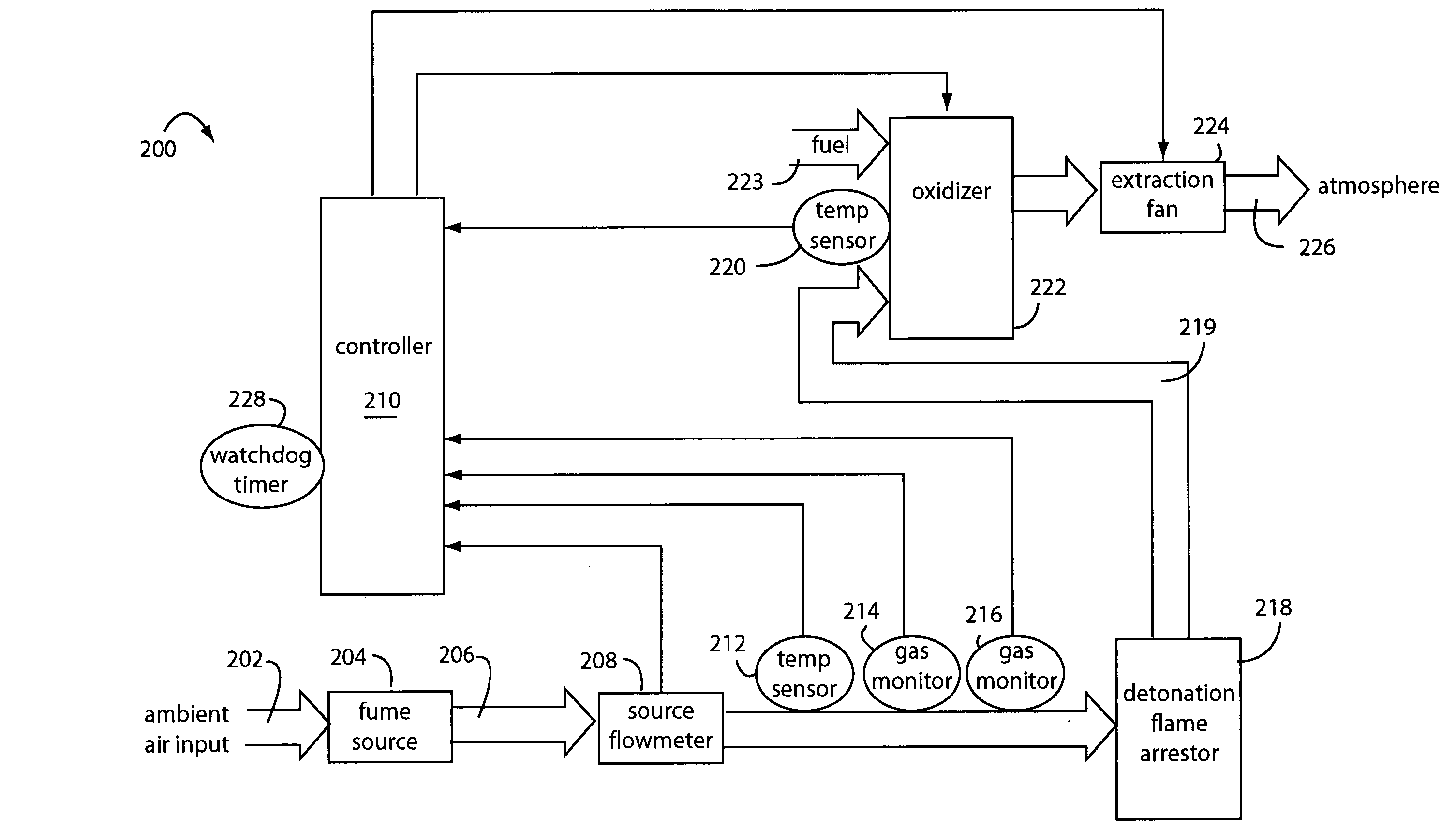
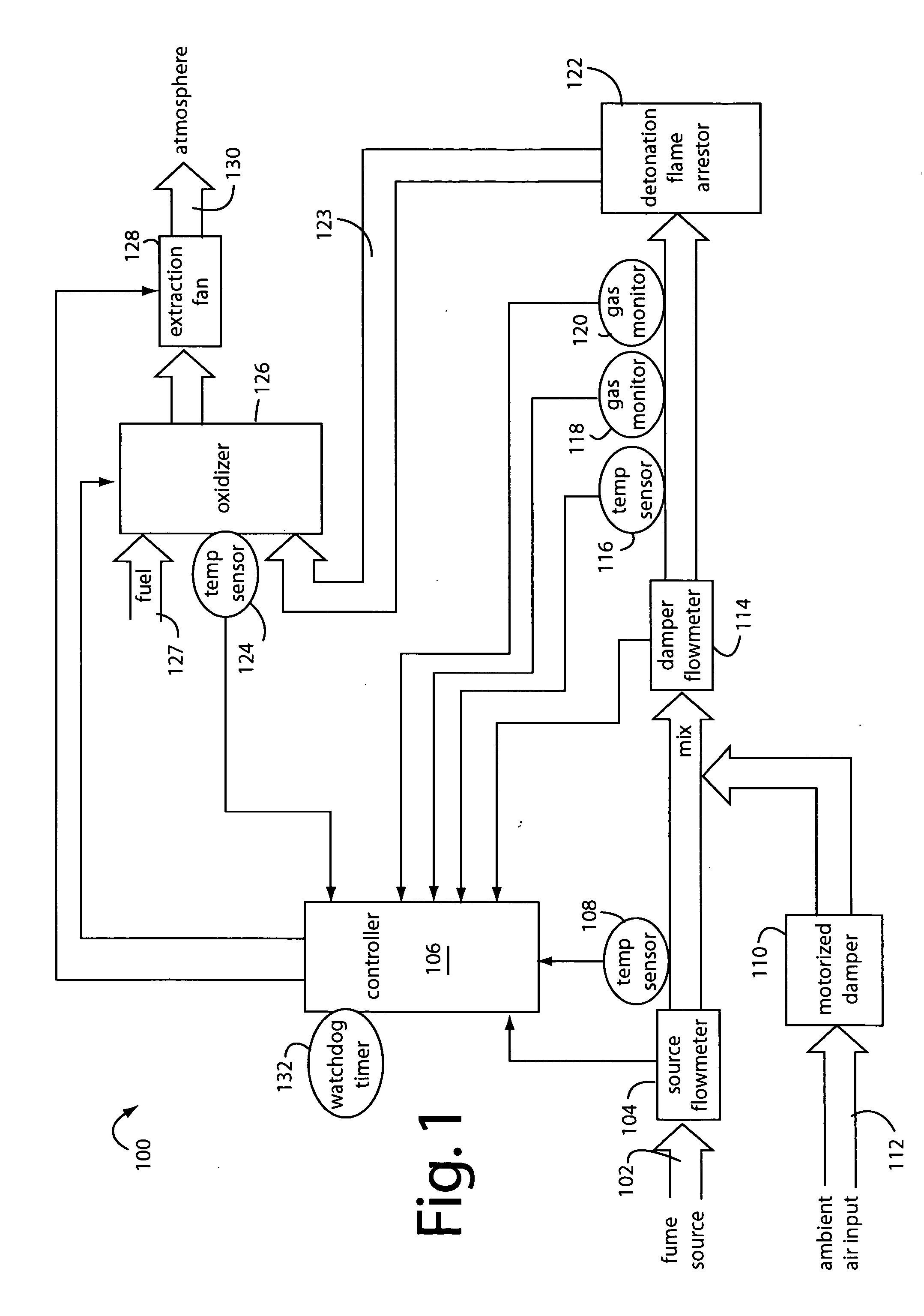
  • Figure 1
    Figure 1
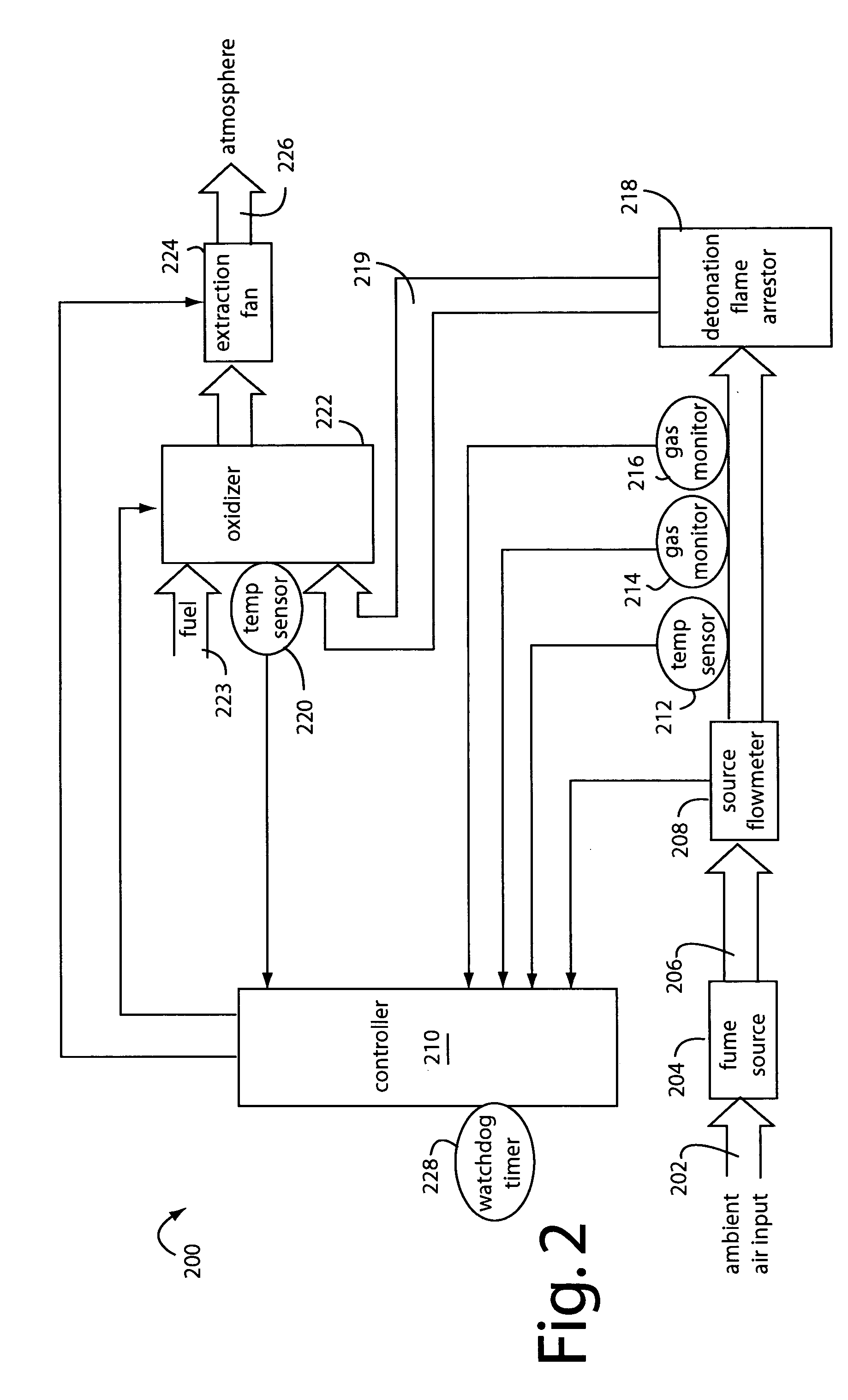
  • Figure 2
    Figure 2
  • Figure 3
    Figure 3
Patent Text Reader

Abstract

An explosive gas incinerator system comprises a fume source inlet for receiving a process exhaust with a volatile material that is explosive when its concentration exceeds a lower explosive limit (LEL). A source flowmeter measures the volume of process exhaust being input. A temperature sensor measures the temperature of the process exhaust. A motorized damper is used for diluting the process exhaust with an ambient air input to produce a damper outflow with an explosive concentration less than the LEL. A damper flowmeter measures the total mixture volume of the process exhaust and ambient air input in the damper outflow. Another temperature sensor measures the temperature of the damper outflow. A gas monitor measures the concentration of volatile material in the damper outflow. An oxidizer burns the damper outflow in a flame to produce a cleaner exhaust, and a fan forces gas flows through the oxidizer. A system controller is connected to receive measurement data from the flowmeters, gas monitor, and temperature sensors, and is connected to control the motorized damper to maintain the damper outflow into the oxidizer below the corresponding LEL of the volatile material. Operator errors and attempts at sabotage can be detected and controlled.
Need to check novelty before this filing date? Find Prior Art

Description

FIELD OF THE INVENTION

[0001] The present invention relates to exhaust gas incinerators, and more particularly to the safe incineration of explosive air mixtures. DESCRIPTION OF THE PRIOR ART

[0002] Industrial processes exhaust various gases and particles into the air. Modern regulations require that the emissions be controlled and limited, and one way to scrub the exhaust is to incinerate it before it leaves the smoke stack. But some exhausts can be explosive if they have mixtures with the right percentages of air-to-fuel. The lower explosive limit (LEL) is a value that represents the minimum percent of an explosive-fume mixed in air which will explode. The source of ignition can either be an open flame or the auto-ignition temperature.

[0003] Some exhausts must be licensed, certified, and monitored. The exhausts can either be permitted to be flow variable, or the more restrictive constant flow type. Thus in the manufacturing of fluorescent paint which generates formaldehyde, the f...

Examples

Embodiment Construction

[0015]FIG. 1 illustrates a constant-source-flow fume incineration system embodiment of the present invention, and referred to by the general reference numeral 100. The system 100 is connected to receive a fume source 102 of gases for incineration before discharging them into the atmosphere. A standard flow is received from fume source 102 according to the nature of the source or government operating permits dictating such. A source flowmeter 104 monitors the volume of gases entering and reports its measurements to a system controller 106. A first temperature sensor 108 allows the controller 106 to convert to Standard Conditions for its calculations. A motorized damper 110 is adjusted by the controller 106 to admit more or less ambient air 112 in order to dilute the incoming gases enough to keep their mixture below the lower explosive limit (LEL). Such LEL is the lowest percentage of volatile gases in the air mixture that will explode if exposed to open flames or sparks, or that will...