
Method, system and computer program product for providing high speed fault tracing within a blade center system
a blade center system and fault tracing technology, applied in the field of data processing systems, can solve problems such as difficult access to the fabric for troubleshooting problems, blade center systems providing no method to directly monitor the switching fabric, and storage systems may experience problems or malfunctions. , to achieve the effect of doubling the number of snoop ports
- Summary
- Abstract
- Description
- Claims
- Application Information
AI Technical Summary
Benefits of technology
Problems solved by technology
Method used
Image

Examples
Embodiment Construction
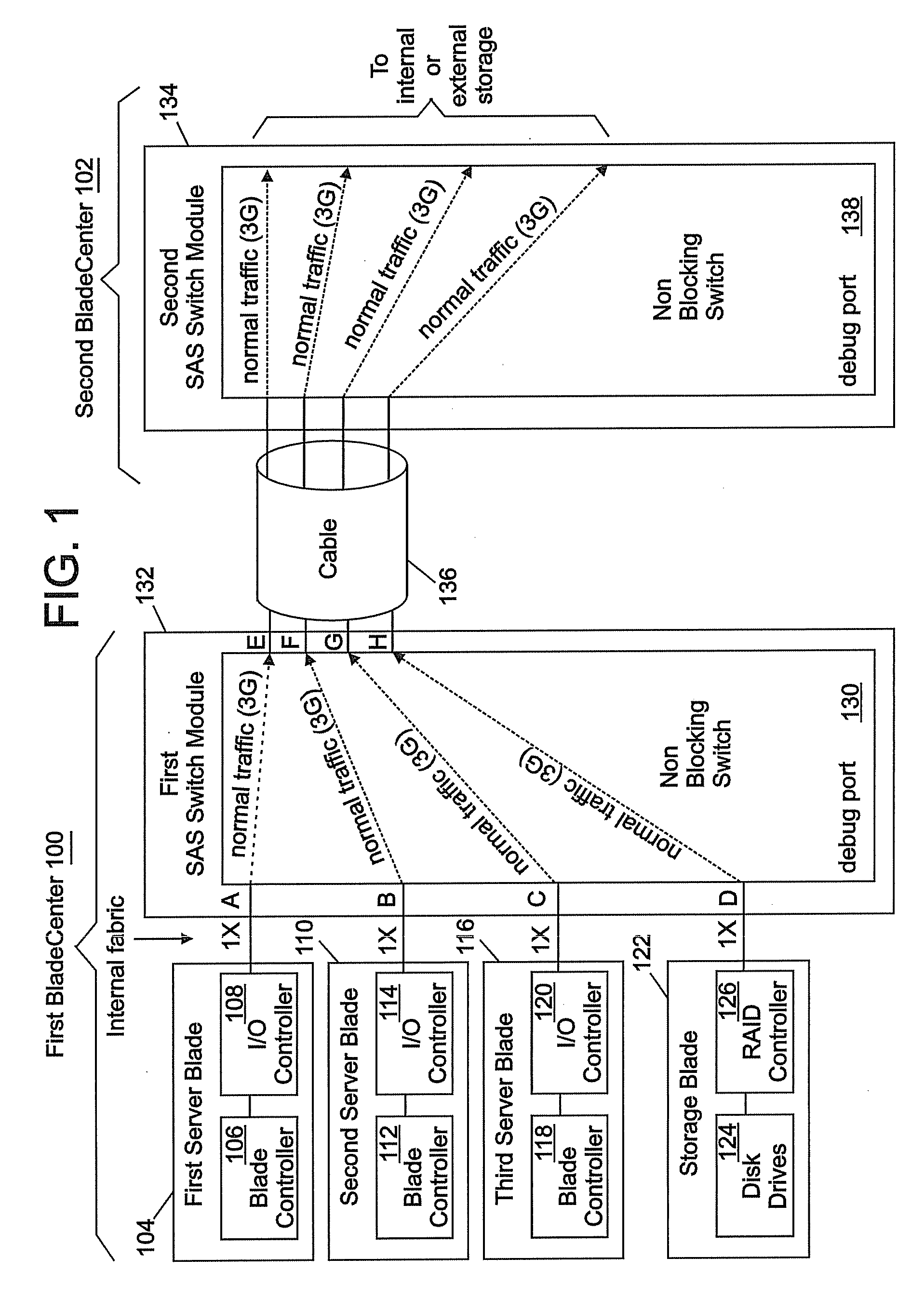
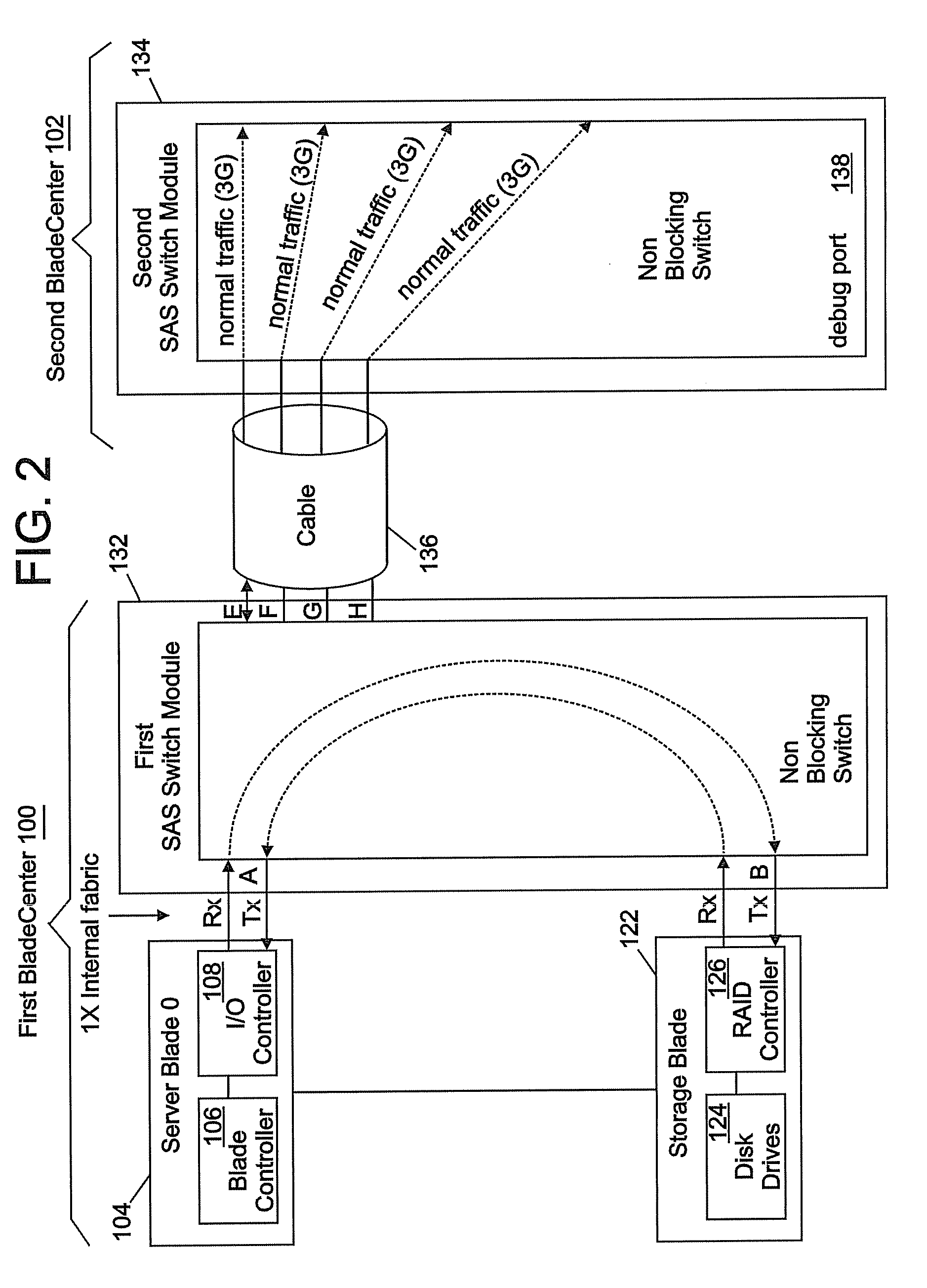
[0021]Recent advances in high speed switch technology provide the ability to selectively and redundantly mirror high speed traffic to other ports on the same switch. This feature is also known as “snooping”, in the sense that high speed traffic in progress between two switch ports can be “snooped” or monitored and then directed to yet another port on a switch dedicated for snooping. There are two storage configurations to consider for snooping: FIG. 1 illustrates a related art blade center system utilizing external storage, whereas FIG. 2 illustrates a related art blade center system utilizing internal storage. However, it should be understood that some blade center systems may utilize a combination of internal as well as external storage.
[0022]Referring to FIG. 1, a blade center system includes a first blade center 100 and a second blade center 102. First blade center 100 includes a first serial-attached SCSI (SAS) switch module 132 operatively coupled to a plurality of server blad...
PUM
 Login to View More
 Abstract
Description
Claims
Application Information
 Login to View More