Moving Bed Hydrocarbon Conversion Process

a hydrocarbon conversion and moving bed technology, applied in the direction of hydrocarbon oil treatment products, catalyst regeneration/reactivation, physical/chemical process catalysts, etc., can solve the problems of physical damage to particles as well as equipment, insufficient pneumatic conveying systems alone, and sporadic upsets

US20100152516A1Inactive Publication Date: 2010-06-17UOP LLC
30 Cites 14 Cited by

Patent Information

Authority / Receiving Office
US · United States
Patent Type
Applications(United States)
Current Assignee / Owner
Publication Date
2010-06-17
Estimated Expiration
Not applicable · inactive patent

Smart Images

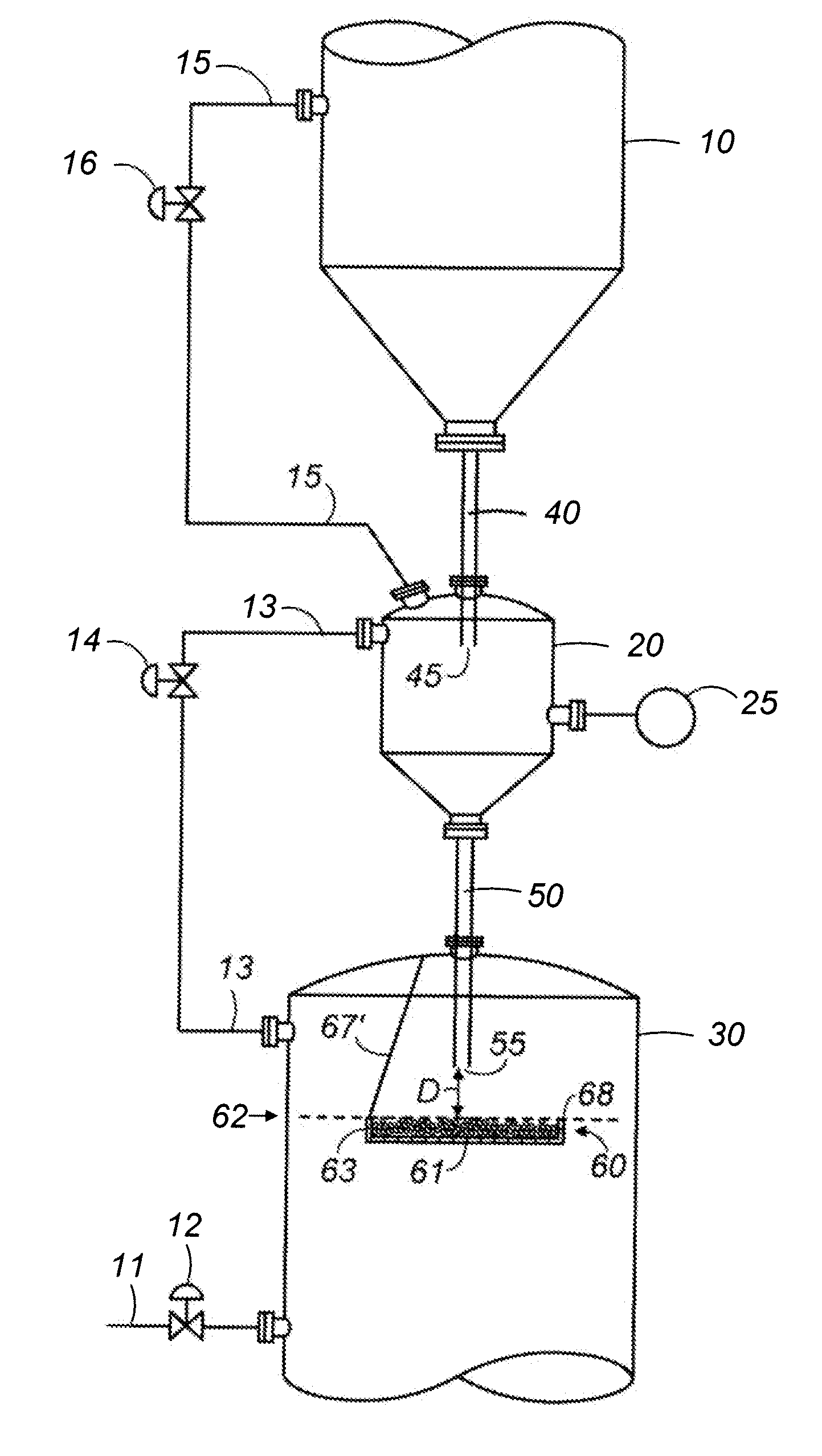
  • Figure 1
    Figure 1
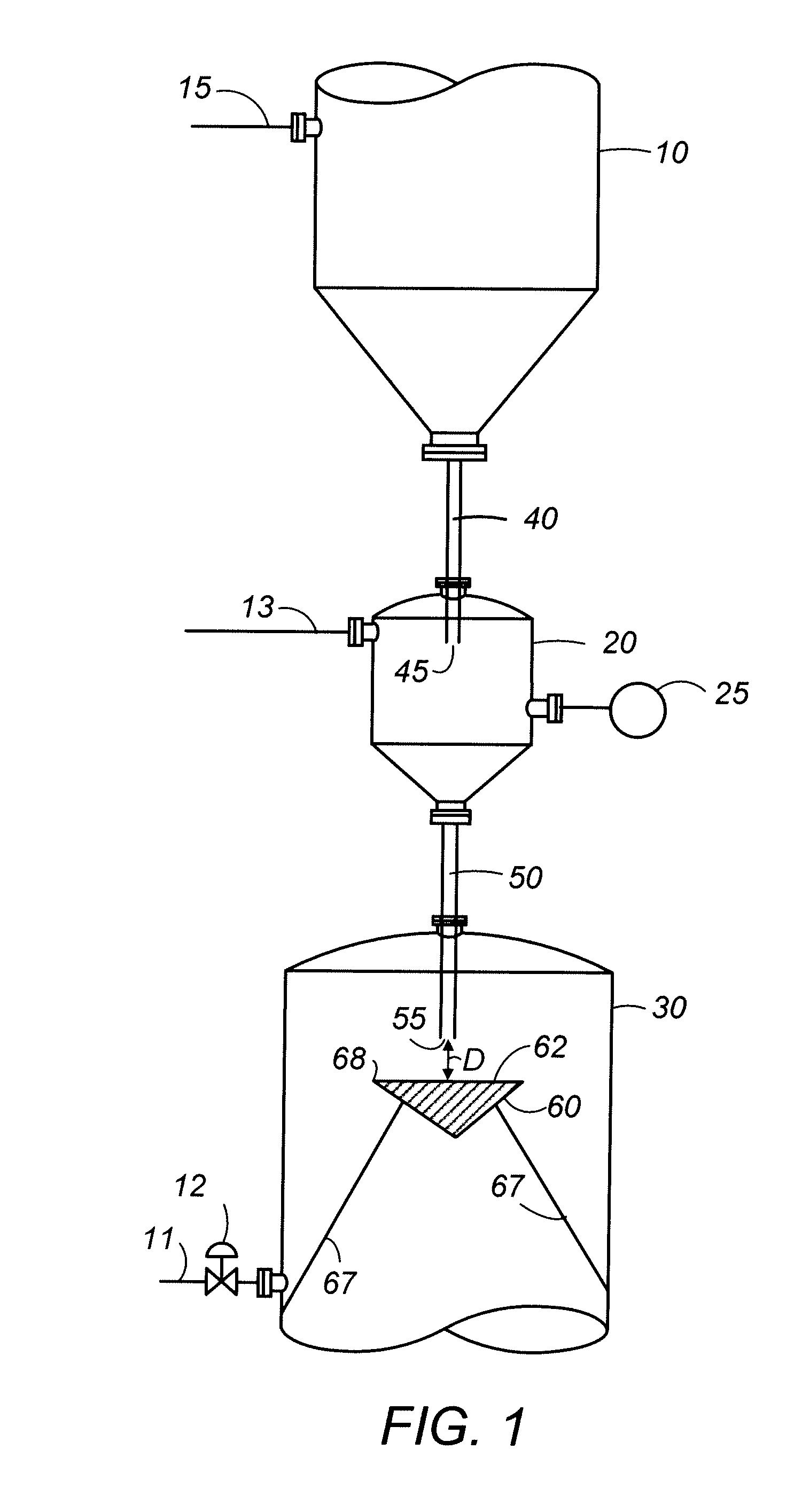
  • Figure 2
    Figure 2
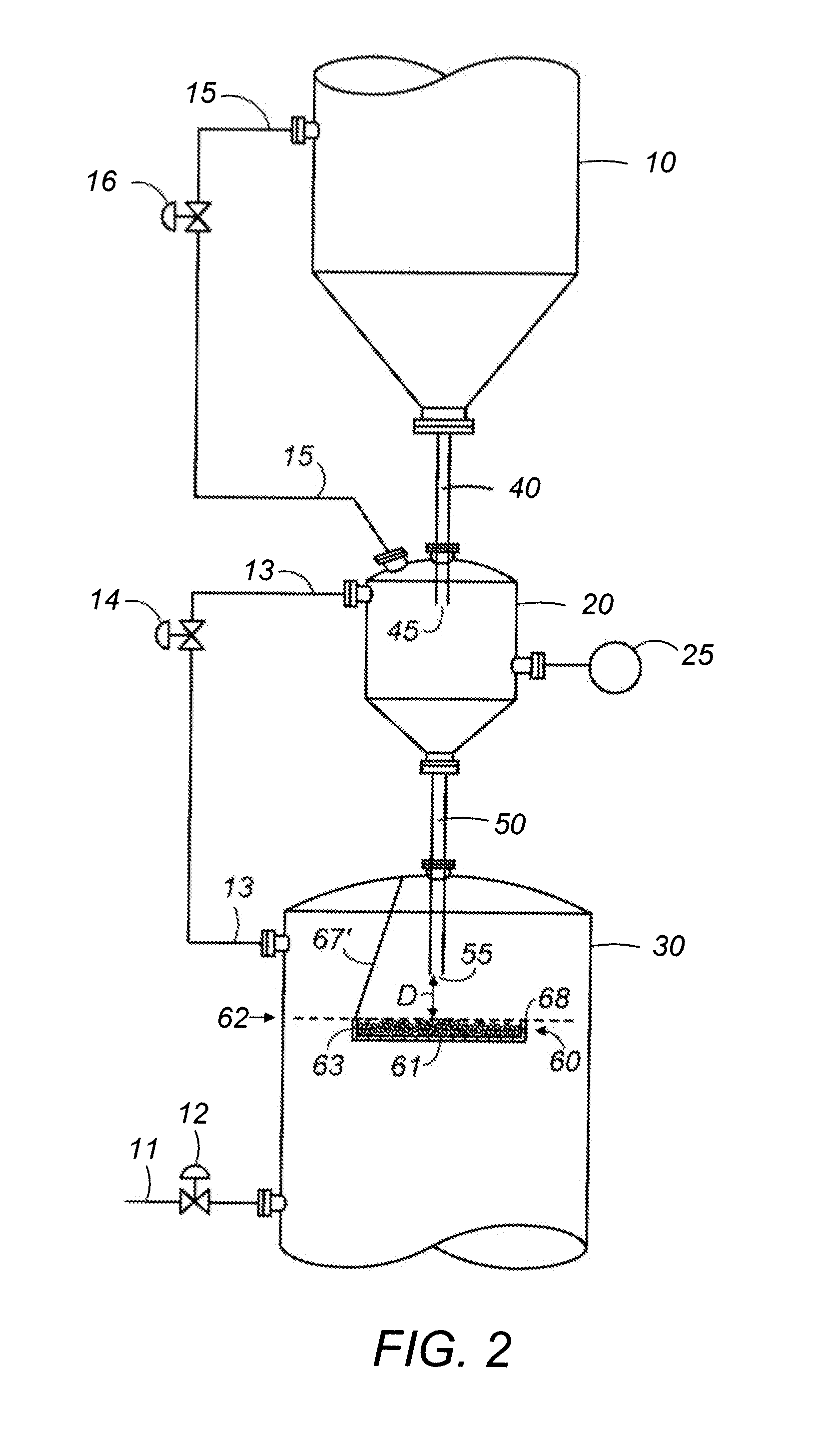
  • Figure 3
    Figure 3
Patent Text Reader

Abstract

Moving bed hydrocarbon conversion processes are provided for contacting a catalyst moving downward through a reaction zone with a hydrocarbon feed, withdrawing the catalyst from the reaction zone and conveying the catalyst to a regeneration zone wherein the catalyst moves downward. The catalyst is withdrawn from the regeneration zone and passed downward to an upper zone of a particle transfer apparatus wherein the transfer of catalyst from the upper zone through an intermediate zone to a lower zone is regulated by varying the pressure of the intermediate zone and the flow rate of gas passing through the valveless conduits. A body within the lower zone is in catalyst communication with a valveless conduit and provides more consistent catalyst flows. The catalyst from the lower zone of the particle transfer apparatus is conveyed to the reactions zone.
Need to check novelty before this filing date? Find Prior Art

Description

FIELD OF THE INVENTION

[0001] This invention generally relates to the art of solid particle transport. More specifically, the invention relates to hydrocarbon conversion processes including a reaction zone, a regeneration zone, and a particle transfer zone where catalyst moves through the zones.BACKGROUND OF THE INVENTION

[0002] There are many chemical processes where it is necessary to bring into contact a fluid and a solid particulate matter, such as adsorbents and catalysts. Frequently, chemical reactions as well as physical phenomena occur for a predetermined period of time in the contact zone, e.g. a reaction or adsorption zone. In many of these processes, the particles are transported between two or more particle containing vessels. The particles may be transported for a variety of reasons depending on the process. For example, particles may be transported from one contacting vessel or zone into another contacting zone in order to take advantage of different process conditions to ...

Examples

Embodiment Construction

[0020]The invention may be used to transfer solid particulate matter from an upper zone, through a middle zone, to a lower zone where the lower zone pressure is greater than the upper zone pressure. The invention transfers particles without using moving equipment such as valves to block the particle flow path. Generally, particles received in an upper zone are transferred through an upper valveless standpipe or transfer conduit to a middle zone. A lower valveless standpipe or transfer conduit is used to transfer the particles from the middle zone towards an obstruction or body located within a lower zone. Thus the zones, valveless conduits, and obstruction or body may be in particle communication and the valveless conduits may provide particle communication.

[0021]The invention can be used within and / or between a variety of process units to transfer particles, such as catalyst and adsorbents. The upper zone of the invention may receive particles from a separate process zone and the l...