
Method of assessing colorectal cancer status in an individual
a colorectal cancer and individual technology, applied in the field of individual colorectal cancer status assessment, can solve the problems of limiting the identification of molecular targets in cancer, affecting the detection of low-abonding proteins and membrane proteins, and no uniformly agreed specific screening test or panel
- Summary
- Abstract
- Description
- Claims
- Application Information
AI Technical Summary
Benefits of technology
Problems solved by technology
Method used
Image

Examples
Embodiment Construction
Patient Samples
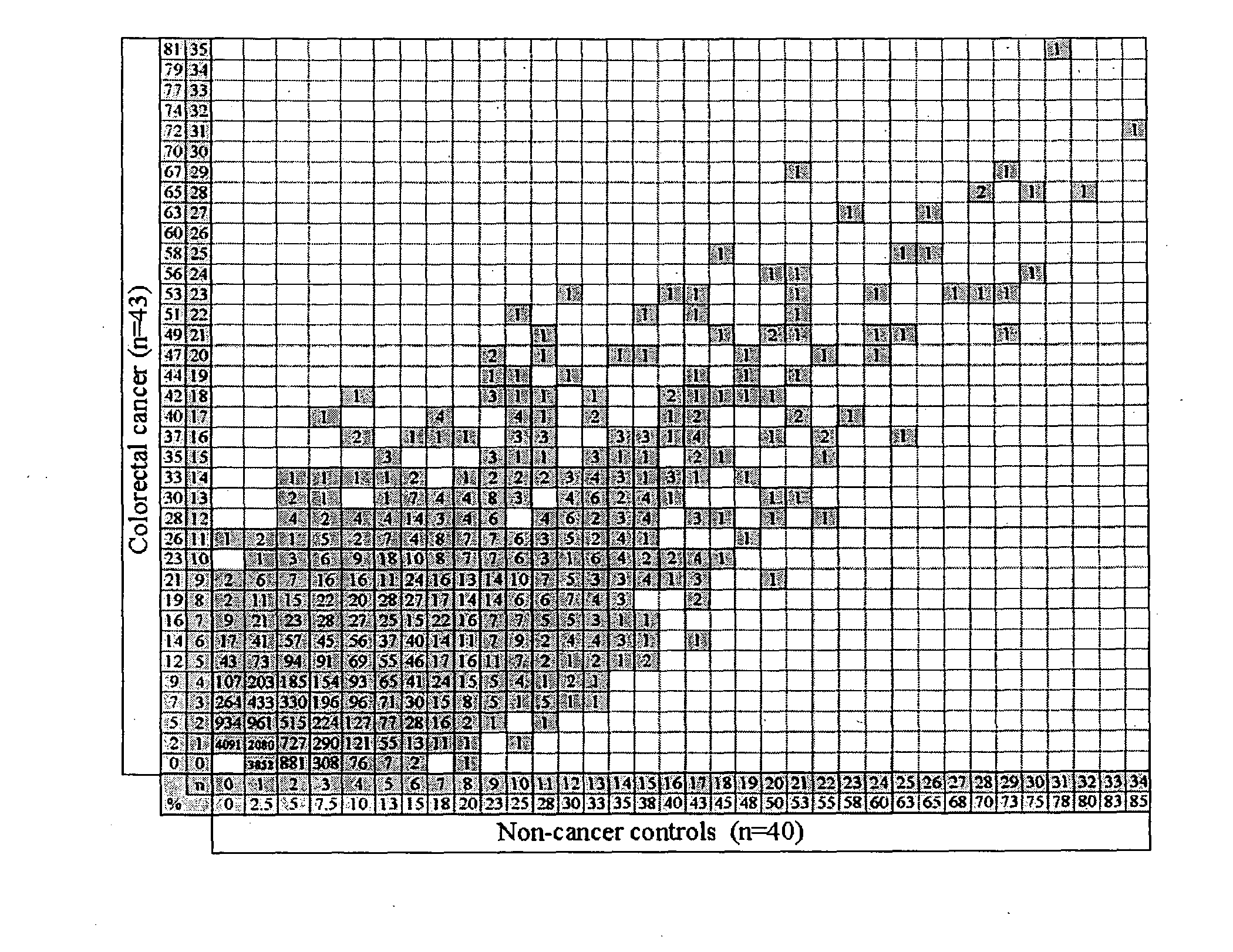
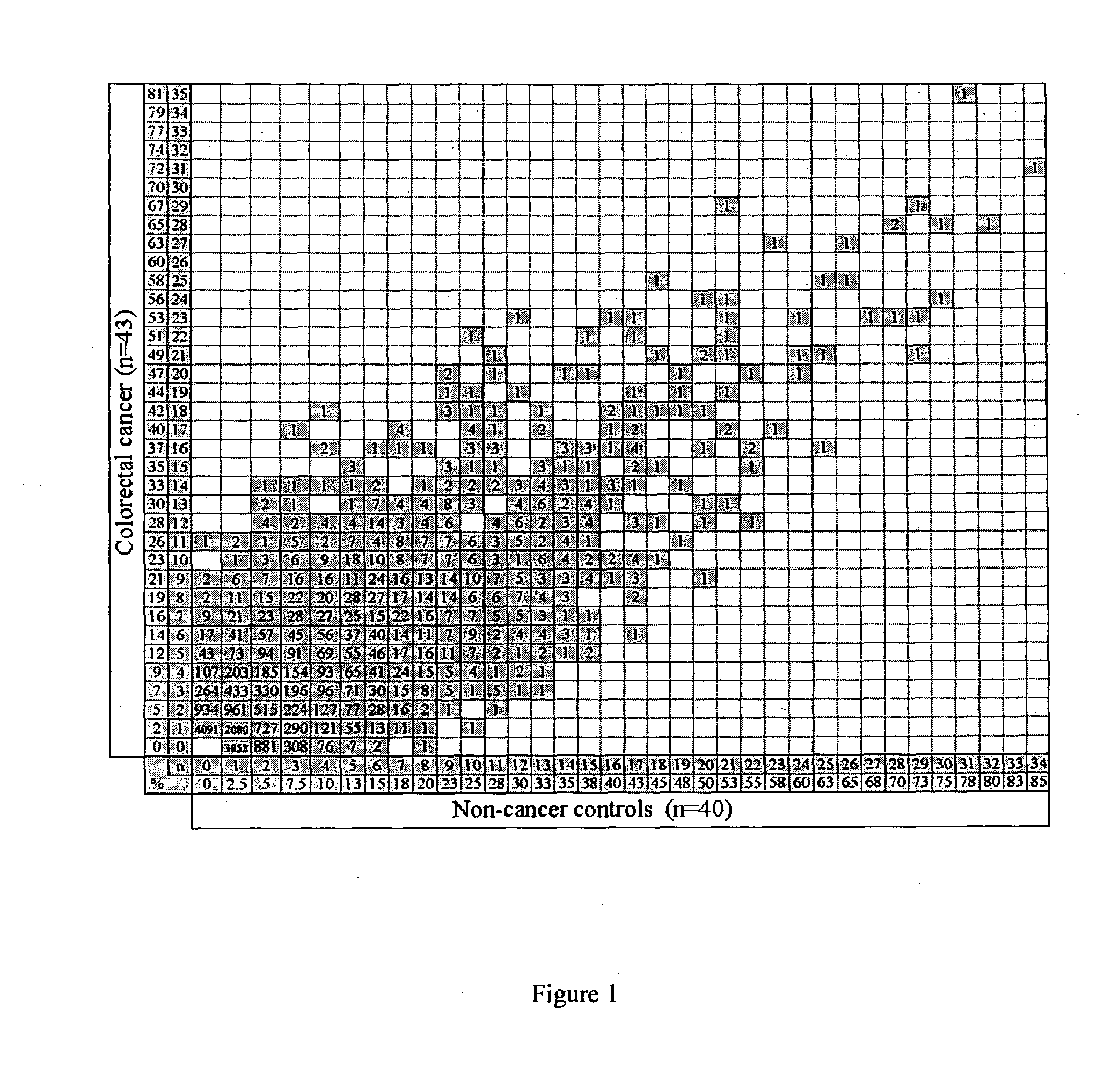
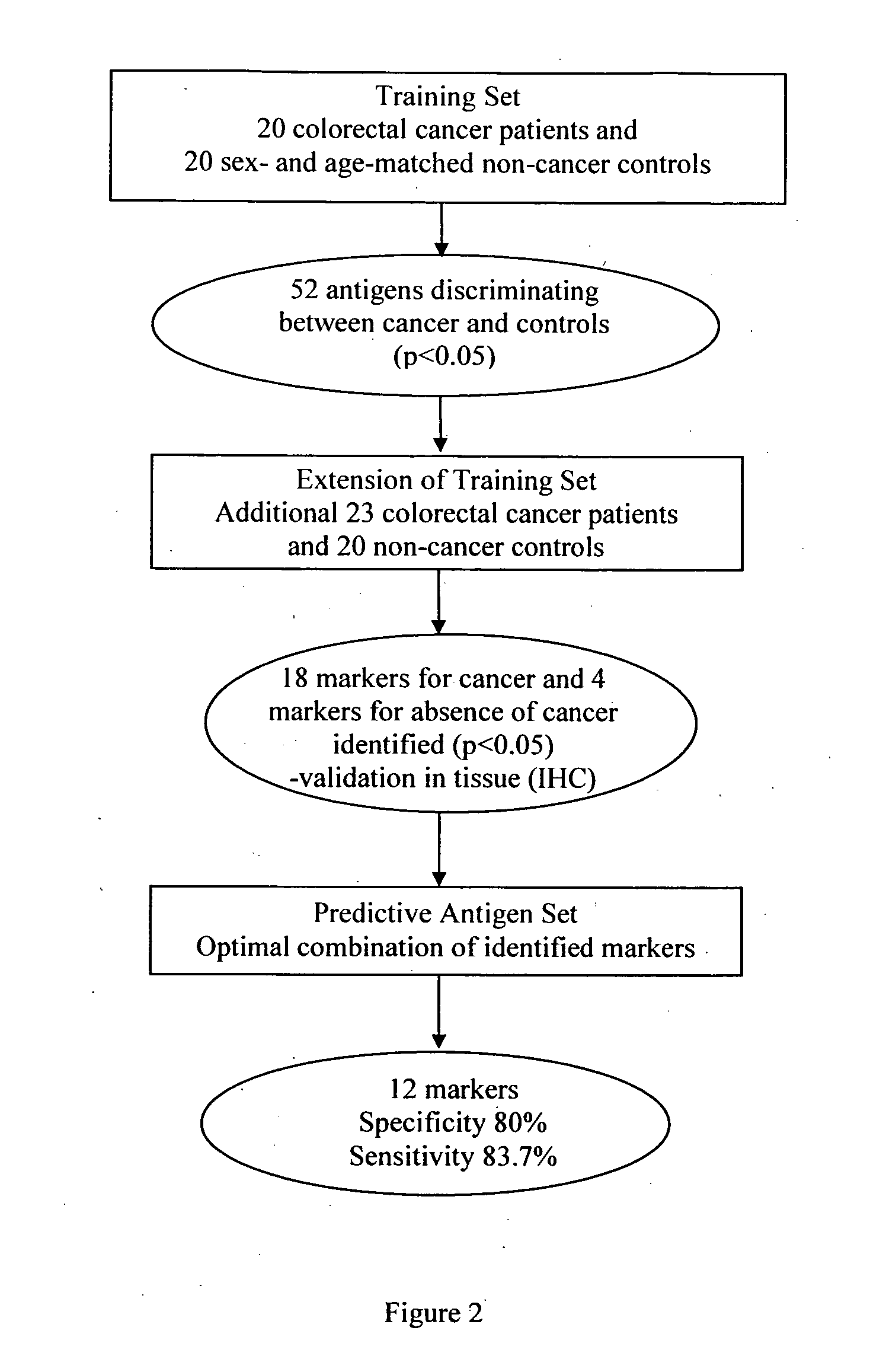
[0050]1,820 patients attending the colonoscopy clinic were screened until a training set of 20 colorectal cancer and 20 sex- and age-matched patients with no cancer was identified. In total, 43 colorectal cancer patients and 40 non-cancer patients entered the study. All 83 sera were screened on high density protein arrays and individual profiles were characterised. To identify a colorectal cancer-specific antibody signature, the frequencies of antibodies in a sex- and age-matched training set were analysed. The resulting antibody profiles identified in the training set were further characterised in an additional extended cohort. The expression of identified antigens p53 and HMGB1 in tissue from this cohort of patients was characterised to validate the approach and assess their potential as molecular marker of cancer.
Antibody Profiles
[0051]The antibody profiles for all 83 subjects were characterised in the absence of any clinical information. The antibody profile for e...
PUM
| Property | Measurement | Unit |
|---|---|---|
| Fraction | aaaaa | aaaaa |
| Fraction | aaaaa | aaaaa |
| Fraction | aaaaa | aaaaa |
Abstract
Description
Claims
Application Information
 Login to View More