Tunneling method for dental block grafting

a technology tunneling method, which is applied in the field of tunneling method of dental block grafting, can solve the problems of increasing complication rate, increasing recovery time, and increasing the risk of infection, so as to achieve the effect of improving the complication rate and reducing the recovery tim

US20110045438A1Active Publication Date: 2011-02-24KING ABDULAZIZ UNIV
15 Cites 2 Cited by

Patent Information

Authority / Receiving Office
US · United States
Current Assignee / Owner
Publication Date
2011-02-24

Smart Images

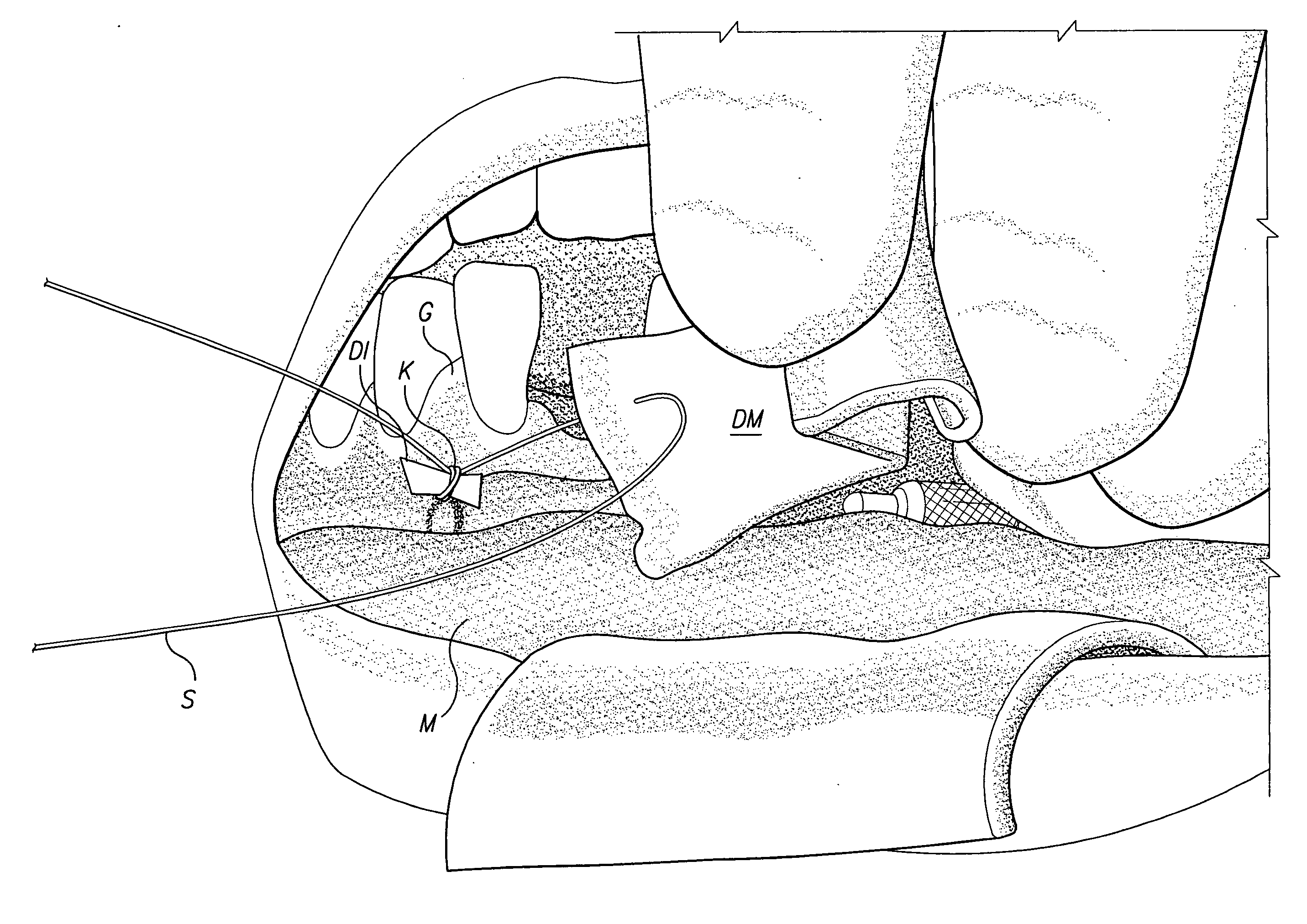
  • Figure 1
    Figure 1
  • Figure 2
    Figure 2
  • Figure 3
    Figure 3
Patent Text Reader

Abstract

The tunneling method for dental block grafting is surgical method for increasing the thickness of the soft tissue of the mouth prior to performing block grafting procedures for dental implants. The method includes cutting a pair of incisions in the mucosa. A tunnel is formed through the mucosa which extends between, and connects, the pair of incisions. The tunnel is then extended coronally to undermine tissue covering the recipient site. An acellular dermal matrix is then sutured to an exposed end of a dental implement pulled through the tunnel to position the acellular dermal matrix within the tunnel. The acellular dermal matrix is then positioned over the recipient site using a periosteal elevator, and the acellular dermal matrix is fixed coronally by suspension sutures. The pair of incisions are closed with interrupted sutures, and a block graft is fixed to the recipient site by a pair of titanium screws.
Need to check novelty before this filing date? Find Prior Art

Description

BACKGROUND OF THE INVENTION

[0001] 1. Field of the Invention

[0002] The present invention relates to oral surgery methods, and particularly to a tunneling method for dental block grafting that increases the thickness of the soft tissue of the mouth prior to performing block grafting procedures for dental implants.

[0003] 2. Description of the Related Art

[0004] A dental implant is an artificial tooth root replacement and is used in prosthetic dentistry to support restorations that resemble a tooth or group of teeth. Prior to commencement of surgery, careful and detailed planning is required to indentify vital structures such as the inferior alveolar nerve or the sinus and to properly orientate the implants for the most predictable outcome. Two-dimensional radiographs, such as periapicals or orthopantomographs, are taken prior to the surgery.

[0005] In its most basic form, the placement of an osseointegrated implant requires a preparation into the bone using either hand osteotomes or precision...

Examples

Embodiment Construction

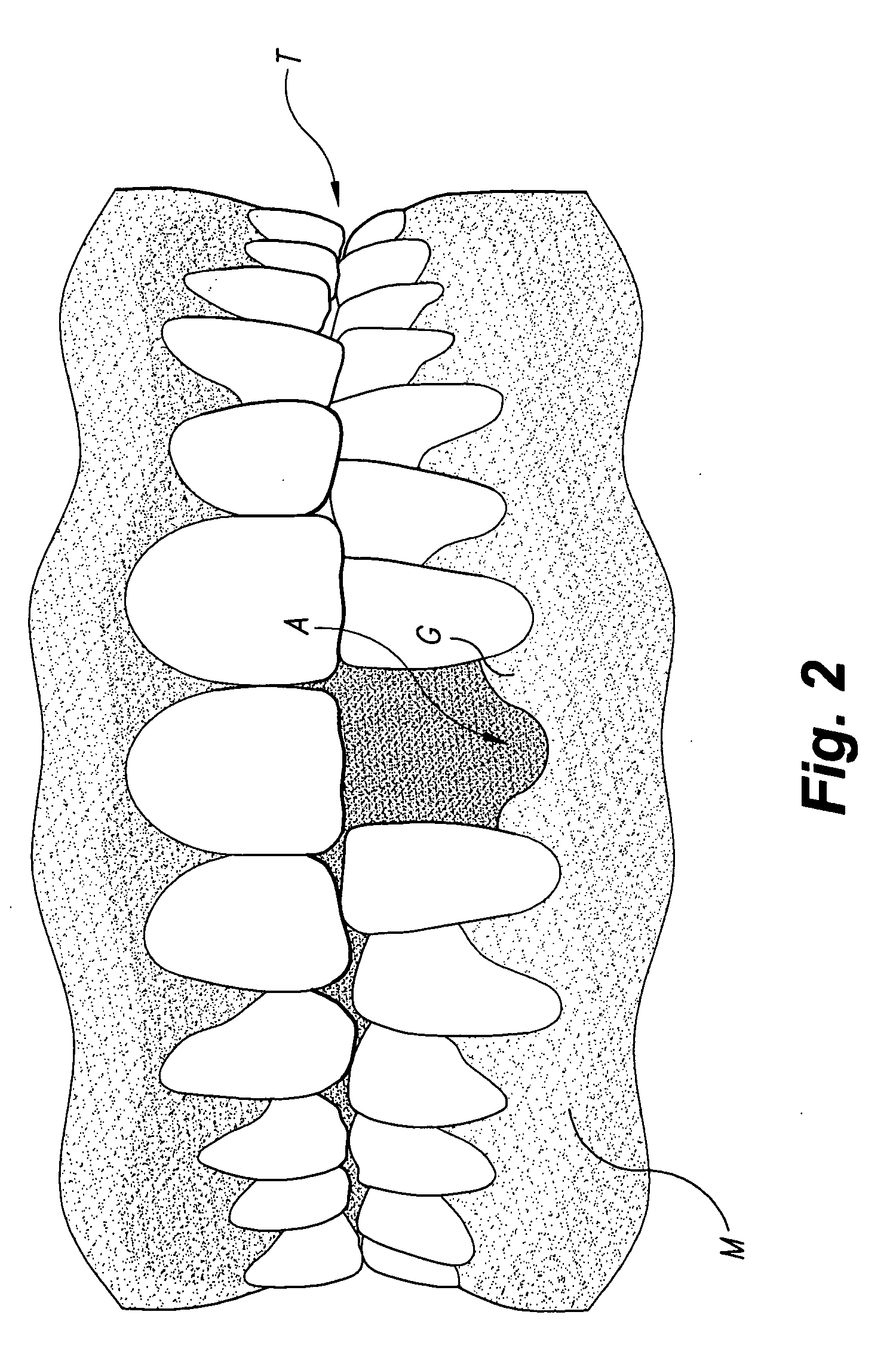
[0030]FIG. 2 illustrates the teeth T of a patient missing a mandibular central incisor (leaving an exposed alveolus) with a class III ridge defect a relatively thin mucosa M. The present tunneling method for dental block grafting is a surgical method for increasing the thickness of the soft tissue of the mouth prior to performing block grafting procedures for dental implants, such as that needed by the patient shown in FIG. 2, for example. The tunneling method is particularly utilized for patients with relatively thin soft tissue or mucosa M. By increasing the thickness of the soft tissue, common soft tissue complications around the block grafts are minimized.

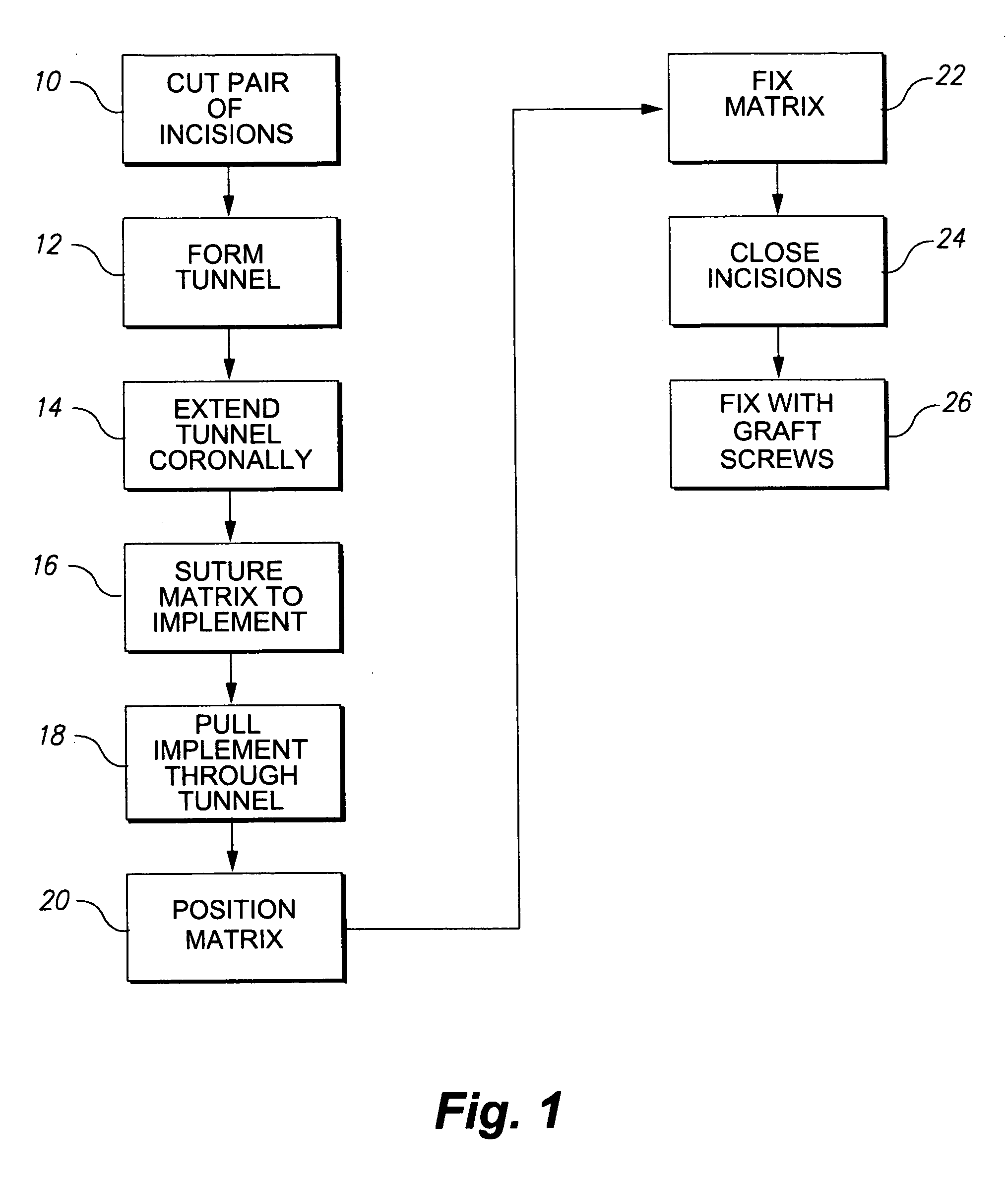
[0031]The recipient site is first anesthetized using local infiltration with, for example, 2% lidocaine, containing 1:100,000 epinephrine. As shown in FIG. 3, the method begins with the cutting of a pair of incisions I in the mucosa M of the patient's mouth (step 10 in FIG. 1). Each incision I is cut approximately equidistant f...