
Biomarkers and methods for determining efficacy of Anti-egfr antibodies in cancer therapy
a cancer therapy and antiegfr technology, applied in the field of biomarkers and methods for determining the efficacy of antiegfr antibodies in cancer therapy, can solve the problems of reducing the number of patients needed in a clinical study, affecting the survival rate of patients with the same cancer, and affecting the survival rate of patients
- Summary
- Abstract
- Description
- Claims
- Application Information
AI Technical Summary
Benefits of technology
Problems solved by technology
Method used
Image

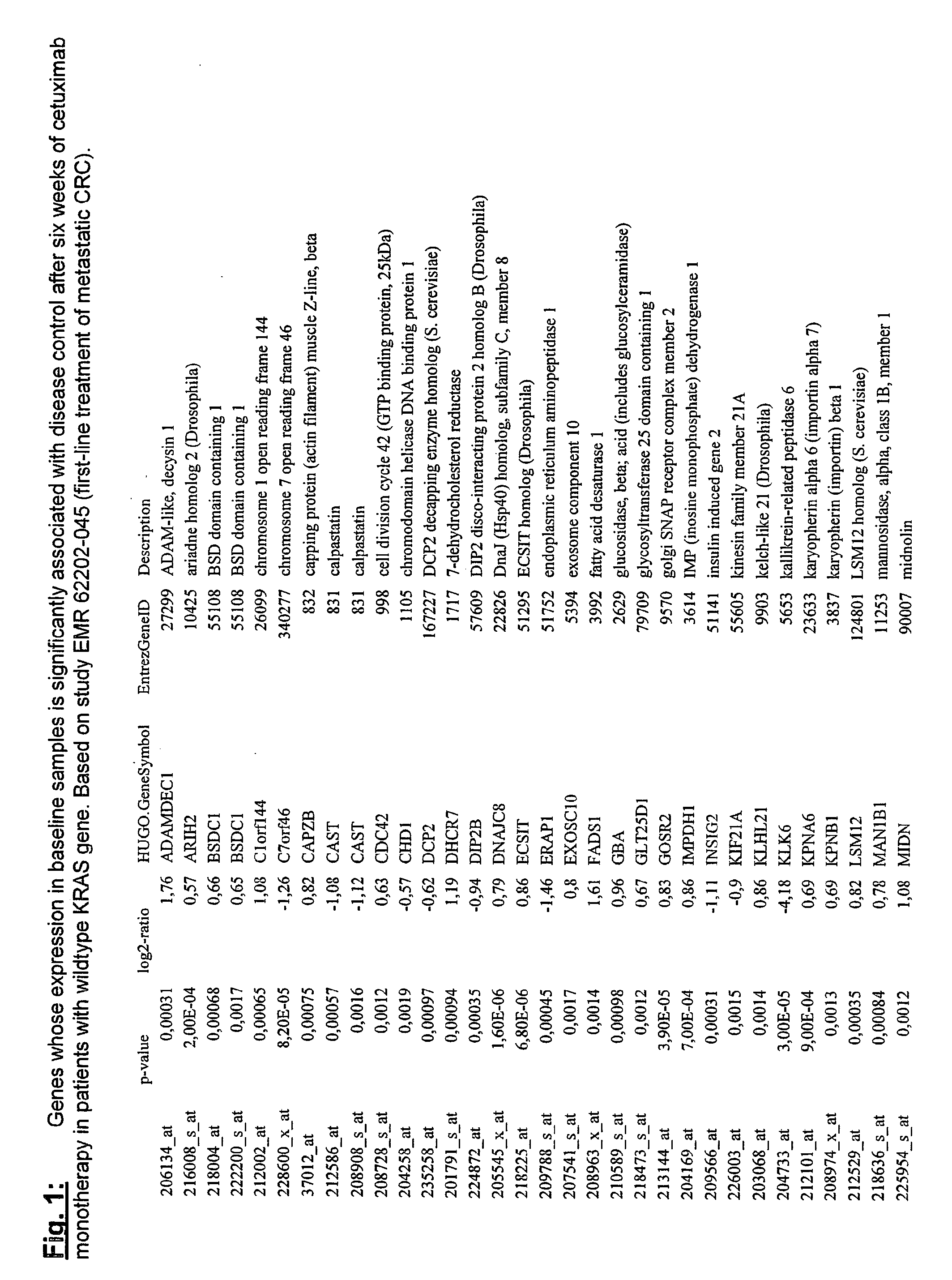
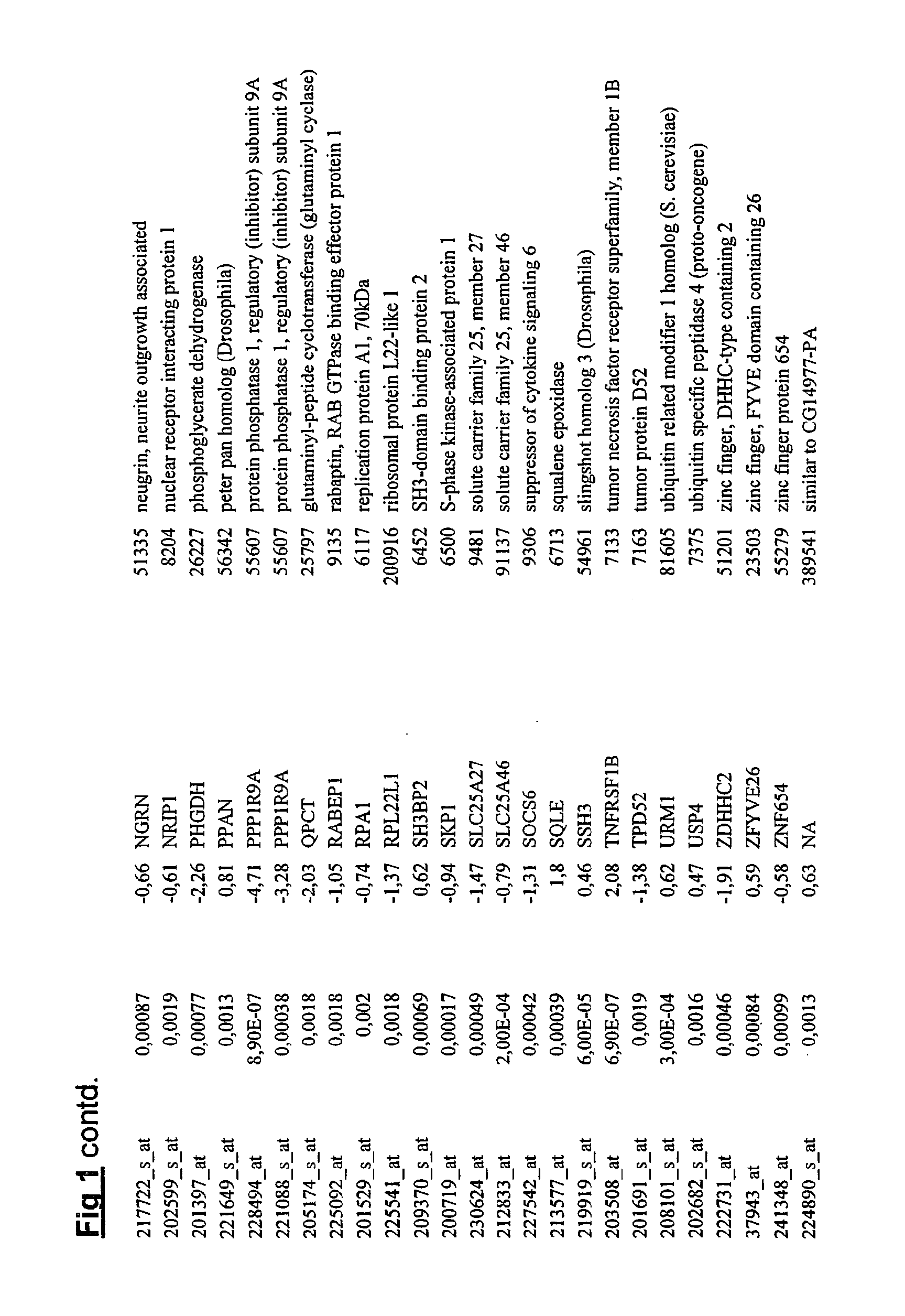
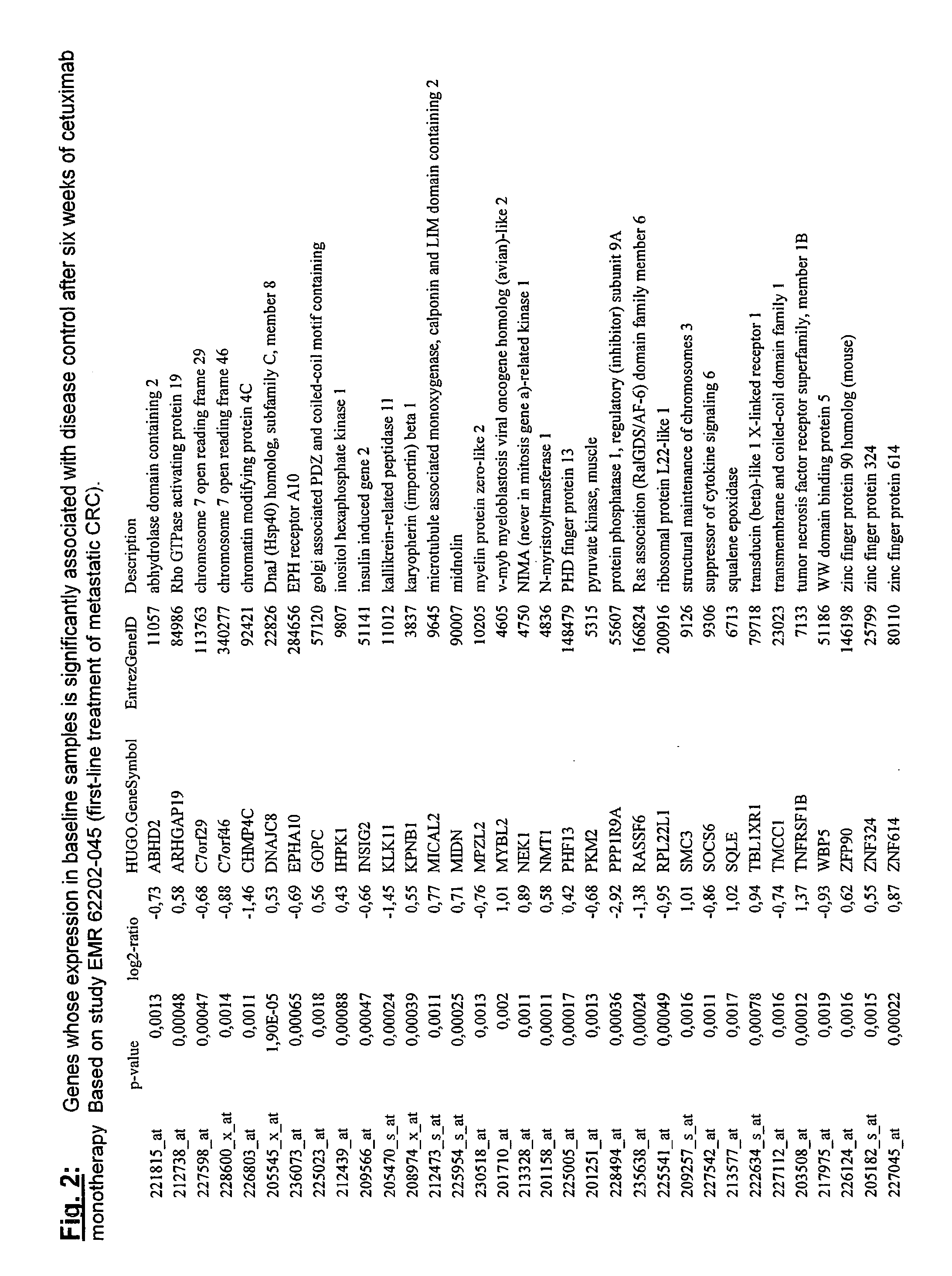
Examples
examples
[0125]Clinical Studies:
[0126]EMR 62202-502: This randomized study investigated cetuximab dose-escalation in patients (pts) with EGFR-expressing mCRC failing irinotecan-including therapy. Pts were randomized 22 days after starting cetuximab (400 mg / m2 initial dose then 250 mg / m2 / week [w]) with I (180 mg / m2 q 2 w) if they had not experienced >grade (G) 1 skin reaction, any other >G 2 cetuximab-related adverse event and were tolerant to I. Randomization was to standard cetuximab dose (Arm A; 250 mg / m2 / w) or dose-escalation (Arm B; cetuximab dose increased by 50 mg / m2 q 2 w, until >G 2 toxicity, tumor response or dose=500 mg / m2). Pts not randomized (Arm C) continued on standard cetuximab dose. Primary endpoint was to compare in skin and tumor biopsies, taken before and during treatment, the effects of dose-escalation on EGFR and downstream signalling markers with those of the standard cetuximab regimen. Secondary endpoints were PK, efficacy, safety, tolerability, biomarker analyses on t...
PUM
| Property | Measurement | Unit |
|---|---|---|
| temperature | aaaaa | aaaaa |
| survival time | aaaaa | aaaaa |
| expression threshold value | aaaaa | aaaaa |
Abstract
Description
Claims
Application Information
 Login to View More