Method of controlling a wind turbine and related system

a technology of wind turbine and related system, which is applied in the direction of rotors, marine propulsion, vessel construction, etc., to achieve the effect of reducing the number or extent of individual pitching events, less wear on bearings, and negative impact on the productivity of wind turbines

US20140140844A1Active Publication Date: 2014-05-22LM WIND POWER AS
7 Cites 18 Cited by

Patent Information

Authority / Receiving Office
US · United States
Patent Type
Applications(United States)
Current Assignee / Owner
Publication Date
2014-05-22

Smart Images

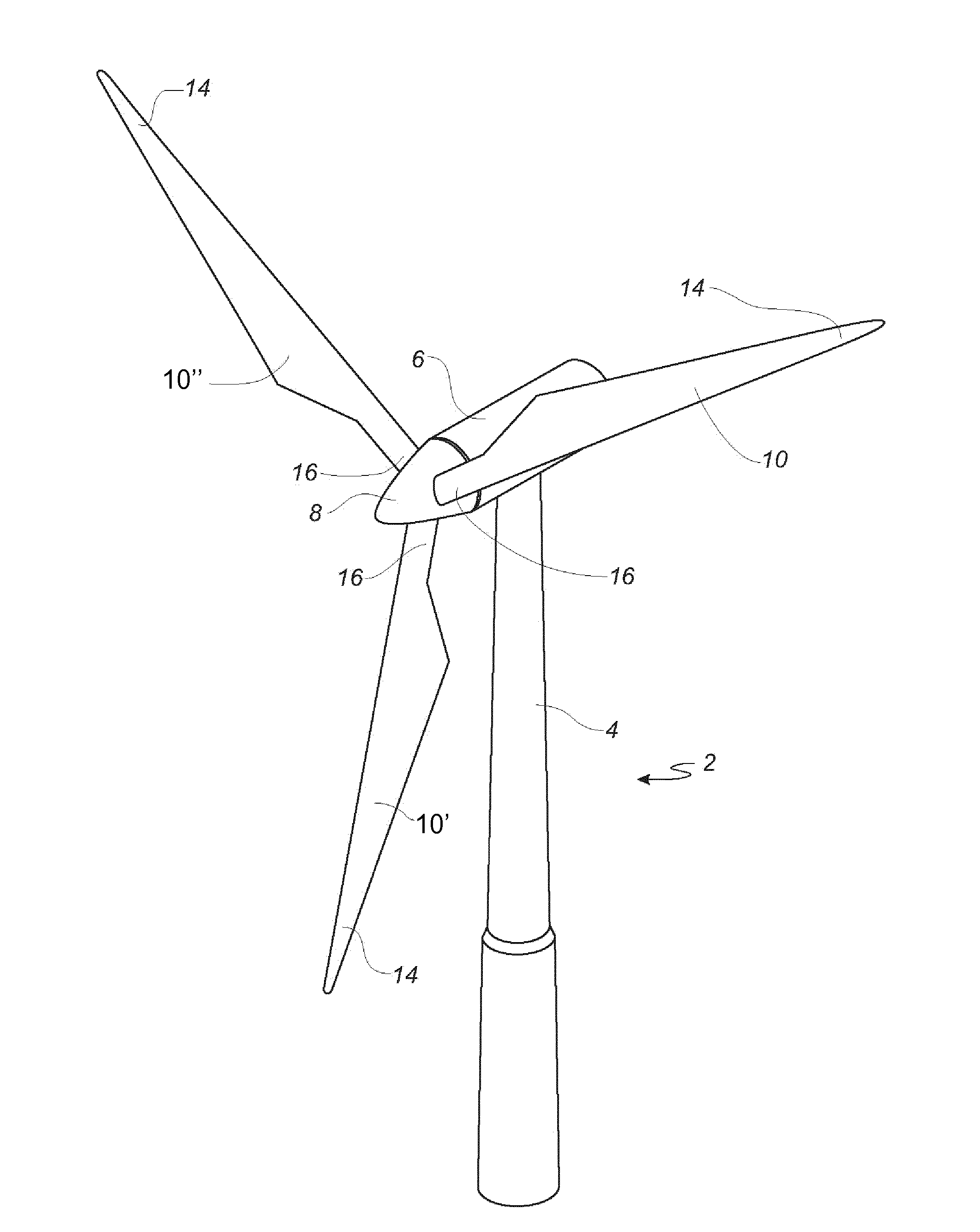
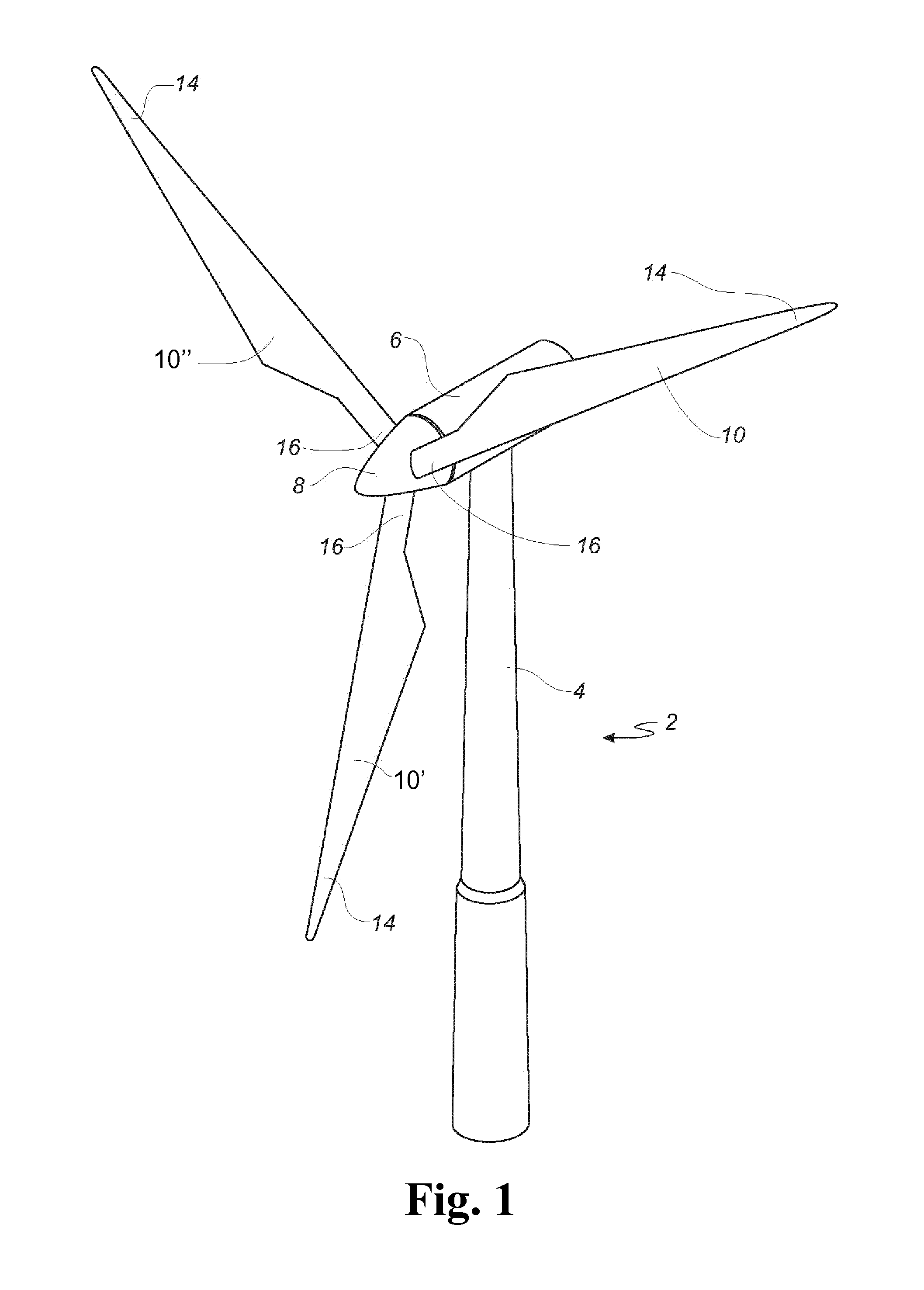
  • Figure 1
    Figure 1
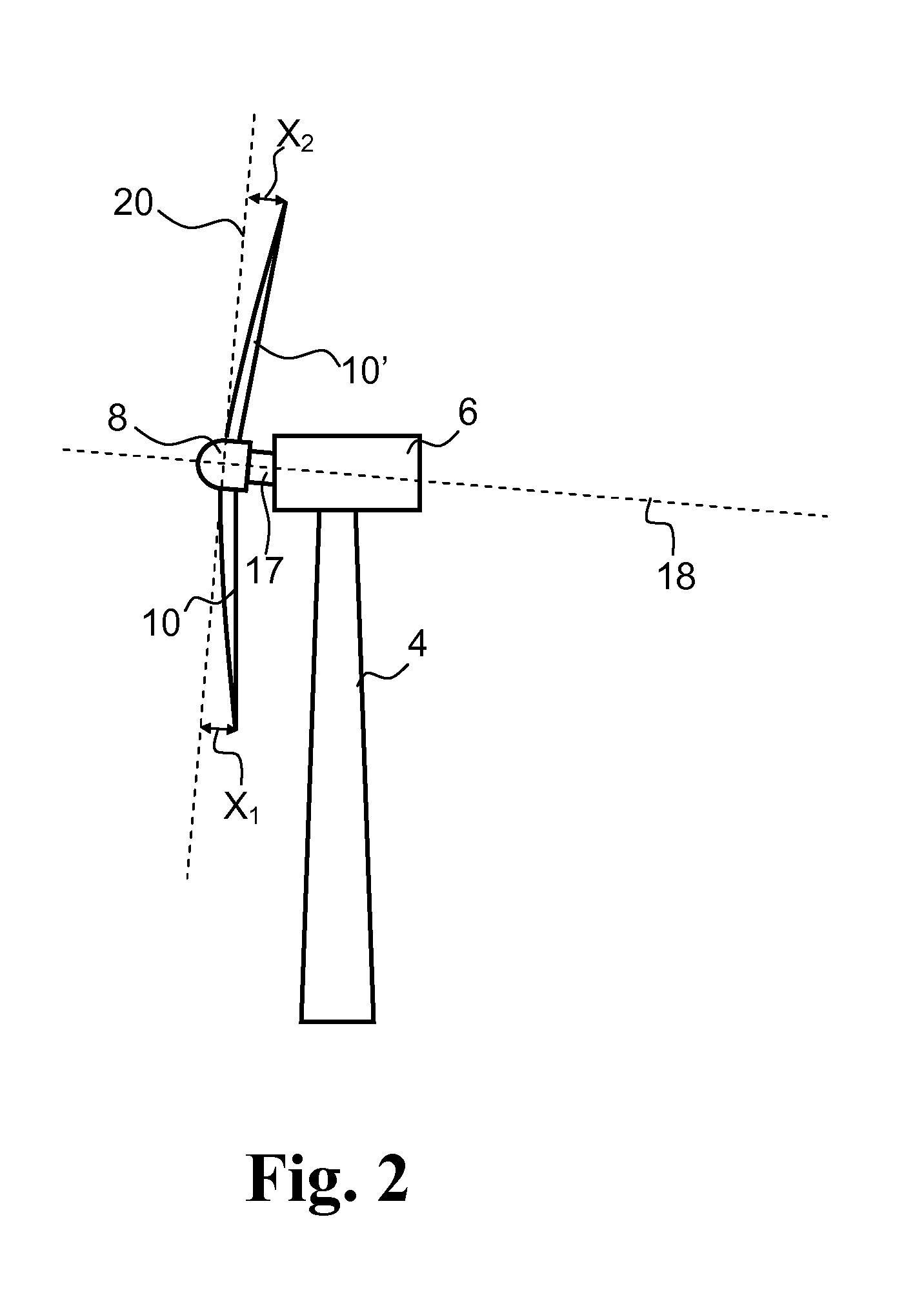
  • Figure 2
    Figure 2
  • Figure 3
    Figure 3
Patent Text Reader

Abstract

The present invention relates to a method for controlling a wind turbine comprising a pitch of one or more blades and collecting first data indicative of a dynamic condition of the first wind turbine blade and a rotor, the first data comprising rotor data and first deflection data, the rotor data indicative of the azimuth position and rotational velocity of the rotor in a rotor plane perpendicular to the rotor axis, and the first deflection data indicative of the position, speed and acceleration of one or more parts of the first wind turbine blade. The method comprises calculating an expected tower clearance distance at a later time of tower passage for the first blade based on the first data including acceleration of one or more parts of the first blade, and performing measures to prevent tower collision, if the expected tower clearance distance fulfills a collision risk criterion.
Need to check novelty before this filing date? Find Prior Art

Description

[0001] The present invention relates to a method for controlling a wind turbine, in particular a method for controlling pitch of one or more blades of a wind turbine and related system.

[0002] Developments within the wind turbine blade industry move towards increasingly longer wind turbine blades. Long wind turbine blades e.g. with lengths above 50 m are a challenge to engineers due to the stiffness required for the wind turbine blades in order to avoid wind turbine blades colliding with the wind turbine tower. At the same time it is as always desired to keep the production of a wind turbine optimized at any given point in time in order to provide the maximum output without undesired wear or damage to the respective wind turbine components which may require time consuming repairs or diminish wind turbine lifetime.SUMMARY

[0003] It is an object of the present invention to provide an improved system and method which reduce or eliminate the risk of wind turbine blades colliding with the win...

Examples

Embodiment Construction

[0018]The figures are schematic and simplified for clarity, and they merely show details which are essential to the understanding of the invention, while other details have been left out. Throughout, the same reference numerals are used for identical or corresponding parts.

[0019]The method comprises collecting data, including first data, indicative of a dynamic condition of the first wind turbine blade and the rotor. The first data comprises rotor data being indicative of the azimuth position ψ of the rotor and rotational velocity ω of the rotor in a rotor plane perpendicular to the rotor axis, enabling determination of azimuth position ψ1 of the first wind turbine blade and rotational velocity ω1 of the first wind turbine blade in a rotor plane perpendicular to the rotor axis. Further, the first data comprises first deflection data being indicative of the position X, speed X′ and acceleration X″ of one or more parts of the first wind turbine blade, e.g. perpendicular to the rotor p...