Three-Dimensional Object Modelling Fitting & Tracking

a three-dimensional object and tracking technology, applied in the field of three-dimensional object modelling, can solve the problems of no disclosure of any object fitting and tracking method, no use of central axes estimation of parts of an object to improve the fitting and tracking of its skeletal representation, and no use of existing methods to recover from posture errors

US20140334670A1Active Publication Date: 2014-11-13SOFTKINETIC SOFTWARE
6 Cites 110 Cited by

Patent Information

Authority / Receiving Office
US · United States
Patent Type
Applications(United States)
Current Assignee / Owner
Publication Date
2014-11-13

Smart Images

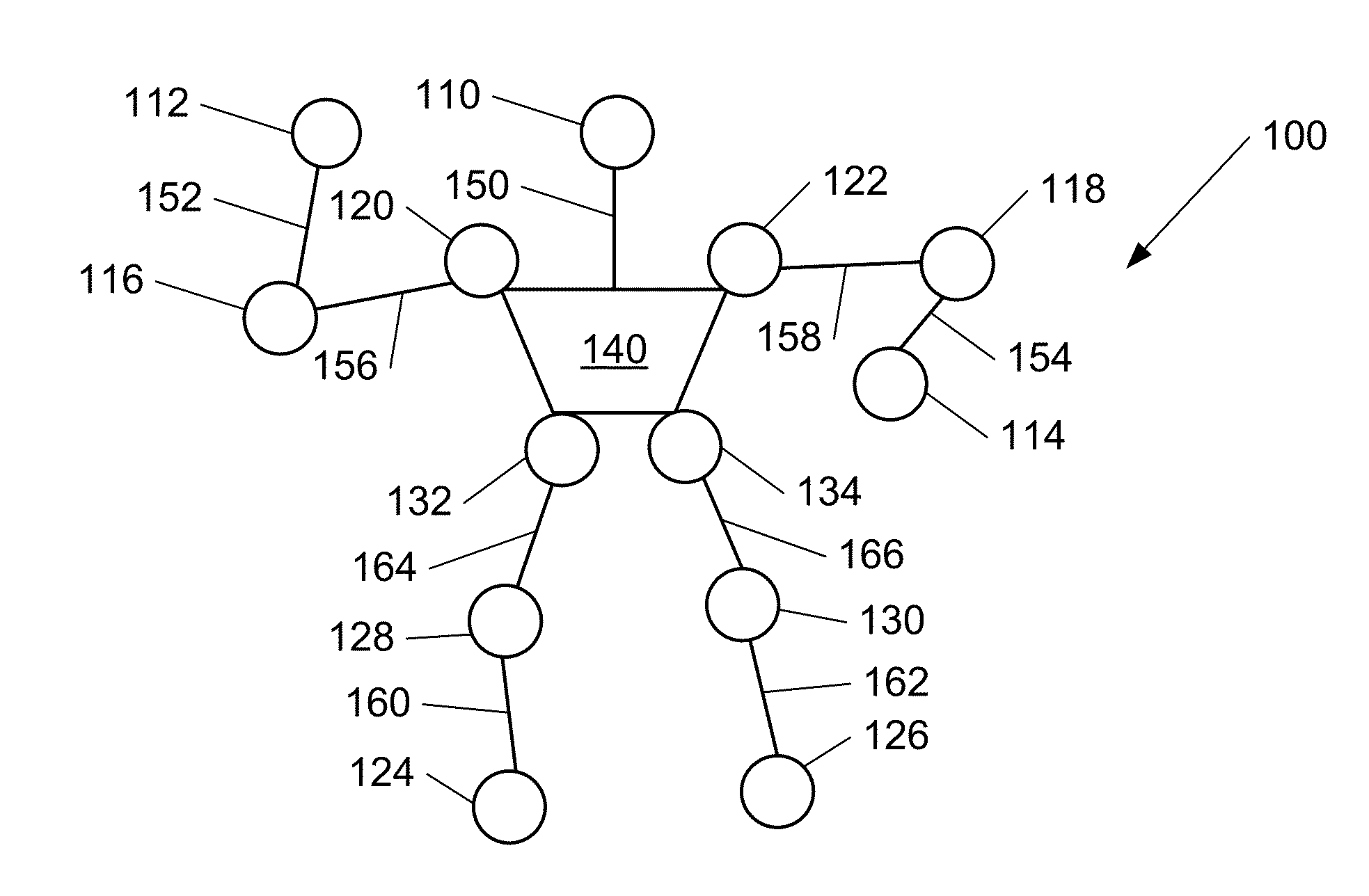
  • Figure 1
    Figure 1
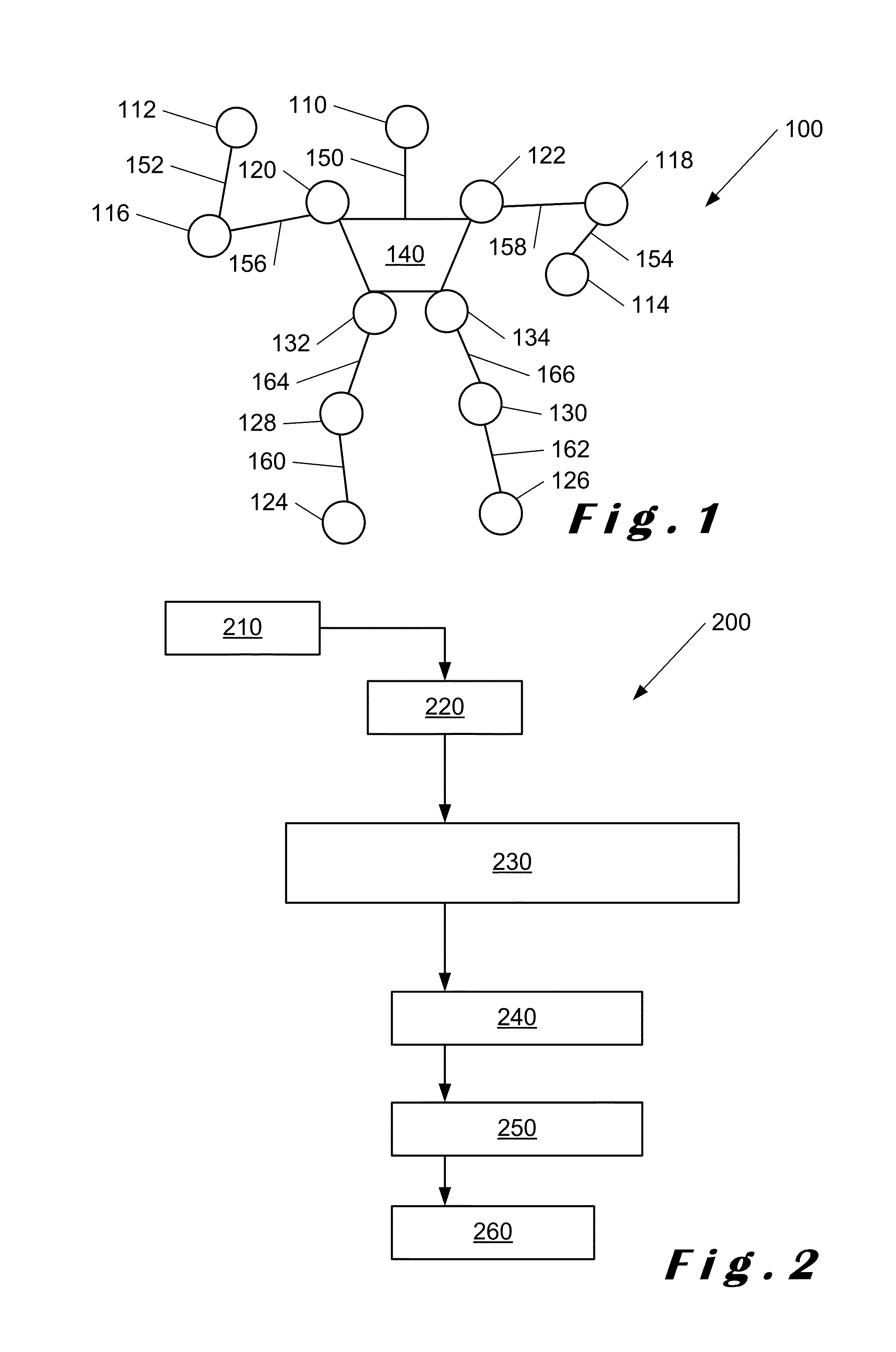
  • Figure 2
    Figure 2
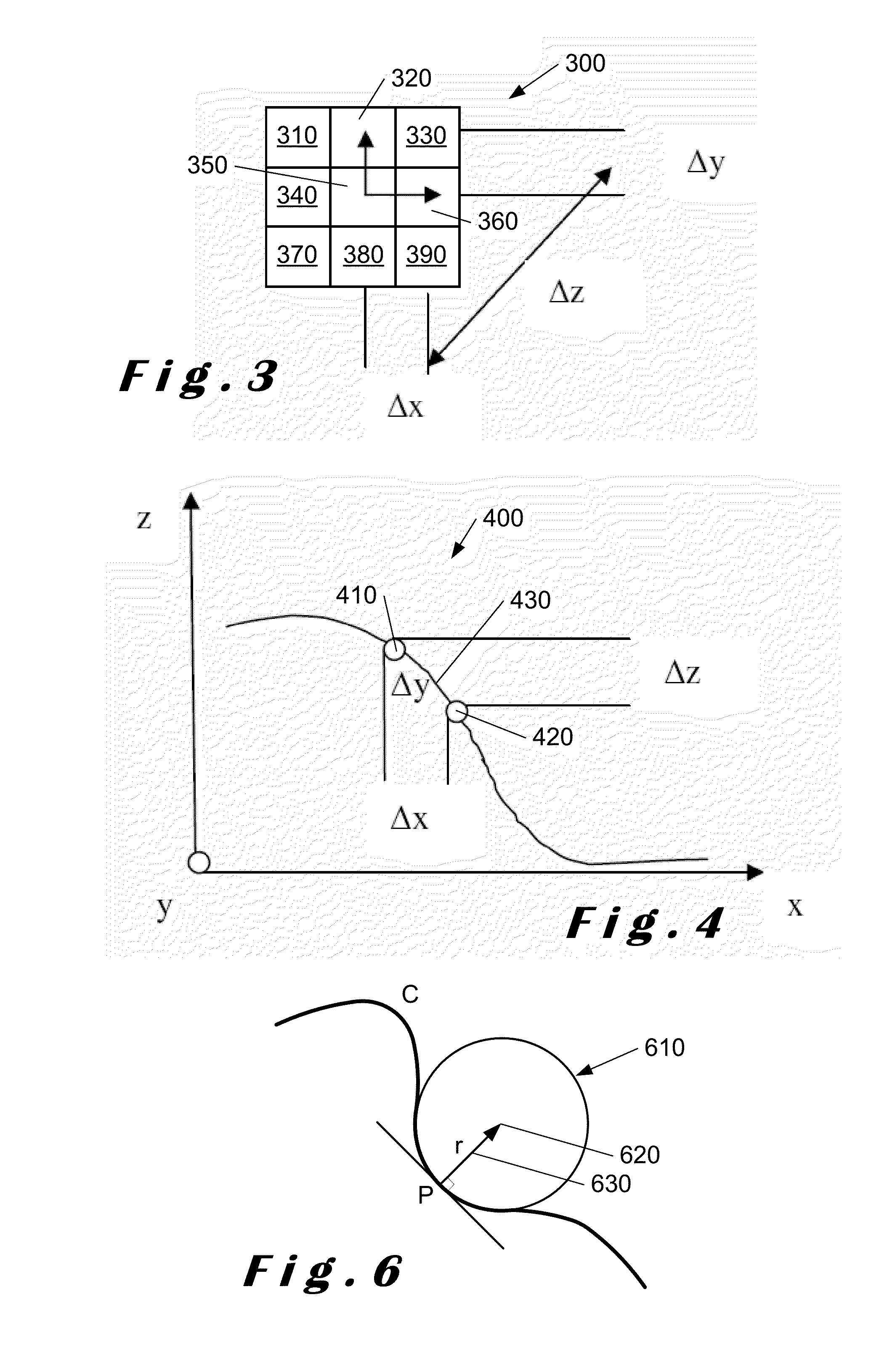
  • Figure 3
    Figure 3
Patent Text Reader

Abstract

Described herein is a method and system for marker-less three-dimensional modelling, fitting and tracking of a skeletal representation of an object in a three-dimensional point cloud. In particular, it concerns the tracking of a human user skeletal representation with respect to time. The method comprises inputting a three-dimensional point cloud derived from a depth map; predetermining a set of control points representing the skeleton of the user, determining a start-up skeleton pose, obtaining an orthographic representation of the user 3D point cloud projected onto a grid by sampling the 3D point cloud with a predetermined static size, determining a set of curvature centres points approximating central axes of main parts of the user, determining the torso plane, and refining and / or defining the principal direction of the body. The method comprises then the step of performing iterative local and global fittings of the set of control points onto the user 3D point cloud and the associated data such as the curvature centre points, using topological and geometric constraints so that to track skeleton posture along the time. Stabilising the skeleton pose; resolving ambiguities; and providing a suitable output are then the last steps of a preferred embodiment of the invention.
Need to check novelty before this filing date? Find Prior Art

Description

FIELD OF THE INVENTION

[0001] The present invention relates to three-dimensional object modelling, and is more particularly concerned with a method of modelling, fitting and tracking of objects, and, in particular, although not exclusively to, determining, fitting and tracking a skeletal representation of a user in a temporal sequence of depth maps captured by a three-dimensional imaging system.BACKGROUND TO THE INVENTION

[0002] Three-dimensional (3D) imaging systems, such as, stereovision cameras, time-of-flight (TOF) cameras and structured-light cameras, produce a temporal sequence of depth maps which are 2D images providing at least X, Y, Z coordinates for each imaged point of a scene. The X and Y coordinates may indicate the horizontal and vertical position of the pixel in the camera sensor matrix array, and the Z coordinate may indicate the distance of the imaged point in the scene to the imaging device. Alternatively, each imaged point of a scene may comprise X, Y, Z coordinates c...

Examples

Embodiment Construction

[0073]The present invention will be described with respect to particular embodiments and with reference to certain drawings but the invention is not limited thereto. The drawings described are only schematic and are non-limiting. In the drawings, the size of some of the elements may be exaggerated and not drawn on scale for illustrative purposes.

[0074]It will be understood that the terms “vertical” and “horizontal” are used herein refer to particular orientations of the Figures and these terms are not limitations to the specific embodiments described herein.

[0075]It also will be understood that, although the skeletal fitting and tracking method is described with reference to the skeleton of a human body, is not limited thereto and can be used with any other kind of object, regardless of whether it is animated or not and / or articulated or not.

[0076]FIG. 1 illustrates a skeletal representation 100 used for fitting and tracking a human being in a virtual environment. The skeletal repre...