
Method for Altering Photosynthetic Growth
a technology of photosynthetic growth and growth, applied in biocide, applications, agriculture, etc., can solve the problems of affecting ecosystems and wildlife, contaminating our drinking water supply, and not being able to use the sun's renewable energy,
- Summary
- Abstract
- Description
- Claims
- Application Information
AI Technical Summary
Benefits of technology
Problems solved by technology
Method used
Image

Examples
Embodiment Construction
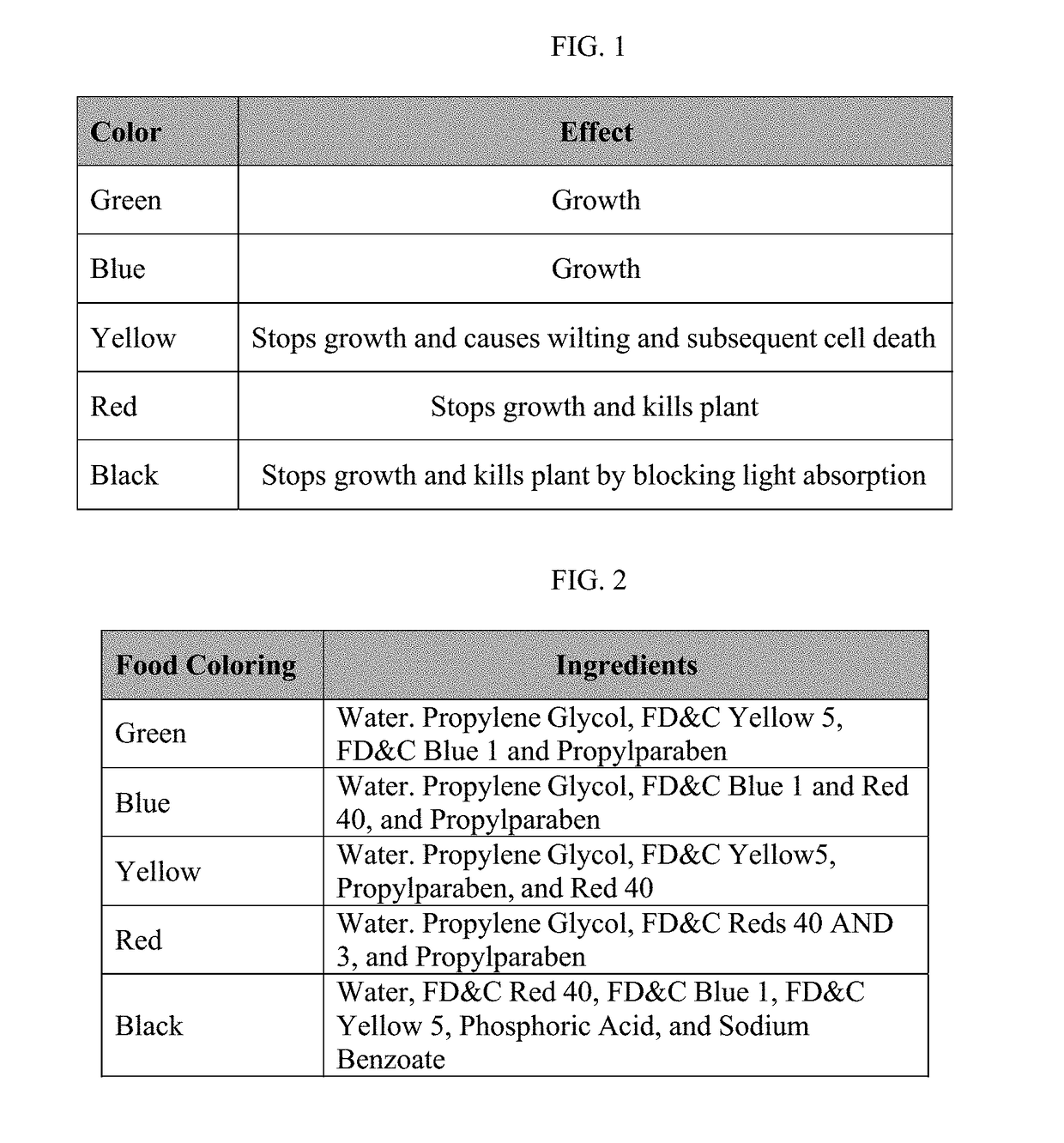
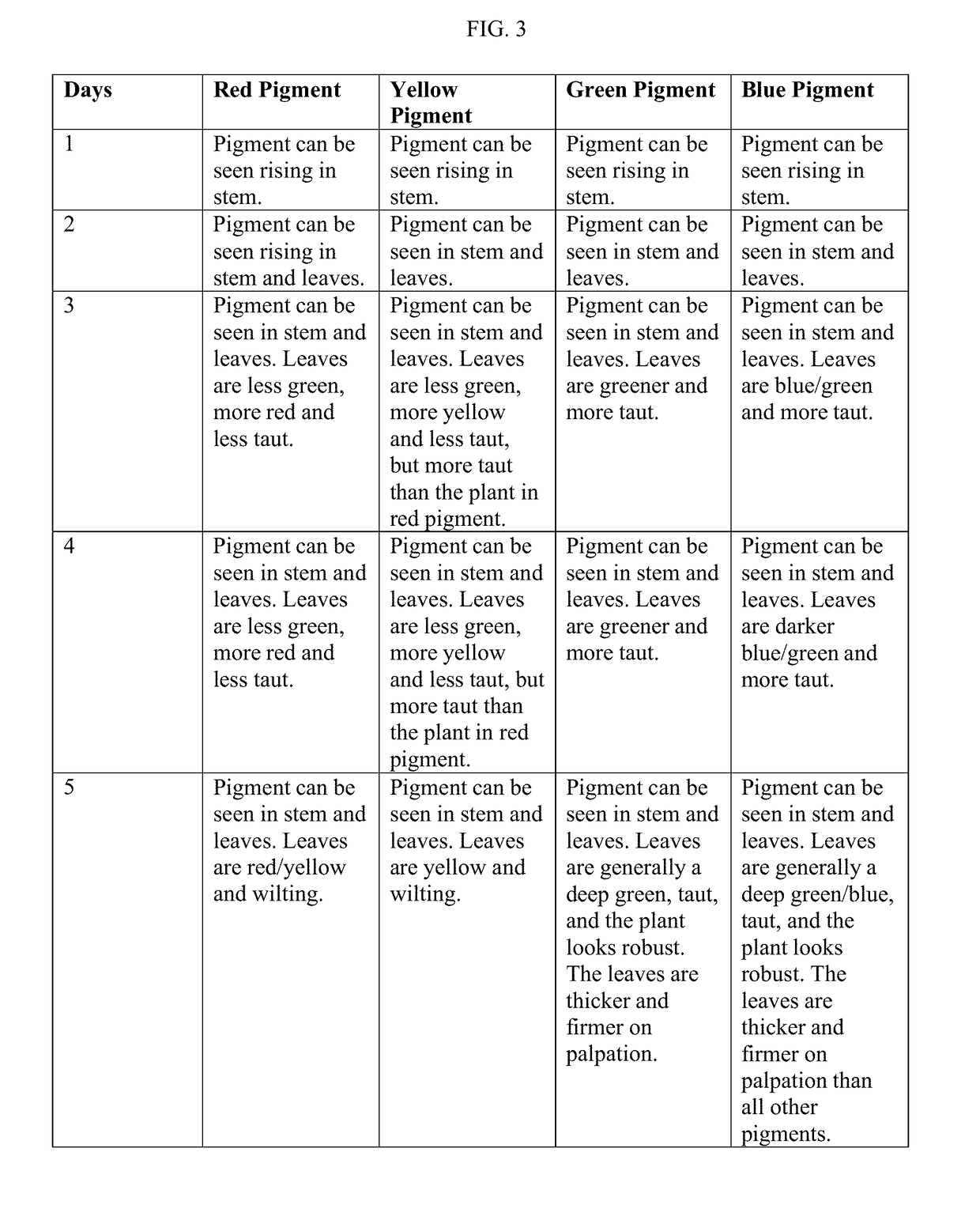
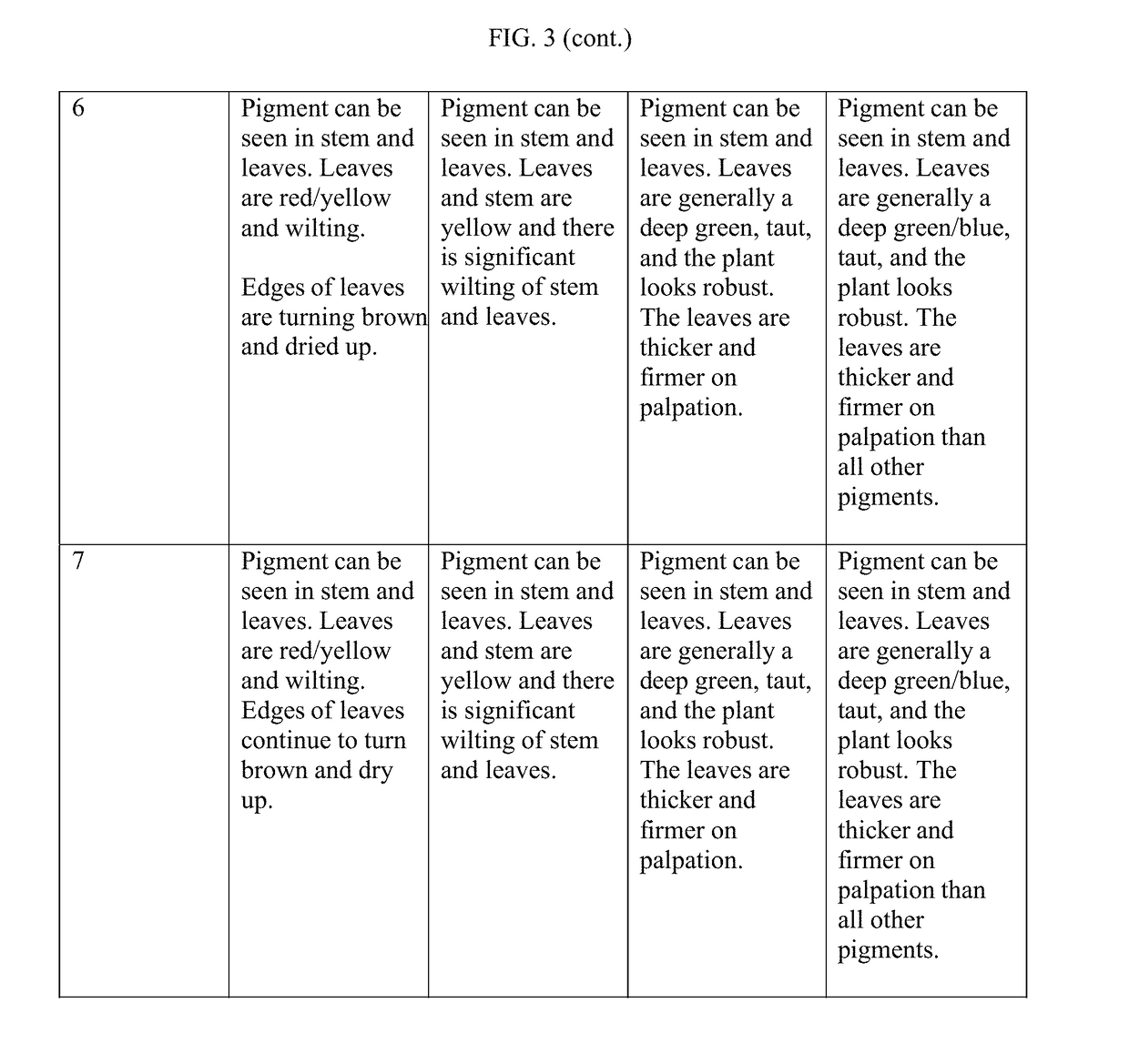
[0017]The present method involves the application of pigmented matter, alone or in combination with other agents or substances, to photosynthetic organisms. This application can work to enhance or reduce absorption of certain wavelengths of light, which, in turn, enhances or reduces photosynthetic activity. Photosynthetic activity is a measurement of the light absorption efficiency of the plant, which in turn affects the amount of energy produced by photosynthesis. For example, as shown in FIG. 1, providing blue and green pigments to green plants enhances photosynthetic activity in the plant by enabling the plant to absorb light energy at a greater magnitude, which in turn increases the output of chemical energy produced by the plant. The increase of photosynthetic activity in a plant will cause a number of changes in the plant's physical appearance, including but not limited to, a faster growth rate, more robust leaves and stems, heartier leaves and stems, and firmer leaves and ste...
PUM
 Login to View More
 Abstract
Description
Claims
Application Information
 Login to View More