
Compositions and methods for the treatment of presbyopia
a presbyopia and composition technology, applied in the field of compositions and methods for the treatment of presbyopia, can solve the problems of insufficient change in normal thickening, limited ability to quickly function at many, and increased curvature of the anterior surface of the lens, so as to improve visual acuity and quality of vision, improve acuity, and eliminate optical aberrations
- Summary
- Abstract
- Description
- Claims
- Application Information
AI Technical Summary
Benefits of technology
Problems solved by technology
Method used
Image

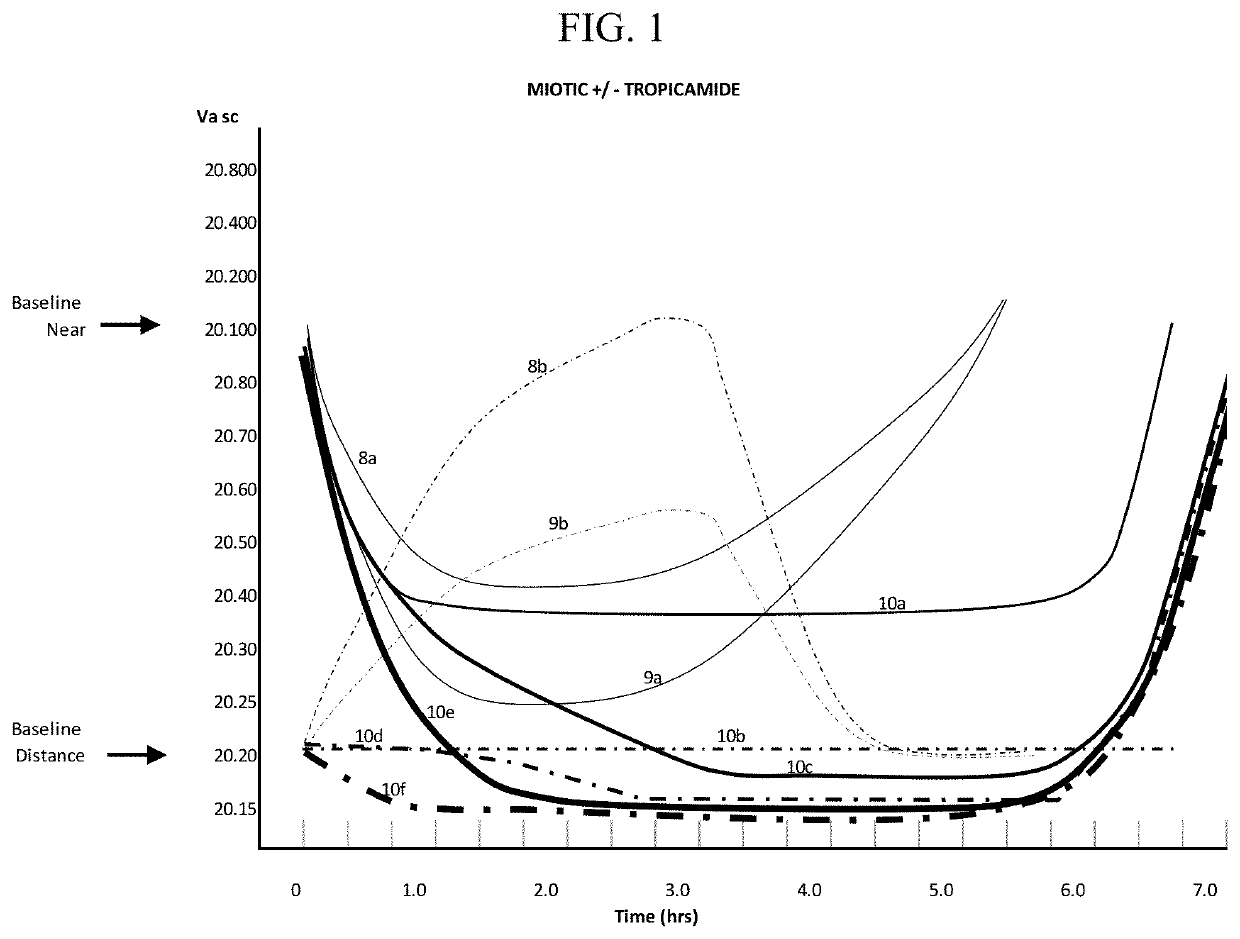
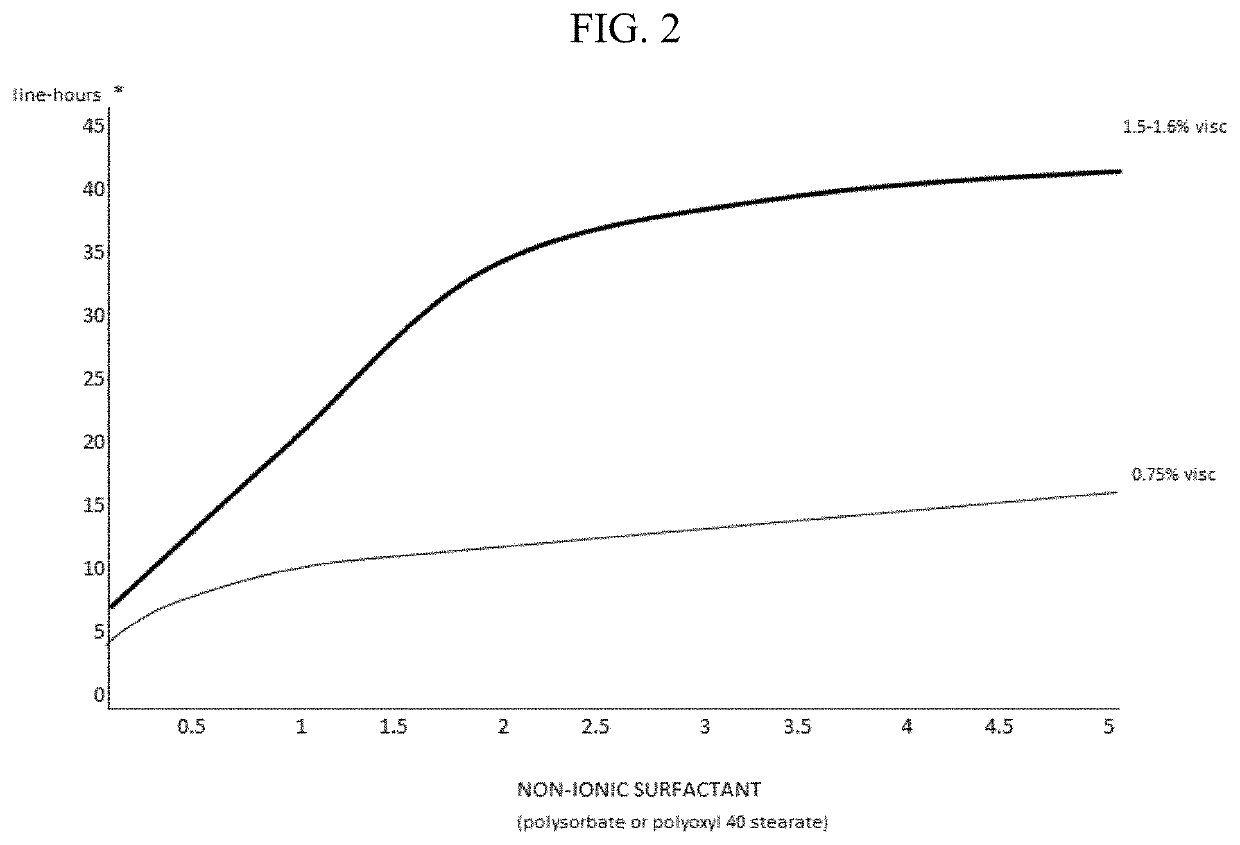
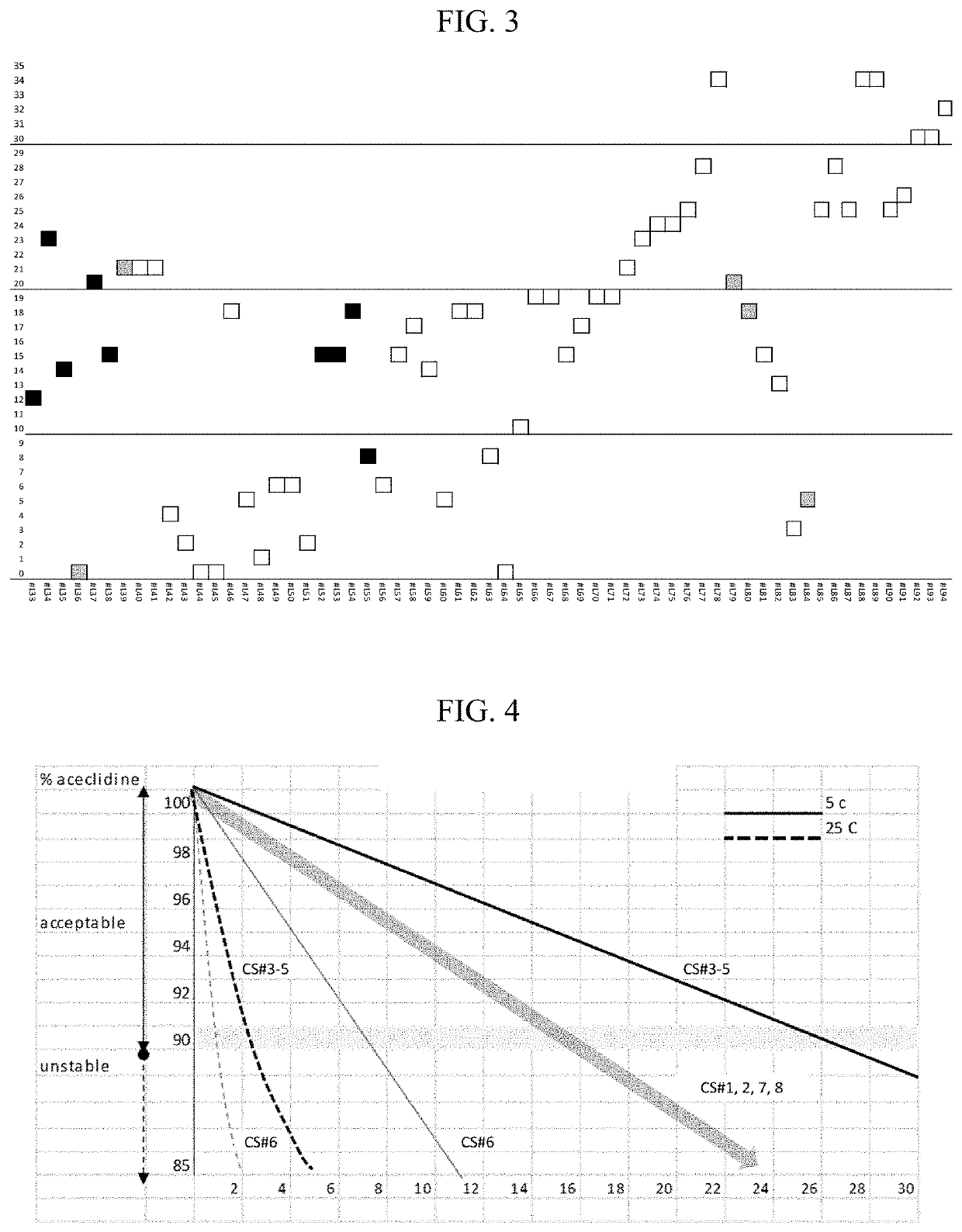
Examples
example 1
Effect of aceclidine on vision of subjects aged 47 to 67 years
[0275]Table 1 demonstrates the effect on the near focus ability of presbyopic subjects before and after ophthalmological administration of a composition containing aceclidine. Each composition included aceclidine in the concentrations indicated and 5.5% w / v HPβCD, 0.75% w / v CMC, 0.25% w / v NaCl and 0.01% w / v BAK. Additionally compositions administered to subjects 4 and 5 included 0.125% w / v tropicamide. As aceclidine is an enantiomer, the clinical effectiveness may vary with different ratios. For the present studies a nearly exact 50:50 ratio of stereoisomers was measured as best determined by polarimetry.
TABLE 1Effects of aceclidine on vision of presbyopic patients.Vision BaselinePost Gtt 15″AceclidineR PreR PostEffectDate#Age%DistL Pre DistR Pre NearL Pre NearDistL Post DistR Post NearL Post Near(h)Aug. 21, 20131671.520.2020.3020.6020.6020.2020.2020.1520.159.00Aug. 22, 20132521.520.3020.3020.5020.5020.2520.2520.2520.208....
example 2
Effect of concentration of concentration of aceclidine and tropicamide
[0277]
TABLE 2Effect of concentration of concentration of aceclidine and tropicamide.#1#2#3#4#5 (OD)#5 (OS)#6#7Brimonidine0.03%0.03%0.03%0.03%0.03%0.03%0.03%Poloxamer 407 5.5%HPBCD 5.5% 5.5% 5.5% 5.5% 5.5% 5.5% 5.5%Aceclidine 1.5% 1.5%0.75% 1.1% 1.1% 1.1% 1.1% 1.1%Tropicamide0.014% 0.021% 0.028% 0.042% 0.062% NaCl0.25%0.25%0.25%0.25%0.25%0.25%0.25%0.25%CMC0.75%0.75%0.75%0.75%0.75%0.75%0.75%0.75%BAK 0.1% 0.1% 0.1% 0.1% 0.1% 0.1% 0.1% 0.1%Redness (15 m)3+ 1 0.50.50000Redness (30 m)1.50.50.250.250000Brow Ache (60 m)2+ 2+ 20.50.50.00.00.0Stinging (10 m)2 2 0.500000BD-OD20.2020.2020.2020.2020.2020.2020.2020.20BD-OS20.2520.2520.2520.2520.2520.2520.2520.25BN-OD8 pt8 pt8 pt8 pt8 pt8 pt8 pt8 ptBN-OS7 pt7 pt7 pt7 pt7 pt7 pt7 pt7 ptBP-photopic3 mm3 mm3 mm3 mm3 mm3 mm3 mm3 mmBP-mesopic5 mm5 mm5 mm5 mm5 mm5 mm5 mm5 mmMiosis start (m)15 15 151515151515Miosis (OU) (1 hr)1.63 mm1.63 mm2.0-2.5 mm1.63 mm1.63 mm1.63 mm1.63 mm1.7...
example 3
Effect of Concentration of Aceclidine, Brimonidine, Guanfacine, Fadolmidine, Tropicamide and Additives
[0282]
TABLE 3Effect of concentration of aceclidine, brimonidine, guanfacine,fadolmidine, tropicamide and additives.AB2TAB4TAB6T AB11TAB12T PROPH13Aceclidine1.551.551.551.551.851.55Brimonidine0.0370.0370.0370.037Fadolmidine0.037Guanfacine0.037HPBCD5.55.55.55.55.55Tropicamide0.0430.0430.0430.0430.0420.043CMC*0.0750.0750.0750.0750.0750.075NaCl0.0250.0250.0250.0250.0250.025BAK0.010.010.010.010.010.01Glycerin0.10.10.1Poloxamer 1880.10.05Polyoxyl 40 stearate0.05pH6.57.57.57.57.07.5nasal congestion000000stinging initial0.7501.53.501.5stinging, 3 min0.500wash out00redness initial001D / C11redness 15 min000D / C00whitening000D / C1.51.5pain000D / C00vision near20.3020.1520.15D / C20.1520.15vision distance20.2020.2020.20D / C20.2020.20onset (min)201216D / C1216duration (hrs)5.57.57.5D / C7.57.5colorclearyellowyellowyellowyellowyellowOVERALL2.53.93.8043.9*1% = 2,500 cpsAll percentages are w / v. Scores for nasa...
PUM
| Property | Measurement | Unit |
|---|---|---|
| temperature | aaaaa | aaaaa |
| viscosity | aaaaa | aaaaa |
| viscosity | aaaaa | aaaaa |
Abstract
Description
Claims
Application Information
 Login to View More