Method and system for locating a network device connected to a proxy network device in an emergency situation

a network device and emergency situation technology, applied in the direction of location information based service, machine-to-machine/machine-type communication service, electrical apparatus, etc., can solve the problems of inability to prior art methods of accomplishing such location do not meet the requirements of rapid location determination, automation and accuracy,

US20210153001A1Active Publication Date: 2021-05-20EVERBRIDGE
0 Cites 51 Cited by

Patent Information

Authority / Receiving Office
US · United States
Current Assignee / Owner
Publication Date
2021-05-20

Smart Images

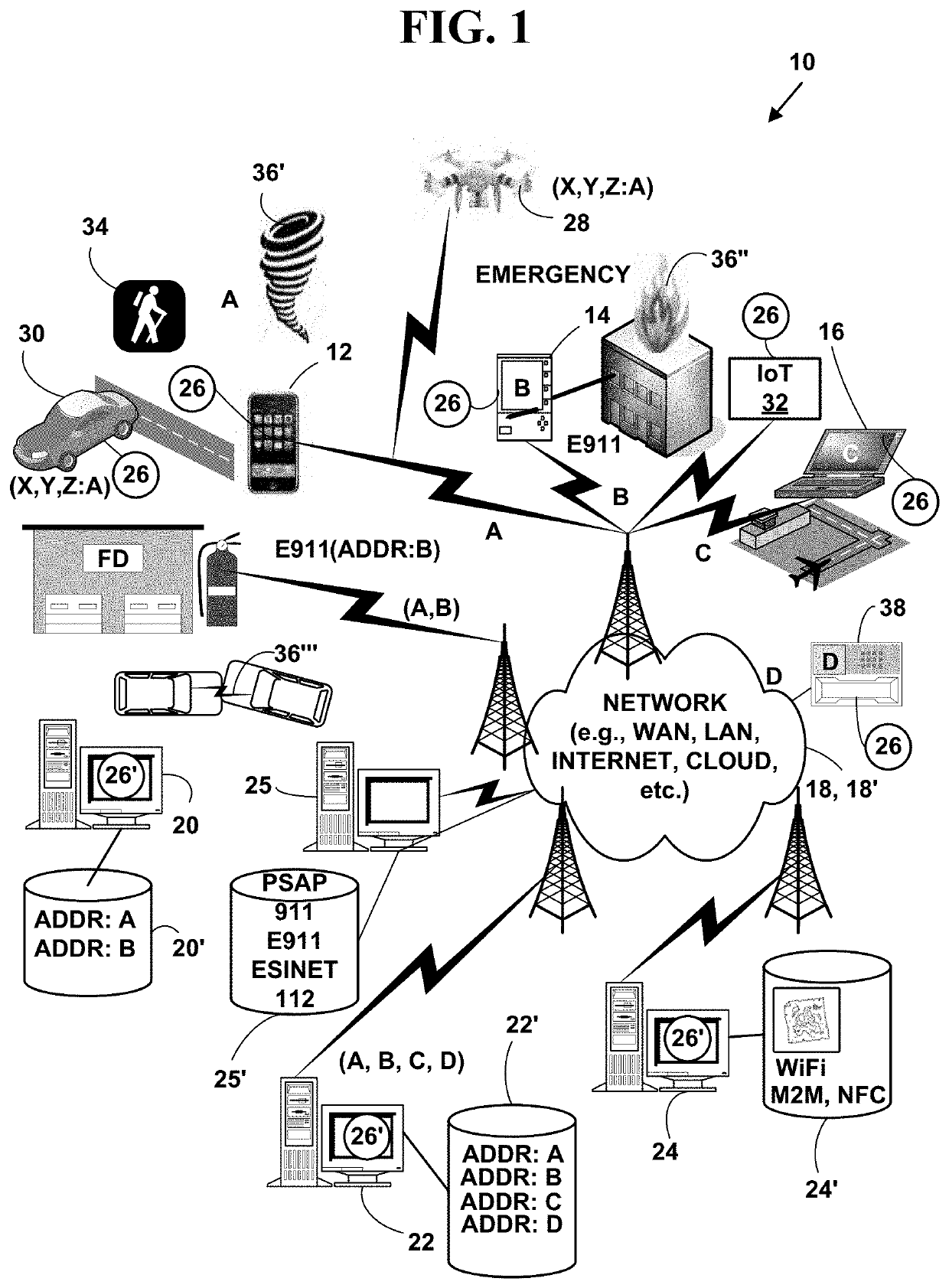
  • Figure 1
    Figure 1
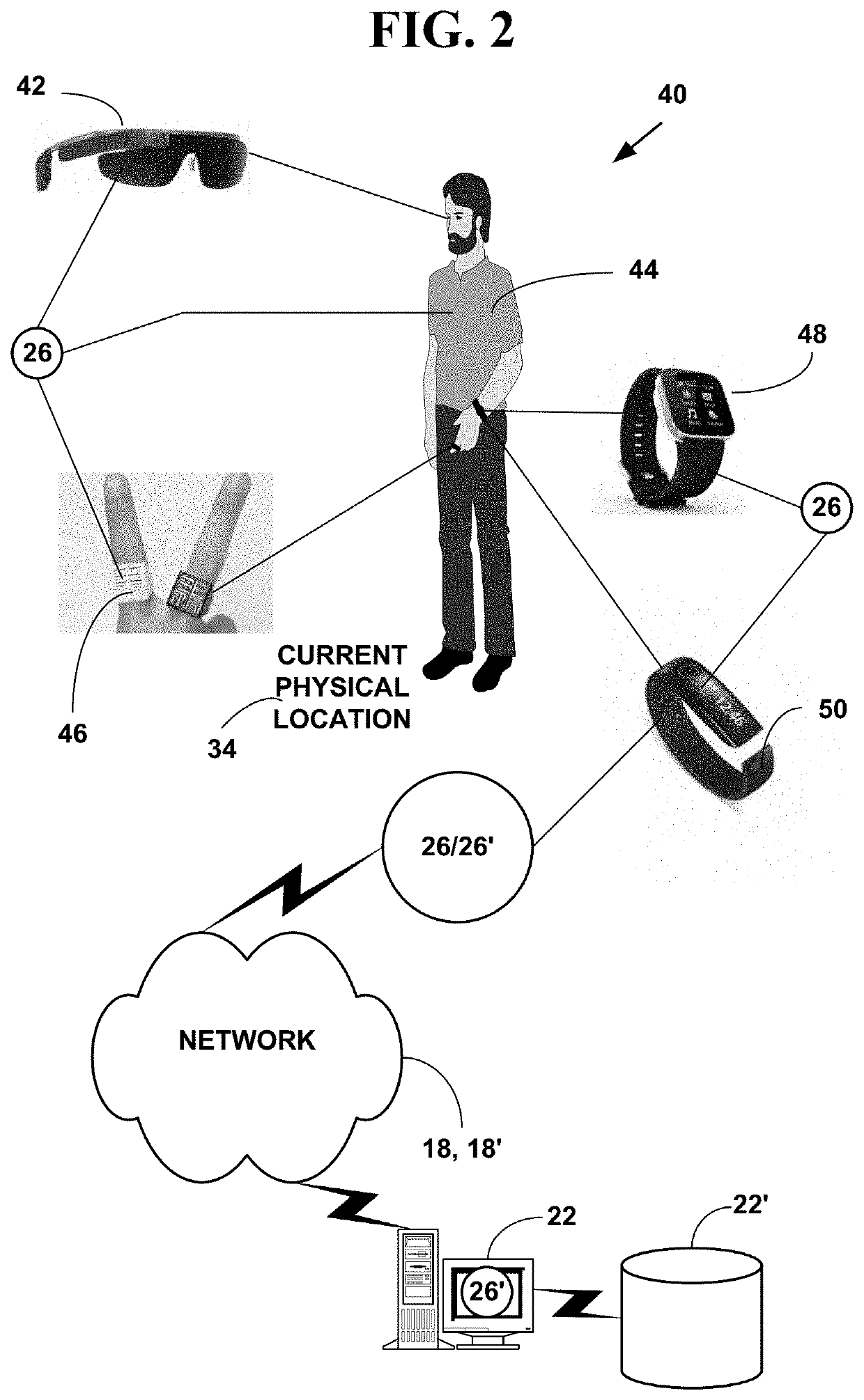
  • Figure 2
    Figure 2
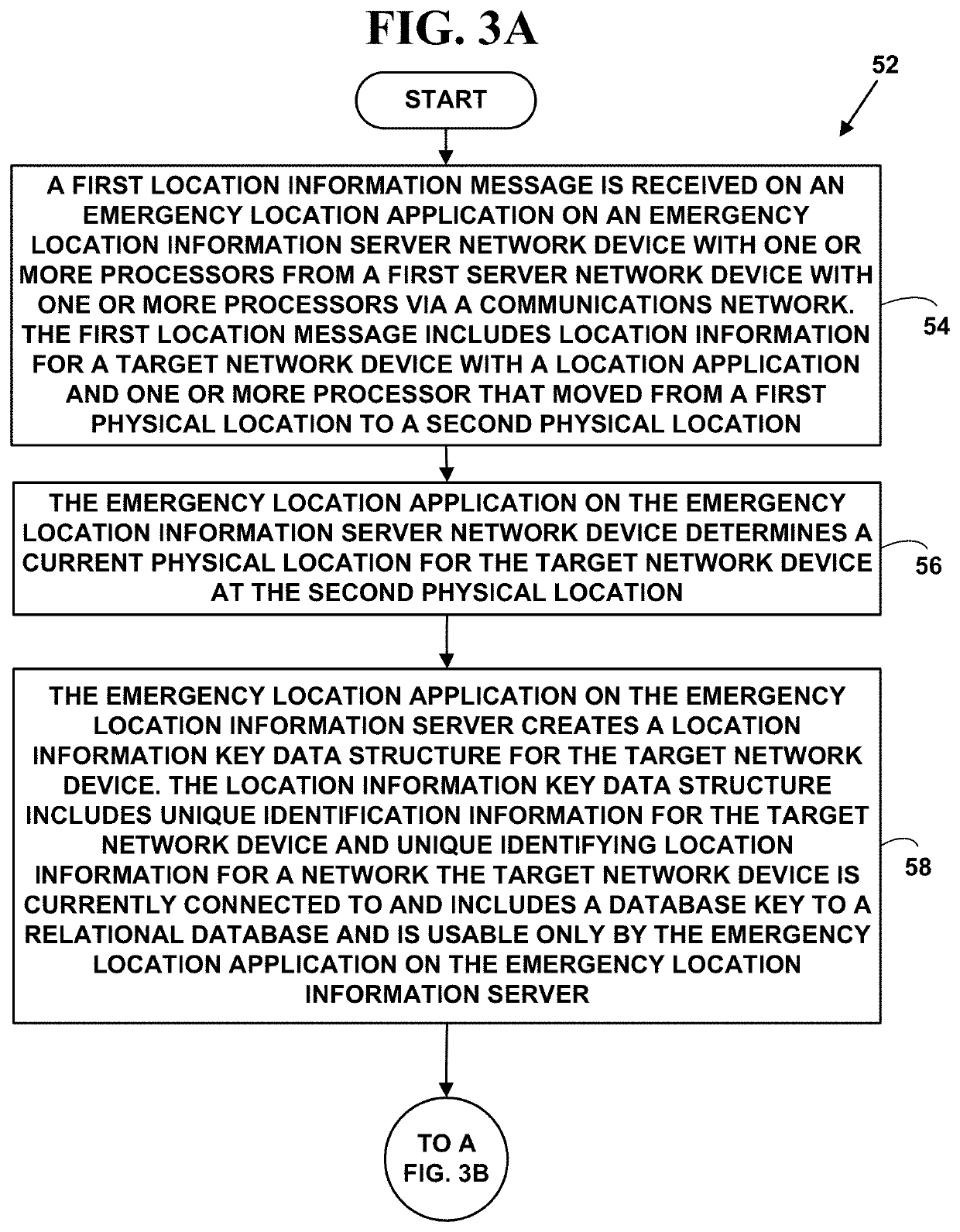
  • Figure 3
    Figure 3
Patent Text Reader

Abstract

A method and system for locating a network device connected to a proxy network device in an emergency situation. When an electrical connection, whether through physical wires or over a wireless interface such as spread spectrum technology is made on a proxy network device (e.g., analog terminal adapter (ATA), analog or digital Private Branch Exchange (PBX) system, Digital Enhanced Cordless Telecommunications (DECT) devices, gateway, bridge, router, switch, etc.) for a network device, the proxy network device sends a connection identifier such as a port number or wireless channel number, Device IDentifier (DID) number, etc. to an emergency location server network device to associate the connection identifier on the proxy network device with connected network and with a current physical location to be used in an emergency. When an emergency event occurs, the connection identifier is used to determine an emergency current physical location that is used by first responders.
Need to check novelty before this filing date? Find Prior Art

Description

CROSS REFERENCES TO RELATED APPLICATIONS

[0001] This U.S. utility patent application is a Continuation-In-Part (CIP) U.S. Utility patent application Ser. No. 16 / 792,630, filed on Feb. 17, 2020, which issued as U.S. Pat. No. 10,912,056, on Feb. 2, 2021, which is a CIP of U.S. Utility patent application Ser. No. 15 / 914,078, filed on Mar. 7, 2018, which issued as U.S. Pat. No. 10,588,004, on Mar. 10, 2020, which is a CIP of U.S. utility patent application Ser. No. 15 / 491,608, filed Apr. 19, 2017, which is a CIP of U.S. utility patent application Ser. No. 14 / 806,068 filed on Jul. 22, 2015, that issued into U.S. Pat. No. 9,935,534, on Apr. 25, 2017, which is a CIP of U.S. utility patent application Ser. No. 14 / 579,760, filed on Dec. 22, 2014, that issued as U.S. Pat. No. 9,094,816, on Jul. 28, 2015, which is a CIP of U.S. patent application Ser. No. 14 / 303,842, filed on Jun. 13, 2014, that issued as U.S. Pat. No. 8,918,075, on Dec. 23, 2014, which is a CIP of U.S. utility patent applicatio...

Examples

Embodiment Construction

Electronic Emergency Location Information Message Processing System

[0035]FIG. 1 is a block diagram illustrating an exemplary communications system 10. The exemplary communications system 10 includes, but is not limited to, one or more target network devices, each with one or more processors and each with a non-transitory computer readable medium. Only selected ones of the target network devices are illustrated in the drawings for simplicity.

[0036]The target network devices, include, but are not limited to, mobile phones including smart phones 12, electronic tablets 14, mobile computers 16, unmanned aerial vehicles (UAV) 28, commonly known as “drones” and also referred to as “Remotely Piloted Aircraft (RPA),” driverless vehicles 30, vehicles with a driver, aircraft (e.g., airplane, helicopter, hot air balloon, blimp, etc.) water vehicles, (e.g., ship, boat, barge, raft, canoe, kayak, personal water craft (PWC), etc.), snow machines, Internet of Things (IoT) network devices 32, and ot...