System and method for adapting a software control in an operating environment

a software control and operating environment technology, applied in the field of substance and material identification, can solve the problems of high false alarm rate, complex energy source operation, short range of reliable detection of quadrupole resonance techniques, etc., and achieve the effects of reducing response time, high power consumption, and increasing reliability

US7106826B2Inactive Publication Date: 2006-09-12CDEX
6 Cites 15 Cited by

Patent Information

Authority / Receiving Office
US · United States
Current Assignee / Owner
Publication Date
2006-09-12
Estimated Expiration
Not applicable · inactive patent

Smart Images

  • Figure 1
    Figure 1
  • Figure 2
    Figure 2
  • Figure 3
    Figure 3
Patent Text Reader

Abstract

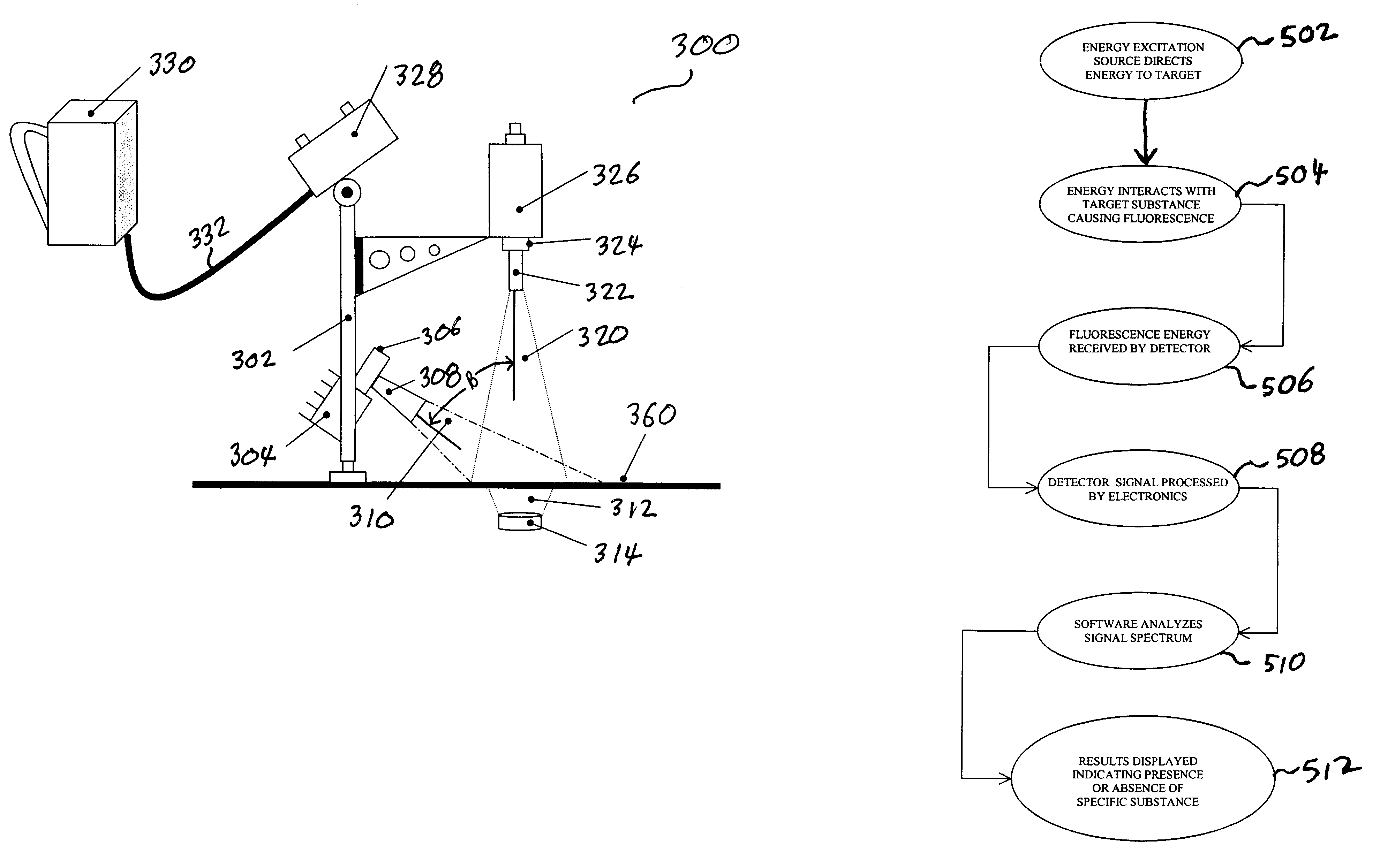
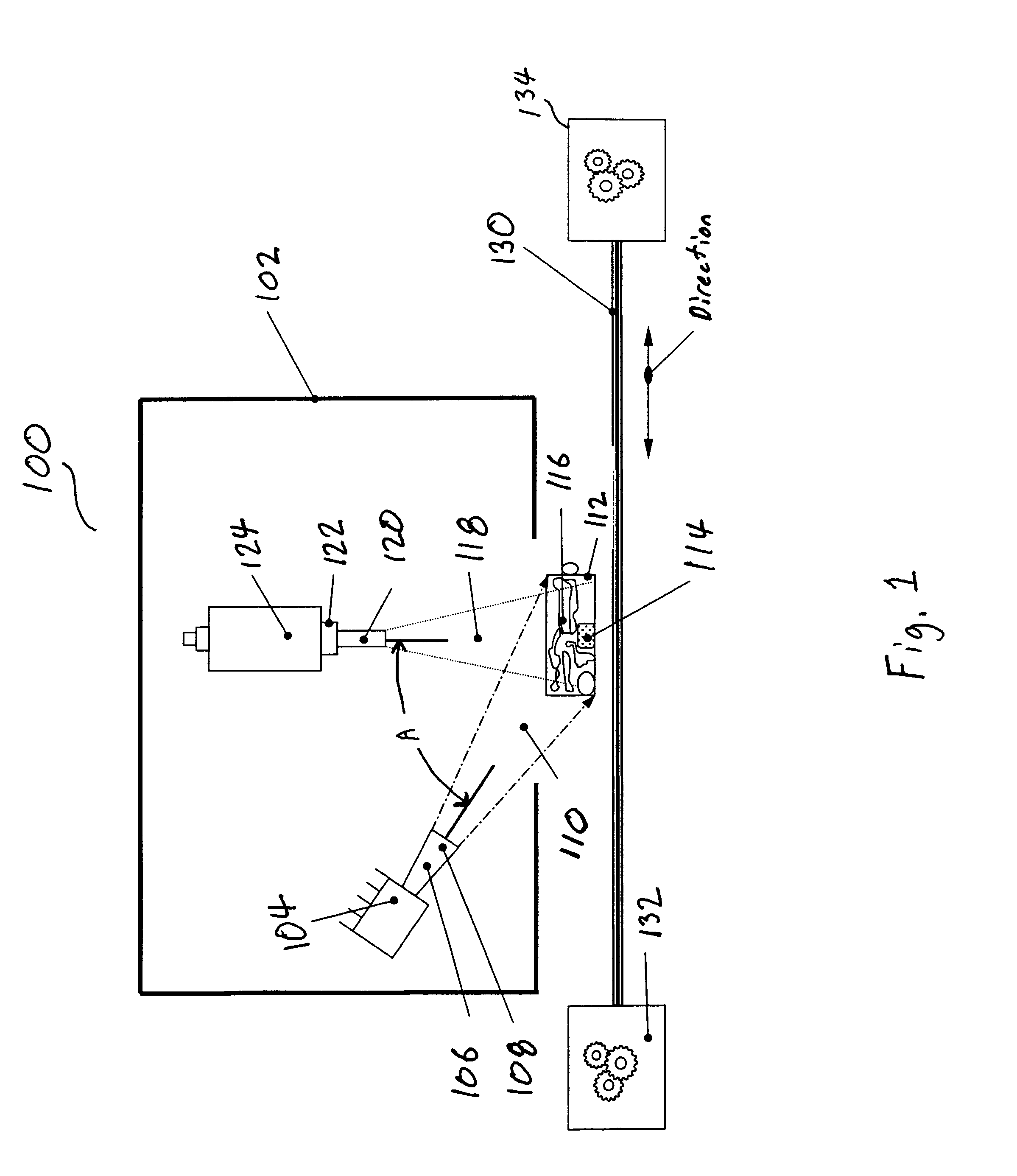
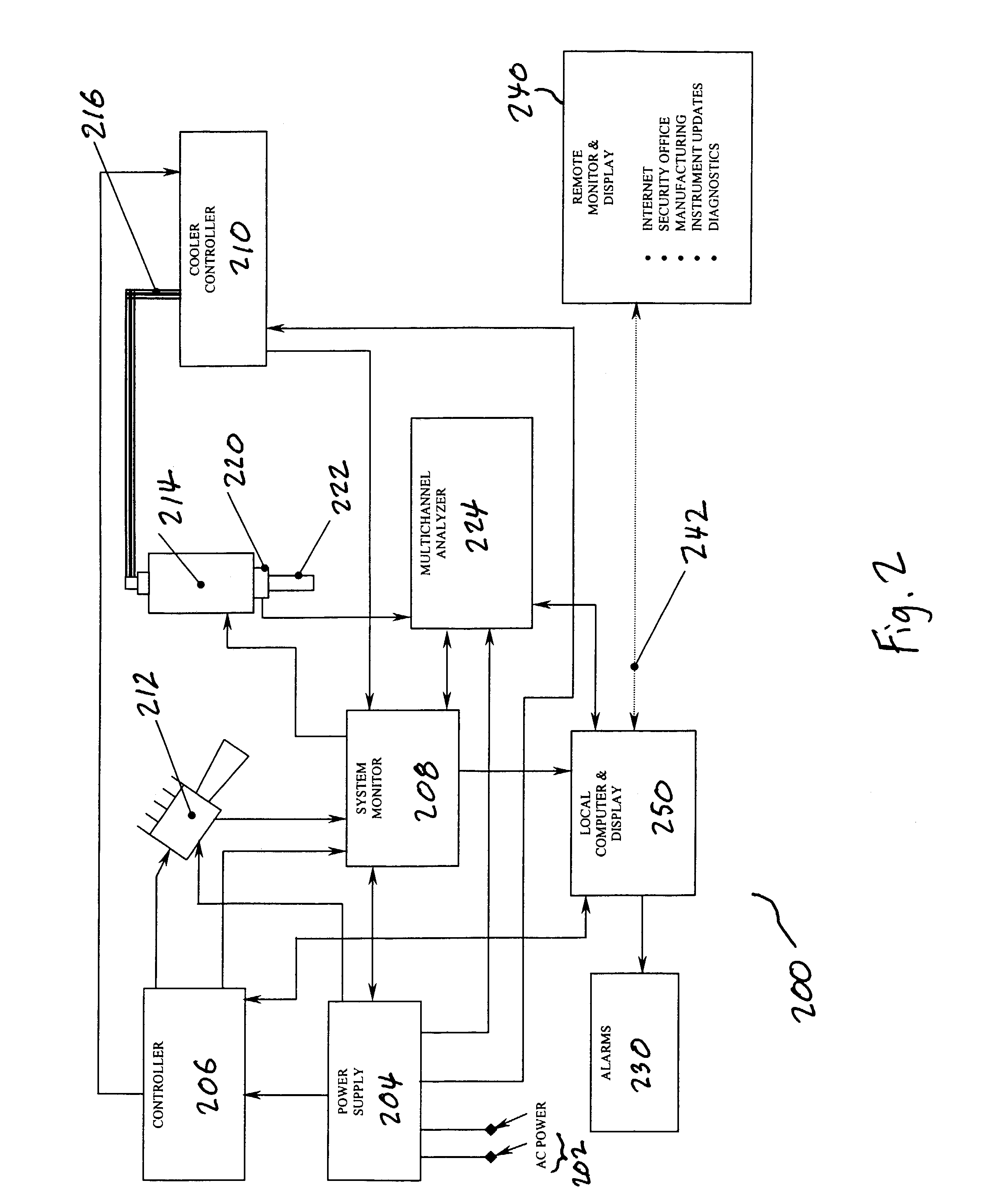
A system and method for detecting a substance using x-ray fluorescence is disclosed. The detected substances may be explosives or controlled substances that have a specific chemical fluorescent signature. An energy source transmits an x-ray beam at a target. The target may be in a container or under a surface. The beam interacts with the target to produce fluorescent energy. An x-ray detector is at an angle relative to the energy source and gathers the fluorescent energy. The angle differs according to the physical configuration of the system. A portable embodiment will have a different angle than a stationary embodiment. A cooling mechanism cools the x-ray detector. The fluorescent energy is analyzed and processed by a multichannel analyzer and a computer. The computer determines whether the fluorescent energy from the target matches known fluorescent energies of specific substances. If the substance is detected, appropriate indications are made to prevent damage or acceptance of the substance.
Need to check novelty before this filing date? Find Prior Art

Description

CROSS REFERENCE TO RELATED APPLICATIONS

[0001] This application claim benefit of U.S. Provisional Patent Application No. 60 / 344,787 entitled “Method and Apparatus for Substance Detection, Inspection, and Classification Using X-ray Fluorescence,” filed Jan. 7, 2002, which is hereby incorporated by reference.BACKGROUND OF THE INVENTION

[0002] 1. Field of the Invention

[0003] The present invention relates to substance and material identifying, including detection, inspection, and classification. More particularly, the present invention relates to a method and system operating in the x-ray portion of the electromagnetic spectrum to identify specific elements and unique mixtures of elements that are components in controlled substances.

[0004] 2. Discussion of the Related Art

[0005] Detection of explosives and controlled substances is increasing in importance. Whether at the airport, a building, or in military applications, quick and confident detection is needed for safety and convenience. Detecti...

Examples

Embodiment Construction

[0021]Reference will now be made in detail to the preferred embodiment of the present invention, examples of which are illustrated in the accompanying drawings.

[0022]X-ray fluorescence has been used to characterize elements and compounds. Both concentration and species may be deduced from de-convolving the spectra. X-ray beams from the excitation source may be directed toward a target area using, for example, capillary optics or collimators to define or concentrate the photons. Photoelectric interactions with the target material produce wavelength-shifted emissions that may be at longer wavelengths, or lower energies, than the absorbed excitation x-rays. The incident x-rays of the appropriate energies may be absorbed by the first or second shell orbital electrons surrounding the atom that causes the electrons to break free of the nuclear attraction.

[0023]The electrons may be in unique energy environments that are different for each element. Electrons from higher orbital energy state...