
Cytomegalovirus gene function and methods for developing antivirals, anti-CMV vaccines, and CMV-based vectors
a technology of cytomegalovirus and gene function, applied in the field of cytomegalovirus gene function and methods for developing antivirals, anticmv vaccines, and cmv-based vectors, can solve the problems of hcmv being a major cause of morbidity and mortality, hcmv being problematic for certain high-risk groups, and patients with low cd4 counts, so as to enhance their long-term survival. the effect of
- Summary
- Abstract
- Description
- Claims
- Application Information
AI Technical Summary
Benefits of technology
Problems solved by technology
Method used
Image

Examples
Embodiment Construction
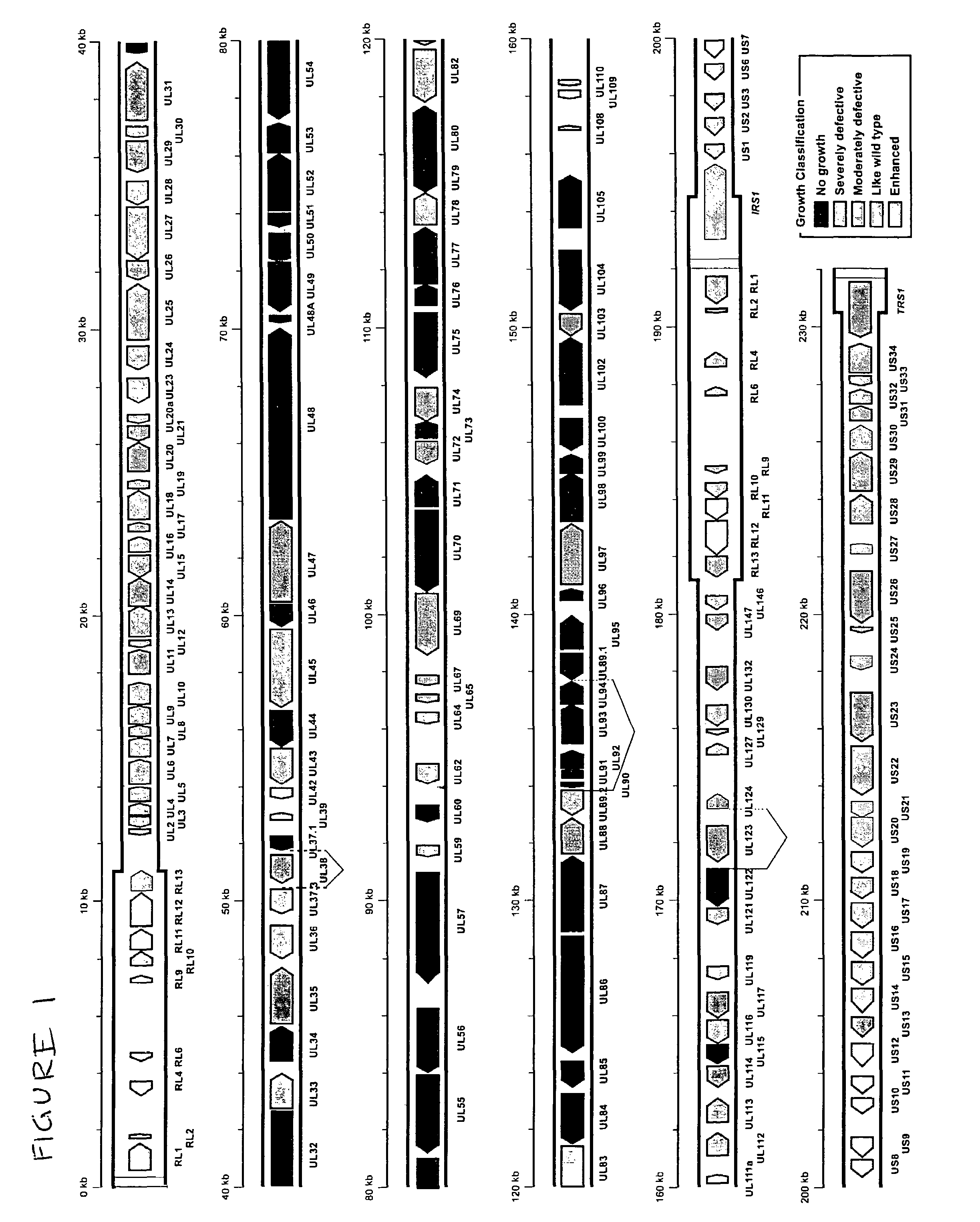
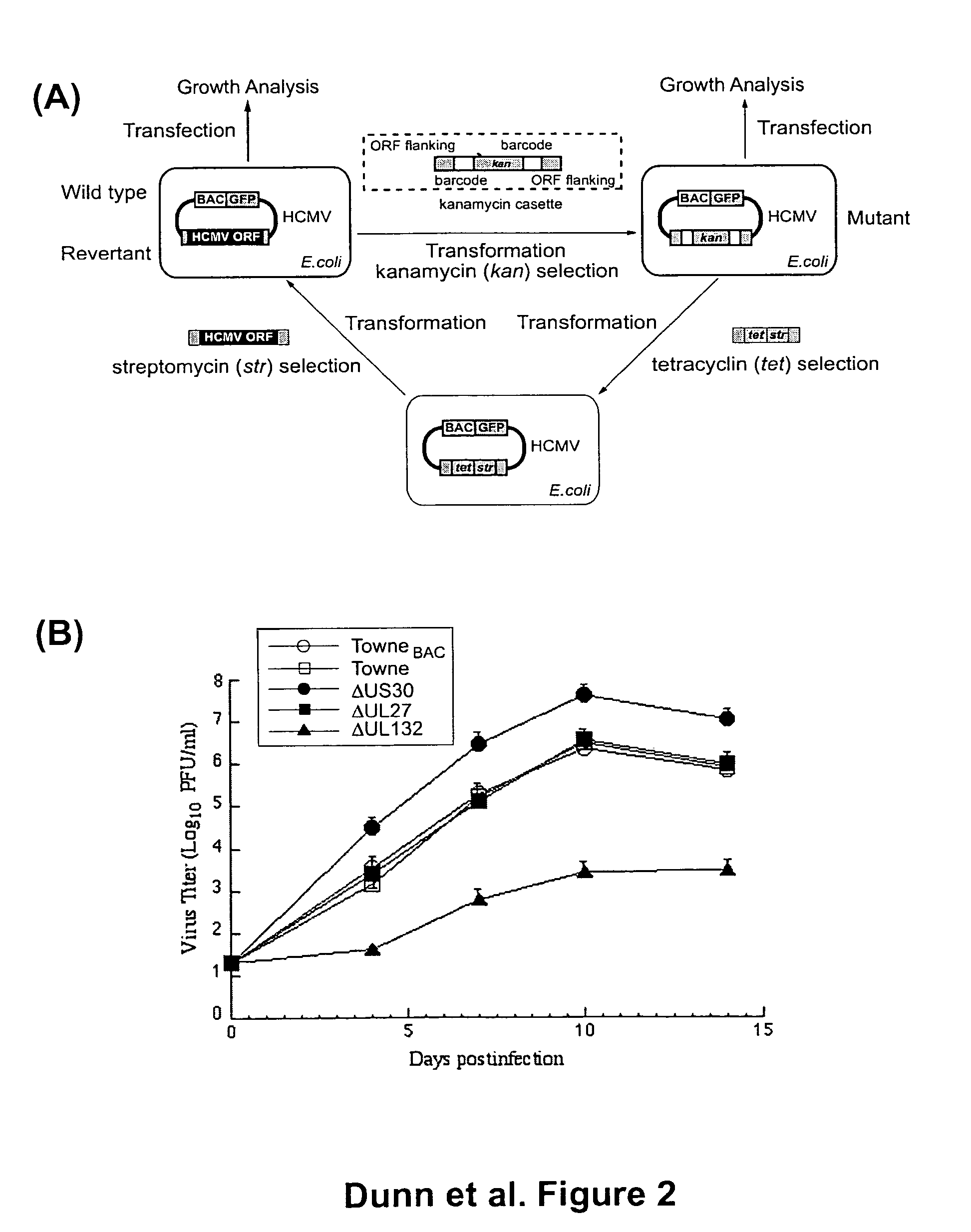
[0018]Using a bacterial artificial chromosome (BAC) engineering and RED recombinase technology in conjunction with growth curve analysis in human fibroblast cells in tissue culture, an open reading frame deletion library spanning the entire human cytomegalovirus genome was constructed. The complete sequence of HCMV Towne strain was determined, and is provided herein as SEQ ID NO:1. The BAC based ORF deletion constructs were then transfected into human fibroblast cells in tissue culture. Constructs with deletions in 45 separate and distinct ORFs in the HCMV genome did not yield any viral progeny upon transfection into the fibroblast cells, indicating that those regions of the genome are essential for viral growth. These essential genes are drug targets for anti CMV therapeutic applications.
[0019]In addition, the functional mapping of the genome identified regions in the viral genome dispensable for viral growth. All ORF deletion constructs that yielded viral progeny upon transfection...
PUM
| Property | Measurement | Unit |
|---|---|---|
| temperature | aaaaa | aaaaa |
| temperature | aaaaa | aaaaa |
| size | aaaaa | aaaaa |
Abstract
Description
Claims
Application Information
 Login to View More