
Biocatalytic process for the production of ortho-aminophenols from chloramphenicol and analogs
- Summary
- Abstract
- Description
- Claims
- Application Information
AI Technical Summary
Benefits of technology
Problems solved by technology
Method used
Image

Examples
example 1
Chemical Reaction Coupled to an Enzymatic Reaction to Produce Aminophenol from Nitrobenzene
[0029]The biological and chemical reduction of a nitroaromatic compound to a hydroxylaminoarene occurs by the transfer of four electrons and protons:
ArNO2+4e+4H+→ArNHOH+H2O
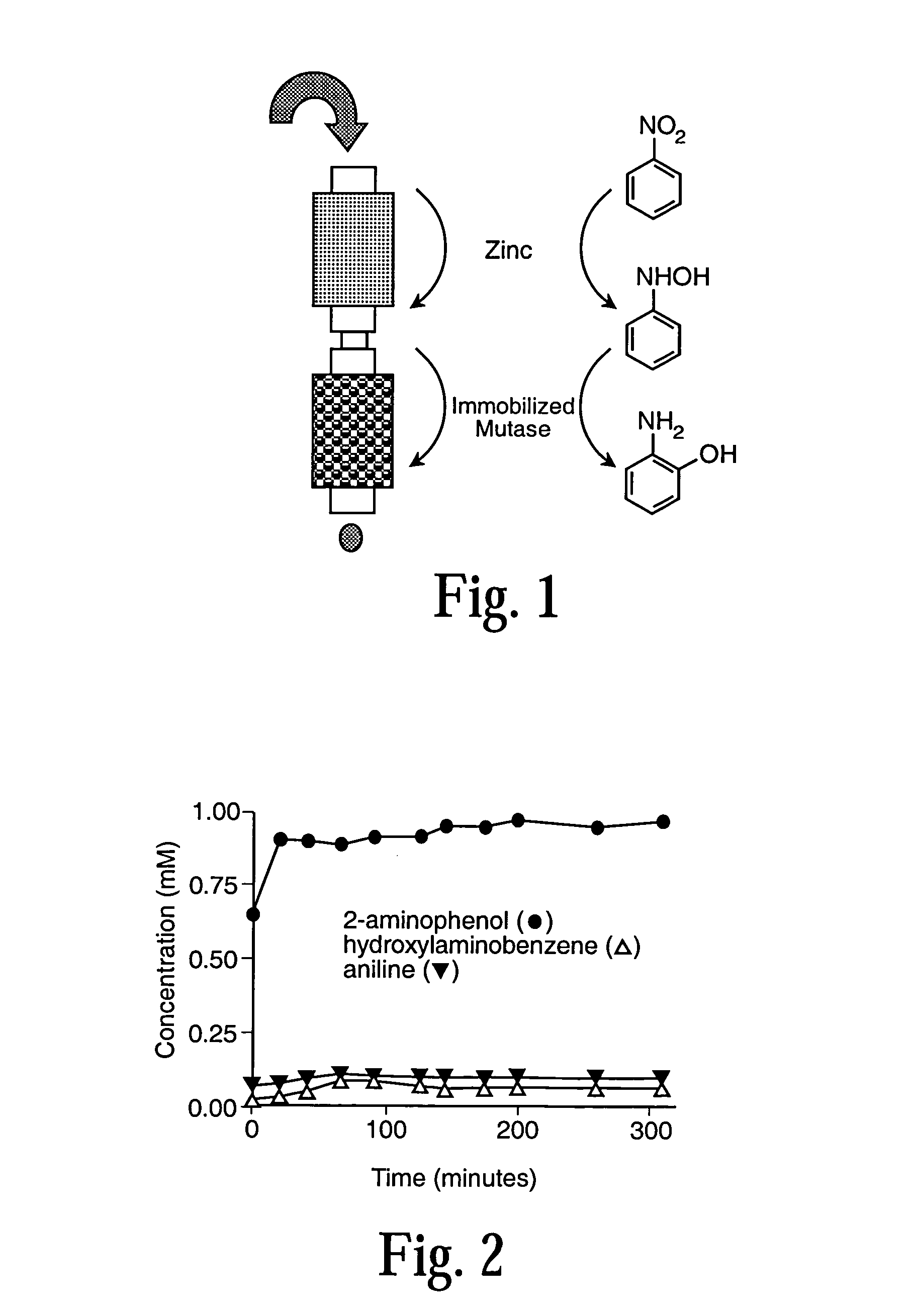
[0030]Hydroxylaminoarenes can be chemically synthesized from nitroaromatic compounds by using metals, such as zinc, in the presence of ammonium sulfate. For example, hydroxylaminobenzene is readily synthesized in an aqueous solution containing ammonium chloride and 2 moles of zinc per mole of nitrobenzene.
[0031]Applicants used a method of enzyme immobilization in biomimetically-derived silica (biosilica) that increases the general mechanical stability of enzymes and facilitates their application in flow-through reactor systems as described by Luckarift, H. L., J. C. Spain, R. R. Naik, and M. O, Stone. 2004, Enzyme immobilization in biomimetic slica support. Nature Biotech. 22 (2):211, incorporated herein by reference. Here, ...
example 2
Batch Chemical Reaction Followed by an Enzymatic Reaction to Produce N-[2-(4-Amino-3-Hydroxy-Phenyl)-2-Hydroxy-1-Hydroxymethyl-Ethyl]-2,2-Dichloro-Acetamide from Chloramphenicol
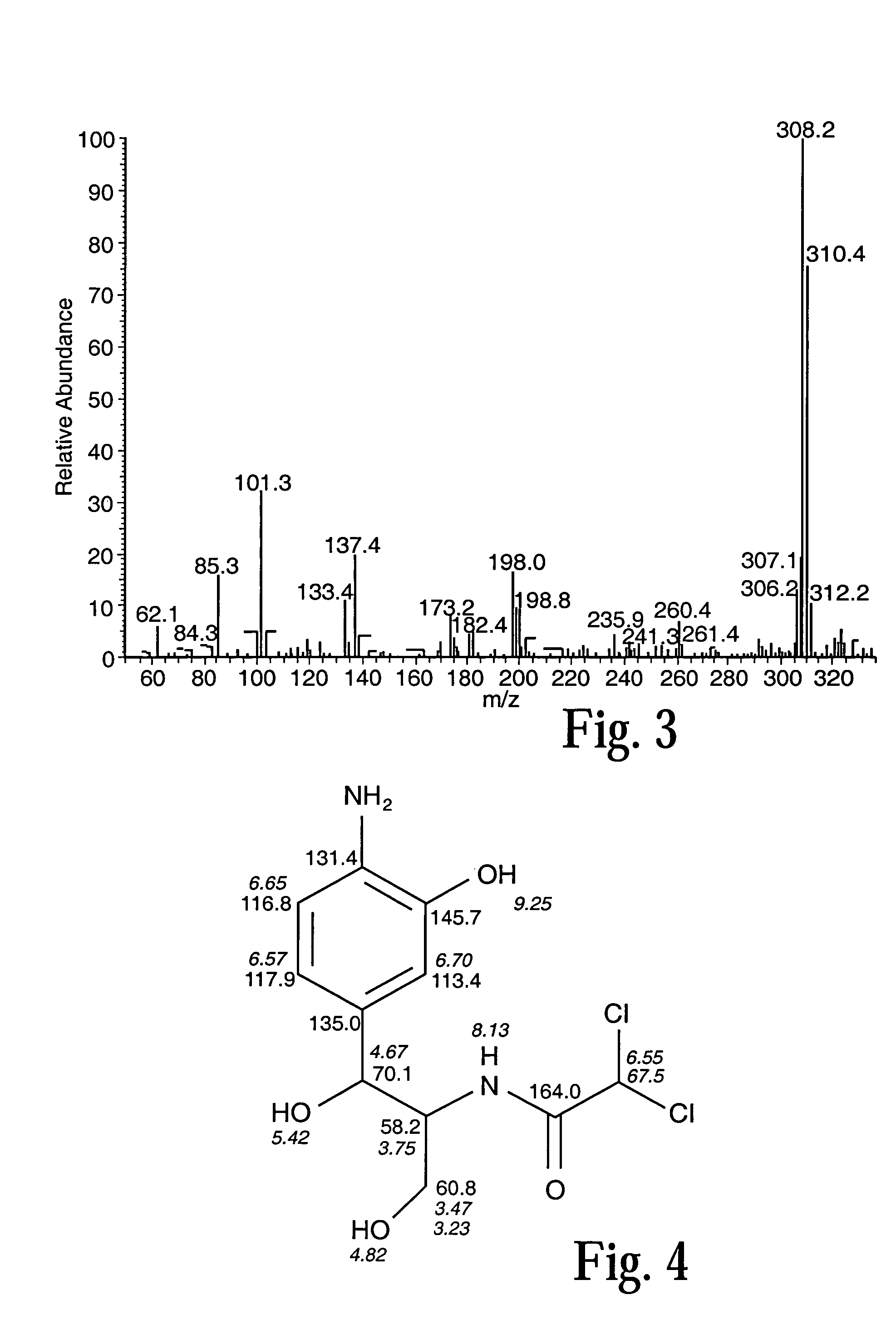
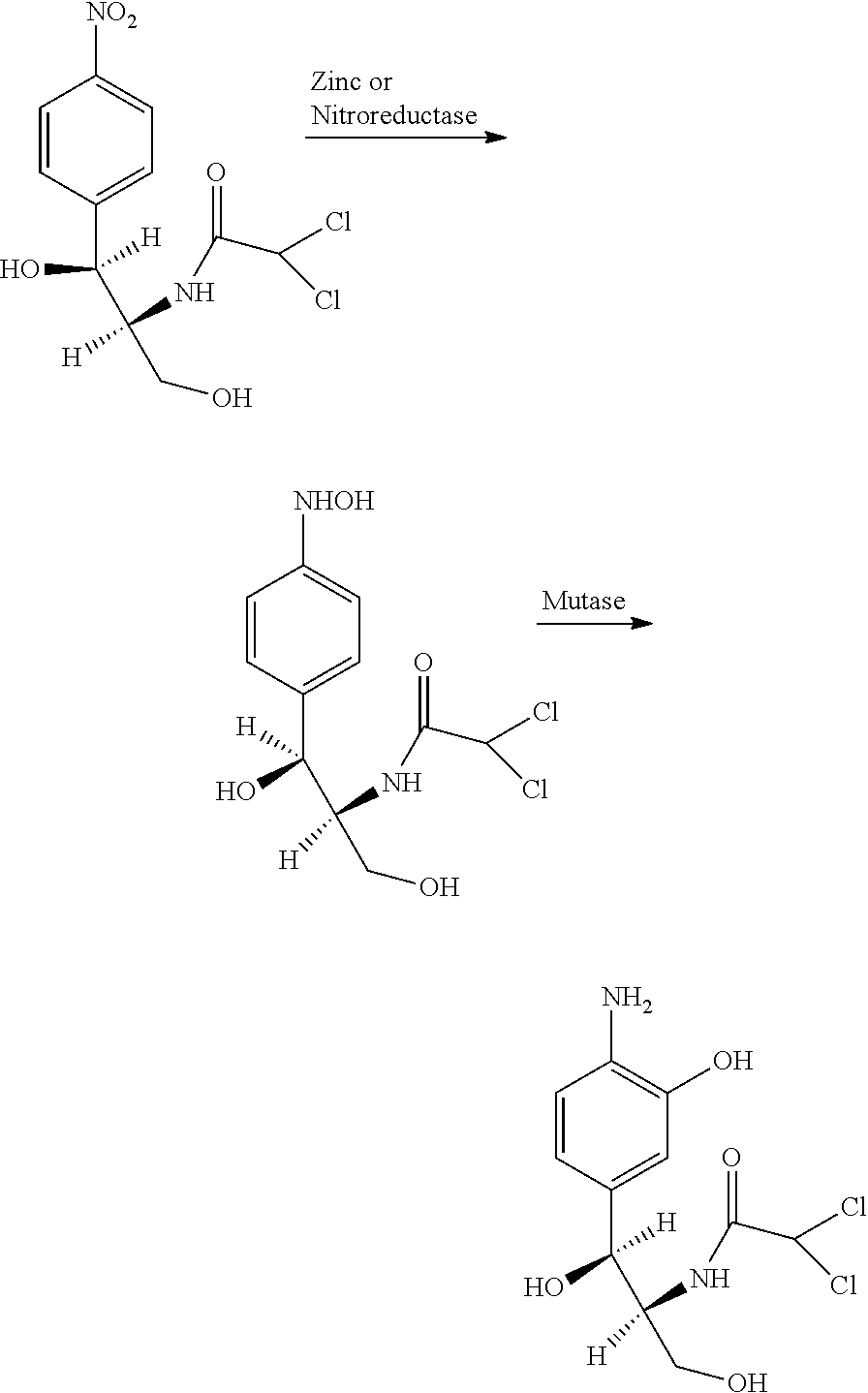
[0035]The biosynthesis of antibiotics using intact bacterial cells is inherently limited by auto-inhibition due to the biocidal properties of the product. The use of metals and enzyme reaction systems therefore provides an attractive alternative. The chemical reduction of the nitroarene to the hydroxylaminoarene by using zinc in a batch process has been previously described. The use of the zinc / mutase sequential reactions were therefore investigated with the antibiotic chloramphenicol (N-[2-hydroxy-1-(hydroxymethyl)-2-(4-nitrophenyl)ethyl]-2,2-dichloro-acetamide) as a model system.
[0036]Preliminary investigation demonstrated that the nitro group of chloramphenicol was reduced to a hydroxylamino-chloramphenicol derivative by reaction with zinc and the identity of the product was confirmed by LC-MS analysis. Su...
example 3
Chemical Reaction Coupled to an Enzymatic Reaction to Produce Aminophenol Analog from Chloramphenicol
[0039]The zinc / mutase column system was used as described for the nitrobenzene model system (FIG. 1). When an aqueous solution of chloramphenicol (1 mM) was pumped through the two columns at a flow rate of 0.25 ml / minute, the corresponding aminophenolic analog (0.94 mM±0.11) was obtained continuously for 24 hours (94% conversion efficiency). Degeneration of the zinc column was observed over time and was detected by the formation of a white zinc oxide precipitate and a nitroso intermediate of chloramphenicol, which was detected by HPLC. The zinc column was replaced and the system continued for a further 24 hours with a conversion efficiency of 89%. This demonstrates the stability of the immobilized mutase enzyme and its utility for continuous production of the aminophenolic-chloramphenicol.
PUM
 Login to View More
 Abstract
Description
Claims
Application Information
 Login to View More