
Method and device for providing an equi-potential touch screen
a touch screen and equipotential technology, applied in the field of equipotential touch screen devices, can solve the problems of disadvantageous non-linearity, device size and thinness increase, and achieve the effect of greater packaging freedom and design opportunities
- Summary
- Abstract
- Description
- Claims
- Application Information
AI Technical Summary
Benefits of technology
Problems solved by technology
Method used
Image

Examples
Embodiment Construction
[0011]Disclosed and shown in the figures, is a touch screen device and method of sensing an object near the surface of a touch screen device.
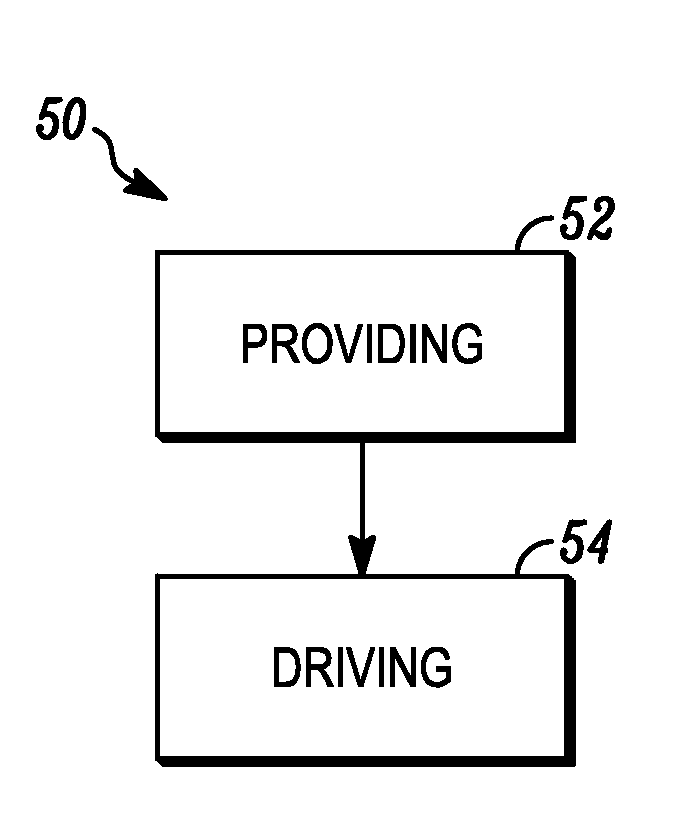
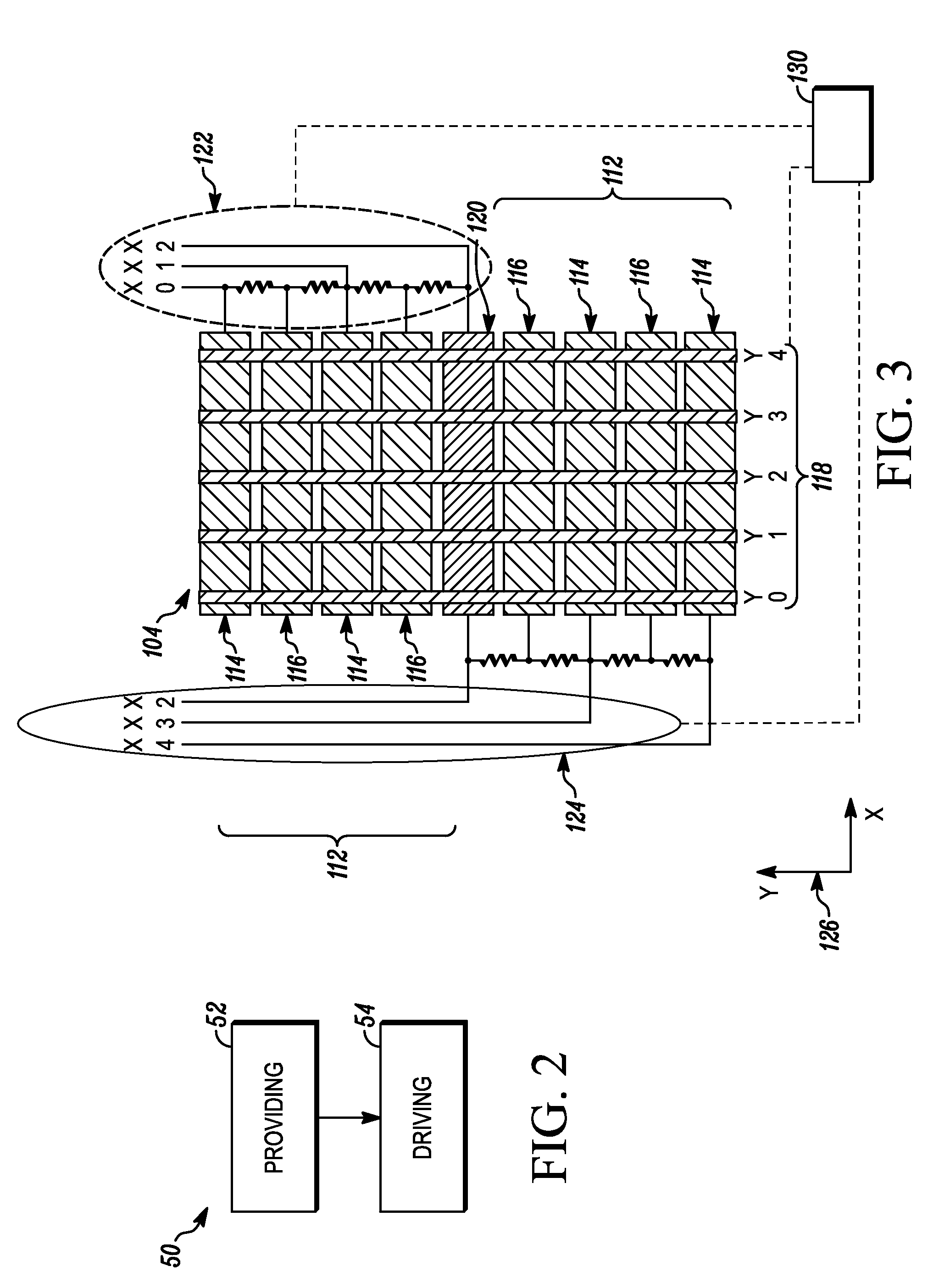
[0012]In one embodiment, a method 50 for providing an equi-potential touch screen, is disclosed and shown in FIG. 2. The method 50 includes: providing 52 a capacitive touch screen including transmit electrodes and receive electrodes combined to form a grid structure configured to provide capacitive signals that allow position of touch to be resolved; and driving 54 a substantially central transmit electrode with equi-potential connection points. Advantageously, the method allows the routing of drive lines on either side of the touch screen, which is highly linear. This provides narrow packaging and reducing electrode complexity. Also, the frame area surrounding the touch screen can be made narrower, as desired, for minimal real estate and optimizing design layout.
[0013]In one embodiment, the method includes providing alternating transmit electr...
PUM
 Login to View More
 Abstract
Description
Claims
Application Information
 Login to View More