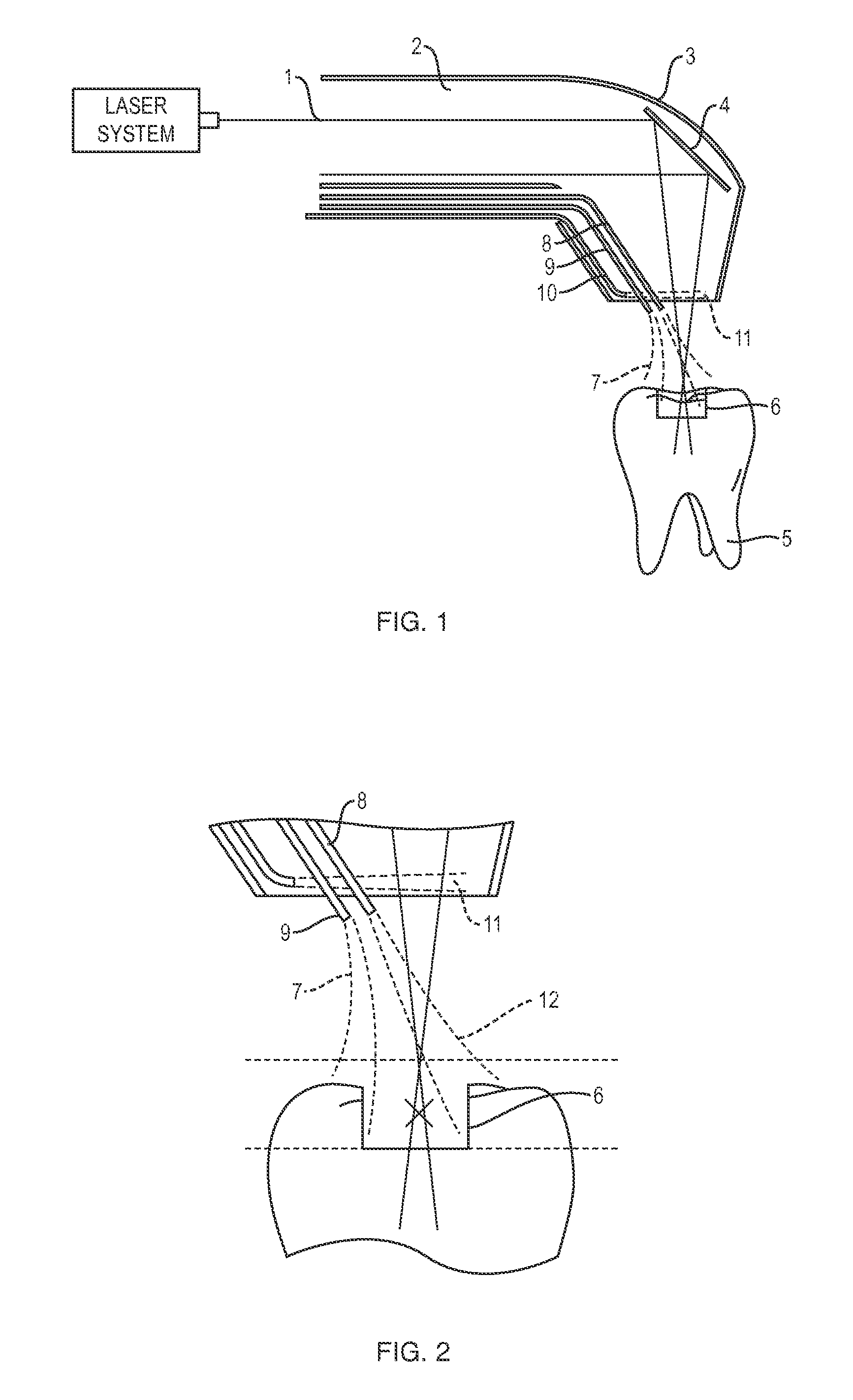
[0011]In various embodiments, a system and a method in accordance with the present invention facilitates effective dental treatment in which the risk of melting of the enamel by a laser beam is mitigated or eliminated without significantly impacting the efficiency of cutting the dental tissue. This is achieved, in part, by regulating the flow of a coolant fluid such that an amount of fluid present in the treatment area is adequate to minimize the risk of melting of the enamel, but is not so excessive as to interfere with the laser beam by absorbing a significant portion of the laser energy. Specifically, because molten enamel can cover hydroxyapatite, and thus substantially prevent absorption of the laser energy thereby, the system and method ensure that an amount of water / coolant that is sufficient to inhibit or minimize melting of the enamel is present in the treatment area. The amount of water / coolant is minimized, however, so that the portion of radiation absorbed into the water / coolant is minimized and absorption of the laser energy by the hydroxyapatite / enamel to be removed is maximized or maintained near the peak absorption. As a result, the portion of the generated laser energy that is utilized for ablation can be maximized so that the cost and / or duration of the mid to far-infrared laser based treatment is minimized, while preventing melting of the enamel. As part of regulating the flow of the coolant fluid, both the location and amount of cooling fluid may be controlled. Various embodiments may also employ computer controlled laser beam delivery.
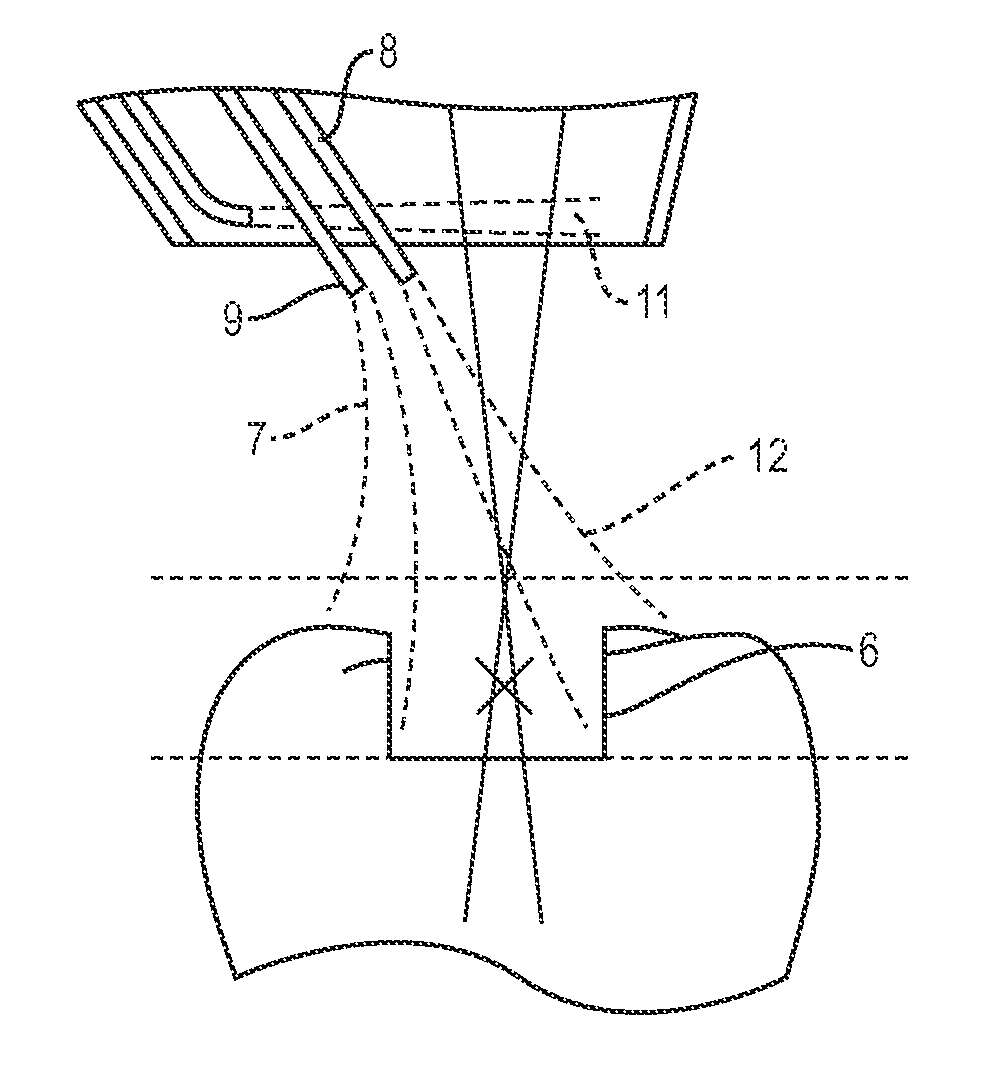
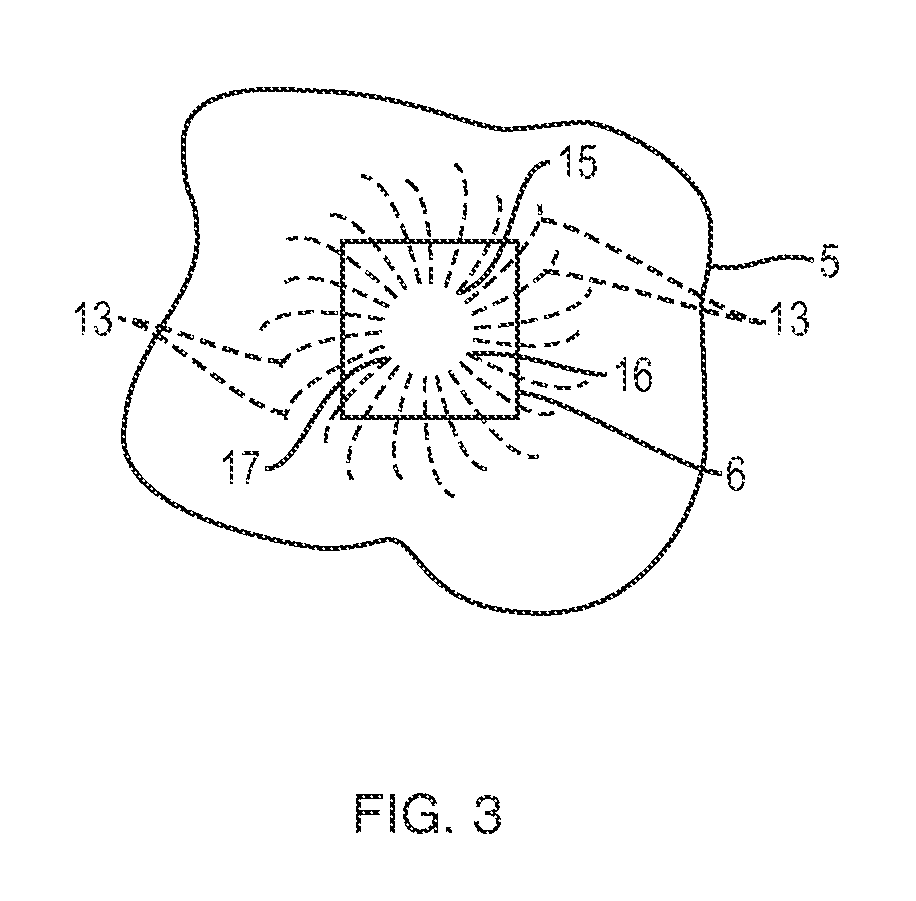
[0012]Often, as ablation by a laser progresses, a hole or depression forms in the treatment area (surface of the tooth, hard tissue, etc.). Therefore, it is beneficial that the coolant fluid spray is formed such that the coolant fluid wets the surface exposed by ablation, to ensure enamel melting does not occur therein, and non-apatite CaP phases are not formed over the exposed surface. It must also be ensured, however, that coolant fluid pooling is avoided. The coolant fluid pooling may lead to increased absorption of laser energy in the pooled coolant fluid and correspondingly decreased hydroxyapatite ablation rates. Moreover, interaction of water (coolant fluid in general) with the infrared laser beam prior to impingement thereof on the enamel surface can lead to additional absorption of the laser energy in the water, and even less hydroxyapatite absorption. Therefore it is advantageous to ensure that as little coolant spray or mist as possible interacts or intersects with the infrared laser light delivered to the treatment area.
[0013]Accordingly, in one aspect, various embodiments feature an apparatus for dental tissue treatment. The apparatus includes a system for directing a laser beam to an area of dental tissue to be treated. The apparatus also includes a fluid-delivery system for directing and controlling a flow of a fluid to at least a portion of the area to be treated to substantially prevent both a change in laser energy absorption by the dental tissue and attenuation of treatment efficiency due to fluid interference with the laser beam. The fluid delivered to at least a portion of the area to be treated may prevent melting of enamel in that area, or may significantly reduce the risk of such melting.
[0022]In some embodiments, a distance between a tip of the nozzle and the area of the dental tissue to be treated is in the range from about 2 millimeters up to about 50 millimeters. The fluid-delivery system may be configured to direct the fluid flow as one or more of a series of droplets, a series of columns, and a mist. The area to be treated may be in a range from about 0.00005 square inches up to about 0.055 square inches, and the dental tissue may include or consist essentially of a hard dental tissue. In some embodiments, an air curtain eliminates or reduces the risk that the cooling fluid after striking the area / region to be treated (e.g., a surface of a tooth) may bounces back and interfere with the laser beam.
[0023]In another aspect, various embodiments feature a method for dental tissue treatment. The method includes directing a laser beam to an area of dental tissue to be treated, and directing and controlling a flow of a fluid to at least a portion of the area to be treated to substantially prevent both a change in laser energy absorption by the dental tissue and attenuation of treatment efficiency due to fluid interference with the laser beam.
[0024]The flow of the fluid may be controlled. In some embodiments, the method includes controlling the flow of the fluid so as to provide a sufficient amount of fluid to substantially prevent the melting of the dental tissue. The control of the fluid flow may also include limiting an amount of fluid to limit absorption of the laser beam in the fluid.


 Login to View More
  Login to View More